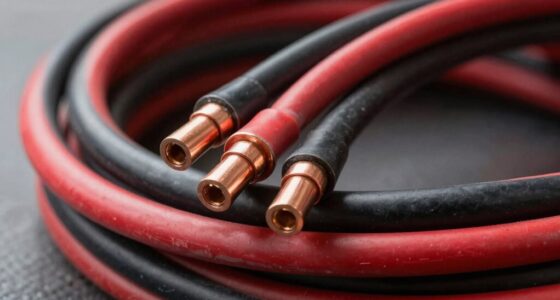
The best LFP car batteries pair strong starting performance with a BCI-group fit and battery management suited to the vehicle. I rank the TET Group 47 as the best overall for its stated 1,200 CCA, while the VEVOR 140Ah stands out for capacity and dual-purpose flexibility, and the Lipower solid-state Group 48 is the premium alternative for shoppers weighing newer battery construction. The main tradeoffs are cranking output versus capacity, direct fit versus unusual dimensions, and feature claims versus compatibility with the car’s charging and start-stop systems. A high CCA figure alone cannot confirm a safe replacement. Read on for the full comparison, selection criteria, and fit checks to make before buying.

Get backup power and energy gear delivered free with Prime
- Fast, free delivery on millions of items
- Prime Video, Amazon Music and more included
- Member-only deals all year
Key Takeaways
- TET’s stated 1,200 CCA is the highest listed cranking figure here, giving it the strongest spec-based case for buyers who prioritize starting output in a Group 47 package.
- VEVOR’s 140Ah capacity and dual-purpose design make it the most versatile pick on paper, but its larger capacity does not by itself establish fit or charging compatibility.
- The 40Ah Group 48 battery favors a more modest capacity and a waterproof claim; buyers should verify that its output and case dimensions suit their vehicle.
- Three Group 47 options have different stated outputs: TET lists 1,200 CCA, the lightweight option lists 800 CCA, and TPE lists 600A, so check the exact rating method and vehicle requirement before comparing numbers.
- Lipower’s solid-state construction claim sets it apart, but shoppers should still confirm terminal layout, start-stop compatibility, and charging requirements rather than choosing by construction label alone.
| VEVOR 12V 140Ah LiFePO4 Dual Purpose Battery with Smart BMS and 1000CCA |  | Best for Dual-Purpose Power | Voltage: 12.8 V | Capacity: 140 Ah | Cold-cranking amps: 1000 CCA | VIEW LATEST PRICE | See Our Full Breakdown |
| 12V 40Ah LiFePO4 Car Battery with BMS, Waterproof, Rechargeable, Group 48 Replacement |  | Best for Long-Cycle, All-Weather Use | Voltage: 12 V | Capacity: 40 Ah | Dimensions: 9.5 × 6.9 × 8 in | VIEW LATEST PRICE | See Our Full Breakdown |
| TET 12V Group 47 LiFePO4 Car Battery, 1200 CCA |  | Best for High Cranking Power in Group 47 Fitments | Battery chemistry: LiFePO4 | Group size: 47 / H5 | Voltage: 12.8 V | VIEW LATEST PRICE | See Our Full Breakdown |
| TPE Car Start-Stop Lithium Battery BCI Group 47 12.8V 600A LiFePO4 |  | Best Lightweight Group 47 Option | Battery chemistry: LiFePO4 | Group size: BCI Group 47 | Voltage: 12.8 V | VIEW LATEST PRICE | See Our Full Breakdown |
| Lipower Group 48 Solid-State Start-Stop Car Battery |  | Best for Group 48 Start-Stop Vehicles | Battery type: Lithium ion, solid-state construction | Voltage: 12 V | Capacity: 60 Ah | VIEW LATEST PRICE | See Our Full Breakdown |
| Group 47 H5 12V LiFePO4 Car Battery, 800CCA Start-Stop, Lightweight |  | Best for Cold-Climate Drivers | Chemistry: LiFePO4 | Voltage: 12V | Cold Cranking Amps: 800 CCA | VIEW LATEST PRICE | See Our Full Breakdown |
| LFP car batterie | Voltage | Dimensions | Cold-cranking amps | Weight |
|---|---|---|---|---|
| VEVOR 12V 140Ah LiFePO4 Dual P | 12.8 V | 12.99 × 6.77 × 8.66 in | 1000 CCA | 30.9 lb |
| 12V 40Ah LiFePO4 Car Battery w | 12 V | 9.5 × 6.9 × 8 in | — | 14.8 lb |
| TET 12V Group 47 LiFePO4 Car B | 12.8 V | 9.6 × 6.9 × 7.75 in | 1200 A | — |
| TPE Car Start-Stop Lithium Bat | 12.8 V | 9.60 × 6.92 × 7.75 in | 600 A | 11.02 lb |
| Lipower Group 48 Solid-State S | 12 V | — | 1200 CCA | — |
| Group 47 H5 12V LiFePO4 Car Ba | 12V | 9.60" x 6.92" x 7.75" | — | 20 lbs |
More Details on Our Top Picks
VEVOR 12V 140Ah LiFePO4 Dual Purpose Battery with Smart BMS and 1000CCA
The VEVOR 140Ah is the clearest choice here for buyers who need one battery to crank an engine and run substantial accessories. Its 1000 CCA and 140Ah capacity give it a broader starting-and-house-power role than the TET Group 47, which is aimed at a specific car battery fit. Bluetooth monitoring can help owners keep tabs on battery status in an RV or boat, while the smart BMS adds electrical protection. The tradeoff is size and mass: at 30.9 pounds, it is heavier than the TPE Group 47 and needs more installation space than a typical car replacement. I would also verify the case dimensions, terminal layout, and vehicle charging compatibility before buying; its dual-purpose label does not make it a universal drop-in fit.
Pros:- 140Ah capacity supports accessory loads beyond ordinary engine starting.
- 1000 CCA provides substantial stated cranking power.
- Bluetooth monitoring and a smart BMS add visibility and battery protection.
- Described as supporting automotive start-stop systems.
Cons:- At 30.9 pounds, it is heavier than the TPE Group 47 option.
- Its dimensions and M8 terminals require careful compatibility checks.
- The supplied product information contains limited independent evidence for its performance claims.
Best for: RV and marine owners who need strong engine starting alongside substantial capacity for accessories such as a refrigerator or trolling motor.
Not ideal for: Drivers seeking a compact, vehicle-specific replacement or anyone whose battery tray cannot accommodate its 12.99 × 6.77 × 8.66-inch case.
- Voltage:12.8 V
- Capacity:140 Ah
- Cold-cranking amps:1000 CCA
- Dimensions:12.99 × 6.77 × 8.66 in
- Weight:30.9 lb
- Terminal:M8
- Monitoring and protection:Bluetooth monitoring; built-in smart BMS
- Supported use:Engine starting, accessories, and automotive start-stop systems
Our verdict“Choose the VEVOR when you need a high-capacity starting-and-accessory battery and have space for its larger, heavier case.”
12V 40Ah LiFePO4 Car Battery with BMS, Waterproof, Rechargeable, Group 48 Replacement
This 40Ah Group 48 replacement stands apart for its stated 6,000+ deep cycles and IP66 waterproof rating, making it a fit for buyers who value durability across repeated cycling and wet conditions. Its 40Ah capacity is well below the VEVOR 140Ah, so it is a more focused car or auxiliary-power option rather than a substitute for a high-capacity RV house battery. The smart BMS adds protection, and the stated operating range of -20°C to 60°C suits a wider range of environments than a battery with no listed temperature range. There is a setup caveat: the maker says to fully charge it before first use, and using it immediately at a low shipping charge may cause low-voltage problems. At 14.8 pounds, it is also not the lightest pick in this group.
Pros:- Stated cycle life of more than 6,000 deep cycles.
- IP66 waterproof rating supports use in wet environments.
- Smart BMS provides battery protection.
- Listed operating temperature range is -20°C to 60°C.
Cons:- 40Ah capacity is far below the VEVOR’s 140Ah for accessory-heavy use.
- Requires a full initial charge; using it at a low shipping charge may cause low-voltage issues.
- 14.8 pounds may be heavy for buyers prioritizing portable power.
Best for: Drivers or RV owners seeking a Group 48-size battery for repeated deep cycling in damp or variable-temperature conditions.
Not ideal for: Buyers who need high starting capacity, a very lightweight portable battery, or a ready-to-install option without an initial full charge.
- Voltage:12 V
- Capacity:40 Ah
- Dimensions:9.5 × 6.9 × 8 in
- Weight:14.8 lb
- Cycle life:6,000+ deep cycles (manufacturer claim)
- Water resistance:IP66
- Operating temperature:-20°C to 60°C
- Battery configuration:Supports up to 16 batteries in series or parallel
Our verdict“Pick this Group 48 option for stated long-cycle durability and water resistance, provided you can charge it fully before first use.”
TET 12V Group 47 LiFePO4 Car Battery, 1200 CCA
For a compatible Group 47/H5 vehicle, the TET combines a defined fitment with a listed 1200 CCA rating, the highest stated cranking figure among these five products. That makes it more directly suited to cold-start demands than the TPE Group 47, whose listed rating is 600A, though buyers should confirm the units and requirements specified for their vehicle. The built-in BMS covers overcharge, overdischarge, overcurrent, short-circuit, and temperature protection, while low self-discharge can help when a vehicle sits unused. Its claimed 1,500-plus cycles is less ambitious than the 40Ah Group 48 battery’s stated 6,000-plus cycles, and the supplied description does not independently verify lifespan or performance claims. Group size alone is not enough: check dimensions, tapered terminal position, polarity, and vehicle requirements before installation.
Pros:- Listed 1200 CCA is higher than the TPE Group 47’s stated 600A.
- BMS protection covers several electrical and temperature fault types.
- Low self-discharge may help preserve charge during storage.
- Manufacturer claims more than 1,500 cycles at 100% depth of discharge.
Cons:- Compatibility depends on matching Group 47/H5 dimensions, tapered terminals, and polarity.
- Cycle-life and performance claims are not independently verified in the supplied information.
- No capacity or weight figure is provided for direct comparison with several alternatives.
Best for: Owners of compatible Group 47/H5 cars who prioritize a high stated cranking rating and a built-in BMS with multiple protections.
Not ideal for: Drivers with another battery group size, incompatible terminal orientation, or a need for independently verified cycle-life claims.
- Battery chemistry:LiFePO4
- Group size:47 / H5
- Voltage:12.8 V
- Cold-cranking amps:1200 A
- Dimensions:9.6 × 6.9 × 7.75 in
- Terminal type and position:Tapered; left negative, right positive
- Cycle life:Over 1,500 cycles at 100% DOD (manufacturer claim)
- BMS protection:Overcharge, overdischarge, overcurrent, short-circuit, and temperature protection
Our verdict“Choose the TET for a compatible Group 47 vehicle if its stated 1200 CCA and protection features matter more than verified longevity data.”
TPE Car Start-Stop Lithium Battery BCI Group 47 12.8V 600A LiFePO4
The TPE is the weight-focused choice for a compatible Group 47 start-stop vehicle: its listed 11.02-pound weight is far below the VEVOR’s 30.9 pounds and also undercuts the TET’s unlisted weight claim of being lighter than lead-acid. Its 12.8V output, 600A rating, and BMS are aimed at automotive replacement rather than running large accessory loads. Compared with the TET, the TPE has a much lower stated cranking figure, so I would favor the TET when the vehicle’s starting demands call for more reserve. The TPE’s product description mentions a long cycle life but gives no exact count, making longevity harder to compare with the 40Ah Group 48 battery’s stated 6,000-plus cycles. Verify fit and polarity carefully, and note that the emergency switch may lock if pressed accidentally.
Pros:- Listed 11.02-pound weight makes it the lightest option here with a stated weight.
- Designed for Group 47 start-stop applications.
- Built-in BMS is intended to protect the battery and vehicle electronics.
- Compact listed dimensions can suit compatible Group 47 battery trays.
Cons:- Its 600A rating is half the TET Group 47’s stated 1200A.
- The cycle-life description gives no specific number for comparison.
- The emergency switch may lock if pressed accidentally, and fit still needs verification.
Best for: Drivers with a compatible Group 47 start-stop vehicle who want a notably light battery and do not need the highest listed cranking rating.
Not ideal for: Owners whose vehicle calls for stronger cranking output, a quantified cycle-life specification, or a battery with no emergency-switch complication.
- Battery chemistry:LiFePO4
- Group size:BCI Group 47
- Voltage:12.8 V
- Cold-cranking amps:600 A
- Dimensions:9.60 × 6.92 × 7.75 in
- Weight:11.02 lb
- Polarity:[- +]
- Cycle life:Several thousand cycles (manufacturer description)
Our verdict“Choose the TPE if low weight is your priority and your Group 47 vehicle’s cranking requirements are compatible with its 600A rating.”
Lipower Group 48 Solid-State Start-Stop Car Battery
The Lipower is the most specifically equipped option here for a compatible Group 48/H6/L3/66L3 start-stop replacement: it pairs 60Ah capacity with a stated 1200 CCA and 140 minutes of reserve capacity. That gives buyers more listed cranking and capacity information than the TPE Group 47, while its 17.6-pound build remains much lighter than the dual-purpose VEVOR. The liquid-free construction and built-in BMS suit a passenger car or truck installation, but this is not a simple fit-and-forget swap. The manufacturer requires OBD battery registration after installation, and the case dimensions and SAE terminals must match the vehicle. Its 10-year service life and five-year warranty are manufacturer claims, not independently verified lifespan guarantees.
Pros:- 1200 CCA and 60Ah capacity are clearly stated for comparison with alternatives.
- 140-minute reserve capacity provides a listed measure of stored power.
- At 17.6 pounds, it is lighter than the VEVOR dual-purpose battery.
- Liquid-free construction, built-in BMS, and a five-year warranty are specified.
Cons:- OBD battery registration is required after installation.
- Group size, dimensions, SAE terminals, and vehicle-specific compatibility must be checked.
- The 10-year service-life figure is a manufacturer claim rather than verified lifespan data.
Best for: Owners of compatible Group 48/H6 start-stop cars or trucks who want a lightweight replacement with stated capacity, cranking, and reserve figures.
Not ideal for: Drivers who cannot perform or arrange OBD battery registration, or whose vehicle uses a different group size, terminal layout, or battery-management procedure.
- Battery type:Lithium ion, solid-state construction
- Voltage:12 V
- Capacity:60 Ah
- Cold-cranking amps:1200 CCA
- Reserve capacity:140 minutes
- Group size:48 / H6 / L3 / 66L3
- Dimensions and weight:10.9 × 7.44 × 6.88 in; 17.6 lb
- Terminal and installation:SAE terminals; OBD battery registration required
- Service life and warranty:10-year service life (manufacturer claim); 5-year warranty
Our verdict“Pick the Lipower for a compatible Group 48 start-stop vehicle if you can complete OBD registration and want strong stated cranking and reserve figures.”
Group 47 H5 12V LiFePO4 Car Battery, 800CCA Start-Stop, Lightweight
This Group 47 H5 LiFePO4 battery stands out for drivers in harsh winter regions, offering reliable starts down to -30°C. Unlike the VEVOR 12V 140Ah, which prioritizes massive capacity for dual-purpose use, this model focuses on efficient cranking power for start-stop systems. Its 20 lbs weight significantly reduces unsprung mass compared to lead-acid alternatives, potentially improving handling. However, the 800 CCA rating is lower than the TET 12V Group 47, which delivers 1200 CCA for larger engines. Buyers must verify physical fitment carefully, as Group 47 dimensions are specific. The integrated smart BMS with voltage display simplifies health checks, a feature often missing in basic lithium replacements. This battery is a strong contender for compact cars and sedans requiring consistent, cold-weather reliability without the bulk of heavier units.
Pros:- Operates reliably in extreme cold down to -30°C
- Weighs only 20 lbs, reducing vehicle weight
- Built-in smart BMS includes a voltage display
- Optimized for start-stop system compatibility
Cons:- Lower 800 CCA rating may struggle with very large engines
- Higher initial cost than traditional lead-acid options
- Strict Group 47 fitment requires careful vehicle verification
Best for: Drivers in northern climates with compact vehicles needing reliable cold starts and weight reduction
Not ideal for: Owners of large trucks or SUVs requiring over 1000 CCA for heavy electrical loads
- Chemistry:LiFePO4
- Voltage:12V
- Cold Cranking Amps:800 CCA
- Weight:20 lbs
- Dimensions:9.60″ x 6.92″ x 7.75″
- Polarity:Negative Left, Positive Right
- Operating Temp:Down to -30°C
- Features:Smart BMS with Voltage Display
Our verdict“This battery is the ideal choice for cold-climate drivers seeking lightweight reliability and easy monitoring.”

How We Picked
I ranked these batteries by how clearly their listed specifications serve common replacement needs: correct BCI-group fit, stated cranking output, capacity where provided, battery-management features, and intended start-stop or dual-purpose use. I gave more weight to a stated vehicle-relevant role than to a standout number without context; CCA, amp-hour capacity, and general current figures answer different questions and are not interchangeable.
The TET Group 47 leads because its listed 1,200 CCA is the clearest high-starting-output claim among the group-specific options. VEVOR ranks next for its 140Ah capacity, smart BMS, and dual-purpose positioning, though buyers must verify physical fit and charging compatibility. The remaining picks serve narrower needs: the 40Ah Group 48 emphasizes a waterproof build, TPE and the 800CCA Group 47 target start-stop fit with different output claims, and Lipower offers a solid-state construction angle without enough listed performance detail to outrank the options with clearer output figures. I treated fit and vehicle approval as purchase checks, not assumptions based on a group label alone.
Factors to Consider When Choosing Best LFP Car Batteries
Before choosing by headline capacity or cranking figures, I would match the battery to the vehicle’s requirements and operating conditions. These broader checks help prevent a technically appealing LFP battery from becoming the wrong replacement.
Match the Battery Group and Physical Layout
A BCI group number is a useful starting point, not a guarantee that a battery will fit every vehicle using that group. Compare case length, width, height, hold-down design, terminal position, and cable reach with the existing battery and the vehicle manual. A reversed terminal layout can make a correct-size case impractical or unsafe to connect. Also check clearance around covers, braces, and nearby components. Do not assume that a Group 47 or Group 48 label makes two products interchangeable. If the car specifies another group or an approved battery type, resolve that difference before focusing on performance claims.
Compare Cranking Ratings on the Same Basis
Cold-cranking amps describe starting current under a defined cold test, while other current figures may use different conditions or naming conventions. That makes TET’s stated 1,200 CCA, the lightweight Group 47’s 800 CCA, and TPE’s 600A difficult to compare unless each seller confirms the test standard and rating type. Check the vehicle maker’s minimum requirement and leave headroom for cold weather, an aging engine, or frequent short trips. A larger number does not compensate for a poor fit or incompatible charging system. If a listing does not explain a current figure, ask the manufacturer what it measures before treating it as equivalent to CCA.
Treat Capacity and Starting Power as Separate Needs
Amp-hour capacity indicates stored energy, while cranking output concerns the short burst needed to start an engine. VEVOR’s 140Ah listing is therefore not a substitute for checking its starting rating, just as a high CCA figure does not tell you how long accessories can run with the engine off. Decide whether your priority is reliable engine starts, extended accessory use, or both. For ordinary commuting, a battery that meets the vehicle’s starting requirement and charging limits may matter more than excess capacity. For auxiliary loads, confirm the battery’s approved use and charging profile rather than relying on the phrase “dual purpose.”
Verify Charging and Start-Stop Compatibility
LFP batteries can have charging requirements that differ from the lead-acid battery originally installed, and a vehicle’s alternator or battery-control system may not be suitable for every replacement. Start-stop cars can also rely on battery monitoring, energy management, and specific replacement procedures. Check the vehicle manual and battery maker’s compatibility guidance for the exact model year and engine, not just the BCI group. Ask whether coding, registration, or a particular charging mode is required. A battery advertised for start-stop use is a useful signal, but it does not establish compatibility with every start-stop vehicle.
Read BMS and Environmental Claims as Part of the Whole Package
A battery management system can monitor or limit battery conditions, but the feature name alone does not explain its protections, limits, or behavior in cold temperatures. Ask for the BMS operating range, low-temperature charging protection, and any restrictions on charging or starting in freezing weather. A waterproof claim also needs a defined rating and installation context; it should not be treated as permission to submerge or expose a battery to road spray without limits. Solid-state construction may distinguish Lipower’s design, but buyers still need clear fit, output, warranty, and compatibility information. Prefer documentation that answers these practical questions over broad labels.
Check Warranty, Support, and Replacement Logistics
Warranty terms can matter more than a small difference in listed capacity, especially for a newer battery chemistry or a less common vehicle fit. Read the coverage period, exclusions, return process, and who pays shipping if a battery needs service. Confirm that technical support can answer questions about the vehicle’s charging system and BMS behavior. Also check whether the battery can be returned after installation if the fit or compatibility proves wrong. A low-maintenance design still needs a clear path to support. These details help separate a well-documented replacement from one that leaves the buyer to resolve fit or charging issues alone.
Frequently Asked Questions
Can I replace my car’s lead-acid battery with an LFP battery?
Only if the LFP battery is approved for the vehicle’s dimensions, starting requirement, and charging system. Some cars regulate charging for a particular lead-acid battery type, while others use battery sensors or control modules that may need a compatible replacement and setup procedure. Check the vehicle manual and the battery maker’s fitment guidance for the exact year and model. Do not rely on matching voltage or BCI group alone. If the compatibility information is unclear, ask a qualified installer or the manufacturer before ordering.
Is a higher CCA rating always the better choice?
No. CCA matters when the engine needs a strong burst of current to start, especially in cold conditions, but the battery must still meet the vehicle’s fit and charging requirements. Ratings can also be hard to compare when listings use different test standards or label a current figure without calling it CCA. Start with the minimum requirement in the vehicle documentation, then compare clearly stated ratings. Capacity and CCA describe different capabilities, so neither should stand in for the other.
Will a Group 47 battery fit every car that currently uses Group 47?
Not necessarily. Group numbers describe a general size class, but case dimensions, terminal orientation, hold-downs, and nearby clearance can vary by vehicle and battery design. Compare the candidate’s measurements with the installed battery and check cable reach and mounting hardware. Also confirm that the vehicle’s battery type and charging system are compatible with LFP chemistry. A matching group label narrows the search; it does not finish the fit check.
Can I use an LFP car battery in freezing weather?
Cold-weather starting and cold-temperature charging are separate questions. A battery may be able to deliver starting current in cold conditions while its manufacturer restricts charging below a specified temperature. Check the product’s operating limits and whether its BMS blocks or manages charging when cold. The product listings in this roundup do not provide enough detail to assume identical cold-weather behavior across all six options. For a vehicle kept outdoors in a cold climate, get the exact temperature limits in writing before buying.
Should I choose a high-capacity battery for running accessories with the engine off?
Capacity can help support accessory use, but it does not automatically make a starter battery suitable for prolonged engine-off loads. Check whether the manufacturer approves that use, how the battery handles repeated discharge, and whether the vehicle’s charging system can restore the energy safely. VEVOR’s 140Ah listing makes it the most capacity-focused option here, but its dual-purpose claim still needs to match your load and installation. Work out the accessories’ power draw and expected run time before choosing. If the main goal is extended parked use, a dedicated auxiliary setup may be a better fit than relying on the starter battery alone.
Conclusion
For the clearest starting-power case in this lineup, I recommend the TET Group 47 as best overall, based on its stated 1,200 CCA and group-specific positioning. The 40Ah Group 48 is my best value-style choice for buyers whose vehicle calls for that fit and whose needs align with its more modest capacity, while the Lipower solid-state Group 48 is the best premium-leaning option for shoppers specifically interested in its construction approach. Beginners should start with whichever battery has the clearest documented fitment and charging guidance for their exact vehicle; a familiar group label is not enough on its own. For higher capacity and dual-purpose needs, consider VEVOR’s 140Ah model, but verify dimensions and charging compatibility first. Choose TPE or the lightweight Group 47 only after confirming that its stated current rating meets the vehicle’s requirement. My final recommendation is to confirm fit, current-rating standards, start-stop support, and temperature limits before ordering any of these batteries.
Fall Picks
fall essentials
As an affiliate, we earn on qualifying purchases.