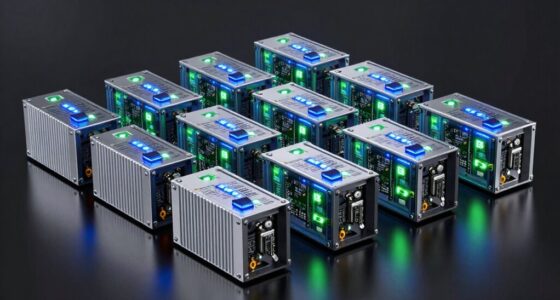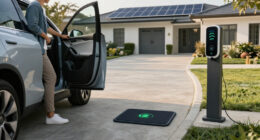
For most homes planning a substantial off-grid or backup system, I’d start with the Sungoldpower 10,000W 48V Hybrid Inverter: its dual MPPT inputs and split-phase output suit larger solar arrays and household loads. The POWLAND 12,000W Hybrid Inverter stands out for buyers who need more output and parallel expansion, while the Renogy P2 2000W is a simpler fit for modest 12V applications. The main tradeoff is between a standalone inverter that gives you flexibility and a bundled system that can simplify component matching but limits your choice of parts. Battery voltage, continuous output, solar input, and installation requirements matter as much as the headline wattage. Read on for the full breakdown of all 14 options and the buyer types each one suits.

Get backup power and energy gear delivered free with Prime
- Fast, free delivery on millions of items
- Prime Video, Amazon Music and more included
- Member-only deals all year
Key Takeaways
- The 48V, 10kW-class hybrid inverters are the strongest fit for substantial home loads, but their split-phase capability and solar input limits still need to match the actual panel and wiring plan.
- The Sungoldpower hybrid inverter ranks ahead for a balanced mix of high output, dual MPPT inputs, and split-phase operation; the POWLAND offers more stated capacity and parallel support for buyers planning expansion.
- Bundled ECO-WORTHY systems can reduce component-matching work, but their panel capacity, battery storage, and daily energy figures differ, so the kit name alone does not reveal how much of a home it can power.
- The BELTTT and Renogy 2,000W 12V inverters suit smaller loads or vehicle-style setups, not whole-home backup; using them for large household appliances can exceed their capacity quickly.
- Battery voltage is a hard compatibility filter: 12V, 24V, and 48V products are not interchangeable, and a higher inverter wattage does not provide longer backup without sufficient battery energy.
| Sungoldpower 10,000W 48V Hybrid Solar Inverter with Dual MPPT, 200A Charging, Wi-Fi, and Split-Phase Output |  | Best for Flexible Home Integration | Peak output power: 20,000W | Battery voltage: 48V DC | Maximum PV input: 11,000W | VIEW LATEST PRICE | See Our Full Breakdown |
| ECO-WORTHY 10kW Home Backup Power System with 10,240Wh LiFePO4 Battery Storage |  | Best Complete Backup Bundle | Inverter power: 10,000W | Peak output power: 20,000W | Battery chemistry and configuration: LiFePO4; two 51.2V 100Ah batteries | VIEW LATEST PRICE | See Our Full Breakdown |
| ECO-WORTHY Liber 10,000W 48V Off-Grid Solar Inverter Charger |  | Best for Scalable Off-Grid Homes | Surge power: 20,000W | Battery voltage: 48V | Maximum PV input: 11,000W total (2 x 5,500W) | VIEW LATEST PRICE | See Our Full Breakdown |
| BELTTT 2000W Pure Sine Wave Inverter, 12V DC to 120V AC |  | Best for Small 12V Backup Loads | Input voltage: 12V DC | Output voltage: 120V AC | Continuous output power: 2,000W | VIEW LATEST PRICE | See Our Full Breakdown |
| DATOUBOSS 48V 5000W Hybrid Solar Inverter with 100A MPPT |  | Best for Mid-Size 120V Systems | Inverter power: 5,000W | Maximum load power: 5,500W | Battery voltage: 48V | VIEW LATEST PRICE | See Our Full Breakdown |
| ECO-WORTHY 10 kW Off-Grid Solar System Kit with Split-Phase Inverter, Batteries, and 5,310 W Solar Panels |  | Best Complete High-Output Off-Grid Kit | Inverter continuous power: 10,000 W | Inverter peak power: 20,000 W | Output voltage: 120 V / 240 V split-phase | VIEW LATEST PRICE | See Our Full Breakdown |
| ECO-WORTHY 48V Home Backup Power Kit with 5120Wh LiFePO4 Battery and 5000W Inverter |  | Best Expandable 120 V Backup Starter | Battery: 51.2 V, 100 Ah LiFePO₄; 5,120 Wh | Inverter output: 5,000 W; 10,000 W peak | Output voltage: 120 V | VIEW LATEST PRICE | See Our Full Breakdown |
| SUNGOLDPOWER 10,000W 48V Solar Hybrid Inverter with Dual MPPT Controllers |  | Best Flexible Hybrid Inverter | Model: SPH10K48SP-P | Output power: 10,000 W; 20,000 W peak | Battery voltage: 48 V DC | VIEW LATEST PRICE | See Our Full Breakdown |
| ECO-WORTHY 10kW Off-Grid Solar Kit with 2,950W Panels and 48V 314Ah Battery |  | Best for Large Battery Storage with a Smaller Array | Inverter output: 10,000 W continuous; up to 20,000 W peak | Inverter output voltage: 120 V or 120 V/240 V split-phase | Solar array: 5 × 590 W; 2,950 W total | VIEW LATEST PRICE | See Our Full Breakdown |
| Renogy P2 2000W 12V Pure Sine Wave Inverter |  | Best Compact Inverter for Small Off-Grid Loads | Model: RNG-INVT-2000-12V-P2 | Continuous output: 2,000 W | Peak surge output: 4,000 W | VIEW LATEST PRICE | See Our Full Breakdown |
| ECO-WORTHY 10 kW Off-Grid Solar System Kit with 9.36 kWh Daily Output |  | Best Complete Off-Grid Kit | Panel array: 12 × 195 W; 2,340 W total | Panel type: N-type monocrystalline, bifacial | Stated daily output: 9.36 kWh under 4 hours of full sunshine | VIEW LATEST PRICE | See Our Full Breakdown |
| POWLAND 12,000W Hybrid Solar Inverter with Wi-Fi, 48V Battery Compatibility, Split-Phase Output, Dual MPPT, and Parallel Support |  | Best for Flexible Hybrid Setups | Model: MLV-10K | Battery voltage and compatibility: 48 V; LiFePO4 and lead-acid | Output voltage: 120 V/240 V split phase | VIEW LATEST PRICE | See Our Full Breakdown |
| ECO-WORTHY PowerMega 48V 314Ah LiFePO4 Energy Storage System with 10kW Hybrid Inverter |  | Best for Longer Battery Backup | Battery chemistry: LiFePO4 | Battery voltage and capacity: 51.2 V, 314 Ah | Usable energy: 16.1 kWh | VIEW LATEST PRICE | See Our Full Breakdown |
| SUMRY 4000W Hybrid Solar Inverter, 24V DC to 120V AC, Pure Sine Wave |  | Best Compact 24 V Option | Peak output power: 8,000 W | DC input: 24 V | AC output: 120 V, 60 Hz | VIEW LATEST PRICE | See Our Full Breakdown |
| solar inverters for home system | Output voltage |
|---|---|
| Sungoldpower 10,000W 48V Hybri | 120V/240V split-phase or 120V single-phase |
| ECO-WORTHY 10kW Home Backup Po | 120V single-phase or 120V/240V split-phase |
| ECO-WORTHY Liber 10,000W 48V O | 120V/240V split-phase or 120V single-phase |
| BELTTT 2000W Pure Sine Wave In | 120V AC |
| DATOUBOSS 48V 5000W Hybrid Sol | 120V AC |
| ECO-WORTHY 10 kW Off-Grid Sola | 120 V / 240 V split-phase |
| ECO-WORTHY 48V Home Backup Pow | 120 V |
| SUNGOLDPOWER 10,000W 48V Solar | 120 V or 120 V/240 V split-phase |
| ECO-WORTHY 10kW Off-Grid Solar | — |
| Renogy P2 2000W 12V Pure Sine | — |
| ECO-WORTHY 10 kW Off-Grid Sola | — |
| POWLAND 12,000W Hybrid Solar I | 120 V/240 V split phase |
| ECO-WORTHY PowerMega 48V 314Ah | 120 V single-phase and 240 V split-phase |
| SUMRY 4000W Hybrid Solar Inver | — |
More Details on Our Top Picks
Sungoldpower 10,000W 48V Hybrid Solar Inverter with Dual MPPT, 200A Charging, Wi-Fi, and Split-Phase Output
The Sungoldpower earns this spot for homeowners who want a 10,000W all-in-one inverter without buying a battery as part of the package. Its dual MPPT controllers accept up to 11,000W of PV input, while 120V/240V split-phase output can serve a broader range of household circuits than the 120V-only DATOUBOSS. Wi-Fi monitoring and several battery communication interfaces also give it more ways to fit into a planned storage system.
The flexibility has limits: using batteries requires a 48V system, and its 53.5-pound weight calls for a sturdy mounting location and careful installation. Unlike the ECO-WORTHY 10kW Home Backup Power System, it does not include batteries, so buyers must source and size storage separately. I’d choose it for a configurable home system, not for a ready-to-install backup bundle.
Pros:- Combines a 10,000W inverter, dual MPPT controllers, and battery charging in one unit.
- Supports 120V/240V split-phase output for a wider range of home loads.
- Works with several battery chemistries and can operate without a battery.
- Provides Wi-Fi monitoring and CAN, USB, RS485, and dry-contact interfaces.
Cons:- Battery-based setups require a compatible 48V battery system, which is not included.
- At 53.5 lb, installation requires a suitable mounting surface and handling help.
- Buyers must select and integrate their own batteries and related system components.
Best for: Homeowners planning a 48V battery system who want split-phase output, solar charging, and monitoring in one inverter.
Not ideal for: Buyers seeking a complete backup kit with batteries included, or those who need a lighter unit for a simple installation.
- Peak output power:20,000W
- Battery voltage:48V DC
- Maximum PV input:11,000W
- Solar charge controllers:2 MPPT
- Maximum battery charging current:200A
- Output voltage:120V/240V split-phase or 120V single-phase
- Dimensions and weight:26 x 17.9 x 4.9 in; 53.5 lb
Our verdict“Choose this inverter if you want a flexible split-phase foundation for a separately assembled 48V home solar and storage system.”
ECO-WORTHY 10kW Home Backup Power System with 10,240Wh LiFePO4 Battery Storage
Unlike the Sungoldpower inverter, this ECO-WORTHY package includes the parts many backup buyers would otherwise need to source separately: a 10,000W inverter and two LiFePO4 batteries totaling 10,240Wh. That makes it the more direct choice for shoppers building a matched battery-and-inverter system, while its 120V/240V output supports more household applications than a 120V-only unit such as the DATOUBOSS.
Storage capacity is a defined starting point, not an unlimited backup supply; runtime depends on the loads connected and how the batteries are recharged. The package also weighs 265.5 pounds, and the components ship separately, so delivery, placement, and installation need planning. Its parallel support for up to six inverters and 32 batteries gives it a clearer growth path than the non-parallel DATOUBOSS, but expansion adds equipment and integration work.
Pros:- Includes a 10,000W inverter and two LiFePO4 batteries with 10,240Wh total capacity.
- Offers 120V single-phase or 120V/240V split-phase output.
- Battery monitoring supports Bluetooth and Wi-Fi, with CAN/RS485 communication.
- Allows expansion with up to six inverters and 32 batteries.
Cons:- The listed system weight is 265.5 lb, making placement and handling a substantial job.
- Components ship separately, so deliveries may not arrive together.
- The included 10,240Wh capacity may not cover prolonged outages with high household loads.
Best for: Homeowners who want an inverter and a substantial LiFePO4 battery bank supplied together for a split-phase backup system.
Not ideal for: Buyers who already own compatible batteries, have limited space or lifting capacity, or want a lightweight, single-box installation.
- Inverter power:10,000W
- Peak output power:20,000W
- Battery chemistry and configuration:LiFePO4; two 51.2V 100Ah batteries
- Total battery capacity:10,240Wh (200Ah)
- Output voltage:120V single-phase or 120V/240V split-phase
- Solar charge controllers:Two independent MPPT controllers
- Maximum battery charger current:200A
- Parallel expansion:Up to 6 inverters and 32 batteries
- System weight:265.5 lb
Our verdict“Pick this package if you want batteries and a split-phase inverter together and have a plan for its heavy, expandable installation.”
ECO-WORTHY Liber 10,000W 48V Off-Grid Solar Inverter Charger
The Liber is the strongest fit here for a homeowner who wants to build an off-grid system in stages. It combines a 10,000W inverter, inverter charger, and dual MPPT controllers, accepts up to 11,000W of PV, and can be paralleled with as many as six units. Compared with the Sungoldpower, its defining distinction is explicit: it cannot feed power back to the utility grid. That makes it a more focused choice for stand-alone power rather than a general grid-connected home setup.
Its 48V battery compatibility and 200A charging support give a substantial system a clear electrical foundation, while UL1741 certification is a useful specification to verify against project requirements. The tradeoff is installation complexity: this is for permanent wiring, not a plug-in backup device. The ECO-WORTHY 10kW Home Backup Power System includes batteries; the Liber does not, leaving battery selection and sizing to the buyer.
Pros:- Combines inverter, charger, and dual MPPT solar controllers.
- Accepts up to 11,000W of PV input and supports 200A battery charging.
- Can be paralleled with up to five additional units.
- Supports AGM, gel, flooded, and lithium batteries and includes CAN, USB, and RS485 ports.
Cons:- Off-grid only; it cannot feed power back to the utility grid.
- Batteries are not included and must be selected to match the system.
- Permanent AC and DC wiring may call for an experienced installer.
Best for: Off-grid homeowners or cabin builders planning a permanent 48V installation that may grow through parallel inverter expansion.
Not ideal for: Homeowners who need utility-grid export, a supplied battery bank, or a straightforward plug-in backup solution.
- Surge power:20,000W
- Battery voltage:48V
- Maximum PV input:11,000W total (2 x 5,500W)
- Maximum PV open-circuit voltage:500V DC
- Solar controllers:Dual MPPT
- Maximum battery charging current:200A
- Output voltage:120V/240V split-phase or 120V single-phase
- Certification and parallel capacity:UL1741; up to 6 units
Our verdict“Choose the Liber for a permanently installed, expandable off-grid system, but skip it if grid export or a bundled battery bank is required.”
BELTTT 2000W Pure Sine Wave Inverter, 12V DC to 120V AC
This BELTTT is a different scale of solution from the 48V household inverters in this roundup. Its 2,000W continuous output and 12V input suit a modest battery-based setup for selected appliances or essential loads, rather than a whole-home solar installation. A graphical LCD reports battery and load status, and the 23-foot remote cable can put basic controls where they are easier to reach. Compared with the DATOUBOSS, it is far less capable as a central solar inverter: it has no stated built-in MPPT controller and supplies only 120V AC.
Pure sine wave output and several built-in protections make it a more appropriate match for sensitive equipment than a basic modified-wave inverter. Its main constraint is the 12V architecture, which can demand high current from the battery at substantial loads. Buyers seeking a 48V home system, split-phase power, or integrated solar charging should look instead at the Sungoldpower or ECO-WORTHY Liber.
Pros:- Provides 2,000W continuous output with pure sine wave power.
- LCD displays input and output voltage, battery status, and load status.
- Includes dual AC outlets, a 20A outlet, USB, and a hardwire port.
- Remote control has a 23-foot cable, with multiple built-in electrical protections.
Cons:- Uses a 12V battery input rather than the 48V architecture of the larger home-system picks.
- Provides 120V AC only and is not a split-phase whole-home inverter.
- No built-in MPPT solar controller is listed, so solar charging needs separate equipment.
Best for: Owners of a small 12V battery-based solar setup who need 120V power for selected appliances, tools, or backup loads.
Not ideal for: Households building a whole-home or split-phase system, or buyers who need an inverter with integrated MPPT solar charging.
- Input voltage:12V DC
- Output voltage:120V AC
- Continuous output power:2,000W
- Peak surge power:4,000W
- Output waveform:Pure sine wave
- Conversion efficiency:Greater than 93%
- Ports:Dual AC outlets, 20A outlet, 5V/2.1A USB port, and hardwire port
- Remote cable:23 ft
- Dimensions and weight:14.8 x 7.7 x 3.9 in; 7.7 lb
Our verdict“Choose the BELTTT for limited 120V loads on a 12V battery system, not as the central inverter for a full home solar installation.”
DATOUBOSS 48V 5000W Hybrid Solar Inverter with 100A MPPT
The DATOUBOSS is a more restrained choice than the 10,000W Sungoldpower and ECO-WORTHY Liber: it offers 5,000W of inverter power and a built-in 100A MPPT controller for a 48V battery system. That narrower scale may suit a home with a defined group of 120V loads, while its 8,500W maximum PV input gives the solar array room to exceed the inverter’s rated output. Its programmable LCD adds control over charging current, priority, and input range, which can help owners tailor operation to their system.
The key limitation is architectural, not cosmetic: it does not support split-phase or parallel operation. Unlike the 10,000W ECO-WORTHY backup system, it also comes without the listed battery storage. I’d shortlist it for a single-unit, 120V installation; buyers who need 240V household circuits or a route to higher inverter capacity should choose another model.
Pros:- Combines a 5,000W inverter with a built-in 100A MPPT controller.
- Accepts up to 8,500W of PV input and supports a maximum PV input voltage of 500V.
- Programmable LCD provides charging-current, priority, and input-range settings.
- Supports solar, utility, and hybrid charging modes, plus cold start and automatic restart.
Cons:- Does not support 120V/240V split-phase output.
- Cannot be paralleled to increase inverter capacity.
- Battery storage is not included in the listed product data.
Best for: Homeowners with a 48V battery bank and a mid-size set of 120V loads who want integrated MPPT charging and adjustable settings.
Not ideal for: Buyers who need 120V/240V split-phase output, parallel expansion, or an inverter-and-battery bundle.
- Inverter power:5,000W
- Maximum load power:5,500W
- Battery voltage:48V
- Output voltage:120V AC
- Maximum PV input power:8,500W
- MPPT controller:100A
- Maximum PV input voltage:500V
- Charging modes:Solar, utility, and hybrid
- Parallel and split-phase support:Not supported
Our verdict“Choose the DATOUBOSS for a single 48V, 120V home setup with moderate loads, but skip it if split-phase power or future parallel expansion matters.”
ECO-WORTHY 10 kW Off-Grid Solar System Kit with Split-Phase Inverter, Batteries, and 5,310 W Solar Panels
For a home that needs 10 kW split-phase output and a substantial included storage bank, this kit brings together the inverter, batteries, and 5,310 W of panels rather than leaving major system choices to the buyer. Its 20.48 kWh of LiFePO₄ storage gives it more stated battery capacity than the ECO-WORTHY 10kW kit with a 314Ah battery, while its nine bifacial panels offer greater solar capacity than that kit’s five panels. Dual MPPT controllers and parallel operation leave room to adapt the system, and Wi-Fi monitoring adds visibility into operation. The tradeoff is a large, freight-shipped package that calls for professional installation. Bifacial gains also depend on how the panels are mounted and what reflects light onto their rear side; the stated daily generation is an optimal-condition estimate, not a guarantee.
Pros:- 10,000 W continuous inverter output with 120 V/240 V split-phase support.
- Includes 20.48 kWh of LiFePO₄ storage.
- Nine bifacial panels provide 5,310 W of stated solar capacity.
- Dual MPPT, Wi-Fi monitoring, and parallel operation support system management and expansion.
Cons:- Professional installation is strongly recommended, adding planning and labor requirements.
- Pallet freight and large components make delivery and handling more involved.
- Bifacial panel gains depend on suitable mounting and light-reflecting conditions.
Best for: Homeowners planning a professionally installed off-grid system who need split-phase service, substantial battery storage, and panels included in one package.
Not ideal for: Buyers with a small or staged installation, limited space for nine full-size panels, or a preference to select inverter, battery, and panels separately.
- Inverter continuous power:10,000 W
- Inverter peak power:20,000 W
- Output voltage:120 V / 240 V split-phase
- Solar array:9 × 590 W; 5,310 W total
- Battery storage:4 × 48 V 100 Ah LiFePO₄; 20.48 kWh total
- Panel efficiency:23.23%
- Solar charging:Dual MPPT; inverter charging current up to 200 A
- Estimated daily generation:Up to 21.24 kWh under optimal conditions
Our verdict“Choose this kit when you want a bundled, high-capacity off-grid system with split-phase output and can accommodate professional installation.”
ECO-WORTHY 48V Home Backup Power Kit with 5120Wh LiFePO4 Battery and 5000W Inverter
This kit suits buyers who want a 48 V battery and inverter in one package without committing to a full panel-and-storage system. The 5,120 Wh LiFePO₄ battery, 5,000 W inverter, and built-in 100 A MPPT controller cover the core of a modest home backup setup; Bluetooth and Wi-Fi monitoring help track the battery through the ECO-WORTHY app. Compared with the 10 kW ECO-WORTHY kit with 20.48 kWh of storage, this package is smaller and easier to build around, but it is not a comparable whole-home power bundle and includes no solar panels in the supplied description. Its single-inverter output is 120 V, so buyers needing 240 V must plan on at least two compatible inverters in parallel. The separately shipped battery and inverter also mean coordinating delivery and installation.
Pros:- Pairs a 5,120 Wh LiFePO₄ battery with a 5,000 W inverter.
- Built-in 100 A MPPT controller and battery charger simplify the core equipment layout.
- Bluetooth and Wi-Fi provide app-based battery monitoring.
- Supports parallel expansion of up to six inverters and 32 batteries.
Cons:- One inverter supplies 120 V; 240 V requires multiple inverters in parallel.
- Solar panels are not included in the supplied product details.
- Battery and inverter ship separately, requiring separate delivery coordination.
Best for: Homeowners starting a 48 V backup system for 120 V circuits who want app-monitored battery storage and a path to add capacity later.
Not ideal for: Households needing 240 V from a single inverter, a ready-to-install solar array, or longer backup runtime than one 5,120 Wh battery can provide.
- Battery:51.2 V, 100 Ah LiFePO₄; 5,120 Wh
- Inverter output:5,000 W; 10,000 W peak
- Output voltage:120 V
- MPPT controller:100 A
- PV input voltage range:120–500 V DC
- Battery charger:Up to 100 A
- Battery communications:CAN and RS485
- Parallel expansion:Up to 6 inverters and 32 batteries
Our verdict“Pick this kit for expandable 120 V backup built around a 48 V battery, but plan separately for panels and any 240 V loads.”
SUNGOLDPOWER 10,000W 48V Solar Hybrid Inverter with Dual MPPT Controllers
Unlike the ECO-WORTHY kits in this roundup, the SUNGOLDPOWER is an inverter-centered choice: it gives a system designer substantial output and charging capability without bundling panels or batteries. Its two MPPT controllers and up-to-200 A battery charging make it suited to a sizable solar-and-storage setup, while configurable 120 V or 120 V/240 V split-phase output can accommodate different household wiring needs. It also supports battery-free operation, which gives it more flexibility during system planning than a battery-dependent setup. That freedom comes with responsibility: buyers must source compatible equipment and configure charging and output modes themselves. At 54 lb and 26 inches long, it is also a substantial unit, and the supplied warranty is two years. Its broad battery compatibility is useful, but battery operation still requires a 48 V bank.
Pros:- 10,000 W pure sine wave output with 20,000 W peak capacity.
- Two MPPT controllers and battery charging up to 200 A.
- Selectable 120 V or 120 V/240 V split-phase output.
- Supports multiple 48 V battery chemistries and battery-free operation.
Cons:- Panels and batteries are not included, so system components must be sourced separately.
- Battery-backed use requires a 48 V battery system.
- The 54 lb unit is sizable, and its two-year warranty is limited compared with longer-term equipment coverage.
Best for: Solar-system planners and experienced installers who already have, or want to select independently, a 48 V battery bank and panel array.
Not ideal for: Buyers seeking a complete plug-in home backup kit, a lightweight inverter, or a system that avoids configuration and compatibility decisions.
- Model:SPH10K48SP-P
- Output power:10,000 W; 20,000 W peak
- Battery voltage:48 V DC
- Output voltage:120 V or 120 V/240 V split-phase
- Solar controllers:2 MPPT
- Maximum battery charging current:200 A
- Maximum PV open-circuit voltage:500 V DC
- Communications:CAN, USB, and RS485
Our verdict“Choose this inverter when you want flexible split-phase operation and charging options and are prepared to design the rest of the system.”
ECO-WORTHY 10kW Off-Grid Solar Kit with 2,950W Panels and 48V 314Ah Battery
This kit pairs a 10 kW split-phase inverter with a large 16.076 kWh LiFePO₄ battery, making it more storage-led than the ECO-WORTHY kit with nine panels and 20.48 kWh of batteries. Its five 590 W bifacial panels supply 2,950 W of stated array capacity, so the solar side is comparatively modest beside the inverter rating; that can suit buyers prioritizing backup storage, but it may limit how quickly the battery recharges from the included array. The battery’s display, Bluetooth, Wi-Fi, and PC connectivity offer more ways to monitor the system than the smaller ECO-WORTHY 5,120 Wh backup kit. Dual MPPT, parallel support, and battery expansion add flexibility. Still, this is a large freight shipment, and professional installation is recommended. Treat the stated daily generation as an optimal-condition estimate.
Pros:- Combines a 10,000 W split-phase inverter with 16.076 kWh of LiFePO₄ storage.
- Battery includes a display plus Bluetooth, Wi-Fi, and PC monitoring.
- Dual MPPT and parallel inverter support allow system expansion.
- Includes five bifacial panels with 2,950 W total stated capacity.
Cons:- The 2,950 W panel array is relatively small beside the 10 kW inverter rating.
- Professional installation is recommended because incorrect setup can create safety or performance issues.
- Freight delivery and large panels complicate handling and installation.
Best for: Homeowners who value a large included battery and split-phase backup more than maximizing included panel capacity, and who can arrange a professional installation.
Not ideal for: Buyers who need a large included solar array to recharge storage quickly or want a compact, simple backup package.
- Inverter output:10,000 W continuous; up to 20,000 W peak
- Inverter output voltage:120 V or 120 V/240 V split-phase
- Solar array:5 × 590 W; 2,950 W total
- Battery:48 V, 314 Ah LiFePO₄
- Battery energy:16.076 kWh
- Estimated daily generation:Up to 11.8 kWh under optimal conditions
- Battery management:PACE 200 A BMS
- Expansion:Up to 15 batteries in parallel; up to 6 inverters in parallel
Our verdict“Choose this kit if you want substantial included battery storage and split-phase output, while accepting a smaller panel array than the inverter rating may suggest.”
Renogy P2 2000W 12V Pure Sine Wave Inverter
The Renogy P2 is the outlier here: rather than a home-scale hybrid inverter or bundled solar kit, it converts 12 V DC to 120 V AC for smaller off-grid loads. Its 2,000 W continuous output and 4,000 W surge capacity can suit a modest battery setup, while three AC outlets, a terminal block, USB output, and a wired remote offer more connection options than a bare inverter. Compared with the SUNGOLDPOWER 10,000 W model, it is far less capable for whole-home circuits and has no built-in MPPT controller described; solar charging equipment must be handled separately. The low-voltage input also means high-power use draws substantial current from the battery, so battery and cabling choices matter. This is a practical component for a small system, not a substitute for split-phase home backup.
Pros:- Pure sine wave output provides 2,000 W continuous power and 4,000 W surge capacity.
- Three AC outlets, a hardwire terminal block, and USB output support different loads.
- Includes a 16.4-foot wired remote and battery cables.
- Compact at 11.7 lb compared with the 54 lb SUNGOLDPOWER hybrid inverter.
Cons:- 12 V input is a poor fit for larger home systems with sustained high-power loads.
- No MPPT controller or solar charging function is listed, so those components must be sourced separately.
- Only 120 V output; it does not provide split-phase 240 V for household appliances.
Best for: RV owners, cabin users, and homeowners powering a limited set of 120 V devices from a 12 V deep-cycle battery.
Not ideal for: Households seeking whole-home backup, 240 V appliances, or direct solar charging and battery management in one integrated unit.
- Model:RNG-INVT-2000-12V-P2
- Continuous output:2,000 W
- Peak surge output:4,000 W
- Input and output:12 V DC to 120 V AC
- Waveform:Pure sine wave
- AC and USB connections:3 AC outlets; 5 V/2.1 A USB
- Additional connection:AC terminal block
- Dimensions and weight:17.8 × 8.6 × 4 in; 11.7 lb
Our verdict“Pick the Renogy for a small 12 V off-grid setup or limited backup loads, not as the core inverter for a whole-home solar system.”
ECO-WORTHY 10 kW Off-Grid Solar System Kit with 9.36 kWh Daily Output
This package is the most turnkey off-grid choice in this group: it bundles panels, batteries, a 10,000 W inverter, mounting brackets, and accessories, rather than asking buyers to assemble a system from separate components. Its 120 V/240 V output and support for up to six parallel inverters give it room to serve split-phase loads and grow later. The 2,340 W panel array is paired with 10.24 kWh of battery capacity, while app monitoring makes battery status easier to check. Compared with the ECO-WORTHY PowerMega, this kit includes solar panels but has less stated storage and a lower inverter output ceiling. The advertised 9.36 kWh daily output assumes four hours of full sunshine, and professional installation is recommended, so this is a substantial system—not a casual DIY inverter purchase.
Pros:- Includes panels, two batteries, inverter, mounting brackets, and accessories.
- 120 V/240 V output suits split-phase home loads.
- Supports up to six parallel inverters for future expansion.
- App battery monitoring and bifacial panels add useful system visibility and generation potential.
Cons:- The stated daily energy output depends on four hours of full sunshine.
- Professional installation is recommended, adding planning and labor needs.
- The 2,340 W panel array and 10.24 kWh battery may be limiting for homes with sustained heavy loads.
Best for: Homeowners building an off-grid system who want panels, battery storage, and a split-phase inverter in one package.
Not ideal for: Buyers who only need an inverter, lack space for twelve panels, or plan to install a complex high-voltage system without professional help.
- Panel array:12 × 195 W; 2,340 W total
- Panel type:N-type monocrystalline, bifacial
- Stated daily output:9.36 kWh under 4 hours of full sunshine
- Inverter output:10,000 W maximum continuous
- AC output:120 V/240 V
- Battery storage:2 × 48 V, 100 Ah; 10.24 kWh total
- Parallel capacity:Up to 6 inverters
- Battery monitoring:Mobile app via Bluetooth or Wi-Fi
Our verdict“Choose this kit if you want a bundled off-grid system with split-phase output and can arrange professional installation.”
POWLAND 12,000W Hybrid Solar Inverter with Wi-Fi, 48V Battery Compatibility, Split-Phase Output, Dual MPPT, and Parallel Support
POWLAND’s inverter suits buyers who want to combine solar, batteries, and grid power without committing to a bundled battery system. Its battery-free mode can serve loads directly from solar, while compatible 48 V LiFePO4 and lead-acid batteries leave storage choices open. Dual MPPT and 120 V/240 V split-phase output make it more adaptable for a home array than the smaller 24 V SUMRY 4000W, and up to six units can be paralleled. Wi-Fi monitoring and an OLED display provide two ways to check operation. The main caveat is an unresolved power discrepancy: the title and description state 12 kW, while the specifications list 10,000 W. Grid export also requires an optional CT sensor, and its 46 lb body needs suitable mounting space. I would verify the rated output with the seller before sizing a system around it.
Pros:- Can supply loads directly from solar without a battery.
- Supports 48 V LiFePO4 and lead-acid batteries.
- Dual MPPT and split-phase output suit more flexible home configurations.
- Wi-Fi monitoring, OLED display, and support for up to six parallel units.
Cons:- Listing conflicts between 12 kW and 10,000 W output claims.
- Grid export requires an optional CT sensor.
- Its 46 lb weight and sizable enclosure call for a sturdy installation location.
Best for: Homeowners designing a 48 V hybrid system who want grid, solar, and battery options and are prepared to confirm the inverter’s rated output.
Not ideal for: Buyers who need a verified power rating before purchase, want an included battery, or need a compact, lightweight inverter.
- Model:MLV-10K
- Battery voltage and compatibility:48 V; LiFePO4 and lead-acid
- Output voltage:120 V/240 V split phase
- Output waveform:Pure sine wave
- Solar input voltage:90–500 V DC
- MPPT:Dual MPPT
- Parallel capacity:Up to 6 units
- Dimensions and weight:24.41 × 17.13 × 5.12 in; 46 lb
Our verdict“Pick this for a flexible hybrid build if the seller confirms the output rating and you are comfortable sourcing any battery separately.”
ECO-WORTHY PowerMega 48V 314Ah LiFePO4 Energy Storage System with 10kW Hybrid Inverter
The PowerMega prioritizes stored energy over an all-in-one solar package: its 16.1 kWh usable LiFePO4 battery is paired with a 10,000 W hybrid inverter, but panels are not listed among the package contents. That makes it a stronger fit for buyers who already have an array or are sourcing panels to match their roof and energy needs. Compared with the ECO-WORTHY 10 kW Off-Grid Solar System Kit, PowerMega offers substantially more stated usable storage, while the kit includes panels and mounting hardware. The battery’s active-balancing BMS, built-in breaker, and aerosol fire suppression add layers of monitoring and protection, and Wi-Fi, Bluetooth, and an LCD provide status access. The 10-year warranty is a notable listed term, though this single-battery package does not include parallel connection cables and freight delivery may require extra coordination.
Pros:- 16.1 kWh of usable battery energy paired with a 10,000 W inverter.
- Supports 120 V single-phase and 240 V split-phase output.
- Battery includes active balancing, a built-in breaker, and aerosol fire suppression.
- Wi-Fi, Bluetooth, LCD, and RS485, CAN, and RS232 communications.
Cons:- Panels are not included in the stated package contents.
- Parallel connection cables are not included with the single-battery package.
- Palletized truck freight may require delivery coordination, and packages may arrive separately.
Best for: Homeowners with an existing or separately planned solar array who want substantial LiFePO4 storage and a 10 kW hybrid inverter for backup or off-grid use.
Not ideal for: Buyers seeking a complete panel-and-mounting kit or an easy expansion path that includes parallel connection cables.
- Battery chemistry:LiFePO4
- Battery voltage and capacity:51.2 V, 314 Ah
- Usable energy:16.1 kWh
- Inverter output power:10,000 W
- Output voltage:120 V single-phase and 240 V split-phase
- Cycle life:9,000+ cycles at 80% depth of discharge
- Monitoring:Built-in Wi-Fi and Bluetooth; LCD display
- Warranty:10 years
Our verdict“Choose PowerMega when battery runtime matters more than receiving panels in the same package.”
SUMRY 4000W Hybrid Solar Inverter, 24V DC to 120V AC, Pure Sine Wave
SUMRY is the smaller-scale choice for a 24 V battery system and 120 V loads, not a substitute for the 48 V split-phase units elsewhere in this roundup. Its 4,000 W rated output, 140 A MPPT charge controller, and support for up to 5,600 W of PV input give a modest home array a built-in path for solar charging. The pure sine wave output is intended for sensitive and inductive appliances, while the LCD and touch buttons let owners check operating information and adjust priorities. Unlike the POWLAND hybrid inverter, it does not provide 120 V/240 V split-phase output, so it is a poor match for homes with 240 V circuits. Battery-free daytime operation is possible only under specified solar-input and grid conditions; storage use still requires a compatible 24 V battery.
Pros:- Built-in 140 A MPPT charge controller supports solar charging.
- Pure sine wave 120 V output suits compatible household loads.
- Can run loads without a battery during daytime under specified conditions.
- LCD and touch controls provide operating information and adjustable priorities.
Cons:- 24 V input and 120 V-only output limit compatibility with larger split-phase home systems.
- Battery-free operation depends on PV input above 120 V and grid connection conditions.
- Battery storage requires a compatible 24 V battery, which is not included in the supplied product details.
Best for: Owners of smaller 24 V solar-battery systems who need 120 V AC output and an integrated MPPT controller.
Not ideal for: Households needing 240 V split-phase output, a 48 V battery architecture, or battery-free operation regardless of solar and grid conditions.
- Peak output power:8,000 W
- DC input:24 V
- AC output:120 V, 60 Hz
- Output waveform:Pure sine wave
- MPPT charge controller:140 A
- Maximum PV input:5,600 W; 350 V DC maximum
- Dimensions and weight:13.78 × 4.33 × 16.54 in; 7.5 kg
Our verdict“Pick SUMRY for a compact 24 V, 120 V system, but choose a split-phase 48 V model for broader whole-home coverage.”

How We Picked
I compared these options as choices for home solar and backup planning, looking at stated continuous output, battery voltage, solar charge capability, output configuration, expansion support, and whether panels or batteries are included. I also weighed practical usability: a complete kit can simplify planning, while a standalone inverter offers more freedom to select compatible storage and panels. Specs were treated as claims to verify against the manufacturer’s documentation and the buyer’s intended wiring and loads, not as a guarantee of real-world runtime.
The ranking gives priority to products that can serve a clear home-system role with fewer mismatches between power, battery architecture, and solar input. The Sungoldpower 10,000W hybrid model leads as a balanced standalone option; the POWLAND ranks well for higher output and parallel capability, while ECO-WORTHY kits earn consideration for bundling components rather than for inverter performance alone. Smaller 12V and 24V units rank lower for whole-home use, though they can be better choices for limited loads. I also account for tradeoffs: bundled systems may be less flexible, and large inverter ratings call for matching batteries, wiring, protection, and professional installation.
Factors to Consider When Choosing Solar Inverters For Home Systems
Choosing among solar inverters for home systems starts with the system you intend to build, not the largest wattage printed on a listing. I’d work through these factors before comparing features, because each one can rule out an otherwise attractive option.
Match inverter output to your loads
List the appliances you expect to run at the same time, then separate their normal draw from their startup surge. Motors in pumps, refrigerators, and some workshop tools can briefly demand far more than their running wattage, so a unit’s surge rating matters alongside continuous output. A 10kW inverter may sound like generous headroom, but it does not mean your battery or panels can sustain that load for long. For backup, decide which circuits matter most and size the inverter around that plan rather than trying to cover every appliance at once. If you need whole-home coverage, check how the inverter connects to the electrical panel and whether its output configuration matches your service. Have a qualified installer verify the load calculation and transfer arrangement.
Treat battery voltage and storage as separate decisions
Choose the battery architecture before buying an inverter: the 12V Renogy and BELTTT models, the 24V SUMRY, and the 48V options in this roundup serve different system designs. A mismatch can prevent operation or require extra conversion equipment, so check the supported battery chemistry, voltage range, communication protocol, and charge limits in the product documentation. Watt-hours or kilowatt-hours describe stored energy, while inverter watts describe the rate at which energy can be delivered; neither figure substitutes for the other. Estimate backup duration by dividing usable battery energy by the loads you plan to run, allowing for conversion losses and battery reserve. Also confirm that the battery can deliver the inverter’s required current. This is a common point of failure when a high-output inverter is paired with storage sized only for capacity, not discharge power.
Check solar input against the array design
MPPT count and maximum PV input determine how panels can be arranged and how much solar power the inverter can accept. Dual MPPT inputs can help manage separate roof orientations or strings with different conditions, but they do not automatically double usable production. Compare the inverter’s permitted voltage and current per input with the proposed string design, including cold-weather open-circuit voltage and panel current. A kit’s panel wattage is only one part of the picture; orientation, shading, season, and local weather change actual energy production. Avoid choosing panels first and assuming the inverter will accept any configuration. Ask an installer to verify string sizing and applicable electrical rules before ordering components.
Decide whether a kit or a standalone inverter suits you
A bundled ECO-WORTHY system may reduce the work of sourcing an inverter, battery, and panels as separate purchases, but the listed package still needs a compatibility and sizing check. Compare included panel capacity and battery energy with your daily consumption, rather than relying on labels such as 10kW or a stated daily output. A standalone hybrid inverter gives you more control over battery choice, array size, and future component replacements, but puts more responsibility on you or your installer to coordinate them. Bundles can also make expansion less straightforward if the original battery or panels are no longer available. Ask what is included, what is needed separately, and which components the warranty covers. The right route depends on whether you value a coordinated starting point or the flexibility to design around existing equipment.
Plan for split-phase power, grid connection, and backup behavior
Split-phase output can serve certain 120V and 240V household loads, but the label alone does not confirm compatibility with every home or utility arrangement. Check the actual output voltages, frequency, neutral configuration, transfer capability, and whether the unit supports grid interaction or only off-grid operation. A backup inverter may need approved transfer equipment to prevent power from feeding into utility lines during an outage. Grid-connected systems can also face local permitting, interconnection, and equipment certification requirements that differ by location. Do not assume Wi-Fi monitoring or hybrid operation means the system is approved for utility export. Have an electrician or solar professional confirm the intended operating mode before purchase.
Budget for installation, protection, and service
The inverter is only one part of a safe home system: battery cables, overcurrent protection, disconnects, grounding, ventilation, and an appropriate enclosure all affect the finished installation. High-current 48V systems can still draw substantial DC current, so undersized conductors or poorly planned cable runs create heat and voltage-drop risks. Review warranty terms, technical support access, replacement-part availability, and the maker’s installation guidance before choosing a less familiar brand. A lower-complexity 12V inverter may be easier to place in a small setup, while a whole-home system usually calls for more planning and qualified labor. Compare total project scope, not just the inverter features. Pay more for professional design and protection when the system will connect to household circuits or serve as essential backup.
Frequently Asked Questions
Can a 10kW solar inverter run my whole home during an outage?
Not by itself. A 10kW rating describes the inverter’s power capacity, while the battery’s usable energy determines how long it can supply loads and the panels determine how quickly energy can be replenished. Your home’s simultaneous demand, startup surges, and 120V or 240V circuit needs also affect what can run. A properly designed system may back up selected circuits or a large share of a home, but the answer depends on a load calculation and compatible storage. Ask an installer to map the intended backup circuits before choosing an inverter.
Should I choose a complete ECO-WORTHY kit or buy an inverter separately?
A kit can simplify component sourcing when its included inverter, battery, and panels match your energy use and installation plan. It is not automatically the better fit: the ECO-WORTHY bundles in this roundup vary in panel capacity and battery storage, so compare the actual included specifications rather than the shared brand or system label. Buying a standalone inverter gives you more freedom to select storage and panels, but shifts compatibility checks and system design onto you and your installer. Check what is included, what is excluded, and whether each component can be expanded or replaced independently. Choose the kit for coordination, not on the assumption that it will power every household load.
Is a 48V inverter always better than a 12V or 24V model for a home?
No. A 48V system is commonly better suited to higher-power home installations because it can deliver the same power at lower current than a 12V system, which affects cable and protection design. But a small, limited-load setup or an existing 12V battery system may fit a 12V inverter more sensibly, while the 24V SUMRY serves a different middle ground. The battery and inverter must use compatible voltage, and the whole system needs correctly sized wiring and protection. Choose voltage around the scale of the project and compatible equipment, not as a standalone measure of quality.
What should I verify before pairing an inverter with batteries I already own?
Confirm the battery’s nominal voltage and operating range, chemistry, maximum charge and discharge current, and any required communication link. Then compare those limits with the inverter’s battery settings and current demand at your planned load. A battery can have adequate stored energy but still be unable to provide the power a large inverter requires. Check whether the manufacturer lists your battery model or protocol as compatible, and ask about warranty effects when using third-party storage. Have a qualified installer review the cable, breaker, and protection requirements before connecting the system.
When is a 2,000W 12V inverter a better choice than a 10kW hybrid model?
A 2,000W 12V inverter can make more sense for a small set of appliances, a modest backup setup, or a system already built around 12V batteries. It avoids paying for capacity you cannot use and may be simpler to integrate in a limited application, though it is not a substitute for a whole-home inverter. Check both continuous and surge ratings against the appliances you plan to run, especially devices with motors or heating elements. The Renogy P2 and BELTTT are the small-output choices here; a 10kW hybrid model is the more suitable class when loads, split-phase needs, or solar input call for a larger system. Neither class solves runtime without enough battery storage.
Conclusion
For the broadest balance among the listed standalone options, I’d choose the Sungoldpower 10,000W 48V Hybrid Inverter as best overall, provided its input limits and split-phase setup match the system design. The best value for a coordinated build is an ECO-WORTHY kit that matches your actual daily use; compare the included panels and battery closely, since the bundles are not interchangeable. For a premium, expansion-minded pick, the POWLAND 12,000W model is the standout for buyers who need higher stated output and parallel support, subject to professional compatibility checks. Beginners may find a complete ECO-WORTHY kit easier to source as a set, but should still get help with sizing and installation. For small loads or existing 12V systems, choose the Renogy P2 or BELTTT rather than overbuying a 48V whole-home unit; for a 24V application, the SUMRY fills that narrower role. Match the final choice to your loads, battery, array, and electrical service before committing.
Black Friday Picks

Amazon Kindle Paperwhite (12th Generation, 2024), 16 GB, 7-inch Display, Black
As an affiliate, we earn on qualifying purchases.