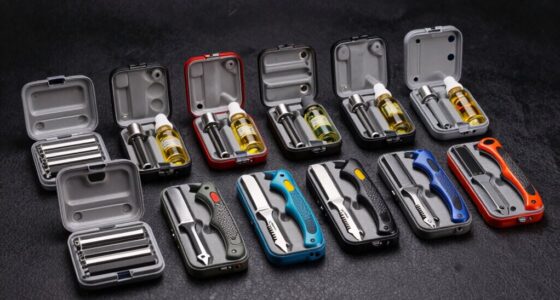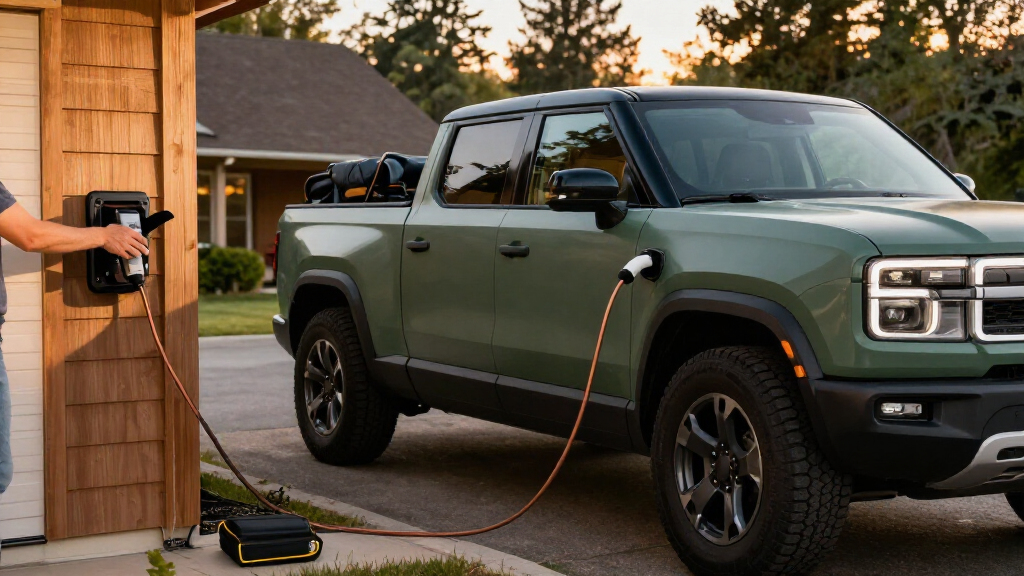

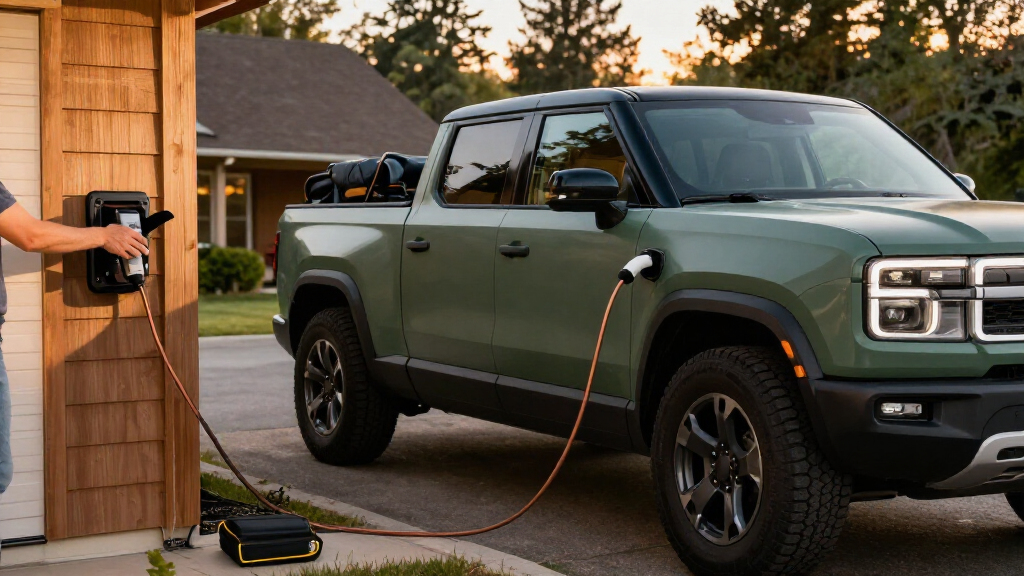
The best Rivian chargers and accessories depend on whether you need faster home charging, access to public fast-charging stations, or a more convenient cabin setup. My best overall pick is the Rivian Wall Charger with NACS Connector for a dedicated home setup, while the EVDANCE portable Level 1 and Level 2 charger suits drivers who need a flexible backup. For road trips, a compatible NACS-to-CCS1 adapter can broaden charging options, while TWRAPS phone mounts and chargers address everyday cabin use. The main tradeoffs are charging speed and installation needs versus portability, compatibility, and accessory fit. Read on for the full comparison and guidance on matching each option to your Rivian and routine.

Get backup power and energy gear delivered free with Prime
- Fast, free delivery on millions of items
- Prime Video, Amazon Music and more included
- Member-only deals all year
Key Takeaways
- The Rivian Wall Charger is the dedicated-home pick: It is the most direct choice for drivers who want a permanent charging setup, while the EVDANCE portable unit offers more flexibility at the cost of a less dedicated installation.
- Portable charging and extension cables solve different problems: The EVDANCE charger supplies charging equipment, whereas WenStorm J1772 cables extend the reach of an existing compatible charger; neither should be mistaken for the other.
- Adapter fit and vehicle compatibility matter more than headline amperage: The NACS-to-CCS1 options vary by maker and stated specifications, so buyers should verify vehicle, charger-network, and adapter approval before relying on one for a trip.
- The 32A and 50A WenStorm cables are not interchangeable upgrades: The 50A model may suit a higher-capacity setup, but the charger, circuit, and vehicle determine the actual current available.
- TWRAPS fills two different cabin needs: Its dual MagSafe-compatible charger prioritizes charging two phones, while its dashboard mounts focus on holding a phone in view without serving as a charging solution.
| TWRAPS Dual MagSafe-Compatible Phone Charger for Rivian R1T/R1S, 25W per Side |  | Best for Charging Two Phones | Compatible vehicles: Rivian R1T 2021–2026; Rivian R1S 2022–2026 | Charging capacity: Two phones, up to 25W per side | Connector: USB Type-C | VIEW LATEST PRICE | See Our Full Breakdown |
| NACS to CCS1 Adapter for Tesla Supercharger – DC Fast Charging 500 A |  | Best for Tesla V3/V4 Supercharger Access | Connector types: NACS to CCS1 | Maximum stated voltage: 1000V | Maximum stated current: 500A | VIEW LATEST PRICE | See Our Full Breakdown |
| TWRAPS Magnetic Dashboard Phone Mount for Rivian R1S and R1T |  | Best Dashboard Phone Mount | Compatible vehicles: Rivian R1S and R1T, 2021–2027 | Phone compatibility: MagSafe-compatible iPhones | Mounting type: Dashboard insert | VIEW LATEST PRICE | See Our Full Breakdown |
| Rivian Wall Charger with NACS Connector |  | Best Dedicated Home Charger | Connector: NACS | Input and output voltage: 240V AC | Ports: 1 | VIEW LATEST PRICE | See Our Full Breakdown |
| WenStorm J1772 EV Extension Cable, 32A, 21 ft |  | Best J1772 Reach Extension | Connector: SAE J1772 male-to-female | Maximum amperage: 32A | Voltage: 240V | VIEW LATEST PRICE | See Our Full Breakdown |
| NACS to CCS1 Tesla Supercharger Adapter for Compatible EVs |  | Best for Verified V3 Supercharger Access | Connector: NACS to CCS1 | Compatible chargers: Tesla V3 Superchargers only | Maximum current: 500 A | VIEW LATEST PRICE | See Our Full Breakdown |
| EVDANCE Portable Level 1 and Level 2 EV Charger, 16A, 25 ft Cable |  | Best Portable Home-Charging Pick | Connector: J1772 | Charging levels: Level 1 and Level 2 | Voltage: 120 V / 240 V | VIEW LATEST PRICE | See Our Full Breakdown |
| RAMATA NACS to CCS Adapter for Tesla Supercharger – 500A DC Fast Charging |  | Best for Broad Brand Coverage | Connector: NACS to CCS | Compatible vehicle brands: Includes Rivian, Ford, GM, Volvo, Polestar, Mercedes, Lucid, BMW, Hyundai, Kia, and others | Maximum amperage: 500 A | VIEW LATEST PRICE | See Our Full Breakdown |
| TWRAPS Dashboard Phone Mount for Rivian R1S and R1T (2021–2027) |  | Best Rivian-Specific Vent Mount | Compatible vehicles: Rivian R1S and R1T | Mounting type: Dashboard, AC vent | Attachment: MagSafe-compatible magnetic mount | VIEW LATEST PRICE | See Our Full Breakdown |
| WenStorm J1772 EV Extension Cable, 50A, 21 ft |  | Best High-Amperage J1772 Extension | Connector: SAE J1772 male-to-female | Length: 21 ft | Maximum amperage: 50 A | VIEW LATEST PRICE | See Our Full Breakdown |
| Amphenol NACS to CCS1 DC Adapter for Tesla Superchargers |  | Best for Safety-Focused Supercharger Access | Manufacturer / model: Amphenol HVCONT1001 | Connector compatibility: NACS to CCS1 | Charging type: DC fast charging only | VIEW LATEST PRICE | See Our Full Breakdown |
| Aipechy NACS to CCS1 Tesla Supercharger Adapter, 500 A, 1000 V |  | Best for High-Rated Charging Capacity | Connector type: V3/V4 DC Tesla Supercharger | Adapter interface: NACS to CCS1 | Maximum amperage: 500A | VIEW LATEST PRICE | See Our Full Breakdown |
| Rivian chargers and accessorie | Connector | Warranty |
|---|---|---|
| TWRAPS Dual MagSafe-Compatible | USB Type-C | One-year replacement warranty |
| NACS to CCS1 Adapter for Tesla | — | — |
| TWRAPS Magnetic Dashboard Phon | — | 1 year |
| Rivian Wall Charger with NACS | NACS | 4 years |
| WenStorm J1772 EV Extension Ca | SAE J1772 male-to-female | 1-year limited warranty |
| NACS to CCS1 Tesla Supercharge | NACS to CCS1 | — |
| EVDANCE Portable Level 1 and L | J1772 | 1 year |
| RAMATA NACS to CCS Adapter for | NACS to CCS | — |
| TWRAPS Dashboard Phone Mount f | — | 1 year |
| WenStorm J1772 EV Extension Ca | SAE J1772 male-to-female | — |
| Amphenol NACS to CCS1 DC Adapt | — | — |
| Aipechy NACS to CCS1 Tesla Sup | — | — |
More Details on Our Top Picks
TWRAPS Dual MagSafe-Compatible Phone Charger for Rivian R1T/R1S, 25W per Side
I’d choose this console pad when two occupants regularly need a place to charge their phones without adding a mount to the dashboard. Its two charging pucks support up to 25W per side, and N52 magnets help keep compatible phones aligned; the raised, two-level layout also leaves room for camera bumps. Compared with the TWRAPS Magnetic Dashboard Phone Mount, this is about keeping phones powered rather than positioning one for viewing. The tradeoff is that installation occupies both under-armrest USB-C ports, leaving neither free for another accessory. It fits the listed 2021–2026 R1T and 2022–2026 R1S models, but not 2027 models, and some Gen 2 vehicles may have charging interruptions when two phones are connected. I’d also skip it if you expect AirPods to charge reliably.
Pros:- Charges two compatible phones side by side, up to 25W per side
- N52 magnets help hold phones in charging alignment
- Raised two-level design provides camera-bump clearance
- Installs without tools or adhesives
Cons:- Uses both under-armrest USB-C ports
- Does not fit 2027 R1T or R1S models
- Some Gen 2 vehicles may interrupt charging when both sides are in use
Best for: R1T or R1S owners with two compatible phones who want a dedicated shared charging spot in the center console.
Not ideal for: Drivers who need the under-armrest USB-C ports for other devices, own a 2027 R1T or R1S, or want reliable AirPods charging.
- Compatible vehicles:Rivian R1T 2021–2026; Rivian R1S 2022–2026
- Charging capacity:Two phones, up to 25W per side
- Connector:USB Type-C
- USB-C ports required:Two
- Compatible devices:MagSafe-compatible iPhones; wireless-charging-capable Android phones with MagSafe-compatible cases
- Magnets:N52
- Installation:No tools or adhesives required
- Warranty:One-year replacement warranty
Our verdict“Choose this pad if two compatible phones need a shared console charging spot and you can spare both USB-C ports.”
NACS to CCS1 Adapter for Tesla Supercharger – DC Fast Charging 500 A
For a Rivian owner seeking access to compatible Tesla fast-charging sites, this adapter’s headline capability is support for up to 1000V and 500A, with a stated maximum of 250kW. Dual temperature sensors and automatic temperature control add a safety feature for high-power charging, while the waterproof, flame-retardant construction suits a travel accessory that may see rough handling. Unlike the Rivian Wall Charger with NACS Connector, this is not home charging equipment: it connects a CCS1 vehicle to compatible Tesla V3 or V4 Superchargers. That narrower station compatibility is the key limitation; it will not work with V1/V2 Superchargers or AC chargers. I’d verify that both the vehicle and station support the intended DC fast-charging setup before relying on it for a route.
Pros:- Supports stated charging capability up to 1000V, 500A, and 250kW
- Dual temperature sensors provide automatic temperature control
- Waterproof and flame-retardant construction
- Portable design is suited to carrying on road trips
Cons:- Works only with compatible Tesla V3 and V4 Superchargers
- Does not support AC home charging or Tesla V1/V2 stations
- Vehicle DC fast-charging compatibility must be confirmed
Best for: Rivian R1T and R1S drivers whose vehicles support DC fast charging and who want a portable adapter for compatible Tesla V3 or V4 Superchargers.
Not ideal for: Owners looking for home charging, access to Tesla V1/V2 stations, or an adapter for a vehicle without DC fast-charging capability.
- Connector types:NACS to CCS1
- Maximum stated voltage:1000V
- Maximum stated current:500A
- Maximum stated power:250kW
- Station compatibility:Tesla V3 and V4 Superchargers
- Temperature control:Dual sensors with automatic control
- Construction:Waterproof and flame-retardant
- Ports:1
Our verdict“Pick this adapter for compatible Rivians that need a travel-ready path to Tesla V3/V4 DC fast chargers, not for home charging.”
TWRAPS Magnetic Dashboard Phone Mount for Rivian R1S and R1T
This mount is the more focused choice for drivers who want a phone within view rather than a second charging surface. Its tool-free dashboard insert avoids adhesive and screws, while the rotatable 17mm ball mount lets drivers adjust the phone position and keep the road view clear. Compared with the TWRAPS Dual MagSafe-Compatible Phone Charger, it takes a dashboard position and serves one compatible iPhone rather than charging two phones in the console. That makes it a better fit for navigation access, but it is not a charging solution. Compatibility is also narrower than the Rivian Wall Charger’s broad vehicle function: this accessory is designed for R1S and R1T dashboards and MagSafe-compatible iPhones. I’d pass if you need Android phone compatibility or would rather keep the dashboard completely free of a mount.
Pros:- Installs without tools, adhesive, or screws
- Rotatable 17mm ball mount allows phone-position adjustment
- Designed to keep the road view unobstructed
- Carbon fiber-infused ABS plastic construction
Cons:- Designed only for Rivian R1S and R1T dashboards
- MagSafe mounting is intended for compatible iPhones
- Provides phone positioning, not charging
Best for: R1S and R1T drivers with a MagSafe-compatible iPhone who want an adjustable, easily installed dashboard position for navigation.
Not ideal for: Drivers using non-MagSafe phones, owners of other vehicle models, or anyone who does not want a dashboard-mounted phone.
- Compatible vehicles:Rivian R1S and R1T, 2021–2027
- Phone compatibility:MagSafe-compatible iPhones
- Mounting type:Dashboard insert
- Adjustability:Rotatable 17mm ball mount
- Installation:Tool-free; no adhesive or screws
- Materials:Carbon fiber-infused ABS plastic
- Dimensions:5 × 3 × 2 in
- Warranty:1 year
Our verdict“Choose this mount if you drive a compatible R1S or R1T and want adjustable MagSafe iPhone access without adhesive.”
Rivian Wall Charger with NACS Connector
Among these picks, this is the purpose-built choice for daily home charging—provided your Rivian falls within its model-year compatibility. The 240V AC wall unit is rated to deliver up to 25 miles of range per hour for R1S and R1T, and up to 38 miles per hour for R2 under optimal conditions. Wi-Fi connectivity supports software updates, and the four-year warranty is longer than the one-year coverage listed for the TWRAPS phone accessories. Its defining drawback is fit: the stated compatibility is for 2026-and-newer Rivian vehicles, including R2 from 2027, so older R1 owners should not assume it will work for their truck or SUV. Unlike the portable NACS to CCS1 adapter, this charger is for a home setup, not public DC fast charging; actual charging rates also vary with conditions.
Pros:- Provides stated rates of up to 25 miles per hour for R1S and R1T and up to 38 for R2 under optimal conditions
- Wi-Fi connectivity supports software updates
- NACS connector is designed for compatible Rivian vehicles
- ENERGY STAR certification and a four-year warranty
Cons:- Compatibility is limited to specified 2026-and-newer Rivian models
- Requires a 240V AC home charging setup
- Actual charging speeds vary with vehicle and environmental conditions
Best for: Owners of compatible 2026-or-newer R1S or R1T models, or 2027-or-newer R2 vehicles, setting up a dedicated home charging point.
Not ideal for: Rivian owners with earlier model years, drivers who need portable public fast-charging access, or buyers who cannot use a 240V AC installation.
- Connector:NACS
- Input and output voltage:240V AC
- Ports:1
- Compatible vehicles:R1S 2026+; R1T 2026+; R2 2027+
- Connectivity:Wi-Fi for software updates
- Dimensions:7.8 × 5.5 × 16.3 in (D × W × H)
- Certification:ENERGY STAR
- Warranty:4 years
Our verdict“Choose this wall unit for a compatible newer Rivian and a dedicated 240V home charging installation.”
WenStorm J1772 EV Extension Cable, 32A, 21 ft
This cable solves a specific parking problem: the compatible J1772 charging handle does not quite reach the Rivian’s inlet. Its 21-foot extension adds reach to a Level 2 EVSE rated up to 32A at 240V, and the IP66 weather-resistance rating suits indoor or outdoor use. A carrying case also makes it easier to stow than a loose cable. Compared with the Rivian Wall Charger with NACS Connector, this is not a charger or a direct replacement for one; it is an extension for compatible J1772 AC equipment. That distinction matters for Rivian owners because it does not support NACS, DC fast charging, or Superchargers. I’d choose it only after checking the existing EVSE’s connector and rating, and skip it if the real need is a standalone charging unit or more than 32A capacity.
Pros:- Adds 21 feet of reach to a compatible J1772 EVSE
- IP66-rated design for indoor and outdoor use
- TPE cable construction with silver-plated copper
- Includes a carrying case for storage and transport
Cons:- Limited to compatible J1772 AC setups up to 32A at 240V
- Does not support NACS, DC fast charging, or Superchargers
- Extension cable only; it is not a standalone charger
Best for: Rivian owners with a compatible J1772 Level 2 EVSE rated up to 32A who need extra cable reach at home or another charging location.
Not ideal for: Drivers using NACS charging equipment, seeking DC fast charging or Supercharger access, or needing a standalone EV charger.
- Connector:SAE J1772 male-to-female
- Maximum amperage:32A
- Voltage:240V
- Power:7.68kW
- Length:21 ft
- Weight:4 lb
- Weather resistance:IP66
- Warranty:1-year limited warranty
Our verdict“Buy this cable only if your J1772 Level 2 setup needs more reach and operates within its 32A rating.”
NACS to CCS1 Tesla Supercharger Adapter for Compatible EVs
For a Rivian owner whose vehicle is confirmed compatible, this adapter can connect a CCS1 charging port to a Tesla V3 Supercharger. Its 500 A and 1000 V DC ratings describe its capacity, not a guarantee of the charging speed a vehicle or station will deliver. Compared with the RAMATA NACS to CCS Adapter, this option spells out a key limitation clearly: it is for V3 Superchargers only, not V1, V2, V4, or home and destination chargers. The 194°F temperature cutoff, IP55 case, and silver-plated copper conductor are useful safeguards for road use. The tradeoff is narrow station compatibility, plus a tight fit that can take extra effort to connect and remove. I would verify both the vehicle and station before carrying it as a charging plan.
Pros:- Connects compatible CCS1 vehicles to Tesla V3 Superchargers.
- Rated for up to 500 A and 1000 V DC.
- Temperature cutoff activates at 194°F (90°C).
- IP55 housing and silver-plated copper conductor.
Cons:- Limited to Tesla V3 Superchargers; it does not support V1, V2, V4, or other charger types.
- Vehicle compatibility must be checked and excludes some models.
- Tight connection may take extra effort to plug in and unplug.
Best for: Rivian drivers who have confirmed their exact vehicle is supported and regularly use Tesla V3 Superchargers.
Not ideal for: Drivers who need one adapter for multiple Tesla charger generations, home charging, or an unverified vehicle configuration.
- Connector:NACS to CCS1
- Compatible chargers:Tesla V3 Superchargers only
- Maximum current:500 A
- Maximum voltage:1000 V DC
- Maximum power:500 kW
- Temperature cutoff:194°F (90°C)
- Water resistance:IP55
- Conductor material:Silver-plated copper
Our verdict“Choose this adapter if your Rivian and the Tesla V3 stations on your routes are both confirmed compatible; skip it if you need broader charger coverage.”
EVDANCE Portable Level 1 and Level 2 EV Charger, 16A, 25 ft Cable
The EVDANCE is the most adaptable home-charging option in this group: it can use a standard 120 V outlet for slower charging or a compatible 240 V outlet for up to 16 A. Its 25 ft cable gives more reach than the WenStorm extension cables, though the EVDANCE is a charger, not an extension for an existing J1772 setup. The included 6-20 to 5-15 adapter and carry bag make it easier to move between suitable outlets, while the LED status and error display gives a basic readout without relying only on the vehicle. This is a modest-power portable unit, not a substitute for the higher-capacity Rivian Wall Charger. Buyers should check outlet and vehicle compatibility first; Tesla vehicles need a separate J1772 adapter, and the one-year warranty is a limited support window.
Pros:- Supports Level 1 charging at 120 V and Level 2 charging at 240 V.
- 25 ft cable offers flexible reach from the outlet.
- Includes a 6-20 to 5-15 adapter and carry bag.
- LED display shows charging status and errors.
Cons:- Maximum output is 16 A, below what a higher-capacity home charging setup may provide.
- Some outlet and vehicle combinations are unsupported.
- Tesla vehicles require a separate J1772 adapter.
Best for: Rivian owners seeking a portable J1772 charger for compatible outlets at home, a second property, or occasional travel.
Not ideal for: Drivers who want a permanently installed high-power charger, need more than 16 A, or lack a compatible outlet and vehicle connection.
- Connector:J1772
- Charging levels:Level 1 and Level 2
- Voltage:120 V / 240 V
- Maximum amperage:16 A
- Power:3.84 kW
- Cable length:25 ft
- Included plug adapter:NEMA 6-20 to 5-15
- Housing protection:IP66
- Warranty:1 year
Our verdict“Pick the EVDANCE for portable, lower-power J1772 charging across compatible 120 V and 240 V outlets, not as a replacement for a permanent wall charger.”
RAMATA NACS to CCS Adapter for Tesla Supercharger – 500A DC Fast Charging
The RAMATA adapter is aimed at drivers who want a NACS-to-CCS option listed for a wide range of EV brands, including Rivian, Ford, GM, Hyundai, and others. Its 500 A / 1000 V rating and temperature kill switch suit DC fast-charging use, while the travel bag supports carrying it between stops. Compared with the V3-only NACS-to-CCS1 adapter in this roundup, RAMATA’s product details do not state the same narrow V3 restriction; that is not proof it works with every Tesla Supercharger generation, so station and vehicle compatibility still need confirmation. The stated waterproof, flame-retardant construction and pure copper conductors are appealing for road use, but the product data gives fewer specific housing and ingress ratings than the other adapter. Its bulk may also be a nuisance for drivers who want a compact kit.
Pros:- Lists compatibility across numerous EV brands, including Rivian.
- Rated for up to 500 A and 1000 V, with a stated 500 kW maximum.
- Includes a temperature kill switch.
- Waterproof, flame-retardant construction and a travel bag are specified.
Cons:- The supplied product data does not identify supported Tesla Supercharger generations, so station compatibility needs confirmation.
- Some older EVs and plug-in hybrid models are unsupported.
- The adapter may be bulky to store and carry.
Best for: Rivian and other CCS1 EV drivers seeking a travel adapter with broad stated vehicle-brand coverage for compatible NACS DC fast chargers.
Not ideal for: Drivers who need clearly documented compatibility with a particular Supercharger generation or who prioritize a compact, lightweight adapter.
- Connector:NACS to CCS
- Compatible vehicle brands:Includes Rivian, Ford, GM, Volvo, Polestar, Mercedes, Lucid, BMW, Hyundai, Kia, and others
- Maximum amperage:500 A
- Maximum voltage:1000 V
- Maximum power:500 kW
- Charging type:DC fast charging
- Conductor material:Pure copper
- Safety feature:Temperature kill switch
- Included:Travel bag
Our verdict“Consider RAMATA if broad stated vehicle coverage matters, but confirm charger-generation compatibility before relying on it for a route.”
TWRAPS Dashboard Phone Mount for Rivian R1S and R1T (2021–2027)
This mount earns its place as a Rivian-specific accessory rather than a general charging add-on: it attaches to an existing R1S or R1T AC vent without tools or adhesive. The adjustable ball mount lets the driver choose a viewing position, while its MagSafe-compatible magnetic attachment is convenient for compatible phones and cases. Compared with the other TWRAPS magnetic dashboard mount in the roundup, this model’s defining fit is its vent attachment; buyers should compare mounting locations and phone-holding preferences before choosing between them. It is designed to keep the phone visible without blocking the road, but fit is limited to the specified Rivian models. The mount is also not water resistant, and Android users should check whether their phone or case supports magnetic attachment rather than assuming every device will hold securely.
Pros:- Fits Rivian R1S and R1T and attaches to an existing AC vent.
- Installs without tools or adhesive.
- Adjustable ball mount supports different viewing positions.
- MagSafe-compatible magnetic attachment.
Cons:- Designed specifically for Rivian R1S and R1T.
- Not water resistant.
- Magnetic holding suitability depends on the phone and case.
Best for: R1S and R1T drivers who want a tool-free, adhesive-free phone mount on an existing AC vent and use a MagSafe-compatible phone or case.
Not ideal for: Owners of other vehicles, drivers who need a water-resistant mount, or users whose phone and case are not suited to magnetic attachment.
- Compatible vehicles:Rivian R1S and R1T
- Mounting type:Dashboard, AC vent
- Attachment:MagSafe-compatible magnetic mount
- Adjustable:Yes
- Material:Plastic
- Water resistance:Not water resistant
- Weight:8 oz
- Included components:Base, extender, phone mount
- Warranty:1 year
Our verdict“Choose this mount for a tool-free vent installation in a compatible R1S or R1T, provided your phone setup works with magnetic mounting.”
WenStorm J1772 EV Extension Cable, 50A, 21 ft
The WenStorm extension is for a specific problem: a compatible J1772 charger or vehicle sits just beyond the reach of the existing cable. Its 21 ft length adds room to park, and the 50 A, 240 V rating supports a higher-capacity connection than the 32 A WenStorm extension listed elsewhere in this roundup. That higher rating does not make it a charger, and it will not convert a NACS connection to J1772. The IP66 jacket, abrasion resistance, copper wiring, and included carrying case suit storage and outdoor use, though at 6 lb it adds noticeable bulk to a travel kit. Buyers should verify that both their charger and vehicle use J1772 and follow the equipment maker’s guidance on extension cables before connecting it.
Pros:- Adds 21 ft of reach to a compatible J1772 charging connection.
- Rated for up to 50 A at 240 V.
- IP66 waterproof, abrasion-resistant jacket for indoor or outdoor use.
- Copper conductors and a carrying case are included.
Cons:- Works with J1772 vehicles and chargers; other connector types are not specified.
- Weighs 6 lb, adding bulk when carried.
- An extension cable does not provide charging by itself, and equipment compatibility must be checked.
Best for: Rivian owners with a compatible J1772 charging setup who need extra reach and whose equipment supports a 50 A extension.
Not ideal for: Drivers using NACS-only equipment, those seeking a portable charger rather than an extension, or anyone whose setup does not permit an extension cable.
- Connector:SAE J1772 male-to-female
- Length:21 ft
- Maximum amperage:50 A
- Voltage:240 V
- Maximum power:12 kW
- Conductors:3
- Water resistance:IP66
- Certifications:ETL listed, UL certified
- Weight:6 lb
Our verdict“Choose this cable when a compatible J1772 setup needs extra reach and supports its 50 A rating; skip it if you need a charger or NACS adapter.”
Amphenol NACS to CCS1 DC Adapter for Tesla Superchargers
The Amphenol NACS to CCS1 adapter is a strong fit for Rivian owners whose vehicle has automaker-enabled access to compatible Tesla Superchargers and who value documented safety features. Its UL 2252 certification, SAE J3400-1 compliance, interlock, and thermal protection give it a more safety-focused profile than the Aipechy NACS to CCS1 adapter, whose listed specs emphasize higher maximum current and voltage instead. The Amphenol is rated for 380A continuous current, so buyers should not choose it on the assumption that every vehicle or station will charge at its maximum rate; actual speed depends on both. The IP67 housing and included case suit owners who keep an adapter in the vehicle, though its 2.64-pound weight makes it less appealing to those prioritizing the lightest kit. It handles DC fast charging only, not home charging.
Pros:- CSA-certified to UL 2252 and compliant with SAE J3400-1
- Interlock and thermal switches add protection during DC charging
- IP67 enclosure and impact-resistant PC/PA66 housing suit outdoor use
- Protective carrying case is included
Cons:- 380A continuous-current rating is lower than the Aipechy adapter’s stated 500A maximum
- Works only with compatible CCS1 vehicles that have authorized Supercharger access
- DC fast charging only; not for Level 1 or Level 2 home charging
Best for: Rivian owners with authorized CCS-to-Supercharger access who prioritize safety certifications, thermal protection, and a protective case for regular travel.
Not ideal for: Owners seeking an adapter for AC home charging, Tesla or CHAdeMO vehicles, or buyers who want the higher stated current and power figures listed for the Aipechy adapter.
- Manufacturer / model:Amphenol HVCONT1001
- Connector compatibility:NACS to CCS1
- Charging type:DC fast charging only
- Continuous current:380A
- Safety:CSA-certified to UL 2252; SAE J3400-1 compliant
- Ingress protection:IP67; Type 3R when connected
- Operating temperature:-40°F to 104°F
- Dimensions / weight:5 x 4.5 x 3 inches; 2.64 pounds
- Included:Protective carrying case
Our verdict“Choose the Amphenol if safety features and a weather-resistant, case-ready design matter more to your Rivian travel kit than a higher stated current rating.”
Aipechy NACS to CCS1 Tesla Supercharger Adapter, 500 A, 1000 V
The Aipechy adapter stands out for its 500A and 1000V ratings, with stated charging power up to 250 kW. Those figures make it the higher-capacity option on paper compared with the Amphenol NACS to CCS1 adapter, which lists 380A continuous current and provides more detail about certifications and protective features. Aipechy’s compact, storable format suits Rivian drivers who want a portable route to compatible Tesla Superchargers, but the rating alone does not guarantee faster charging: vehicle limits, station output, and network authorization still apply. Its product information does not list the Amphenol’s UL 2252 certification, interlock, or thermal switches, so buyers seeking those specified protections may prefer Amphenol. Like the other DC adapters here, Aipechy cannot connect to Level 1 or Level 2 AC equipment.
Pros:- Rated for up to 500A and 1000V
- States charging power up to 250 kW
- Compact design can be stored in a vehicle
- Enables compatible, authorized CCS vehicles to use Tesla Supercharger stations
Cons:- Vehicle compatibility and manufacturer-enabled Supercharger access are required
- DC fast charging only; not compatible with Level 1 or Level 2 AC chargers
- Product details do not list the Amphenol adapter’s UL 2252 certification or specified interlock and thermal switches
Best for: Rivian owners with confirmed vehicle compatibility and Supercharger authorization who want a compact adapter with a higher stated current and voltage rating.
Not ideal for: Buyers who need an AC charging adapter, have not confirmed manufacturer-enabled network access, or prioritize listed safety certifications and thermal protections over headline electrical ratings.
- Connector type:V3/V4 DC Tesla Supercharger
- Adapter interface:NACS to CCS1
- Maximum amperage:500A
- Maximum input voltage:1000V
- Stated charging power:Up to 250 kW
- Compatibility:Authorized CCS electric vehicles, including select Ford, GM, and Rivian models
- Charging type:DC fast charging
- Portability:Compact; packaged for storage
Our verdict“Pick Aipechy for its higher stated electrical ratings and compact storage, but choose Amphenol instead if documented safety certifications and protective features are your priority.”
How We Picked
I ranked these 12 options by how directly they address common Rivian ownership needs: dependable home charging, flexible backup charging, public-charging access, cable reach, and cabin convenience. I weighed the stated electrical ratings and connector types alongside compatibility clarity, likely installation demands, portability, and how much extra equipment a buyer may need. A listed amperage or power figure is not a promise that every Rivian, charging station, or circuit will deliver that output.
The order reflects usefulness to the widest range of Rivian drivers, not a claim that every item serves the same job. The Rivian Wall Charger leads for a dedicated home setup; the portable EVDANCE charger and broadly useful accessories follow according to flexibility and purpose. NACS-to-CCS1 adapters are grouped as road-trip tools, with no assumption that one works at every Supercharger or with every vehicle. Similar phone mounts and extension cables are differentiated by their stated function and rating, while product details that require confirmation—especially fitment, certification, and supported charging networks—remain buyer checks rather than assumed advantages.
| Rivian chargers and accessorie | Connector |
|---|---|
| TWRAPS Dual MagSafe-Compatible | USB Type-C |
| NACS to CCS1 Adapter for Tesla | — |
| TWRAPS Magnetic Dashboard Phon | — |
| Rivian Wall Charger with NACS | NACS |
| WenStorm J1772 EV Extension Ca | SAE J1772 male-to-female |
| NACS to CCS1 Tesla Supercharge | NACS to CCS1 |
| EVDANCE Portable Level 1 and L | J1772 |
| RAMATA NACS to CCS Adapter for | NACS to CCS |
| TWRAPS Dashboard Phone Mount f | — |
| WenStorm J1772 EV Extension Ca | SAE J1772 male-to-female |
| Amphenol NACS to CCS1 DC Adapt | — |
| Aipechy NACS to CCS1 Tesla Sup | — |
Factors to Consider When Choosing Best Rivian Chargers And Accessories
Before choosing from this list, identify the problem you are solving: adding a home charging point, making an existing charger reach farther, accessing a compatible public station, or improving daily phone placement. Those needs call for different equipment, and buying by connector name or maximum rating alone can lead to a poor fit.
Choose home charging around your electrical setup
A home charger is only as useful as the circuit and installation supporting it. Before buying a permanent unit, check the available breaker capacity, wiring, mounting location, and whether an electrician needs to add or upgrade a circuit. A charger’s advertised capability does not mean your home can supply that current or your Rivian will accept it. Portable equipment may be a better first step for renters or drivers who move between outlets, but ordinary household outlets can charge slowly. Compare installation requirements and connector compatibility before treating a wall-mounted unit as a simple plug-in purchase.
Know whether you need a charger or an extension cable
A portable EVSE such as the EVDANCE unit manages the connection between a power source and the vehicle; a J1772 extension cable only adds reach to a compatible charger. That distinction affects both cost and safety, since an extension cannot create charging capacity or replace missing charging equipment. Check connector type at both ends and confirm that the charger manufacturer allows an extension. Match cable current rating to the EVSE and circuit, not just the highest number printed on the cable. Extra length can help with awkward parking, but it also adds bulk to store and more cable to keep clear of wheels and water.
Verify NACS-to-CCS1 adapter compatibility before a trip
An adapter label alone does not prove that a Rivian can use every Tesla Supercharger. Confirm the vehicle’s charging hardware, software eligibility, station access, and the specific adapter requirements published by Rivian and the charging network. Check whether the adapter is approved for the intended use and whether it supports the station’s electrical limits. Do not choose solely by a 500A or 1000V rating; the vehicle and charger set practical limits, and compatibility remains the gatekeeper. For travel, keep a second charging plan because station access and equipment availability can vary by location.
Treat current ratings as system limits, not performance promises
For chargers and cables, the usable charging rate depends on the lowest-capacity part of the system: the circuit, EVSE, cable, connector, vehicle, and charging station. A 50A extension cable cannot make a 32A charger deliver 50A, and a high-rated adapter cannot raise a vehicle’s charging limit. Confirm whether ratings are continuous-use specifications and follow the manufacturer’s instructions for heat, storage, and inspection. Avoid stacking adapters or using equipment with damaged connectors. Choosing a rating that matches the equipment you actually own can be more practical than buying the largest number available.
Choose phone accessories by placement and daily routine
A phone mount and a wireless phone charger solve related but separate cabin problems. A mount is the better fit if your priority is a stable, visible position; the dual MagSafe-compatible charger is more suited to charging two compatible phones. Check that your phone supports the relevant magnetic attachment or charging standard and that its case does not interfere. Placement should keep the screen easy to glance at without obstructing visibility or controls. Drivers who use a bulky case, a different phone system, or a preferred charging cable should confirm fit and convenience before choosing a magnetic accessory.
Pay for fit, support, and flexibility—not duplicated gear
It can be tempting to buy a home charger, portable charger, extension cable, and public-charging adapter at once, but each covers a different situation. Start with your regular parking and charging access, then add equipment only for a clear gap, such as a second location or a road-trip network requirement. A permanent charger may justify installation effort for a stable home routine, while a portable unit can better suit changing locations. For electrical accessories, look for clear manufacturer documentation, warranty terms, and service guidance rather than relying on a high rating alone. A modest setup that is known to fit your vehicle and circuit is more useful than several overlapping accessories.
Frequently Asked Questions
Can I use any NACS-to-CCS1 adapter with my Rivian at a Tesla Supercharger?
No. Adapter shape and electrical ratings do not confirm that a particular Rivian and Supercharger can communicate or that the station permits the vehicle to charge. Check Rivian’s current compatibility guidance and the charging network’s access rules for your vehicle and adapter model. Confirm whether the adapter is approved for DC fast charging, not just physically compatible. If you are planning a long trip, verify station access in advance and keep another charging option available.
Should I buy a portable charger or a J1772 extension cable first?
Buy a portable charger if you do not already have compatible charging equipment for the outlet or location you plan to use. Choose an extension cable only when you already have a compatible J1772 charger and need more distance between it and the vehicle. An extension cable does not include the electronics that control charging. Check the EVSE maker’s rules before adding an extension, then match its rating to the circuit and charger. If you are unsure which connector your setup uses, confirm that before ordering either item.
Does a 50A extension cable charge a Rivian faster than a 32A cable?
Not by itself. The actual current is limited by the charger, supply circuit, vehicle, and the weakest-rated connection in the setup. A 50A cable can be useful when the existing equipment is rated for a higher-current configuration, but it will not raise the output of a 32A charger. Confirm the continuous current ratings and manufacturer instructions for every component. Choose based on your actual charging equipment and future plans rather than assuming the higher cable rating means faster charging today.
Is a dedicated Rivian wall charger a better choice than portable charging?
A dedicated wall charger makes more sense for drivers with a consistent home parking spot and an electrical circuit suited to a permanent installation. Portable charging is more adaptable if you rent, travel between locations, or need a backup option, though the available outlet can limit charging speed. Installation cost and circuit capacity are separate from the charger itself, so check both before deciding. Some owners may find a home unit and a portable backup useful, but they serve different routines. Start with where you charge most often and what electrical supply is available there.
Which TWRAPS phone accessory should I choose for an R1T or R1S?
Choose the dual MagSafe-compatible charger if charging one or two compatible phones is the main need. The dashboard phone mount is the more direct choice when you want a phone held in a usable position and already charge it another way. Check the product’s vehicle-year fitment and your phone-and-case combination before buying. Magnetic attachment and wireless charging are not the same feature, so confirm which function the specific item provides. If passengers need a second charging position, compare that need with the mount’s simpler phone-holding role.
Conclusion
For a consistent home routine, my best overall pick is the Rivian Wall Charger with NACS Connector, provided your electrical setup supports installation. The best value for flexible charging is the EVDANCE portable Level 1 and Level 2 charger for drivers who need one unit that can work across suitable locations; beginners should start by confirming outlet and circuit compatibility before use. For a more permanent, higher-capacity home setup, the Rivian wall unit is the best premium-style choice in this lineup. Road-trip drivers should choose a NACS-to-CCS1 adapter only after confirming Rivian and network compatibility, while owners who need extra cable reach can compare the WenStorm 32A and 50A models against their existing EVSE. For cabin needs, choose the TWRAPS dual charger for charging compatible phones or a TWRAPS mount for phone placement. That separates the choices by job, so you can buy the equipment that addresses your actual charging or cabin gap.