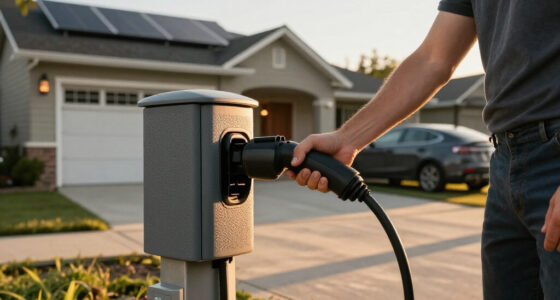
The best wireless EV chargers in this roundup are Wi-Fi-connected Level 2 units: my best overall pick is the Emporia Level 2 J1772, 48A, which pairs high charging capacity with app connectivity and a long cable. The Autel 50A stands out for buyers seeking higher amperage and smart controls, while the Lectron 40A offers a plug-in setup for drivers who want to avoid hardwiring. Here, “wireless” means app-connected charging, not charging a vehicle without a cable; every option still uses a physical connector. The main tradeoffs are charging power versus installation demands, and smart features versus a simpler setup. Read on for the full comparison, buying advice, and recommendations by driver type.

Get backup power and energy gear delivered free with Prime
- Fast, free delivery on millions of items
- Prime Video, Amazon Music and more included
- Member-only deals all year
Key Takeaways
- Emporia earns the overall lead by combining 48A charging, Wi-Fi, hardwired installation, and a 25-foot cable—though its power level calls for a compatible circuit and professional installation may be needed.
- The two Autel 50A listings are distinct options: one specifies hardwired installation and a 25-foot cable, while the other explicitly lists Wi-Fi and Bluetooth as well as J1772 compatibility.
- Plug-in chargers reduce installation commitment: the Lectron, Leviton, and EVIQO options use NEMA 14-50 plugs, but buyers must have a suitable outlet and should check its circuit rating.
- Portable models trade charging speed for flexibility: Raylix and EVDANCE provide Level 1 and Level 2 operation at 16A, making them more adaptable than fixed high-amperage units but less suited to fast daily replenishment.
- Long cable reach is a recurring strength: several hardwired 48A–50A models include 25-foot cables, while the Lectron’s 16-foot cord makes parking position more important.




| wireless EV charger | Connector | Cable length | Warranty |
|---|---|---|---|
| Emporia Level 2 J1772 EV Charg | SAE J1772 | 25 ft | 3 years |
| IYILO Level 2 J1772 EV Charger | SAE J1772 | 25 ft | 3 years |
| Hicrab Level 2 J1772 EV Charge | SAE J1772 | 25 ft | 3 years |
| 48A Level 2 Hardwired EV Charg | SAE J1772 | 25 ft | — |
| Autel 50A Level 2 EV Charger | J1772 | 25 ft | 5 years |
| Lectron Level 2 J1772 WiFi EV | J1772 | — | 2 years |
| Leviton Smart Level 2 EV Charg | SAE J1772 | 25 ft | — |
| Raylix Portable Level 1 and Le | SAE J1772 | 25 ft | 2 years |
| Calion 50A Level 2 EV Charger | J1772 | 25 ft | 1 year |
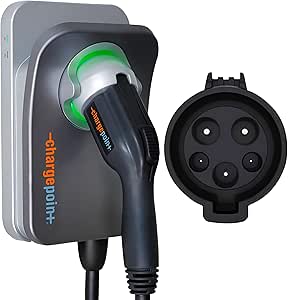
| ChargePoint HomeFlex Level 2 H | J1772 | 23 ft, cold-resistant | 3 years |
| EVDANCE Level 1 and Level 2 Po | J1772 | 25 ft | — |
| Autel 50A Level 2 EV Charger | J1772 | 25 ft | — |
| EVIQO Level 2 J1772 EV Charger | J1772 | 25 ft | — |
| AIXINE Level 2 EV Charger | J1772 | 27 ft | — |
| AIMILER 48A Level 2 Hardwired | J1772 | 25 ft | — |
More Details on Our Top Picks
Emporia Level 2 J1772 EV Charger, 48A, 240V, Wi-Fi, 25 ft Cable, Hardwired, White
The Emporia 48A is my strongest all-around pick for drivers who want fast home charging with useful app controls, not just a basic wall unit. Its 25-foot cable gives more parking flexibility than the shorter-cord options in the wider roundup, while Wi-Fi supports scheduled charging and energy monitoring. Compared with the Hicrab 40A, Emporia offers higher maximum output, but it gives up Hicrab’s plug-in installation: this charger is hardwired and calls for professional electrical work. Its J1772 connector suits many North American EVs, though some newer vehicles with NACS ports need an adapter. The included mount and holster help make installation tidy, and UL listing plus ENERGY STAR certification are useful credentials. I’d choose it for a permanent setup, not for renters or anyone who needs a portable charger.
Pros:- Up to 48A output can support faster charging than the 40A Hicrab option.
- Wi-Fi enables mobile energy monitoring and scheduled charging.
- 25-foot cable and included wall-mount hardware offer flexible placement.
- UL listed and ENERGY STAR certified.
Cons:- Hardwired installation requires electrical work and is less convenient to relocate than a plug-in charger.
- J1772 connection may require a separate adapter for vehicles with NACS ports.
Best for: Homeowners with a J1772 EV who want up to 48A charging, app scheduling, and a long cable in a permanent hardwired installation.
Not ideal for: Renters, drivers without access to an electrician, or owners of NACS-port vehicles who do not want to use a separate adapter.
- Charging level:Level 2
- Maximum current:48A
- Voltage:240V
- Connector:SAE J1772
- Cable length:25 ft
- Installation:Hardwired with whip
- Connectivity:2.4 GHz Wi-Fi
- Certifications:UL listed; ENERGY STAR certified
- Warranty:3 years
Our verdict“Choose the Emporia if you want a well-equipped, high-output hardwired charger and can arrange a professional installation.”
IYILO Level 2 J1772 EV Charger, 48A, 11.5 kW, 240V
The IYILO 48A stands out for buyers who need more control over charging current than a fixed-output setup provides. Its adjustment range runs from 6A to 48A in 1A steps, which can help match charging to a home circuit or a preferred charging schedule. It also supports power sharing between two chargers, a feature the Emporia 48A listing does not specify. App controls add scheduling and energy tracking, while connector overheat protection addresses a practical safety concern. The tradeoff is a demanding installation: 48A charging calls for a 60A breaker and a licensed electrician. Wi-Fi is limited to 2.4 GHz, and Tesla drivers need a separate NACS adapter. Compared with the plug-in Hicrab 40A, IYILO offers more output and configuration flexibility but is less adaptable to changing homes.
Pros:- Current adjusts from 6A to 48A in 1A increments.
- Power sharing allows two chargers to use one circuit.
- App features include scheduled charging, energy tracking, RFID, and multiple user accounts.
- Connector temperature monitoring can stop charging if overheating occurs.
Cons:- 48A operation requires a 60A breaker and licensed electrician.
- Wi-Fi supports 2.4 GHz only.
- Tesla NACS adapter is not included.
Best for: Households with a permanent 60A-capable circuit that want fine-grained current adjustment or plan to share one circuit across two chargers.
Not ideal for: Renters, owners without a suitable hardwired circuit, or buyers seeking a charger that plugs into a NEMA 14-50 outlet.
- Charging level:Level 2
- Maximum current:48A
- Power:11.5 kW
- Current adjustment:6A–48A in 1A increments
- Voltage:240V
- Connector:SAE J1772
- Cable length:25 ft
- Installation:Hardwired; 60A breaker and licensed electrician required
- Warranty:3 years
Our verdict“Pick the IYILO if adjustable output and circuit sharing matter more to you than plug-in convenience.”
Hicrab Level 2 J1772 EV Charger with NEMA 14-50 Plug and Wi-Fi
For buyers who want Level 2 charging without committing to hardwiring, the Hicrab 40A is the most practical fit in this group. Its NEMA 14-50 plug makes it easier to remove or relocate than the Emporia 48A or IYILO 48A, although it still needs a dedicated 50A, 240V circuit and matching outlet. The 40A maximum is lower than those hardwired models’ 48A ceiling, so charging may take longer, but adjustable output from 8A to 40A gives owners some flexibility. Wi-Fi supports schedules and energy monitoring; RFID cards offer an alternative to app access. IP55 weather resistance supports indoor or outdoor use, but the 2.4 GHz app requirement and separate Tesla adapter add setup limits. I’d favor it for a suitable existing outlet, not for a home needing maximum charging speed.
Pros:- NEMA 14-50 plug avoids permanent hardwiring and makes relocation simpler.
- Adjustable output from 8A to 40A supports different charging needs.
- 25-foot cable offers useful reach around a garage or driveway.
- IP55 enclosure, app controls, RFID cards, and plug-and-play operation provide flexible use.
Cons:- Maximum output is 40A, below the 48A hardwired Emporia and IYILO options.
- Requires a dedicated NEMA 14-50 outlet on a suitable 50A/240V circuit.
- Tesla NACS adapter is separate, and app connectivity requires 2.4 GHz Wi-Fi.
Best for: Drivers with a dedicated NEMA 14-50 outlet who want a removable Level 2 charger with app scheduling and outdoor-rated construction.
Not ideal for: Buyers seeking 48A output, those without a suitable 50A/240V outlet, or Tesla owners who do not want to source an adapter.
- Charging level:Level 2
- Maximum output:40A / 9.6 kW
- Voltage:240V AC
- Connector:SAE J1772
- Plug type:NEMA 14-50
- Cable length:25 ft
- Adjustable current:8A–40A
- Weather resistance:IP55
- Warranty:3 years
Our verdict“Choose the Hicrab if you already have the right outlet and value plug-in flexibility over the higher output of hardwired models.”
48A Level 2 Hardwired EV Charger with 25-Foot J1772 Cable
This 48A hardwired charger is aimed at buyers who want controls and status information at the unit itself, rather than relying entirely on a phone. Its 4.3-inch LCD and RFID access distinguish it from the simpler Emporia setup, while Wi-Fi adds scheduling, energy tracking, and notifications. The current range starts at 32A, however, so it is less adaptable at the low end than the IYILO 48A, which adjusts down to 6A. A 25-foot J1772 cable is useful for awkward parking positions, and the IP65 aluminum housing adds protection, but the manufacturer advises against direct sunlight or rain exposure. That guidance narrows placement choices despite the weather-resistance rating. This makes sense for a sheltered permanent installation where an on-unit display is a priority, not an exposed driveway location.
Pros:- 4.3-inch LCD presents charging information at the unit.
- RFID access can help control who starts a charging session.
- Current adjusts from 32A to 48A, with Wi-Fi scheduling and energy tracking.
- IP65-rated aluminum housing and listed electrical protections support a fixed installation.
Cons:- Requires hardwiring and a 60A-or-higher breaker for 48A charging.
- Current cannot be reduced below 32A, unlike the IYILO’s 6A minimum.
- Manufacturer advises against direct sunlight or rain exposure.
Best for: Homeowners with a sheltered hardwired installation who want an LCD status screen, RFID access, and charging schedules.
Not ideal for: Drivers who need lower current settings, an outdoor location exposed to sun or rain, or a plug-in charger they can relocate.
- Charging level:Level 2
- Maximum current:48A
- Maximum power:11.5 kW
- Adjustable current:32A–48A
- Voltage:240V
- Connector:SAE J1772
- Cable length:25 ft
- Display and access:4.3-inch LCD; RFID
- Ingress protection:IP65
Our verdict“Choose this model for a sheltered, permanent installation where the LCD and RFID controls justify its narrower current range.”
Autel 50A Level 2 EV Charger, 240V Hardwired with 25 ft Cable
The Autel 50A has the highest stated maximum current in this batch, making it the pick for buyers who want a high-output hardwired J1772 charger and broad adjustment from 6A to 50A. That range gives it more flexibility than the 48A Emporia and the 32A–48A display model, while the Autel Charge app handles monitoring and scheduling. Thermal monitoring and flame-retardant materials add safety-focused features, and its five-year warranty is longer than the three-year coverage listed for those alternatives. The compromise is that this model’s supplied details do not specify Wi-Fi or Bluetooth connectivity, so buyers should not assume the app connection method matches the other smart chargers. Hardwiring also limits portability, and J1772 may require an adapter for some vehicles. I’d shortlist it for a permanent installation where output range and warranty term lead the decision.
Pros:- Up to 50A output exceeds the 48A maximum of the Emporia and IYILO models.
- Current adjusts from 6A to 50A for a broad range of charging configurations.
- Autel Charge app supports monitoring and scheduled charging.
- Thermal monitoring, flame-retardant materials, UL certification, and a five-year warranty.
Cons:- Hardwired installation requires electrical work and is not easy to relocate.
- J1772 connection may require an adapter for some vehicles.
- The supplied product details do not specify Wi-Fi or Bluetooth connectivity.
Best for: J1772 EV owners planning a permanent hardwired setup who want up to 50A output, wide current adjustment, and a five-year warranty.
Not ideal for: Renters, drivers who need a plug-in or portable unit, or buyers who require clearly specified wireless connectivity details before purchase.
- Charging level:Level 2
- Maximum current:50A
- Adjustable current:6A–50A
- Voltage:240V AC
- Connector:J1772
- Cable length:25 ft
- Installation:Hardwired
- Safety certification:UL-certified by CSA
- Warranty:5 years
Our verdict“Pick the Autel if you want the batch’s highest stated output and a wide current range in a permanent installation.”
Lectron Level 2 J1772 WiFi EV Charger, 240V 40A, NEMA 14-50 Plug, 16 ft Cord
The Lectron 40A pairs app-based scheduling and charge monitoring with a carrying case, making it a better fit for drivers who want one charger for home and occasional travel. Its 9.6 kW output is on par with the plug-in Leviton Smart Level 2, but Lectron’s 16-foot cord is much shorter than Leviton’s 25-foot cable, so parking position matters more. The app adds useful control without requiring a hardwired installation, while the NEMA 14-50 plug still limits use to sites with a compatible outlet. Weather-resistant construction and an IP65 rating support varied conditions, but this remains a J1772 unit rather than a universal connector option. I’d choose it for portability and app features, not for extra reach.
Pros:- Wi-Fi app supports status monitoring, scheduling, and setting charge amounts.
- Up to 40A and 9.6 kW for Level 2 charging.
- Portable format includes a carrying case.
- IP65-rated design is suited to varied weather conditions.
Cons:- The 16-foot cable offers less reach than the Leviton’s 25-foot cable.
- Requires a compatible NEMA 14-50 outlet.
- J1772 connector limits direct compatibility with vehicles using other standards.
Best for: J1772 EV owners with a NEMA 14-50 outlet who want Wi-Fi scheduling at home and a charger they can pack for trips.
Not ideal for: Drivers who need a long cable, lack a NEMA 14-50 receptacle, or use a vehicle connector not listed as J1772-compatible.
- Connector:J1772
- Input voltage:240V
- Maximum current:40A
- Power:9.6 kW
- Plug:NEMA 14-50
- Cord length:16 ft
- Connectivity:Wi-Fi
- Certifications:ETL, FCC, UL 2251, Energy Star
- Warranty:2 years
Our verdict“Choose the Lectron if you want a portable, app-connected 40A charger and can work with its shorter cable and J1772 connection.”
Leviton Smart Level 2 EV Charger, 40A, Wi-Fi, NEMA 14-50 Plug, White
The Leviton EV40P’s clearest advantage over the Lectron is its 25-foot J1772 cable: it can make a workable connection when the outlet and parked car are farther apart. Like the Lectron, it delivers 40A and 9.6 kW through a NEMA 14-50 plug, but Leviton adds remote start and stop plus fault notifications in the My Leviton app. Its water-resistant Type 3R enclosure also suits indoor or outdoor placement, giving it a more installation-oriented feel than the Lectron’s portable, case-included design. The tradeoff is that it is still tied to a compatible receptacle, and Tesla drivers need a separate NACS adapter. I’d favor this model when cable reach and app alerts matter more than portability.
Pros:- 25-foot cable provides more reach than the Lectron’s 16-foot cord.
- My Leviton app supports scheduling, remote start and stop, session status, and fault notifications.
- Water-resistant Type 3R enclosure is suited to indoor or outdoor installation.
- Pre-attached input cable and included mounting hardware simplify setup.
Cons:- Requires a compatible NEMA 14-50 receptacle.
- Tesla vehicles require a NACS adapter.
- Less travel-oriented than the portable Lectron, which includes a carrying case.
Best for: J1772 EV owners with a NEMA 14-50 receptacle who need a longer cable for a driveway or garage layout and want app alerts.
Not ideal for: Drivers seeking a travel-friendly charger, or Tesla owners who do not want to obtain a compatible adapter.
- Model:EV40P
- Connector:SAE J1772
- Input voltage:240V
- Maximum power:9.6 kW
- Cable length:25 ft
- Plug:NEMA 14-50P
- Connectivity:Wi-Fi
- Certifications:UL, ENERGY STAR
- Enclosure:Water-resistant NEMA Type 3R
Our verdict“Pick the Leviton if a 25-foot cable and app-based fault alerts are more useful to you than a portable design.”
Raylix Portable Level 1 and Level 2 J1772 EV Charger, 16A, 25 ft Cable
The Raylix is the lineup’s dual-level portable option: it can use a standard NEMA 5-15 outlet for Level 1 charging or a NEMA 6-20 outlet for Level 2. That flexibility is useful for drivers who travel between locations or do not have a 14-50 receptacle, though its 16A, 3.68 kW Level 2 ceiling is far below the 40A Lectron and Leviton. A 25-foot cable, adjustable current, delay timer, and color display give it more hands-on control than those app-connected alternatives, but it does not list Wi-Fi. Level 1 output is limited to 12A, and faster charging depends on access to a 240V 6-20 outlet. I’d select it for outlet versatility and portability, not for speed.
Pros:- Supports Level 1 and Level 2 charging with NEMA 5-15 and NEMA 6-20 plug options.
- Four current settings and a 1–12 hour delay timer offer useful control.
- 25-foot cable reaches farther than the Lectron’s 16-foot cord.
- Color display reports charging data and temperature; enclosure is IP65-rated.
Cons:- Level 2 output tops out at 16A and 3.68 kW, well below the 40A Lectron and Leviton.
- Level 2 use requires a NEMA 6-20 outlet.
- Level 1 charging is limited to 12A, and Wi-Fi connectivity is not listed.
Best for: J1772 drivers who need a portable charger for both household 120V outlets and locations with a NEMA 6-20 outlet.
Not ideal for: Drivers prioritizing faster home charging, Wi-Fi controls, or a Level 2 connection above 16A.
- Connector:SAE J1772
- Charging levels:Level 1 and Level 2
- Maximum current:16A
- Level 1 output:120V, 12A, 1.44 kW
- Level 2 output:240V, 16A, 3.68 kW
- Plugs:NEMA 5-15 and NEMA 6-20
- Cable length:25 ft
- Display:TFT color display
- Warranty:2 years
Our verdict“Choose the Raylix if you value two outlet options and portable flexibility more than higher-amperage charging or app connectivity.”
Calion 50A Level 2 EV Charger with Wi-Fi, Bluetooth, and 25 ft Cable
The Calion combines 50A hardwired charging with both Wi-Fi and Bluetooth, making it a fit for buyers who want app access and do not need a plug-in unit. Its 25-foot J1772 cable matches the reach of the Leviton, while its higher 50A capacity exceeds the Leviton’s 40A output; actual charging still depends on the vehicle and electrical setup. Bluetooth provides a second connection method alongside Wi-Fi, but installation is less flexible than with the NEMA 14-50 Lectron or Leviton: hardwiring calls for electrical work. The enclosure is rated IP65 and the product lists several electrical protections, though its one-year warranty is shorter than the ChargePoint HomeFlex’s three years. I’d put it ahead of plug-in models for a permanent high-amperage setup, with that warranty gap in mind.
Pros:- Up to 50A at 240V for a hardwired Level 2 setup.
- Wi-Fi and Bluetooth provide two app connection options.
- 25-foot cable offers practical reach around a parking area.
- IP65 enclosure and listed electrical protections support indoor or outdoor use.
Cons:- Hardwired installation may require an electrician and electrical work.
- One-year warranty is shorter than the ChargePoint HomeFlex’s three-year warranty.
- J1772 connector is not a direct fit for Tesla charging ports.
Best for: J1772 EV owners planning a permanent hardwired installation who want 50A capability and both Wi-Fi and Bluetooth app access.
Not ideal for: Renters, drivers who need a portable plug-in charger, or buyers who prioritize a longer warranty.
- Installation:Hardwired, wall-mounted
- Input voltage:240V
- Maximum current:50A
- Connector:J1772
- Cable length:25 ft
- Connectivity:Wi-Fi and Bluetooth
- Weather resistance:IP65
- Operating temperature:-31°F to 131°F
- Warranty:1 year
Our verdict“Choose the Calion for a permanent 50A installation with dual wireless connectivity, but compare its one-year warranty with ChargePoint’s longer coverage.”
ChargePoint HomeFlex Level 2 Hardwired EV Charger, J1772, 50A
The ChargePoint HomeFlex earns its premium role through a three-year warranty, adjustable 16–50A output, and a 23-foot cable described as cold-resistant. That adjustability gives an electrician room to configure charging around the home circuit, unlike the Calion’s stated 50A maximum without listed adjustable amperage. The ChargePoint cable is slightly shorter than the Calion’s 25 feet, but it offers a more clearly specified hardwired setup and app features for charging information and reminders. Some functions require Wi-Fi, so it is not the right pick for buyers who want every feature available offline. Like the Calion, it needs an electrician for installation, and Tesla owners need an adapter. I’d choose it when warranty coverage and adjustable current matter more than Bluetooth or maximum cable reach.
Pros:- Adjustable 16–50A charging can be configured to suit the electrical installation.
- 23-foot cold-resistant cable is suited to outdoor or cold-weather use.
- Three-year warranty exceeds the Calion’s one-year coverage.
- UL-certified and rated for indoor or outdoor installation.
Cons:- Hardwired installation requires an electrician.
- Wi-Fi is required for some app features.
- Tesla vehicles require a J1772 adapter, and the cable is shorter than the Calion’s 25 feet.
Best for: Homeowners planning electrician-installed charging who want adjustable amperage, a cold-resistant cable, and a longer stated warranty.
Not ideal for: Drivers who need a plug-in or portable charger, lack reliable Wi-Fi for app features, or want a 25-foot cable and Bluetooth.
- Model:CPH50-HARDWIRE-L23
- Connector:J1772
- Installation:Hardwired
- Amperage:Adjustable 16–50A
- Output voltage:240V AC
- Cable length:23 ft, cold-resistant
- Charging speed:Up to 37 mi/hr
- Certification:UL-certified; Energy Star
- Warranty:3 years
Our verdict“Choose the HomeFlex if you want adjustable hardwired charging and a longer warranty, and are comfortable with electrician installation and Wi-Fi-dependent features.”
EVDANCE Level 1 and Level 2 Portable EV Charger, 16A, J1772, 25 ft Cable
The EVDANCE is the most adaptable pick here for drivers who may need to charge from more than one kind of outlet. It supports 120V Level 1 charging with its NEMA 5-15 plug and can move to 16A Level 2 charging with the included NEMA 6-20 adapter. That flexibility is useful for travel or a changing home setup, though Level 2 use depends on having the right outlet. Compared with the higher-output EVIQO 40A and AIXINE 40A, it charges more slowly, so it is better suited to modest daily mileage than fast turnaround. Wi-Fi and Bluetooth controls, scheduling, an LCD, and a 25-foot cable add practical control, while the carrying case helps with portability. Its J1772 connector needs a separate adapter for Tesla vehicles.
Pros:- Supports Level 1 and Level 2 charging with included plug options.
- Wi-Fi and Bluetooth controls, scheduled charging, and an LCD provide several ways to manage sessions.
- A 25-foot flexible cable and carrying case suit portable use.
- NEMA 4-rated housing and built-in electrical protections support indoor or outdoor use.
Cons:- The 16A maximum is slower than the 40A EVIQO and AIXINE options.
- Level 2 charging requires a NEMA 6-20 outlet.
- Tesla vehicles require a separate adapter.
Best for: J1772 EV and PHEV owners who want one portable charger for standard 120V outlets and compatible 240V NEMA 6-20 outlets.
Not ideal for: Drivers who need faster home charging or only have a NEMA 14-50 outlet; its 16A ceiling and NEMA 6-20 Level 2 connection may not fit either need.
- Charging levels:Level 1 and Level 2
- Level 1 connection:120V AC, NEMA 5-15
- Level 2 connection:NEMA 6-20 adapter; up to 16A
- Connector:J1772
- Cable length:25 ft
- Connectivity:Wi-Fi and Bluetooth
- Weight:7 lb
- Safety certification:ETL
Our verdict“Choose the EVDANCE if outlet flexibility and portability matter more than high charging output.”
Autel 50A Level 2 EV Charger, 240V Hardwired, J1772, Wi-Fi and Bluetooth, 25 ft Cable
For a home installation built around higher charging output, the Autel offers up to 50A and 12 kW, with current adjustable from 6A to 50A. That range gives more flexibility than the AIMILER 48A, including when the available circuit calls for a lower setting. The tradeoff is a permanent 240V hardwired installation; unlike the plug-in EVIQO or AIXINE, it cannot simply connect to a NEMA 14-50 outlet. Its 25-foot cable and integrated holster make cable reach and storage easier to manage, while the NEMA 4X enclosure suits indoor or outdoor placement. Wi-Fi and Bluetooth enable app scheduling and session monitoring, but this is a more involved home setup than a portable charger. J1772 compatibility also means some vehicles need an adapter.
Pros:- Up to 50A and 12 kW output for higher-capacity home charging.
- Adjustable current from 6A to 50A offers more range than the AIMILER 48A.
- App supports remote start and stop, scheduling, and session monitoring over Wi-Fi or Bluetooth.
- A 25-foot cable, integrated holster, and NEMA 4X enclosure support convenient indoor or outdoor installation.
Cons:- Requires permanent 240V hardwired installation.
- J1772 vehicles with a different inlet need a separate adapter.
- Its 50A maximum requires compatible electrical capacity at the installation site.
Best for: J1772 EV owners planning a permanent home charging installation who want up to 50A output and adjustable current.
Not ideal for: Renters, frequent movers, or homeowners who need a plug-in charger; this model requires hardwiring by a qualified installer.
- Installation:240V hardwired
- Maximum output:50A, 12 kW
- Adjustable current:6A to 50A
- Connector:J1772
- Cable length:25 ft
- Connectivity:Wi-Fi and Bluetooth
- Enclosure:NEMA 4X
- Certification:CSA
Our verdict“Pick the Autel for a permanent, higher-output setup when you have the electrical capacity and do not need a plug-in connection.”
EVIQO Level 2 J1772 EV Charger, 40A, NEMA 14-50
The EVIQO stands out among the plug-in options for drivers who want more than basic start-and-stop control. Its app offers charging-speed adjustment, reminders, and energy tracking over 2.4 GHz Wi-Fi, so owners can follow usage without relying only on the vehicle display. It supplies up to 40A and 9.6 kW through a NEMA 14-50 outlet, matching the AIXINE’s stated maximum while adding a glow-in-the-dark holster for easier connector storage after dark. Compared with the hardwired Autel 50A, the EVIQO is simpler to connect when a suitable outlet is already installed, but it gives up maximum output. Its 25-foot cable and IP66/NEMA 4 enclosure support varied home placements. Buyers should check their circuit and Wi-Fi band before choosing it.
Pros:- Up to 40A and 9.6 kW through a NEMA 14-50 plug.
- App supports remote start and stop, charging-speed adjustment, reminders, and energy tracking.
- UL and ETL certifications and an IP66/NEMA 4 enclosure support indoor or outdoor use.
- A 25-foot cable and glow-in-the-dark holster help with reach and nighttime storage.
Cons:- Requires a NEMA 14-50 outlet on a dedicated 50A circuit.
- App features require a 2.4 GHz Wi-Fi network.
- Its 40A maximum is below the Autel 50A and AIMILER 48A hardwired options.
Best for: J1772 EV and PHEV owners with a dedicated 50A circuit and NEMA 14-50 outlet who want app-based charging records and controls.
Not ideal for: Drivers without a NEMA 14-50 outlet or 2.4 GHz Wi-Fi, and those seeking higher output than 40A.
- Maximum output:40A, 9.6 kW
- Input voltage:240V
- Outlet:NEMA 14-50
- Required circuit:Dedicated 50A circuit
- Connector:J1772
- Cable length:25 ft
- Wi-Fi:2.4 GHz
- Weather protection:IP66 / NEMA 4
- Certifications:UL, ETL, FCC, Energy Star
Our verdict“Choose the EVIQO if you have the right outlet and value app-based energy tracking in a plug-in charger.”
AIXINE Level 2 EV Charger, 40A J1772, 240V, 27 ft Cable, Wi-Fi App
The AIXINE’s main advantage over the similar-output EVIQO 40A is straightforward: its 27-foot cable gives a little more reach from a NEMA 14-50 outlet to the vehicle. That can help when a parking position sits awkwardly in a garage or driveway. It also offers six current settings from 10A to 40A, scheduled charging, and app monitoring with cost calculation and usage history. Its IP67 rating and stated operating range suit outdoor placements, though those features do not remove the need for a sheltered, correctly installed outlet. Unlike the EVIQO, the supplied information does not list UL certification, instead stating ETL and FCC certification and that it meets UL safety standards. Tesla vehicles with NACS connectors are not compatible without the appropriate separate adapter.
Pros:- A 27-foot cable provides more reach than the 25-foot EVIQO cable.
- Six current settings from 10A to 40A support adjustment to different charging needs.
- App includes scheduling, real-time monitoring, cost calculation, and usage history.
- IP67 weather resistance and stated operating range support outdoor use.
Cons:- Requires a 240V NEMA 14-50 outlet.
- Not compatible with Tesla vehicles using NACS connectors without a separate adapter.
- The listed certifications are ETL and FCC; the product description only states that it meets UL safety standards.
Best for: J1772 EV owners with a NEMA 14-50 outlet who need a longer-than-standard cable for a distant or awkward parking spot.
Not ideal for: Tesla NACS drivers who do not want an adapter, or buyers who need a hardwired charger or a 50A maximum output.
- Maximum output:40A, 9.6 kW
- Voltage:240V
- Plug:NEMA 14-50
- Adjustable current:10A, 16A, 20A, 24A, 32A, 40A
- Connector:J1772
- Cable length:27 ft
- Weather resistance:IP67
- Connectivity:Wi-Fi app
- Certifications:ETL, FCC; stated to meet UL safety standards
Our verdict“Pick the AIXINE over the EVIQO when the extra two feet of cable reach matters more than the EVIQO’s listed UL certification.”
AIMILER 48A Level 2 Hardwired EV Charger with 25 ft Cable, J1772 Connector, Carbon
The AIMILER pairs 48A output and 11.5 kW maximum power with a touchscreen, making it a fit for drivers who want charging information visible at the unit as well as in an app. Its output sits just below the Autel 50A, while exceeding the 40A plug-in EVIQO and AIXINE; that makes it a stronger match for higher-capacity home charging than for a simple outlet-based setup. Current adjusts from 24A to 48A, and the 25-foot cable offers familiar reach. The main commitment is installation: this charger is hardwired with no plug, and 48A operation calls for a 60A or greater circuit breaker. Wi-Fi scheduling and monitoring add convenience, but app setup requires 2.4 GHz Wi-Fi. NACS vehicles need a separate adapter.
Pros:- Up to 48A and 11.5 kW output exceeds the 40A EVIQO and AIXINE.
- Touchscreen displays charging information at the unit.
- Wi-Fi app supports scheduling, status tracking, and notifications.
- A 25-foot J1772 cable supports practical reach around a home parking area.
Cons:- Requires hardwired installation and does not support a NEMA 14-50 outlet.
- 48A operation calls for a 60A or greater circuit breaker.
- Tesla and other NACS vehicles need a separate J1772 adapter, and app setup requires 2.4 GHz Wi-Fi.
Best for: Homeowners with a suitable high-capacity circuit who want near-50A charging and a touchscreen at the charger.
Not ideal for: Renters or owners who need a NEMA 14-50 plug-in unit, or drivers without a suitable hardwired circuit and installation plan.
- Charging level:Level 2
- Maximum output:48A, 11.5 kW
- Voltage:240V
- Current adjustment:24A to 48A
- Installation:Hardwired; no plug
- Recommended breaker at 48A:60A or greater
- Connector:J1772
- Cable length:25 ft
- Controls and certification:Touchscreen and Wi-Fi app; ETL, FCC
Our verdict“Choose the AIMILER if you want touchscreen access and 48A output and already have a suitable hardwired circuit.”
How We Picked
I compared the 15 listed chargers through the features that most affect everyday home charging: stated amperage, Level 1 or Level 2 support, plug-in versus hardwired installation, cable length, connector type, and the smart controls explicitly named in each product listing. I treated J1772 compatibility and NEMA 14-50 connection details as practical fit factors, since a charger only works well when it suits the vehicle and the home electrical setup.
The ranking favors options with a useful balance of charging capacity, clearly stated installation details, cable reach, and connected features. That puts the Emporia first for its combination of 48A, Wi-Fi, and a 25-foot cable; the Autel models follow for 50A capacity, with the Wi-Fi-and-Bluetooth listing distinguished by its named controls. Plug-in models rank well for buyers who value a less permanent installation, while 16A portable units are placed for flexibility rather than speed. Where a listing omits details, I do not assume features it does not state.
| wireless EV charger | Connector |
|---|---|
| Emporia Level 2 J1772 EV Charg | SAE J1772 |
| IYILO Level 2 J1772 EV Charger | SAE J1772 |
| Hicrab Level 2 J1772 EV Charge | SAE J1772 |
| 48A Level 2 Hardwired EV Charg | SAE J1772 |
| Autel 50A Level 2 EV Charger | J1772 |
| Lectron Level 2 J1772 WiFi EV | J1772 |
| Leviton Smart Level 2 EV Charg | SAE J1772 |
| Raylix Portable Level 1 and Le | SAE J1772 |
| Calion 50A Level 2 EV Charger | J1772 |
| ChargePoint HomeFlex Level 2 H | J1772 |
| EVDANCE Level 1 and Level 2 Po | J1772 |
| Autel 50A Level 2 EV Charger | J1772 |
| EVIQO Level 2 J1772 EV Charger | J1772 |
| AIXINE Level 2 EV Charger | J1772 |
| AIMILER 48A Level 2 Hardwired | J1772 |
Factors to Consider When Choosing Best Wireless EV Chargers
Before choosing among these wireless EV chargers, match the charger to both your vehicle and your home’s electrical capacity. App connectivity can add scheduling and monitoring, but it does not compensate for an unsuitable circuit, short cable, or incompatible connector. These broader checks help narrow the field before comparing individual models.
Match Charging Power to Your Electrical Service
A higher amperage rating can shorten charging time, but only when your vehicle and home circuit can support it. Ask an electrician to confirm the circuit’s capacity and the charger’s installation requirements before buying; do not assume a charger’s maximum rating is available from any 240V outlet. A 48A or 50A unit may call for hardwiring and a larger dedicated circuit, while a plug-in model may be limited by the outlet and circuit already in place. If your daily driving needs are modest, a lower-powered setup may be a better fit than paying for capacity your home cannot deliver. Check the vehicle’s onboard charging limit too, since it can cap the power the car accepts.
Choose Plug-In or Hardwired Installation Deliberately
A NEMA 14-50 plug can make a charger easier to remove or replace, but it is not a shortcut around electrical planning. The outlet must be correctly installed, rated for the intended load, and positioned where the cable can reach the parked vehicle. Hardwired chargers avoid a plug-and-outlet connection and may suit a permanent installation, though moving or replacing them can take more work. A common mistake is buying a plug-in model before confirming that an appropriate outlet exists near the parking space. Get installation advice first, especially if the garage needs new wiring or the electrical panel has limited spare capacity.
Check Connector Compatibility Before Comparing Apps
Connector fit is a first-pass requirement, not a feature to sort out after purchase. The products listed here use J1772 connectors, which suit many non-Tesla EVs and plug-in hybrids; a vehicle with a different inlet may need a compatible adapter, and adapter use should follow the vehicle and charger makers’ instructions. Also check whether the charger’s cable and connector are intended for your parking setup, including indoor or outdoor placement. Do not assume that a familiar plug shape means every vehicle or charging situation is covered. Confirm your vehicle’s inlet and accepted charging standards before weighing Wi-Fi, Bluetooth, or amperage.
Treat Cable Length as a Parking-Layout Decision
A 25-foot cable can give you more freedom to approach the charging point from different parking angles, while a shorter cord can be easier to manage in a compact garage. Measure the route from the planned charger location to the vehicle inlet with the car parked in its usual position, and leave room for comfortable handling. Do not count on stretching a cable across a doorway, walkway, or vehicle path; that can create a trip or wear hazard. A longer cable is useful only if it can be stored neatly and kept clear of traffic. If two household vehicles share one parking area, map both inlet positions before choosing a mounting location.
Decide What Wireless Features You Will Actually Use
On these products, wireless usually refers to Wi-Fi or Bluetooth connectivity for app-based functions, not cable-free power delivery. Connected controls can help with scheduling, charging status, or remote monitoring when those functions are supported, but the product listing should name the features you need rather than leaving them implied. Check whether the charger’s app works with your home network and whether basic charging remains usable if the connection drops. Bluetooth and Wi-Fi are not interchangeable: one may work nearby while the other can support access through a network, depending on the product. If you mainly need reliable charging at a fixed time, prioritize straightforward operation and electrical fit over an app feature list.
Balance Portability Against Daily Charging Needs
Portable Level 1 and Level 2 chargers can be useful for travel, a second parking location, or households that need a flexible setup. Their 16A ratings in this roundup make them a different category from the 40A–50A fixed chargers, so compare them by versatility rather than expecting similar charging speed. Confirm which adapters or outlets are included and which are sold separately; do not assume every portable unit can connect to every household socket. For a primary home charger, estimate how much energy you need to replace overnight and compare that with the vehicle’s expected charging rate. A portable unit is a better match when flexibility matters more than faster replenishment.
Frequently Asked Questions
Does “wireless EV charger” mean I can charge without plugging in a cable?
Not for the products in this roundup. Here, wireless refers to Wi-Fi or Bluetooth features used for app connectivity, while charging still requires a cable and vehicle connector. True cable-free charging uses a separate wireless power-transfer system and is not what these listed J1772 units provide. If you want remote monitoring or scheduling, check the specific product’s stated app features. If you want no physical plug-in step, these chargers do not meet that need.
Can I use a 48A or 50A charger with my existing 240V outlet?
Do not assume so based on voltage alone. The circuit, outlet, charger connection method, and vehicle charging limit all affect the power available, and high-amperage models may call for hardwiring rather than a standard plug-in connection. Have a qualified electrician inspect the circuit and confirm the installation requirements for the exact charger. A lower available circuit rating may mean the charger must be configured for less power, if the model supports that. Confirm the setup before ordering to avoid buying a unit your electrical service cannot support.
Will a J1772 charger work with my vehicle?
It will connect directly to many EVs and plug-in hybrids that use a J1772 inlet. A vehicle with a different inlet may require a compatible adapter, but fit and charging support depend on the vehicle and adapter specifications. Check the owner’s manual and the charger documentation rather than relying on the vehicle brand alone. Also confirm that the car accepts the charger’s AC charging rate; the connector may fit even when the vehicle cannot use the charger’s full output. These checks matter before comparing smart features or cable length.
Is a portable 16A charger enough for everyday home charging?
It can be enough for drivers who cover shorter distances, have long overnight parking windows, or need a charger that can move between locations. It will generally replenish a battery more slowly than the 40A–50A Level 2 units in this roundup, so regular high-mileage driving may make it inconvenient as the only home charger. Compare your daily energy use with the charging time available rather than judging by the charger label alone. Verify that the portable unit supports the outlets you plan to use and that those circuits are suitable. For frequent fast turnarounds, a fixed higher-powered Level 2 charger is usually a stronger fit.
Should I prioritize a longer cable or Wi-Fi connectivity?
Choose based on the problem you need to solve at home. Cable reach affects whether the connector can comfortably reach your vehicle from the planned mounting point, so measure your parking layout before installation. Wi-Fi can support app features such as remote status or scheduling when the particular model offers them, but it does not fix a cable that cannot reach. If your parking position varies, reach may matter more every day; if it is fixed and you want remote control, connectivity may add more value. Check network coverage at the charger location as part of that decision.
Conclusion
For most drivers seeking a connected, high-capacity home charger, I recommend the Emporia 48A as the best overall balance of Wi-Fi, cable reach, and charging output. The Lectron 40A is my best value-style pick for buyers who want a NEMA 14-50 plug-in option and can work with its 16-foot cable; the Autel 50A with Wi-Fi and Bluetooth is the best premium-leaning choice for shoppers who prioritize higher stated output and named smart connections. For beginners, the Raylix or EVDANCE portable 16A units offer Level 1 and Level 2 flexibility, though neither is the choice for the quickest routine charging. If cable reach is your main concern, compare the 25-foot hardwired options; if installation flexibility matters most, start with the NEMA 14-50 models and confirm your outlet and circuit first. My final choice would depend on an electrician’s check of the home setup, the vehicle’s inlet, and the distance from charger to parking spot.
Black Friday Picks

Amazon Kindle Paperwhite (12th Generation, 2024), 16 GB, 7-inch Display, Black
As an affiliate, we earn on qualifying purchases.