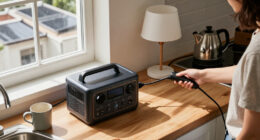
Solar backup power stations range from compact 300W units that keep a phone and laptop alive during an outage to whole-home systems like the Jackery HomePower 3600 Plus, which can run refrigerators, well pumps, and medical devices for days. The Jackery HomePower 3600 Plus earns my best overall pick thanks to its 3600W output, expandable 21kWh capacity, and genuine home-backup credentials. If your budget is tighter, the BLUETTI AC180 delivers an exceptional capacity-to-price ratio, while the Anker SOLIX S2000 is the strongest mid-range option for powering heavy appliances. The main tradeoff in this category is straightforward: capacity and output cost money and weight, so the right pick depends on whether you’re backing up a fridge or just charging devices. Read on for the full breakdown of all 14 models.

Get backup power and energy gear delivered free with Prime
- Fast, free delivery on millions of items
- Prime Video, Amazon Music and more included
- Member-only deals all year
Complete the kit


Key Takeaways
- The Jackery HomePower 3600 Plus is the only model in this lineup that can genuinely back up a home, but it costs roughly five times more than mid-range picks like the BLUETTI AC180.
- Several 300W-class units (the Jackery Explorer 300, the two 300W solar generators with bundled panels) are device-chargers, not backup power — they cannot run a refrigerator even briefly.
- LiFePO4 battery chemistry has become standard above $400, which means 3,000+ charge cycles; the cheaper NMC units here are the tradeoff pick only at the lowest price points.
- Bundled solar panels change the value math dramatically: the Jackery Solar Generator 1000 V2 with a 200W panel recharges far faster than station-only rivals at the same price.
- Around the $700–$900 mark, the BLUETTI AC180, EcoFlow Delta 3 Classic, and Anker SOLIX C1000 Gen 2 are nearly matched on capacity — inverter surge rating and recharge speed are the tiebreakers.
| Librids Portable Power Station 640Wh, 1200W Surge, Solar Generator |  | Best Budget Backup for Essentials | Capacity: 640Wh | Surge Power: 1200W | Charging Time: 1.5 hours | VIEW LATEST PRICE | See Our Full Breakdown |
| Jackery HomePower 3600 Plus Portable Power Station, 3600W AC Output, 3584Wh LFP Solar Generator |  | Best for Whole-Home Backup | Power Output: 3600W (7200W in parallel) | Capacity: 3584Wh, expandable to 21kWh | Charging Time: AC 2.5 hrs, solar 4 hrs, hybrid 2 hrs | VIEW LATEST PRICE | See Our Full Breakdown |
| BLUETTI AC180 Portable Power Station 1152Wh 1800W LiFePO4 Solar Generator |  | Best All-Round Midsize Choice | Battery Capacity: 1152Wh | Battery Type: LiFePO4 | Charge Time: 1 hour (AC) | VIEW LATEST PRICE | See Our Full Breakdown |
| BLUETTI Elite 30 V2 Portable Power Station 288Wh 600W LFP Solar Generator |  | Best Ultra-Portable Pick | Capacity: 288Wh | Weight: 9.4 lbs | Continuous Power: 600W | VIEW LATEST PRICE | See Our Full Breakdown |
| EF ECOFLOW Portable Power Station Delta 3 Classic, 1024Wh, 1800W AC |  | Best for Fast Solar Recharging | Capacity: 1024Wh | Output Wattage: 1800W (X-Boost) | Surge Power: 3600W | VIEW LATEST PRICE | See Our Full Breakdown |
| Portable Solar Generator 300W Power Station with 60W Foldable Solar Panel |  | Best Budget Starter Kit | Battery Capacity: 296Wh lithium-ion | Output Power: 300W | Solar Panel: 60W foldable (included) | VIEW LATEST PRICE | See Our Full Breakdown |
| Jackery Solar Generator 1000 V2 with 200W Solar Panel, 1070Wh, 1500W AC |  | Best Fast-Charging Midsize | Capacity: 1070Wh LFP | AC Output: 1500W (3000W surge) | Recharge Time: 1 hr fast charge, 3 hr full, 6 hr solar | VIEW LATEST PRICE | See Our Full Breakdown |
| BROWEY 1600W Portable Power Station with 1024Wh LiFePO4 Battery and Built-in Solar Panel |  | Best All-in-One Design | Power Output: 1600W (3200W peak) pure sine wave | Capacity: 1024Wh LiFePO4 | Built-in Solar: 40W panel with MPPT | VIEW LATEST PRICE | See Our Full Breakdown |
| Jackery Solar Generator 300 with 40W Solar Panel |  | Best Ultralight Trail Pick | Capacity: 292Wh LiFePO4 | Weight: 7.5 lbs | AC Output: 300W across 2 outlets | VIEW LATEST PRICE | See Our Full Breakdown |
| Anker SOLIX C1000 Gen 2 Portable Power Station, 1024Wh, 2000W |  | Best Premium Powerhouse | Capacity: 1024Wh | Power Output: 2000W (3000W peak) | Recharge Time: 1.8 hours with solar (HyperFlash) | VIEW LATEST PRICE | See Our Full Breakdown |
| Jackery Explorer 1000 v2 Portable Power Station, 1070Wh, 1500W |  | Best Fast-Charging Mid-Size Pick | Capacity: 1070Wh | AC Output: 1500W (3000W surge) | Battery Chemistry: LFP | VIEW LATEST PRICE | See Our Full Breakdown |
| Portable Solar Generator 300W with 60W Solar Panel | 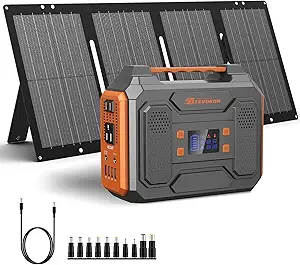 | Best Budget All-in-One Kit | Power Output: 300W | AC Outlets: 2 x 300W max | Solar Panel: 60W foldable monocrystalline | VIEW LATEST PRICE | See Our Full Breakdown |
| Jackery Explorer 300 Portable Power Station, 292Wh |  | Best Ultralight Grab-and-Go | Capacity: 292Wh | Rated Output: 300W (600W surge) | Battery Chemistry: LiFePO4 | VIEW LATEST PRICE | See Our Full Breakdown |
| Anker SOLIX S2000 Portable Power Station, 2010Wh, 3000W Peak, Home Backup |  | Best Longevity for Home Backup | Capacity: 2010Wh | Continuous Output: 1500W (3000W peak) | Battery Chemistry: LiFePO4 (LFP) | VIEW LATEST PRICE | See Our Full Breakdown |
| solar backup power station | Capacity | Weight |
|---|---|---|
| Librids Portable Power Station | 640Wh | — |
| Jackery HomePower 3600 Plus Po | 3584Wh, expandable to 21kWh | — |
| BLUETTI AC180 Portable Power S | — | — |
| BLUETTI Elite 30 V2 Portable P | 288Wh | 9.4 lbs |
| EF ECOFLOW Portable Power Stat | 1024Wh | 26.7 lbs |
| Portable Solar Generator 300W | — | 6.5 lbs (station) |
| Jackery Solar Generator 1000 V | 1070Wh LFP | 23.8 lbs |
| BROWEY 1600W Portable Power St | 1024Wh LiFePO4 | — |
| Jackery Solar Generator 300 wi | 292Wh LiFePO4 | 7.5 lbs |
| Anker SOLIX C1000 Gen 2 Portab | 1024Wh | — |
| Jackery Explorer 1000 v2 Porta | 1070Wh | 23.8 lbs |
| Portable Solar Generator 300W | — | — |
| Jackery Explorer 300 Portable | 292Wh | 7.5 lbs |
| Anker SOLIX S2000 Portable Pow | 2010Wh | 35.7 lbs |
More Details on Our Top Picks
Librids Portable Power Station 640Wh, 1200W Surge, Solar Generator
For buyers who want blackout insurance without a four-figure spend, this Librids unit covers the fundamentals well. The 640Wh capacity keeps a router, phones, and a lamp running for hours, and the 1.5-hour recharge means it bounces back quickly between outages. The LiFePO4 chemistry rated for 4000+ cycles is the standout at this price point — many cheap competitors still ship shorter-lived cells. Compared with the BLUETTI AC180, you give up roughly half the capacity and a lot of inverter power, but you also sidestep the premium pricing. The tradeoff is real, though: it’s indoor-only, with no weather resistance, so campers in damp climates should look elsewhere.
Pros:- LiFePO4 battery rated for 4000+ cycles, unusual at budget pricing
- Very fast 1.5-hour full recharge
- Four AC outlets plus USB ports for simultaneous device charging
- Pure sine wave inverter that’s safe for sensitive electronics
Cons:- Indoor use only — no protection against rain or humidity
- 640Wh limits you to essentials; it won’t run a fridge for long
Best for: Renters and apartment dwellers who need affordable, indoor-safe backup for phones, internet gear, and small electronics during short outages
Not ideal for: Anyone planning outdoor or wet-weather use — it’s rated for dry, ventilated indoor environments only
- Capacity:640Wh
- Surge Power:1200W
- Charging Time:1.5 hours
- Battery Type:LiFePO4
- Cycle Life:4000+ cycles
- Output Ports:4 AC outlets, USB ports
- Warranty:5 years
Our verdict“A sensible low-cost entry point for short indoor outages, as long as you accept the capacity and weather limits.”
Jackery HomePower 3600 Plus Portable Power Station, 3600W AC Output, 3584Wh LFP Solar Generator
This is the heavyweight of the lineup, and it behaves like it. With 3600W of continuous output and a 3584Wh capacity expandable to 21kWh, the HomePower 3600 Plus can run a refrigerator, a microwave, and lights simultaneously — something none of the mid-size units here, including the BLUETTI AC180 or EcoFlow DELTA 3, can manage. The luggage-style wheels and telescopic handle are what make it genuinely portable despite the heft. Solar recharging in about 4 hours pairs well with a panel array for off-grid resilience. The honest tradeoffs: this is the most expensive tier of the roundup, and home integration takes planning — transfer switches, placement, and panel configuration aren’t plug-and-play.
Pros:- 3600W output, expandable to 7200W in parallel, runs major appliances
- Capacity grows to 21kWh with add-on batteries
- Hybrid AC+solar charging tops up in as little as 2 hours
- Wheeled, telescoping design makes a large unit movable by one person
Cons:- Premium price that rivals small fixed generator installs
- Home integration requires setup and planning, not a simple plug-in
Best for: Homeowners in outage-prone areas who want refrigerator-and-beyond coverage and can budget for expansion batteries later
Not ideal for: Casual campers or occasional-outage users — the price and capacity are overkill for keeping phones charged
- Power Output:3600W (7200W in parallel)
- Capacity:3584Wh, expandable to 21kWh
- Charging Time:AC 2.5 hrs, solar 4 hrs, hybrid 2 hrs
- Battery Type:LFP (Lithium Iron Phosphate)
- Lifespan:6,000 cycles / 10 years
- Design:Luggage-style with wheels and handle
Our verdict“The pick if your goal is real home backup rather than gadget charging — provided the budget matches the ambition.”
BLUETTI AC180 Portable Power Station 1152Wh 1800W LiFePO4 Solar Generator
The AC180 hits a sweet spot that most of this roundup orbits around: enough capacity and wattage for real appliances, at a size you can still carry. Its 1-hour AC recharge is the fastest full-size charge in this batch, and the 1800W output expandable to 2700W via app means a microwave or power tools are in play. Compared with the EcoFlow DELTA 3 Classic, which offers the same class of output, the BLUETTI pulls ahead on charge speed and its eight outlets. Against the Jackery Explorer 1000 v2, you get more headroom and UPS capability. The catch is that 1152Wh still runs dry if you’re powering a fridge overnight multiple times — whole-house buyers should step up to the HomePower 3600 Plus.
Pros:- Full AC recharge in roughly 1 hour
- 1800W output, boostable to 2700W through the app
- Eight outlets plus 500W solar input
- Doubles as a UPS for automatic emergency switchover
Cons:- 1152Wh ceiling is limiting for extended or multi-appliance outages
- Boost features depend on the app, adding a setup step
Best for: Campers and homeowners who want fridge-and-laptop-level backup in a carryable package with true UPS protection
Not ideal for: Households with multi-day outage expectations — capacity won’t stretch that far without solar input
- Battery Capacity:1152Wh
- Battery Type:LiFePO4
- Charge Time:1 hour (AC)
- Output Power:1800W (2700W via app)
- Solar Input:500W
- Outlets:8
- UPS Backup:Yes
Our verdict“The best balance of speed, power, and portability for buyers who want one station that does everything adequately.”
BLUETTI Elite 30 V2 Portable Power Station 288Wh 600W LFP Solar Generator
At 9.4 pounds, the Elite 30 V2 is the lightest serious option in this roundup — a category the Jackery Explorer 300 also plays in, but with slower charging and less output flexibility. The 0-80% in 45 minutes wall charge is remarkable for this size, and Power Lifting Mode stretching surge to 1500W lets it briefly start stubborn small appliances that other 300Wh-class units can’t. The sub-10ms UPS switchover is a genuinely useful feature for a modem or CPAP during a flicker. The obvious tradeoff: 288Wh disappears fast under any real load, and the dense feature set — eight charging modes, Power Lifting, 140W PD — may feel like noise to someone who just wants a big battery.
Pros:- Featherweight at 9.4 lbs with nine ports
- Extremely fast charging: 0-80% in 45 minutes
- Sub-10ms UPS protection for critical medical or network devices
- Power Lifting mode boosts surge handling to 1500W
Cons:- 288Wh capacity limits runtime to hours, not days
- Feature-dense menus overwhelm buyers who want simplicity
Best for: Hikers, van-lifers, and CPAP users who prioritize carry weight and need reliable short-duration power for critical devices
Not ideal for: Anyone expecting appliance backup — the 288Wh capacity can’t sustain a fridge or extended household loads
- Capacity:288Wh
- Weight:9.4 lbs
- Continuous Power:600W
- Surge Power:1500W (Power Lifting)
- Fast Wall Charge:380W (0-80% in 45 min)
- Ports:9 (USB-C 140W PD, USB-A, DC5521)
- UPS:≤10ms switchover
Our verdict“The clear choice when weight matters more than capacity — just don’t ask it to be a home backup unit.”
EF ECOFLOW Portable Power Station Delta 3 Classic, 1024Wh, 1800W AC
The DELTA 3 Classic stakes its claim on recharge flexibility: full solar recharge in 2.5 hours with a 500W panel, or 45 minutes on AC. For off-grid users, that solar turnaround is the story — it halves the downtime you’d face with slower-charging rivals like the Jackery Solar Generator 1000 V2 on a comparable panel setup. The sub-10ms UPS function protects sensitive electronics during grid flickers, and X-Boost stretches output for resistive appliances beyond the nameplate. Where the BLUETTI AC180 beats it on outlet count and raw capacity, the DELTA 3 counters with a more refined app ecosystem. Drawbacks are real: at 26.7 pounds it’s a two-handed carry, only six outlets, and it won’t pair with Delta 2 expansion batteries.
Pros:- 500W solar input recharges fully in about 2.5 hours
- 45-minute AC recharge for quick turnaround at home
- Sub-10ms UPS protection for sensitive electronics
- 3600W surge and X-Boost handle appliance startup loads
Cons:- 26.7 pounds is awkward for frequent carrying
- Only six outlets, fewer than similarly priced rivals
- No compatibility with Delta 2 Smart Extra Battery expansion
Best for: Off-grid campers and cabin owners who recharge primarily by solar and need the fastest possible sun-to-full turnaround
Not ideal for: Buyers planning to expand capacity later — incompatibility with Delta 2 extra batteries caps your growth path
- Capacity:1024Wh
- Output Wattage:1800W (X-Boost)
- Surge Power:3600W
- Weight:26.7 lbs
- Battery Type:LiFePO4
- Outlets:6 (incl. 100W USB-C)
- Solar Recharge:2.5 hours with 500W panel
- UPS:Yes, under 10ms
Our verdict“The best pick when solar is your main charging source and recharge speed matters more than expandability.”
Portable Solar Generator 300W Power Station with 60W Foldable Solar Panel
For a first dip into solar backup power, this 296Wh bundle makes a low-risk entry point. Unlike the Jackery Solar Generator 300, which sells its panel separately, this kit pairs a 300W station with a 60W foldable panel, so you’re solar-ready out of the box for less total spend. The 6.5-pound station and 4-pound panel pack down small enough for car camping or an emergency kit under the stairs.
The tradeoff is chemistry: the lithium-ion battery is rated for roughly 1,000 cycles, while the Jackery 300’s LiFePO4 cell claims over 4,000. That means this pick will age faster with regular use. A 300W output ceiling also rules out anything with a heating element or a full-size fridge.
Pros:- Complete kit with both station and 60W panel included
- Genuinely light at 6.5 pounds for the station alone
- Six output ports covering AC, USB, and DC devices
- Battery management system with multiple safety protections
Cons:- Lithium-ion battery rated for only about 1,000 charge cycles
- 300W output can’t run high-draw appliances
- Panel charging speed depends heavily on weather conditions
Best for: Budget-conscious buyers or camping newcomers who want a complete solar kit in one purchase
Not ideal for: Anyone prepping for multi-day home backup — the capacity and 300W ceiling are too small for appliances
- Battery Capacity:296Wh lithium-ion
- Output Power:300W
- Solar Panel:60W foldable (included)
- Weight:6.5 lbs (station)
- Dimensions:9 x 5.5 x 7.5 inches
- Ports:2 USB-A, 1 USB-C, 2 AC, 2 DC
Our verdict“A sensible, affordable all-in-one starter kit for campers and casual emergency planners who value completeness over longevity.”
Jackery Solar Generator 1000 V2 with 200W Solar Panel, 1070Wh, 1500W AC
The Jackery 1000 V2 earns its spot on charging speed alone: a full 0-to-100% wall recharge in about an hour is rare at this capacity, and it outpaces the Anker SOLIX C1000 Gen 2‘s 1.8-hour solar recharge claim for grid top-ups. With 1,070Wh and 1,500W of output, it handles refrigerators, power tools, and even small AC units — territory the 300W-class kits in this roundup can’t touch.
The LFP battery chemistry means it should hold up for years of cycling, and app control adds convenience. Just note the fine print: the 200W panel and generator ship separately, and reaching that one-hour charge time takes some app setup. At 23.8 pounds, it’s a shoulder-load rather than a backpack item.
Pros:- Full recharge in about one hour from a wall outlet
- 1,070Wh capacity runs refrigerators and small appliances
- Long-lived LFP battery chemistry
- Versatile port selection with 100W USB-C PD charging
Cons:- Panel and generator ship separately, adding logistics friction
- Fast-charge feature requires app setup to unlock fully
- Cannot ship to PO Box addresses
Best for: Campers and road-trippers who want kilowatt-hour capacity with the fastest possible recharge between stops
Not ideal for: Backpackers and day hikers — at 23.8 lbs it’s far heavier than sub-300Wh options like the Jackery Explorer 300
- Capacity:1070Wh LFP
- AC Output:1500W (3000W surge)
- Recharge Time:1 hr fast charge, 3 hr full, 6 hr solar
- Weight:23.8 lbs
- Ports:2 USB-C, 1 USB-A, 1 DC car port, 3 AC
- Solar Panel:200W (ships separately)
Our verdict“The pick for buyers who need real appliance power and hate waiting on recharges, as long as portability isn’t the priority.”
BROWEY 1600W Portable Power Station with 1024Wh LiFePO4 Battery and Built-in Solar Panel
The BROWEY’s party trick is its built-in 40W solar panel — no separate panel to carry, connect, or forget at the campsite. Every other kit in this roundup makes you manage a panel as a second piece of gear; here, sun exposure is as simple as setting the unit down. The 1,600W continuous output also beats the Jackery 1000 V2’s 1,500W, giving it headroom for hungrier devices.
The catch is that 40W of integrated solar is slow — the Anker SOLIX C1000 recharges from external panels far faster, and BROWEY’s 3-hour-to-80% claim applies to AC charging. There’s also a transparency problem: no published weight or dimensions, which makes portability planning guesswork before you buy. It’s an intriguing one-box design, but one that asks you to shop on faith.
Pros:- Built-in 40W solar panel with MPPT controller
- Strong 1600W pure sine wave output with 3200W peak
- Durable LiFePO4 battery with BMS protection
- Multiple input options: AC, car, and solar
Cons:- Weight and dimensions undisclosed, complicating portability decisions
- Integrated solar is too slow for meaningful off-grid recharging
- Less established brand with limited track record versus Jackery or Anker
Best for: Buyers who want a single, self-contained unit with zero accessories to manage for emergency drawers or car storage
Not ideal for: Anyone needing fast off-grid recovery — 40W of built-in solar is trickle-speed compared to external panel setups
- Power Output:1600W (3200W peak) pure sine wave
- Capacity:1024Wh LiFePO4
- Built-in Solar:40W panel with MPPT
- AC Charging Time:3 hours to 80%
- Ports:USB-C PD 100W, AC, DC
Our verdict“A clever one-box solution for convenience-first buyers, provided slow solar recovery and missing size specs don’t put you off.”
Jackery Solar Generator 300 with 40W Solar Panel
At 7.5 pounds, the Explorer 300 is the lightest genuinely capable station in this lineup, and the one I’d point hikers and kayak campers toward. The surprise is the LiFePO4 battery rated for over 4,000 cycles — far more durable than the lithium-ion cell in the cheaper 300W budget kit, which claims around 1,000. Buy it once, and the battery should outlast years of weekend trips.
The tradeoffs are predictable at this size: 292Wh and a 300W ceiling mean phones, cameras, drones, and lights — not blenders or fridges. Pairing with only a 40W panel also means slow solar recovery, so a full sun-top-up takes patience. Compared with the BROWEY’s built-in panel, at least you can upgrade to a bigger panel later without replacing the whole unit.
Pros:- Featherweight 7.5 lb build that fits in a pack
- LiFePO4 battery rated for 4,000+ cycles
- Full port spread: 2 AC, 100W USB-C, 2 USB-A, car port
- Expandable solar input since panels connect externally
Cons:- 300W continuous output limits it to small electronics
- 40W panel charges slowly for the capacity
- Cost per watt-hour is high compared to 1000Wh-class units
Best for: Backpackers, paddlers, and minimalist campers prioritizing weight and battery longevity over raw capacity
Not ideal for: Home-backup planners — 292Wh won’t run a refrigerator, CPAP machine overnight, or any heating device
- Capacity:292Wh LiFePO4
- Weight:7.5 lbs
- AC Output:300W across 2 outlets
- USB-C PD:100W
- Other Ports:2 USB-A, 120W car port
- Battery Lifespan:4,000+ charge cycles
Our verdict“The trail-ready choice for weight-obsessed adventurers who want a battery that will still be going strong in five years.”
Anker SOLIX C1000 Gen 2 Portable Power Station, 1024Wh, 2000W
In the crowded 1,000Wh class — where the Jackery 1000 V2 and ECOFLOW Delta 3 also compete — the Anker SOLIX C1000 Gen 2 leads on raw output. Its 2,000W continuous rating (3,000W peak) is the highest in this batch, enough to run a microwave or hair dryer alongside other gear. HyperFlash recharging hits full in roughly an hour and a half via solar — quicker than most rivals manage from a wall.
The 4,000-cycle battery matches the Jackery Explorer 300 for longevity, and Anker claims it’s 14% smaller and 11% lighter than comparable models, which pays off when loading the car. Weaknesses: detailed port specifications are thin, some features require the app, and pricing isn’t published, so value depends heavily on the deal you find.
Pros:- Class-leading 2000W output with 3000W surge
- HyperFlash recharge in about 1.8 hours via solar
- 4,000-cycle battery retaining 80%+ capacity
- More compact and lighter than similarly sized rivals
Cons:- No published port breakdown despite 10 total outputs
- App dependency for several features
- No listed price, making value comparisons difficult
Best for: Power-hungry users — RV owners, remote workers, storm-prepped households — who need maximum wattage from a 1kWh unit
Not ideal for: Casual campers charging phones and lights — the output and capacity go largely wasted, and lighter options cost less
- Capacity:1024Wh
- Power Output:2000W (3000W peak)
- Recharge Time:1.8 hours with solar (HyperFlash)
- Total Ports:10
- Battery Lifespan:4,000 cycles to 80% capacity
- Size:14% smaller, 11% lighter than comparable models
Our verdict“The strongest 1kWh performer here for buyers who refuse to compromise on wattage, provided the street price stays competitive.”
Jackery Explorer 1000 v2 Portable Power Station, 1070Wh, 1500W
The Explorer 1000 v2 stands out for its one-hour recharge, which changes how you actually use a backup station — you can top it off between outages instead of babysitting it overnight. Compared with the Anker SOLIX C1000 Gen 2, the Jackery matches its 1500W output but pulls ahead on charge speed, while the EF ECOFLOW Delta 3 Classic counters with 1800W. The LFP chemistry rated for a decade of use makes it a long-term buy rather than a two-season gadget. At 23.8 pounds with a folding handle, it splits the difference between the pocketable Explorer 300 and the home-scale HomePower 3600 Plus. The real tradeoff is ecosystem lock-in: solar charging works best with Jackery’s own panels, and high-wattage appliances will drain it quickly.
Pros:- One-hour full recharge keeps it ready between outages
- 1500W output runs most household appliances simultaneously
- LFP battery rated for 10+ years of service
- 23.8 lbs with a folding handle — genuinely portable for its class
Cons:- Solar charging works best with proprietary Jackery panels
- No solar panel included at this price point
- High-wattage devices like kettles will drain it fast
Best for: Campers and suburban homeowners who want a do-it-all 1kWh station that recharges fast enough to stay useful during repeat outages
Not ideal for: Buyers who want a complete solar kit out of the box — no panel is included, unlike the bundled Jackery Solar Generator 1000 V2
- Capacity:1070Wh
- AC Output:1500W (3000W surge)
- Battery Chemistry:LFP
- Recharge Time:~1 hour (fast charging)
- Outlets:7 total
- Weight:23.8 lbs
- Dimensions:12.87 x 8.82 x 9.72 inches
Our verdict“This pick makes the most sense for anyone who values recharge speed and portability over raw capacity or bundled solar.”
Portable Solar Generator 300W with 60W Solar Panel
This is the only true complete solar kit at the entry price point — the foldable 60W panel ships in the box, which the Jackery Explorer 300 and Explorer 1000 v2 don’t offer. That matters for buyers who want off-grid capability immediately rather than budgeting for panels later. The tradeoff is scale: 300W of output means phones, tablets, and a laptop, not refrigerators. Compared with the similar Jackery Solar Generator 300 with 40W panel, this kit’s 60W panel and higher conversion efficiency recharge meaningfully faster in mixed light. Real weaknesses exist — the panel’s junction box isn’t waterproof, and the unit can enter protection mode if left uncharged for long stretches, so it needs occasional maintenance charging.
Pros:- Solar panel included — genuinely off-grid ready from day one
- Three recharge methods: AC, solar, and 12V carport
- 20.5% panel conversion efficiency performs well in low light
- Built-in safety protections and SOS flashlight add emergency value
Cons:- 300W ceiling rules out nearly all kitchen appliances
- Panel junction box is not weatherproof — needs dry conditions
- May enter protection mode if not recharged regularly
Best for: First-time buyers and car campers who want a working solar generator for under the cost of a bare name-brand station
Not ideal for: Households prepping for outages — 300W can’t run a fridge, microwave, or any heating appliance
- Power Output:300W
- AC Outlets:2 x 300W max
- Solar Panel:60W foldable monocrystalline
- Conversion Efficiency:20.5%
- USB Ports:3 x 5V/3A, 1 x quick charge
- Recharge Methods:AC, solar, 12V carport
- Protection:Short circuit, over-current, over-voltage, overload, overheating
Our verdict“If your budget is tight and your needs are phones-and-laptops small, this bundled kit beats a bigger bare unit you can’t charge off-grid.”
Jackery Explorer 300 Portable Power Station, 292Wh
At 7.5 pounds, this is the station you’ll actually carry — the Explorer 1000 v2 more than triples the weight, and the Anker SOLIX S2000 nearly quintuples it. The standout spec is 4,000+ charge cycles from LiFePO4 chemistry, rare at this size and price, meaning years of weekend trips won’t degrade it. Compared with the BLUETTI Elite 30 V2, the Explorer 300 offers comparable capacity with a broader port spread, including a car socket. What you give up is obvious: 292Wh runs a laptop for a day, not a fridge for an evening, and there’s no solar panel included, so off-grid use means an extra purchase. This model is better suited to adventure kits and emergency bags than home backup duty.
Pros:- 7.5 lbs — the lightest full-featured option in this lineup
- 4,000+ cycle LiFePO4 battery outlasts most rivals in its class
- Six outlets including USB-C PD and a 12V car port
- Four-hour recharge from empty
Cons:- 292Wh capacity limits runtime on anything beyond small electronics
- Solar panel sold separately
- No capacity expansion path unlike larger modular units
Best for: Hikers, van lifers, and anyone building a go-bag who needs reliable small-capacity power at a carryable weight
Not ideal for: Home outage preparation — 292Wh can’t sustain a refrigerator, CPAP machine, or any heating device overnight
- Capacity:292Wh
- Rated Output:300W (600W surge)
- Battery Chemistry:LiFePO4
- Charge Cycles:4,000+
- Charge Time:4 hours
- Outlets:2 AC, 1 USB-C PD, 2 USB-A, 1 car port
- Weight:7.5 lbs
Our verdict“For weight-conscious travelers, this is the capacity-to-portability sweet spot; home-backup shoppers should size up immediately.”
Anker SOLIX S2000 Portable Power Station, 2010Wh, 3000W Peak, Home Backup
With 2,010Wh and a 10,000-cycle LFP battery, this Anker is built around one idea: a backup station you buy once. That cycle life doubles or triples most rivals — the Explorer 1000 v2 and BLUETTI AC180 are rated for a fraction of it — which translates to more than a decade of daily cycling before meaningful degradation. It also undercuts the Jackery HomePower 3600 Plus on price and weight (35.7 lbs vs. a far heavier frame) while still covering essentials like a fridge, router, and lights for a day-plus. The compromises are real: no 12V DC port rules out car accessories, and 1500W continuous output means electric kettles and hair dryers are off the menu despite the 3000W surge rating.
Pros:- 10,000-cycle LFP battery is the longest-lived chemistry in this roundup
- 2010Wh runs a fridge and essentials through an overnight outage
- Compact 35.7 lb frame for this capacity class
- Up to 400W solar input for meaningful off-grid recharge
Cons:- No 12V DC port limits compatibility with automotive accessories
- 1500W continuous output can’t handle high-wattage appliances
- Split front/rear outlets complicate placement near appliances
Best for: Homeowners who want set-and-forget outage insurance with a battery that outlives most appliances in the house
Not ideal for: RV owners and anyone running 12V gear — the missing DC port forces adapters or a pass on this model entirely
- Capacity:2010Wh
- Continuous Output:1500W (3000W peak)
- Battery Chemistry:LiFePO4 (LFP)
- Cycle Life:10,000 cycles
- Solar Input:Up to 400W
- Weight:35.7 lbs
- Dimensions:8.2 x 11.1 x 12.7 inches
Our verdict“This is the pick when lifespan and home-readiness matter more than maximum wattage — buy it once and stop thinking about it.”
How We Picked
I evaluated every model in this lineup against four criteria that actually determine whether a solar backup power station does its job during an outage. First, usable capacity and runtime math: a 1000Wh station runs a typical refrigerator for 8–15 hours, while a 300Wh unit barely manages two hours — so I grouped models by what they can realistically back up. Second, inverter output and surge rating: continuous wattage decides which appliances a unit can start, and motors in fridges and pumps demand two to three times their running wattage at startup. Third, battery chemistry and cycle life: LiFePO4 cells rated for 3,000+ cycles justify a higher price over NMC units that degrade in 500–800 cycles. Fourth, recharge speed and solar input, because a backup station that takes two sunny days to refill after one outage isn’t really a backup.
The ranking order reflects a simple philosophy: a solar backup power station exists to keep essential loads running, so models capable of whole-home or refrigerator-class backup rank above device-charging units regardless of price. Value picks earned their spots by maximizing capacity and output per dollar, while compact models were judged only against other compact models — a 300W unit can’t compete with a 3600W home system, but it can be the right answer for camping and emergency phone charging. Expandability, warranty length, and whether a solar panel was included also separated otherwise-similar models.
Factors to Consider When Choosing Solar Backup Power Stations
Before choosing among these 14 stations, it helps to understand the broader patterns in this category — where the price cliffs are, which specs get quietly inflated, and which mistakes buyers consistently regret. These five factors shaped my rankings more than any single spec sheet.Size Your Battery to the Load, Not the Marketing
The most common mistake in this category is buying capacity you don’t need — or underbuying capacity you do. A realistic emergency load calculation looks like this: refrigerator (100–200W running), a few phone chargers, LED lighting, a Wi-Fi router, and maybe a CPAP machine totals roughly 150–250W continuous, which means a 1000Wh station covers 4–6 hours of true essentials, not the 8–10 hours optimistic marketing implies. Inverter losses of 10–15% eat into that figure too. If your goal is only communication and lighting during outages, anything above 1000Wh is money spent on capacity that will sit unused. If you want a refrigerator to survive a 24-hour outage, you need at minimum 1500Wh, and 2000Wh-plus gives real headroom. Write down your actual watt-hours before comparing a single product.
Battery Chemistry Determines How Many Years You Actually Own This
Every station above roughly $400 in this lineup uses LiFePO4 chemistry, and that’s not a coincidence — it’s the single biggest durability difference in the category. LiFePO4 cells are rated for 3,000–4,000 cycles, meaning daily use for eight to ten years before capacity drops to 80%. Older NMC chemistry, found in some budget and legacy units, typically manages 500–800 cycles. If you’ll use the station weekly for camping or work, that difference is the difference between a decade-old unit that still works and a paperweight. For a rarely-used emergency unit kept at storage charge, the gap matters less, which is why budget NMC models still make sense for occasional-use buyers. Check the cycle-life spec, not just the chemistry label — some brands advertise the chemistry without publishing the cycle rating.
Surge Rating Matters More Than Continuous Wattage for Motors
Buyers fixate on the continuous wattage number, but refrigerators, well pumps, furnaces, and power tools fail on the surge (or peak) rating — the wattage the inverter can supply for a few seconds to start a motor. A refrigerator drawing 150W running may need 900–1200W for a split second at compressor startup, which is exactly why the 1200W-surge Librids 640Wh unit can start a small fridge while a generic 300W unit with a similar price cannot. A useful rule: your inverter’s surge rating should be at least 2.5 times the running wattage of any motorized appliance you plan to power. Also verify how long the surge lasts — some brands quote a 2-second surge, others a full 30 seconds, and motor starts sometimes need the longer window.
Solar Input Speed Decides Whether Backup Actually Works Multi-Day
A backup station that can’t recharge quickly becomes a one-shot device — useful for a single evening outage, useless in a multi-day grid failure. Solar recharge speed depends on two things: the station’s maximum solar input wattage and the panels you pair with it. A 1024Wh station limited to 200W of input needs a full sunny day to recharge; the same capacity with 400–500W input refills by early afternoon. When comparing bundles, calculate the ratio of included panel wattage to battery capacity — the Jackery 1000 V2 bundle with its 200W panel charges meaningfully faster than bundles pairing 40W or 60W panels with small batteries that still take most of a day. And remember real-world solar output runs 60–80% of panel rating under average conditions, so pad your expectations.
Expandability Is Cheaper to Buy Now Than to Retrofit Later
If there’s a realistic chance your needs will grow — a second refrigerator, a home medical device, longer outages — buying an expandable system now costs less than replacing a non-expandable one in two years. Expansion battery systems like the Jackery 3600 Plus’s route to 21kWh let you start with a core unit and add capacity as budget allows, and the add-on batteries usually share warranty and chemistry with the base unit. The catch: expansion batteries only work with their matching stations, so you’re locked into one brand’s ecosystem — compare the cost of the expanded configuration upfront, not just the entry unit. Also check whether expansion requires a separate charging cable or passes through the main unit, since some systems throttle input wattage when expanded, slowing recharge. For buyers who are certain their needs are fixed and small, skip expandability and pocket the savings.
Bundle Versus Station-Only: Do the Panel Math Separately
Several products in this roundup ship with solar panels, and several don’t — but the bundled price isn’t automatically the better deal. Standalone panels from third parties often cost 40–60% less per watt than branded bundles, provided the station’s input is compatible (check connector type, voltage window, and whether the brand voids support for third-party panels). A 200W panel in a bundle might add $300 to the price when an equivalent third-party panel costs $130. The reverse trap also exists: ultra-cheap bundles pairing 40W or 60W panels with 300Wh stations look like complete solutions but take most of a day to recharge a battery that only powers a phone and a lamp. Decide your target recharge time first, then buy exactly the panel wattage that achieves it — whether that comes in the box or separately.
Frequently Asked Questions
Can a 1000Wh solar backup power station run a refrigerator during an outage?
Yes, but with tight limits. A modern full-size refrigerator draws 100–200W while the compressor runs, though it cycles on and off, so a 1024Wh station like the EcoFlow Delta 3 Classic or Anker SOLIX C1000 typically keeps one running for 8–14 hours. The bigger constraint is surge: compressor startup can demand 900–1200W for a split second, so you need an inverter with at least a 1500W surge rating — which all three 1000Wh-class picks here have. Chest freezers and older refrigerators draw more and may push runtime down to 6–8 hours. For overnight-long or multi-day fridge backup, pair the station with at least 200W of solar input or step up to a 2000Wh-class unit like the Anker SOLIX S2000.
Is LiFePO4 really worth paying extra for over older battery types?
For most buyers, yes, and by 2026 the premium has shrunk to the point where nearly every mid-range and above model in this roundup uses it. LiFePO4 cells are rated for 3,000–4,000 charge cycles versus roughly 500–800 for older NMC chemistry, which translates to many years of regular use instead of two or three. They’re also more thermally stable, which matters for a device that sits in a garage or closet year-round. The exception is a true emergency-only unit you’ll discharge a handful of times per decade — for that use case, a cheaper NMC station kept at 50–60% storage charge will outlive its own relevance. If you camp, work remotely, or expect frequent outages, treat LiFePO4 as non-negotiable.
How much solar panel wattage do I actually need to pair with my station?
Aim for panel wattage equal to 20–30% of your battery capacity if you want a same-day recharge in decent sun. A 1000Wh station wants 200–300W of panels; a 3600Wh home system like the Jackery HomePower 3600 Plus justifies 600W or more if multi-day grid independence is the goal. Remember that real-world output runs 60–80% of the panel’s rating depending on angle, weather, and temperature, so a 200W panel delivers maybe 120–160W in practice. Also check your station’s maximum solar input — exceeding it wastes panel capacity, and underusing it wastes recharge speed. The bundles in this lineup range from a 40W panel (barely trickle-charging a 293Wh battery) to 200W (genuinely useful), so the included panel should factor heavily into bundle value comparisons.
Should I buy one big expandable station or two smaller ones for redundancy?
Two smaller stations give you redundancy — if one fails mid-outage, you’re not dark — and let you split power between locations like a house and a vehicle. One expandable system gives you higher inverter output in a single unit, which is what actually matters if you need to run large appliances, since two 1500W stations cannot combine to start a 2000W load. If your backup plan centers on a refrigerator, furnace fan, or well pump, the single big system wins because those loads exceed what a small station can start. If your plan is phones, lights, routers, and a CPAP, two mid-size units are more flexible and often cheaper. Households with medical devices should lean toward a single high-capacity system plus a small portable unit as the backup to the backup.
Can I leave a solar backup power station plugged in and charged all the time?
Most current models, including the LiFePO4 units in this lineup, support pass-through charging and are designed to sit plugged into wall power, ready for an outage — that’s the entire point of a home backup unit. Keep two things in mind, though. First, check that the manufacturer explicitly lists UPS or pass-through mode; a few budget models throttle output or bypass the battery while charging, which can glitch sensitive electronics during a grid blip. Second, heat is the long-term enemy, so store the station somewhere ventilated, away from direct sun and freezing temperatures, since charging below 0°C permanently damages lithium cells. If you plan to leave a station idle for months rather than plugged in, store it at 50–60% charge rather than full.
Conclusion
The right choice here depends almost entirely on what you’re backing up. For whole-home backup, the Jackery HomePower 3600 Plus is the clear best overall pick — nothing else in this lineup can start and run major appliances, and its expandability to 21kWh means it grows with your needs. The Anker SOLIX S2000 is the best premium alternative for heavy-appliance backup without the full home-system price. For best value, the BLUETTI AC180 packs 1152Wh and 1800W of LiFePO4 power at a mid-range price, with the EcoFlow Delta 3 Classic and Anker SOLIX C1000 Gen 2 as near-equal alternatives — choose among those three by recharge speed and current pricing. Beginners and casual users are best served by the BLUETTI Elite 30 V2 or the Jackery Explorer 300, both forgiving, simple, and inexpensive ways to learn what you actually need before spending more. For camping and portable use with real capability, the Jackery Solar Generator 1000 V2 bundle stands out with its included 200W panel. And if you want a true all-in-one with no separate panels to manage, the BROWEY 1600W’s built-in solar panel is the most self-contained option in the group. Size your loads first, then let capacity, surge rating, and recharge speed make the final call.
Halloween Picks
halloween
As an affiliate, we earn on qualifying purchases.