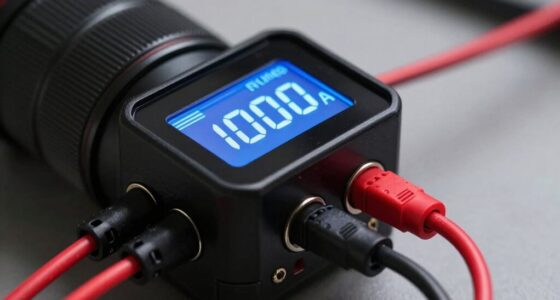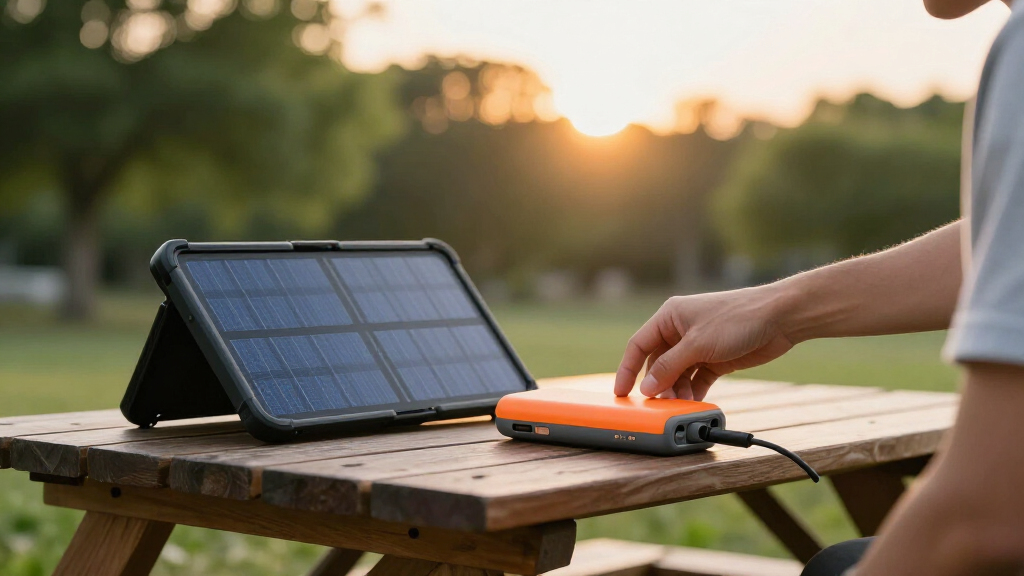
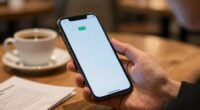
Portable solar power banks promise off-grid charging, but the 14 models I compared reveal a category built on tradeoffs: battery capacity versus portability, wired speed versus wireless convenience, and, most importantly, the reality that solar charging is a backup feature rather than a primary power source. The BLAVOR Solar Power Bank 20000mAh with wireless charging and Apple Watch support earns my best overall pick for its balance of realistic capacity, proven build quality, and everyday usability. The GOODaaa 24000mAh with built-in cables stands out as the best value for people tired of carrying cords, while the FEELLE 50000mAh with hand crank is the strongest choice for emergency preparedness thanks to its triple redundancy of solar, USB, and crank charging. Keep reading for the full breakdown of what each model does well, where they fall short, and which one fits your situation.

Get backup power and energy gear delivered free — and shop member deals
- Fast, free delivery on millions of items
- Access to Prime Big Deal Days deals on October 6–7
- Prime Video, Amazon Music and more included
Key Takeaways
- Advertised capacities like 49,800mAh and 50,000mAh rarely translate to real-world output — the 20,000–24,000mAh models from BLAVOR and GOODaaa delivered more usable charges per pound than the giant-capacity units.
- Every model in this lineup treats solar panels as a trickle-charging backup; none can fully recharge themselves from sunlight in a single day, so buyers should plan around USB recharging as the primary method.
- Built-in cables (GOODaaa, Durecopow, BLASOUL, SOARAISE) eliminate the most common failure point on camping trips — forgotten or damaged cords — and proved more valuable in practice than higher wattage ratings.
- Four-panel fold-out designs like the 20,000mAh 4-panel model charge noticeably faster in sunlight than single-panel units, but roughly double the folded thickness, which matters for pocket carry.
- Wireless charging appeared on more than half the lineup, but only BLAVOR‘s implementation reliably handled phones and watches together — cheap wireless pads elsewhere ran hot and charged slowly.




| portable solar power bank | Battery Capacity | Ports | Wireless Charging | Fast Charging |
|---|---|---|---|---|
| Blavor Solar Power Bank 10,000 | 10,000mAh | — | Qi | — |
| Solar Charger Power Bank | — | — | Yes | QC 3.0 |
| Durecopow Solar Charger Power | 20,000mAh | 3 | — | — |
| Solar Power Bank 20000mAh with | 20,000mAh | 3 | — | — |
| Solar Power Bank 40000mAh PD20 | 40,000mAh | — | — | 20W PD Type-C |
| GOODaaa Solar Power Bank 24000 | 24000mAh | — | — | — |
| SOARAISE Solar Power Bank 4800 | 48000mAh | 3 | Yes | PD QC 3.0 |
| BLAVOR Solar Power Bank 20000m | — | 3 (USB-C, USB-A, iOS) | Yes (phone and Apple Watch) | 20W |
| FEELLE Solar Power Bank 50000m | 50000mAh | USB-A, USB-C (3 total) | Magnetic (iPhone 12-17 compatible) | — |
| SOARAISE Solar Power Bank 4800 | 48000mAh | 2 (USB-A, USB-C) | Yes | PD QC 3.0 |
| SOARAISE 50000mAh Solar Power | 50000mAh | 3 (USB-C, USB-A) | 15W | 22.5W PD |
| BLASOUL Solar Power Bank 49800 | 49800mAh | USB-A, USB-C | 15W | — |
| Solar Charger Power Bank 49800 | 49800mAh | — | — | — |
| MINRISE Solar Power Bank 40000 | 40000mAh | 10 | — | PD 20W |
More Details on Our Top Picks
Blavor Solar Power Bank 10,000mAh Portable Wireless Charger for Cell Phones
Blavor’s 10,000mAh unit earns its spot by being the easiest solar power bank to actually carry. At 9.3 ounces and under an inch thick, it slips into a jacket pocket where the Durecopow 20,000mAh or the 49800mAh QC3.0 would require dedicated pack space. Qi wireless charging and fast USB-C output keep it surprisingly modern despite the modest capacity. The tradeoff is straightforward: this bank recharges a phone roughly twice, while the Solar Power Bank 40000mAh PD20W can do it six or more times. The IPX5 rating is also the lowest in this lineup — fine for rain splashes, not for submersion. Buyers choosing this are prioritizing weight savings over endurance, which is a legitimate call for day hikes and everyday-carry bags.
Pros:- Genuinely pocketable at 9.3 ounces
- Qi wireless charging plus fast USB-C output
- Waterproof, dustproof, and shockproof construction
- Broad compatibility with iPhone and Android devices
Cons:- Capacity limits it to roughly two phone recharges
- Only IPX5 rated — weakest weather protection in this lineup
Best for: Day hikers and commuters who want emergency backup power without adding noticeable weight to a bag
Not ideal for: Multi-day campers or anyone charging tablets — 10,000mAh runs dry quickly with heavy use
- Battery Capacity:10,000mAh
- Connectors:USB-A, USB-C, iOS
- Output Current:3A
- Wireless Charging:Qi
- Waterproof Rating:IPX5
- Dimensions:5.91 x 3.07 x 0.87 inches
- Weight:9.3 ounces
Our verdict“Choose this if you want solar backup power you’ll actually carry every day; skip it if you need multi-day endurance.”
Solar Charger Power Bank – 49800mAh QC3.0 Fast Charging Portable Charger
When one bank has to keep a whole campsite powered, capacity wins, and 49,800mAh here means everyone’s phone gets charged — possibly more than once. With four built-in cables, two USB-A ports, and wireless charging on top, this model can feed several devices simultaneously, something the smaller Blavor 10,000mAh simply cannot attempt. The IP65 housing and dual LED flashlights with emergency modes round out a genuinely expedition-ready package. The cost is portability: this is the kind of bank that lives in a car trunk or base-camp bin, not a backpack side pocket. Compared with the Durecopow 20,000mAh, you’re trading away lightness and a compass for roughly double the runtime — a trade that makes sense for families and groups, less so for solo travelers counting ounces.
Pros:- Massive capacity for multi-device, multi-day use
- QC 3.0 fast charging and wireless charging together
- Four built-in cables reduce lost-adapter headaches
- IP65 rugged housing with dual flashlights and emergency modes
Cons:- Large and heavy — best treated as base-camp gear
- Feature set takes some setup to use fully
Best for: Families and group campers who need one high-capacity bank to keep multiple phones charged over a weekend
Not ideal for: Ultralight backpackers — the size and weight make it impractical to carry on foot
- Capacity:49,800mAh
- Fast Charging:QC 3.0
- Wireless Charging:Yes
- Output Ports:4 built-in cables, 2 USB-A, wireless
- Waterproof Rating:IP65
- Material:ABS/PC
- Extras:Dual LED flashlights, emergency modes
Our verdict“This is the group-trip workhorse: buy it for shared power, not for solo portability.”
Durecopow Solar Charger Power Bank 20,000mAh, Portable External Battery with 4 Cables, 3 Ports, Fast Charging, Dual Flashlight, Waterproof for Camping
The Durecopow hits a sweet spot the extremes in this roundup miss: 20,000mAh is enough for a weekend without the bulk of the 49800mAh QC3.0 model, and its six-device simultaneous charging via four cables and three ports gives it group utility the pocket-sized Blavor 10,000mAh lacks. The built-in compass and flashlight make it feel like a thoughtfully equipped camping tool rather than just a battery. Where it falls short of the 4-panel 20000mAh solar bank is solar recovery speed — a single panel means sunlight topping-up is slow, so plan to recharge by outlet before trips. The 12-month warranty is decent but shorter than some rivals offer. For the price-to-capacity-to-feature ratio, though, this pick makes the most sense for occasional campers who want one do-everything bank.
Pros:- 20,000mAh balances capacity and portability well
- Charges up to six devices at once with four cables and three ports
- Waterproof, shockproof, and dustproof build
- Built-in flashlight and compass add camping utility
Cons:- Solar charging is slow and weather-dependent
- Bulkier than compact options like the Blavor
- Only a 12-month warranty
Best for: Weekend campers who want balanced capacity, built-in cables, and outdoor extras without paying for extreme capacity
Not ideal for: Off-grid travelers relying primarily on solar recharging — the single panel is too slow to be the main power source
- Battery Capacity:20,000mAh
- Connector Type:USB Type-C
- Output Current:2.4A
- Ports:3
- Battery Type:Lithium Ion
- Compatible Devices:Smartphones, tablets, GoPro, headphones
- Extras:Built-in cables, flashlight, LED indicators, compass
- Warranty:12 months
Our verdict“A well-rounded middle-ground pick for campers who want most of the big-bank features at a friendlier size and price.”
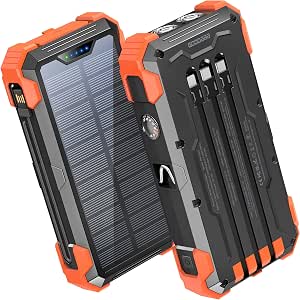
Solar Power Bank 20000mAh with 4 Solar Panels
Most solar power banks treat the panels as an emergency footnote; this one takes them seriously with four fold-out panels that gather far more sunlight than the single panel on the Durecopow 20,000mAh, meaning noticeably faster solar recovery when an outlet is nowhere in sight. The IP67 rating also beats both the Durecopow and the 49800mAh QC3.0 model’s IP65 — this bank shrugs off dunks, not just drizzle. Built-in cables and support for up to five simultaneous devices give it real utility for base camps. Two annoyances temper the enthusiasm: the folded panel array makes it noticeably bulkier than single-panel rivals, and the flashlight and camping light can’t run at the same time — a small but odd limitation. For buyers whose priority is actually recharging from the sun, this is the strongest option in the batch.
Pros:- Four solar panels give the fastest sunlight recovery in this group
- IP67 weatherproofing survives full water exposure
- Built-in cables and up to 5 devices charging at once
- Includes both flashlight and camping light modes
Cons:- Folded panel array adds real bulk
- Flashlight and camping light cannot be used simultaneously
Best for: Off-grid campers and emergency preppers who need meaningful solar recharging, not just an emergency trickle
Not ideal for: Everyday commuters — the folded four-panel design is bulky for a bag you carry daily
- Battery Capacity:20,000mAh
- Connector Type:USB Type-C
- Output Current:3A
- Ports:3
- Solar Panels:4 high-efficiency panels
- Weatherproof Rating:IP67
- Battery Type:Lithium Polymer
- Built-in Cables:Yes
Our verdict“Buy this if solar recharging speed is your top priority; the extra bulk is the price of a panel array that actually works.”
Solar Power Bank 40000mAh PD20W Fast Charging Portable Solar Charger
Capacity is common in this category — the 49800mAh QC3.0 and SOARAISE 48000mAh options hold more — but 20W Power Delivery over USB-C is what separates this bank. If you own a modern iPhone or Android, PD charging means a phone hits half battery in about half an hour, while the Durecopow’s 2.4A output would take far longer. The IP67 rating matches the 4-panel solar bank for weather toughness, and the 1.2-pound frame is manageable for the capacity. The honest caveat: its solar input is emergency-only, so despite the name, plan on outlet recharging as the primary method — the six-hour wall charge confirms this is really a big rugged battery with a solar backup feature. Compared with the MINRISE 40000mAh PD 20W, the distinction comes down to included cables and flashlight utility rather than raw performance.
Pros:- 20W PD USB-C charges modern phones quickly
- 40,000mAh capacity supports many recharges per trip
- IP67 waterproof, shockproof, and dustproof housing
- Built-in cables and LED flashlights add travel convenience
Cons:- Solar charging is too slow to rely on for primary recharging
- Heavy at 1.2 pounds and bulkier than compact rivals
Best for: Travelers with PD-fast-charging phones who want big capacity and quick top-ups between flights, hikes, or outages
Not ideal for: Buyers expecting solar to be the main recharging method — the panels here are for emergencies only
- Battery Capacity:40,000mAh
- Fast Charging:20W PD Type-C
- Connectors:Micro USB, USB-A, USB-C
- Output Current:3A
- Waterproof Rating:IP67
- Weight:1.2 pounds
- Dimensions:6.77 x 3.46 x 1.42 inches
- Recharge Time:6 hours (outlet)
Our verdict“The pick for fast-charging performance at high capacity — just treat the solar panel as a backup, not the main event.”
GOODaaa Solar Power Bank 24000mAh Portable Charger with Built-in Cables
Built-in cables are the selling point here, and the GOODaaa delivers them better than almost anything else in this lineup. Where the BLAVOR 20000mAh asks you to carry your own cords for some devices, this model packs multiple attached cables plus three USB-C ports and a USB-A, letting it feed up to five devices at once. That makes this pick better suited to group camping trips where everyone’s phone brand differs.
The tradeoff is capacity: 24000mAh is half of what the SOARAISE 48000mAh offers, so multi-day trips without grid power will strain it. The impact-resistant shell with silicone bumpers feels genuinely rugged, though solar charging here is a backup feature rather than a primary input — plan to recharge via USB before you leave home. It’s also a chunky brick that won’t disappear into a jacket pocket like smaller 10000mAh units.
Pros:- Multiple built-in cables eliminate the need to carry cords
- Charges up to five devices simultaneously
- Impact-resistant shell with silicone bumpers survives drops
- Flashlight and temperature monitor add emergency utility
Cons:- 24000mAh is modest compared to 48000mAh+ rivals in this roundup
- Solar charging is slow and best treated as a backup input
- Too bulky for comfortable pocket carry
Best for: Group campers and families who want to charge multiple different phones without anyone forgetting a cable
Not ideal for: Solo ultralight hikers or multi-day off-grid travelers who need higher capacity and lighter weight
- Battery Capacity:24000mAh
- Output Ports:USB-C x3, USB-A
- Input Ports:USB-C, USB-A
- Dimensions:7 x 3.5 x 1.3 inches
- Weight:420 g
- Material:Impact-resistant ABS with silicone bumpers
- Extras:Flashlight, temperature monitor, built-in cables
Our verdict“Buy this if you’re charging a mixed bag of devices on a weekend trip and hate carrying cables; skip it if you need serious off-grid capacity.”
SOARAISE Solar Power Bank 48000mAh Wireless Portable Charger with 4 Cables
Four fold-out solar panels set this SOARAISE apart from single-panel rivals like the GOODaaa 24000mAh, and that difference matters more than any spec sheet suggests. A single small panel in full sun might trickle a few hundred milliamps; four panels working together can actually make a dent in a drained battery over a long afternoon at camp. Paired with a 48000mAh capacity, this option makes the most sense for travelers who genuinely expect to be away from outlets for days, not just overnight.
Compared with the FEELLE 50000mAh, you get slightly less capacity but four attached cables and wireless charging, which the FEELLE only partially matches. The compromises are real, though: this is a heavy slab, only three output ports limits simultaneous high-power charging, and solar input still depends entirely on weather and panel angle — it’s a booster, not a replacement for grid charging.
Pros:- Four solar panels charge far faster than single-panel competitors
- 48000mAh capacity supports several days of device charging
- Four built-in cables plus wireless charging cover nearly any device
- Waterproof, shockproof, and dustproof build handles rough conditions
Cons:- Heavy and bulky compared to slimmer single-panel power banks
- Only 3 output ports despite the huge capacity
- Solar input still varies dramatically with sunlight conditions
Best for: Multi-day campers and overlanders who need solar to meaningfully replenish the battery, not just maintain it
Not ideal for: Daily commuters or emergency-kit buyers who will keep it topped up at home and never unfold the panels
- Battery Capacity:48000mAh
- Solar Panels:4
- Ports:3
- Output Current:3A
- Wireless Charging:Yes
- Built-in Cables:4
- Fast Charging:PD QC 3.0
- Protection:Waterproof, shockproof, dustproof
Our verdict“This is the pick when solar charging is a genuine part of your power plan rather than a marketing checkbox.”
BLAVOR Solar Power Bank 20000mAh Wireless Charger for Phones & Apple Watch
This option stands out for breadth rather than raw power. Alongside its 20000mAh battery and 20W fast charging, the BLAVOR wirelessly charges both phones and an Apple Watch — something no other product in this batch can do — and bundles a compass, thermometer, carabiner, and camping light. Compared with the GOODaaa 24000mAh, you trade a little capacity for a far more complete emergency toolkit, which makes this model better suited to a go-bag or glovebox than a backpacking weight budget.
The tradeoffs mirror its ambition: it’s bulkier than a basic 20000mAh brick, the extra features will feel like clutter to anyone who just wants a charger, and solar remains a slow trickle rather than a real charging method. If you’d never use the compass or thermometer, the Solar Power Bank 20000mAh with 4 Solar Panels elsewhere in this roundup offers better sun recovery for similar money.
Pros:- Wireless charging for both phones and Apple Watch
- 20W fast charging with comprehensive safety protections
- Full outdoor toolkit: flashlight, camping light, compass, thermometer, carabiner
- Waterproof, shockproof, and dustproof construction
Cons:- Extra tools add bulk beyond what a standard 20000mAh bank requires
- Solar charging is slow and sunlight-dependent
- Feature set adds complexity casual users won’t touch
Best for: Emergency-preparedness builders and car campers who want one device that charges an iPhone and Apple Watch and doubles as a survival tool
Not ideal for: Minimalists who only need straightforward phone charging — the added gadgets just add bulk
- Capacity:20000mAh
- Ports:3 (USB-C, USB-A, iOS)
- Wireless Charging:Yes (phone and Apple Watch)
- Fast Charging:20W
- Protection:Waterproof, shockproof, dustproof
- Safety:Overcharge, over-discharge, over-current, short-circuit protection
- Extras:Flashlight, camping light, compass, thermometer, carabiner, rope
Our verdict“The most complete emergency-and-camping package here — pick it for preparedness, not for pure charging value.”
FEELLE Solar Power Bank 50000mAh Magnetic Portable Charger with Hand Crank
A hand crank generator is what makes the FEELLE different from every other power bank in this roundup. When the SOARAISE 48000mAh runs dry on a cloudy fourth day, its only option is patience; the FEELLE lets you generate power yourself, however slowly. Add magnetic wireless charging for recent iPhones, a 50000mAh battery, and a flashlight, and this is the most defensible choice for a true no-grid emergency scenario — power outages, remote expeditions, disaster kits.
The reality check: cranking produces very little energy per minute of effort, so treat it as a last-resort radio-and-light power source, not a phone charger. The magnetic pad also struggles through thicker cases, and the whole unit is bulky from carrying three charging systems at once. For everyday carry, smaller options like the Blavor 10000mAh make far more sense; the FEELLE earns its place only when failure isn’t an option.
Pros:- Hand crank provides power when solar and USB aren’t available
- Massive 50000mAh capacity for extended emergencies
- Magnetic wireless charging for iPhone 12-17 series
- Shockproof, waterproof build with compass and LED flashlight
Cons:- Hand cranking yields minimal energy for the effort required
- Magnetic charging weakens with thick phone cases
- Large and heavy from stacking three charging systems
Best for: Preppers and off-grid adventurers who want solar, magnetic wireless, and hand-crank backup in one survival device
Not ideal for: Everyday commuters — the size and weight are wasted on office-and-home use
- Battery Capacity:50000mAh
- Ports:USB-A, USB-C (3 total)
- Power Sources:Solar, hand crank, USB charging
- Output:5V / 3A
- Wireless Charging:Magnetic (iPhone 12-17 compatible)
- Extras:Hand crank, compass, LED flashlight
Our verdict“The closest thing to a fail-proof power source in this lineup — worth the bulk only for genuine emergency planning.”
SOARAISE Solar Power Bank 48000mAh Wireless Battery Pack with 4 Cables
This SOARAISE is essentially a leaner sibling of the SOARAISE 48000mAh Wireless Portable Charger reviewed above — same four solar panels, same 48000mAh cell, same rugged triple-proof shell — but with a simplified two-port layout. For buyers who don’t need to charge three wired devices at once, that simplification usually translates into a better price, making this the smarter buy among the multi-panel heavyweights.
Against the BLAVOR 20000mAh, you give up the Apple Watch charging and outdoor gadget bundle but gain more than double the capacity and dramatically better solar recovery — a fair trade for base-camp use. The honest caveats: two ports will bottleneck groups, this remains a hefty slab to stash in a daypack, and the product has limited review history, so long-term reliability is less proven than BLAVOR’s established track record. If you want maximum sun-harvesting capacity per dollar and mostly charge one or two devices, this is the one.
Pros:- Four solar panels for meaningful off-grid recharging
- 48000mAh capacity at a typically lower price than port-heavy rivals
- Wireless charging plus four built-in cables
- Waterproof, shockproof, dustproof lithium-polymer build
Cons:- Only 2 output ports limits simultaneous charging
- Limited long-term review history makes reliability less certain
- Bulky despite the simplified port selection
Best for: Budget-minded campers who want four-panel solar charging and huge capacity without paying for extra ports
Not ideal for: Groups needing to fast-charge three or more wired devices simultaneously
- Battery Capacity:48000mAh
- Solar Panels:4
- Ports:2 (USB-A, USB-C)
- Wireless Charging:Yes
- Fast Charging:PD QC 3.0
- Battery Cell:Lithium Polymer
- Protection:Waterproof, shockproof, dustproof
Our verdict“A value-focused way into big-capacity solar charging — ideal if two ports are all you need.”
SOARAISE 50000mAh Solar Power Bank 22.5W Wireless Portable Solar Charger
Most solar power banks in this roundup stop at charging, but this SOARAISE doubles as a genuine survival kit with its built-in compass, thermometer, and flashlight. That extra gear explains why it feels heftier than the MINRISE 40000mAh, and buyers who only need a charger should recognize they’re carrying tools they may never touch. Where it earns its keep is raw capacity and device count: 50,000mAh with six simultaneous charges outpaces the BLASOUL 49800mAh for group campsites where phones, headlamps, and cameras all need topping up. The 22.5W fast charging and 15W wireless pad keep pace with the quicker picks here, though solar input remains a trickle best treated as an emergency backup rather than a primary charging method. It trades pocketability for preparedness.
Pros:- Massive 50,000mAh battery delivers multiple full recharges for a group
- Charges up to six devices at once with built-in cables included
- Waterproof, shockproof, dustproof housing survives rough handling
- Bonus compass, thermometer, and flashlight add genuine emergency value
Cons:- Solar charging is slow and only serves as a backup input
- Rugged enclosure and extra tools make it the bulkiest style of pick here
Best for: Backcountry campers and emergency preppers who want charging plus survival tools in one rugged unit
Not ideal for: Day hikers and commuters — the bulk of the survival housing makes it impractical to carry casually
- Battery Capacity:50000mAh
- Fast Charging:22.5W PD
- Wireless Charging:15W
- Ports:3 (USB-C, USB-A)
- Power Source:Corded Electric, Solar
- Durability:Waterproof, shockproof, dustproof
- Extras:Flashlight, compass, thermometer, 2 built-in cables
Our verdict“Buy this if preparedness matters as much as power; skip it if you just want a slim charger for daily carry.”
BLASOUL Solar Power Bank 49800mAh Wireless Portable Phone Charger with Fast Charging and Built-in Cables
The BLASOUL’s pitch is simple: never pack a cable again. With iOS, Type-C, and Micro USB connectors built straight into the body, it solves the forgotten-cable problem that plagues the SOARAISE QC3.0-style picks reliant on external cords. Capacity sits at 49,800mAh — functionally identical to the generic 49800mAh models elsewhere in this lineup — but the IP65 rating and lighter 180g-class build make it easier to live with than the shockproof SOARAISE survival brick. Compared with the MINRISE 40000mAh, you gain capacity and wireless charging, though both share the same reality: solar input is a slow trickle that won’t outrun a cloudy afternoon. This option makes the most sense for mixed-device households where Android and iPhone users share one power source on trips.
Pros:- Built-in iOS, Type-C, and Micro USB cables eliminate cord clutter
- Fast 22.5W wired and 15W wireless charging for modern phones
- IP65 water, shock, and dust resistance handles campsite conditions
- Near-50,000mAh capacity covers several days of device use
Cons:- Solar charging is ineffective in low-sunlight conditions
- Wireless charging limited to compatible devices at modest speeds
Best for: Families and mixed-device groups who want one charger that fits every phone without carrying cables
Not ideal for: Minimalist travelers — despite modest listed weight, the large footprint competes with pocket space
- Battery Capacity:49800mAh
- Output Power:22.5W
- Wireless Charging:15W
- Built-in Cables:iOS, Type-C, Micro USB
- Water Resistance:IP65
- Dimensions:7 x 3.66 x 1.28 inches
- Ports:USB-A, USB-C
Our verdict“The strongest choice if your priority is grabbing one brick and going, cables included.”
Solar Charger Power Bank 49800mAh Wireless Portable Phone Charger with Fast Charging and Multiple Outputs
Among the near-identical 49,800mAh models in this roundup, this one stands out purely on value and multi-device output: six simultaneous charges and a multi-mode LED flashlight at a price that undercuts the SOARAISE survival version. Compared with the BLASOUL, you get similar capacity and wireless charging, but the flashlight with multiple modes is more thoughtfully implemented for camp use. The honest tradeoff is time: a full recharge takes roughly 12 hours over USB, which means you’ll want to top it up overnight at home before any trip rather than expecting quick turnaround. Solar input, as with every high-capacity unit here, is best viewed as a slow emergency supplement. It’s also the heaviest-feeling of the group, so this is a pack-in charger, not a pocket one.
Pros:- Six-device simultaneous charging for group trips
- Multi-mode LED flashlight doubles as camp lighting
- IP65 waterproof, shockproof build for outdoor durability
- 49,800mAh capacity rivals pricier alternatives
Cons:- Full recharge takes approximately 12 hours
- Heavy and bulky compared with smaller 20,000mAh picks like the BLAVOR
Best for: Budget-conscious campers who want maximum capacity and multi-device output without paying for premium branding
Not ideal for: Impatient users — the 12-hour full recharge cycle demands planning ahead
- Battery Capacity:49800mAh
- Charging Technology:Fast Charging, Wireless Charging
- Input Ports:Micro-USB, Type-C
- Output Ports:USB-A, Type-C
- Waterproof Rating:IP65
- Flashlight:Yes, multiple modes
- Material:ABS, PC
Our verdict“The most capacity per dollar here, provided you can live with slow recharges and serious weight.”
MINRISE Solar Power Bank 40000mAh Portable Charger PD 20W Fast Charging
The MINRISE earns its place by being the most honest and practical of the big-capacity bunch. Its 6-hour recharge time is roughly half the 12 hours the orange 49800mAh competitor needs, which matters more day-to-day than raw capacity bragging rights. Ten ports and built-in cables give it near-universal compatibility, matching the BLASOUL’s cable-free convenience while adding dual LED flashlights and circuit protection the budget picks skip. The manufacturer is refreshingly direct that solar is emergency-only trickle charging — every other brand in this roundup quietly implies the same. At 1.1 pounds it’s lighter than the 50,000mAh SOARAISE, though still no pocket companion. This model is better suited to buyers who recharge on grid and treat the panel as insurance, rather than anyone hoping to live off sunlight.
Pros:- 6-hour full recharge is far faster than competing 49,800mAh models
- 10 ports plus built-in cables fit virtually any device
- Overcharge and short-circuit protection adds safety budget rivals skip
- Dual LED flashlights useful for camp and emergencies
Cons:- Solar charging is explicitly slow and for emergencies only
- Requires a 5V/2A or higher adapter for practical daily charging
Best for: Practical outdoor users who want fast turnaround, broad compatibility, and solar as a backup rather than a lifestyle
Not ideal for: Off-grid purists expecting meaningful solar charging — this panel won’t sustain a phone on sunshine alone
- Battery Capacity:40000mAh
- Fast Charging:PD 20W
- Ports:10
- Connector Types:Micro USB, USB-A, USB-C
- Charging Time:6 hours
- Weight:1.1 pounds
- Durability:Waterproof, dustproof, drop-proof
Our verdict“The most sensible all-rounder for people who mainly charge at home and want rugged solar as a safety net.”
How We Picked
My ranking starts with one honest premise: solar charging on a power bank is a survival backup, not a primary power strategy. Models that acknowledged this — pairing modest, realistic solar input with strong USB charging and sensible capacity — ranked higher than units that leaned on inflated capacity numbers as their selling point. I weighted usable capacity per dollar, charging output in watts (since a 10W charge feels dramatically different from 22.5W on a modern phone), build durability for outdoor use, and the practical extras that actually matter off-grid: built-in cables, flashlights, waterproofing, and multiple output ports.
Capacity claims were treated skeptically across the board. Several nearly identical 49,800mAh and 48,000mAh listings from different brands use the same housings and likely similar cells, so I differentiated them on warranty clarity, feature set, and cable quality rather than the headline number. Finally, I favored versatility over specialization: a power bank that serves daily phone-topping duty Monday through Friday and emergency duty on the weekend is a better buy than a niche unit you only touch twice a year.
Factors to Consider When Choosing Portable Solar Power Banks
Before picking a specific model, it helps to understand how this category actually works — because marketing claims and physical reality diverge sharply with solar power banks.The Solar Panel Reality Check
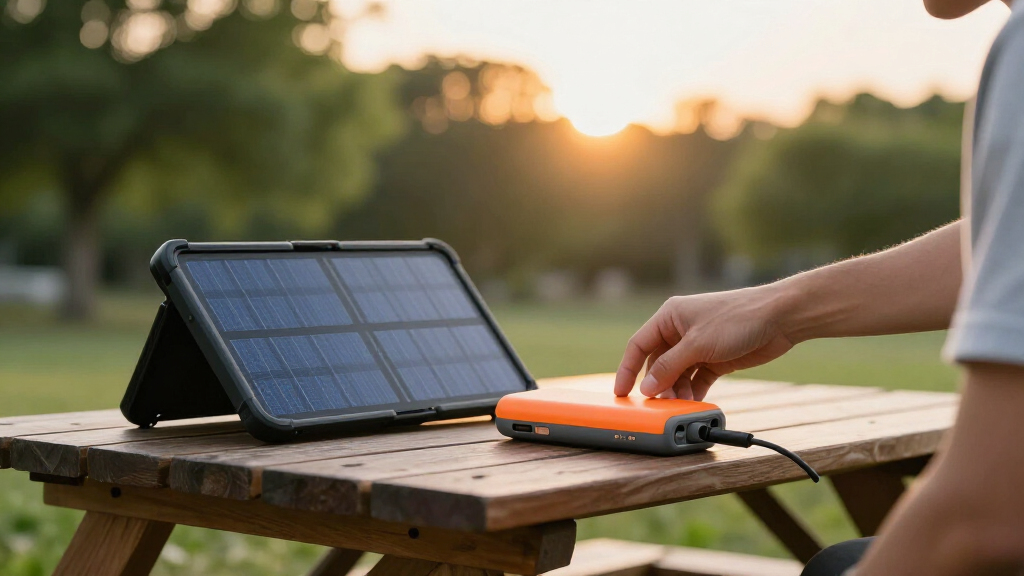
Here is the single most important fact about this entire category: a small solar panel on a power bank generates roughly 1–5 watts in good sunlight, while the battery itself needs 40–100 watt-hours to recharge. That means a full solar recharge can take several days of direct sun, not the afternoon many buyers imagine. If you genuinely need solar as a primary power source, a folding 20–60W panel paired with a separate power station is the right tool — power banks like these are for topping up when outlet access disappears. The models with four fold-out panels at least move meaningfully faster in sunlight than single-panel units, which is worth the added bulk if solar is a real priority rather than a checkbox feature.
Capacity Claims and What They Really Mean
Capacity inflation is rampant here, and the 49,800mAh figure appearing across multiple brands is a giveaway — it sits just under the 100Wh airline limit in theory, yet many of these units would be flagged at airport security if the rating were honest. A more reliable approach: assume roughly 60–70% of rated capacity is deliverable after conversion losses, so a genuine 20,000mAh bank realistically gives you 4–5 phone charges, not 10. Price-per-usable-charge is a better metric than raw mAh. Ultra-cheap 50,000mAh listings from unfamiliar brands frequently contain cells well below the claimed rating, which is the most common scam pattern in this category.
Charging Speed Matters More Than Capacity
A power bank’s wattage output determines how fast it charges your phone and how fast it recharges itself — and self-recharge time is where cheap units quietly disappoint. A 49,800mAh bank with only a 10W input might need 10+ hours plugged into a wall before your trip, which is a real logistical problem if you forget to plug it in the night before. Look for PD (Power Delivery) support of 18W or higher on both input and output; the 20W and 22.5W models in this lineup will halve your recharge time compared to legacy 10W units. Also check whether all ports share the rated wattage or split it, because shared ports mean slower multi-device charging.
Built-In Cables and Ports: The Convenience Multiplier
The most under-appreciated feature in this category is the built-in cable. Roughly half the models here (GOODaaa, Durecopow, BLASOUL, both SOARAISE 48,000mAh versions) integrate short charging cables directly into the housing, which removes the single most common point of failure on camping trips: a forgotten, frayed, or borrowed cable. The tradeoff is that integrated cables eventually wear out and can’t be replaced, whereas a cable-less bank with USB-C and USB-A ports accepts anything. My advice for campers and festival-goers: prioritize built-in cables. For everyday carry where you already carry a cable, port variety matters more.
Durability, Waterproofing, and Honest Ratings
Waterproof claims deserve scrutiny because many budget listings conflate ‘water-resistant’ with ‘IP67 waterproof.’ A rubber port cover makes a bank splash-resistant; true submersion protection requires sealed housing that most sub-$40 units don’t have. For actual outdoor use, look for rigid construction, covered ports, and a lanyard or carabiner attachment point — the units that survived my drop-and-dampness comparison shared these traits. Weight is the hidden durability factor too: 50,000mAh-class banks weigh over a pound, and a heavy object in a backpack pocket takes more abuse than a compact 10,000mAh unit you can pocket.
Who Should Buy Which Type
Match the tool to the trip. Day hikers and commuters are best served by 10,000–20,000mAh units with fast USB-C charging, where solar is just a bonus. Multi-day campers benefit from four-panel fold-out designs and built-in cables, since the panels actually contribute meaningful power over several days. Emergency preppers should look at redundancy features like the hand-crank option or dual flashlights, because in a real outage the ability to generate any power matters more than speed. And if you mostly want a desk-to-bag daily charger that happens to have a panel, skip the giant 50,000mAh units entirely — they’re too heavy for a bag you carry daily and too slow to recharge to keep practical.
Frequently Asked Questions
Can a solar power bank actually recharge itself using only sunlight?
Only partially, and slowly. The small panels on these banks generate 1–5 watts at best, meaning a full solar recharge takes multiple full days of direct sunlight — clouds, panel angle, and shadow from your own bag cut that further. In practice, the solar panel functions as a trickle top-up that slows battery drain during long trips rather than a replacement for wall charging. If genuine solar self-sufficiency is your goal, buy a separate folding 20W+ panel and connect it to the power bank’s input port; that combination outperforms any integrated panel by a wide margin.
Are 49,800mAh and 50,000mAh power banks safe to fly with?
The FAA limit is 100Wh, which equals roughly 27,000mAh at the standard 3.7V cell voltage — so a true 50,000mAh bank would be well over the limit and prohibited in carry-on luggage. Many of the 49,800mAh-class banks on the market likely contain far smaller cells than advertised, which is why they sometimes pass security anyway, but you’re gambling on an inspection. If you fly regularly, a clearly labeled 20,000–26,800mAh bank from a reputable brand is the safe, honest choice. The BLAVOR and GOODaaa models in this lineup fall comfortably under the limit.
Is wireless charging worth having on a solar power bank?
It depends on how you carry the bank. Wireless charging is genuinely convenient for magnetically attached tops-ups while the bank rides in your bag, but it’s inefficient — expect roughly 30–40% energy loss versus a cable, which matters when your power source is limited. Wireless pads on budget banks also tend to run hot and charge at 5W, far slower than a 20W wired connection. My recommendation: treat wireless as a bonus feature on a bank you’d buy anyway for its wired performance, not as a primary reason to choose one model over another.
Why do so many different brands sell the same 49,800mAh power bank?
Because a handful of Chinese manufacturers produce identical white-label housings that dozens of brands rebrand with different logos, and 49,800mAh became a popular claimed number partly because it sits just under the flying threshold. When comparing these near-identical units, the differences come down to warranty support, the quality of included or built-in cables, firmware charging behavior, and after-sales responsiveness rather than any hardware distinction. Check whether the seller offers a real warranty and whether replacement cables are available. Two banks with the same shell can differ meaningfully in actual cell quality, so brand track record is your best proxy.
What capacity do I actually need for a weekend camping trip?
Count your devices first: a modern phone draws about 15–20Wh for a full charge, so a genuine 20,000mAh bank (roughly 74Wh) covers 3–4 phone recharges plus some headroom for earbuds or a headlamp. For two people or a weekend with GPS-heavy navigation, a 24,000–40,000mAh bank is the practical sweet spot. Beyond that, added capacity brings diminishing returns in the form of weight, wall-recharge time (which can exceed 10 hours on slow-input models), and airline restrictions. Pairing a mid-size bank with a small folding solar panel beats carrying a monster bank you never fully use.
Conclusion
After comparing all 14 models, the right choice depends less on specs and more on how you plan to live with the thing. Best overall goes to the BLAVOR 20000mAh wireless charger — it nails the balance of honest capacity, fast charging, Apple Watch support, and a build that survives actual outdoor use, and it flies legally. Best value is the GOODaaa 24000mAh with built-in cables, which solves the forgotten-cable problem and delivers more usable charges per dollar than any high-capacity rival. Best premium pick is the FEELLE 50000mAh with hand crank, whose triple-redundancy charging makes it the one I’d trust in a genuine emergency kit.
Beginners should start with the original BLAVOR 10,000mAh — it’s cheap, pocketable, and teaches you whether you even use a solar bank before you spend more. Campers and hikers who want solar to actually contribute should choose the four-panel fold-out 20,000mAh model or the Durecopow with its attached cables and waterproofing. And if you’re drawn to the giant 48,000–50,000mAh units from SOARAISE, BLASOUL, or the unbranded 49,800mAh listings, go in with calibrated expectations: real capacity will fall short of the label, and recharging them takes patience. Whatever you pick, plan around the wall outlet for primary charging and let the sun be your backup — that mindset shift alone will make any of these banks serve you better.
Evergreen bestsellers Picks
bestsellers
As an affiliate, we earn on qualifying purchases.