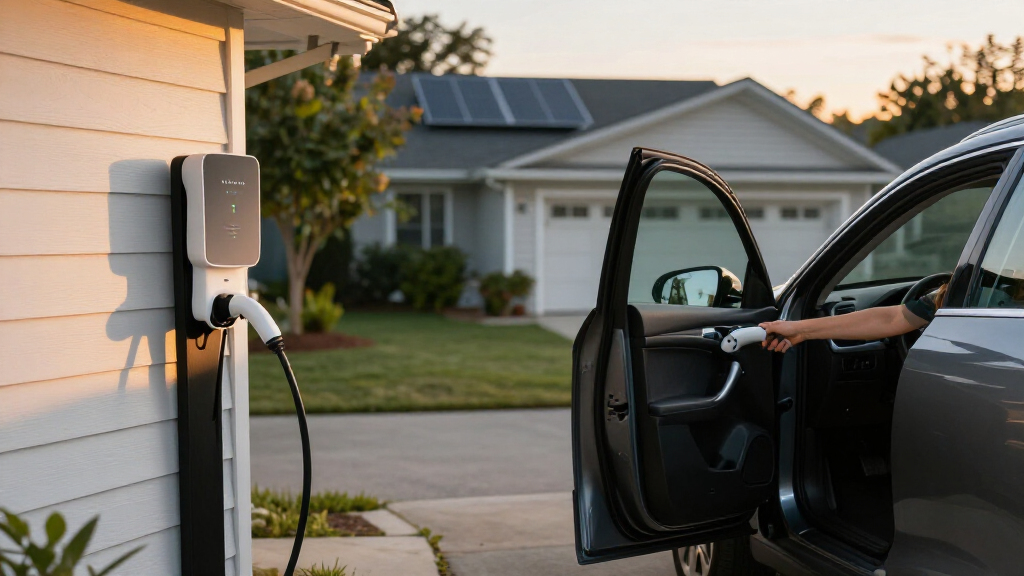

Choosing the right home charging solution defines your daily EV routine, balancing speed, installation complexity, and cost. The Emporia Pro Level 2 EV Charger stands out as the best overall choice for most homeowners, offering smart energy management and reliable 48A performance without requiring complex hardwiring for basic use. For those prioritizing flexibility, the Energbison Portable EV Charger excels by offering both Level 1 and Level 2 capabilities in a single compact unit. Buyers typically face a tradeoff between the raw speed of high-amperage hardwired units and the versatility of portable chargers that work with standard outlets. This guide breaks down the twelve top options to help you decide which features justify the investment for your specific garage setup and driving habits.

Get backup power and energy gear delivered free with Prime
- Fast, free delivery on millions of items
- Prime Video, Amazon Music and more included
- Member-only deals all year
Key Takeaways
- Smart energy management features like those in the Emporia Pro are increasingly standard and can prevent breaker trips by dynamically adjusting amperage.
- Portable Level 2 chargers with NEMA 14-50 plugs offer a significant speed upgrade over Level 1 without requiring permanent electrical installation.
- Hardwired 48A chargers provide the fastest charging speeds but demand professional installation and dedicated 240V circuits.
- Cable length is a critical differentiator; 25-foot cables provide essential flexibility for garages where parking spots are not directly adjacent to the breaker box.
- Wi-Fi connectivity enables scheduling and monitoring, allowing users to take advantage of off-peak electricity rates automatically.
| AIMILER Level 2 EV Charger, 32A, 25 ft Cable, Wi-Fi App, NEMA 14-50 Plug, J1772 Connector |  | Best for App-Controlled Plug-In Charging | Maximum output: 32A; up to 7.68 kW | Voltage: 240V | Vehicle connector: J1772 | VIEW ON AMAZON | See Our Full Breakdown |
| Energbison 16A Level 1 and Level 2 Portable EV Charger, 25 ft Cable |  | Best for Outlet Flexibility | Charging voltage: 110V–240V | Maximum current: 16A | Power: 1.44 kW at 110V; 3.68 kW at 240V | VIEW ON AMAZON | See Our Full Breakdown |
| EVDANCE Level 2 Portable EV Charger, 32A, 240V, NEMA 14-50P, 25 ft Cable |  | Best Portable Kit for Home and Travel | Maximum output: 32A; up to 7.68 kW | Voltage: 240V | Power plug: NEMA 14-50P | VIEW ON AMAZON | See Our Full Breakdown |
| 48A Level 2 Hardwired EV Charger with 25 ft J1772 Cable |  | Best for Flexible Access Control | Maximum output: 48A; up to 11.5 kW | Input voltage: 240V | Installation: Hardwired; requires a 60A-or-higher circuit | VIEW ON AMAZON | See Our Full Breakdown |
| IYILO Level 2 EV Charger, 48A, 11.5 kW, 240V, J1772 |  | Best for Shared-Circuit Hardwired Charging | Maximum output: 48A; 11.5 kW | Voltage: 240V | Installation: Hardwired; requires a 60A breaker | VIEW ON AMAZON | See Our Full Breakdown |
| AplysiaTech Portable Level 1 and Level 2 EV Charger |  | Best Compact Dual-Voltage Option | Charging Levels: Level 1 and Level 2 | Maximum Current: 16 A | Cable Length: 21 ft | VIEW ON AMAZON | See Our Full Breakdown |
| EVDANCE Level 2 Portable EV Charger |  | Best High-Power Portable | Charging Level: Level 2 | Maximum Current: 40 A | Voltage: 240 V | VIEW ON AMAZON | See Our Full Breakdown |
| Emporia Pro Level 2 EV Charger with PowerSmart |  | Best Smart Load Balancing | Charging Level: Level 2 | Maximum Current: 48 A | Cable Length: 25 ft | VIEW ON AMAZON | See Our Full Breakdown |
| Grasside Portable Level 1 and Level 2 EV Charger |  | Best Budget-Friendly Flexibility | Charging Levels: Level 1 and Level 2 | Current Settings: 8A, 10A, 12A, 16A | Maximum Power: 3.84 kW | VIEW ON AMAZON | See Our Full Breakdown |
| EVIQO Level 2 EV Charger |  | Best Value Smart Charger | Charging Level: Level 2 | Maximum Amperage: 40 A | Input: 240 V, NEMA 14-50 | VIEW ON AMAZON | See Our Full Breakdown |
| ChargePoint HomeFlex Level 2 EV Charger | 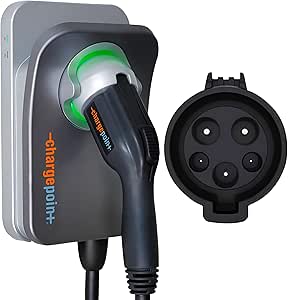 | Best Premium Smart Charger | Amperage: 16–50 A (Adjustable) | Output Voltage: 240 volts AC | Connector: J1772 | VIEW ON AMAZON | See Our Full Breakdown |
| EVDANCE Portable Level 1 and Level 2 EV Charger |  | Best Budget Dual-Voltage Option | Charging Levels: Level 1 and Level 2 | Current: 12A at 120V; 16A at 240V | Connector: J1772 | VIEW ON AMAZON | See Our Full Breakdown |
| home ev chargers for faster easier charging | Cable length | Warranty |
|---|---|---|
| AIMILER Level 2 EV Charger | 25 ft | — |
| Energbison 16A Level 1 and Lev | 25 ft | — |
| EVDANCE Level 2 Portable EV Ch | 25 ft | — |
| 48A Level 2 Hardwired EV Charg | 25 ft | 3 years |
| IYILO Level 2 EV Charger | 25 ft | 3 years |
| AplysiaTech Portable Level 1 a | 21 ft | — |
| EVDANCE Level 2 Portable EV Ch | 25 ft | — |
| Emporia Pro Level 2 EV Charger | 25 ft | 3 years |
| Grasside Portable Level 1 and | — | 2 years |
| EVIQO Level 2 EV Charger | 25 ft | 3 years |
| ChargePoint HomeFlex Level 2 E | 23 ft | 3 years |
| EVDANCE Portable Level 1 and L | 25 ft | 1 year |
More Details on Our Top Picks
AIMILER Level 2 EV Charger, 32A, 25 ft Cable, Wi-Fi App, NEMA 14-50 Plug, J1772 Connector
The AIMILER pairs a useful 32A, 7.68 kW output with Wi-Fi scheduling and charging-status tracking, so you can manage charging without stepping out to check the unit. Its 25-foot cable gives it more reach than a typical short-reach setup, while adjustable current helps match charging to the circuit and vehicle. Compared with the EVDANCE 32A portable charger, the AIMILER adds app control; EVDANCE instead includes a carrying case and wall-mounting bracket. That convenience comes with limits: setup requires 2.4 GHz Wi-Fi, and Tesla or other NACS vehicles need a separate adapter. The listed 5-15P adapter is not included, so buyers should not assume they can use a standard household outlet out of the box. This is a strong fit for J1772 drivers who want a portable charger with connected controls, not a universal plug-in solution.
Pros:- Up to 32A and 7.68 kW for faster charging than 16A portable options
- Wi-Fi app supports charging schedules and status tracking
- 25-foot cable offers flexibility in where the vehicle is parked
- Adjustable current and ETL and FCC listings
Cons:- Tesla and other NACS vehicles require a separately purchased adapter
- App setup requires a 2.4 GHz Wi-Fi network
- The 5-15P adapter is not included, and household-outlet charging is slower
Best for: J1772 EV or plug-in-hybrid owners with a NEMA 14-50 outlet who want scheduling and charging updates through Wi-Fi.
Not ideal for: Tesla or other NACS drivers without an adapter, and buyers who need included household-outlet charging or cannot use 2.4 GHz Wi-Fi.
- Maximum output:32A; up to 7.68 kW
- Voltage:240V
- Vehicle connector:J1772
- Power plug:NEMA 14-50
- Cable length:25 ft
- Current adjustment:16A–32A
- Controls and display:Wi-Fi app, scheduling, status tracking, LED screen
- Certifications:ETL, FCC
Our verdict“Choose the AIMILER if you want app-managed 32A charging from a NEMA 14-50 outlet and can work around its adapter and Wi-Fi requirements.”
Energbison 16A Level 1 and Level 2 Portable EV Charger, 25 ft Cable
The Energbison is the lineup’s outlet-flexibility pick: it can charge from 110V or 240V and includes NEMA 5-15 and 6-20 connection options. That makes it more adaptable for renters, travel, or homes where a dedicated 14-50 receptacle is not available, though its 16A ceiling means slower charging than the 32A AIMILER or EVDANCE portable units. The 1–12 hour delay timer can shift charging to a preferred time, and the IP66-rated control box is suited to tougher conditions than the EVDANCE 32A unit, which is not recommended for heavy rain or direct sun. The tradeoff is speed: even at 240V, its 3.68 kW maximum is aimed at topping up rather than recovering a large daily range quickly. Buyers should also confirm the vehicle’s connector needs before purchase.
Pros:- Works with 110V and 240V power using included outlet adapters
- Adjustable current from 6A to 16A, with a limit for 5-15 outlets
- 25-foot cable and IP66-rated control box suit varied parking setups
- Delay timer and multiple safety protections support scheduled charging
Cons:- 16A maximum is slower than the 32A AIMILER and EVDANCE portable chargers
- Maximum 240V output is 3.68 kW
- J1772 compatibility may require an adapter for some vehicles
Best for: Drivers who need one portable charger for both household 110V outlets and compatible 240V outlets, especially renters or people who charge at multiple locations.
Not ideal for: Drivers who need fast daily replenishment or routinely add substantial range overnight; its maximum output is lower than the 32A portable chargers.
- Charging voltage:110V–240V
- Maximum current:16A
- Power:1.44 kW at 110V; 3.68 kW at 240V
- Vehicle connector:SAE J1772
- Outlet connections:NEMA 6-20 plug with NEMA 5-15 adapter
- Cable length:25 ft
- Delay timer:1–12 hours
- Control-box protection:IP66
Our verdict“Pick the Energbison for outlet flexibility and portable, lower-power charging rather than for the fastest overnight refill.”
EVDANCE Level 2 Portable EV Charger, 32A, 240V, NEMA 14-50P, 25 ft Cable
The EVDANCE makes a practical case for buyers who want one 32A portable charger that can live on a garage wall or go in the car for trips. Its 25-foot cable, carrying case, and wall-mounting bracket make that dual role easier than with the AIMILER, whose main advantage is Wi-Fi app scheduling. Five current settings—from 10A to 32A—let drivers lower the draw when sharing a circuit or using a less capable supply, while the LED display shows charging information at the unit. At up to 7.68 kW, it offers the same stated maximum output as the AIMILER, but skips app controls. Its stated limitation is weather exposure: it is not recommended for direct sun or heavy rain, so outdoor installation needs more care. Tesla drivers also need a separate adapter.
Pros:- Up to 32A and 7.68 kW for capable Level 2 home charging
- Five current settings help adapt charging to different circuit limits
- 25-foot cable, carrying case, and wall-mounting bracket support home and travel use
- LED display and delayed charging settings provide local control
Cons:- Tesla vehicles require a separate J1772 adapter
- Not recommended for direct sun or heavy rain
- No Wi-Fi app control for remote monitoring or scheduling
Best for: J1772 drivers who want a 32A charger that can be mounted at home yet packed away for travel, with included storage and mounting accessories.
Not ideal for: Buyers who need app-based charging control or a charger intended to sit in direct sun or heavy rain.
- Maximum output:32A; up to 7.68 kW
- Voltage:240V
- Power plug:NEMA 14-50P
- Vehicle connector:SAE J1772
- Cable length:25 ft
- Current settings:10A, 16A, 20A, 24A, 32A
- Controls:LED display and delayed charging
- Included accessories:Carrying case and wall-mounting bracket
Our verdict“Choose the EVDANCE 32A portable kit if you want useful mounting and travel accessories more than app-connected controls.”
48A Level 2 Hardwired EV Charger with 25 ft J1772 Cable
This hardwired unit is for households ready to move beyond plug-in charging: 48A and 11.5 kW can deliver more power than the 32A portable chargers in this group, provided the home has a suitable circuit. Its distinction is access choice. Drivers can use plug-and-charge, RFID, or app control, while the IYILO 48A charger also offers app and RFID features but adds power sharing and connector-temperature protection. The 25-foot cable and IP65 enclosure give the charger flexibility for indoor or outdoor installation, and its listed safety standards add useful installation context. The tradeoff is commitment: this model requires hardwiring on a 60A-or-higher circuit, so it is not a portable option and installation calls for a licensed electrician. App features also depend on 2.4 GHz Wi-Fi, and Tesla owners need an adapter.
Pros:- 48A output and up to 11.5 kW exceed the 32A portable options
- Plug-and-charge, RFID, and app controls suit different household access preferences
- IP65 enclosure and 25-foot cable support flexible indoor or outdoor placement
- ETL, UL 2594, and CSA-C22.2 No. 280 certifications are listed
Cons:- Hardwired installation requires a 60A-or-higher circuit and licensed electrician
- Tesla vehicles require a separately purchased adapter
- App connectivity requires 2.4 GHz Wi-Fi
Best for: Households with a 60A-or-higher circuit that want high-output hardwired charging and a choice of plug-and-charge, RFID, or app access.
Not ideal for: Renters, drivers who need a portable charger, or homes without a suitable circuit and budget or plans for licensed installation.
- Maximum output:48A; up to 11.5 kW
- Input voltage:240V
- Installation:Hardwired; requires a 60A-or-higher circuit
- Vehicle connector:J1772
- Cable length:25 ft
- Charging access:Plug-and-charge, RFID, app control
- Protection:Built-in GFCI; IP65 enclosure
- Warranty:3 years
Our verdict“Choose this charger if your home can support a hardwired 48A unit and multiple access methods matter more than portability.”
IYILO Level 2 EV Charger, 48A, 11.5 kW, 240V, J1772
The IYILO matches the other 48A hardwired charger here for headline output, reaching 11.5 kW, but its buyer-focused distinction is broader current adjustment and power sharing. The 6A–48A range gives installers more room to set charging to the available supply, while power sharing supports two chargers on one breaker—a useful feature for households with multiple EVs. It also adds connector-temperature protection that can stop charging if the connector overheats. Compared with the 48A hardwired charger with plug-and-charge, RFID, and app access, the IYILO is the more specialized choice for shared electrical capacity; the other model spells out a wider set of access modes. Both require hardwiring, a 60A circuit, and 2.4 GHz Wi-Fi for app functions. Tesla drivers need a separate NACS adapter.
Pros:- Up to 48A and 11.5 kW for high-output Level 2 charging
- Adjustable current from 6A to 48A supports circuit-specific setup
- Power sharing can support two chargers on one breaker
- Connector-temperature protection, built-in GFCI, ETL and Energy Star certification
Cons:- Requires hardwired installation, a 60A breaker, and a licensed electrician
- Tesla NACS adapter is not included
- App connectivity is limited to 2.4 GHz Wi-Fi
Best for: Multi-EV households planning two compatible chargers on one breaker, or owners who want fine-grained current adjustment and connector-temperature protection.
Not ideal for: Renters, buyers who need a plug-in portable unit, or homes that cannot support a 60A hardwired installation.
- Maximum output:48A; 11.5 kW
- Voltage:240V
- Installation:Hardwired; requires a 60A breaker
- Vehicle connector:SAE J1772
- Cable length:25 ft
- Current adjustment:6A–48A
- Connectivity and controls:2.4 GHz Wi-Fi, app scheduling, energy tracking, RFID
- Safety and certification:Built-in GFCI; ETL and Energy Star certified; UL 2594 test report
- Warranty:3 years
Our verdict“Pick the IYILO if you need a hardwired 48A charger with power sharing and broad current adjustment, especially for a multi-EV setup.”
AplysiaTech Portable Level 1 and Level 2 EV Charger
This charger stands out for its compact portability and dual-voltage flexibility, making it ideal for drivers who need a backup solution that fits easily in a trunk. Unlike the Grasside model, which offers a longer cord and more current settings, the AplysiaTech is more streamlined with a 21-foot cable and a fixed 16A max output. The IP66 rating on the charger unit provides robust weather resistance, though the controller is only IP54, meaning you should keep the control box under cover. It is significantly lighter than the heavier EVDANCE units, making it easier to manage for travel, but it lacks the high-amperage speed of dedicated Level 2 home chargers. This is a solid choice for occasional use rather than daily rapid charging.
Pros:- Supports both Level 1 and Level 2 charging with included adapters
- Compact design includes a storage bag for easy transport
- High IP66 rating on the charger unit for weather resistance
Cons:- Lower maximum amperage (16A) compared to dedicated Level 2 chargers
- Controller has lower IP54 rating, requiring protection from direct rain
- Requires separate adapter for Tesla vehicles
Best for: Drivers needing a lightweight, travel-friendly backup charger that works with standard household outlets
Not ideal for: Users who need fast daily charging or have Tesla vehicles without an adapter
- Charging Levels:Level 1 and Level 2
- Maximum Current:16 A
- Cable Length:21 ft
- Connector:SAE J1772
- Included Plugs:NEMA 5-15 and NEMA 6-20
- Weather Resistance:IP66 Charger / IP54 Controller
- Certification:CE
Our verdict“Choose this if you prioritize portability and dual-voltage flexibility over maximum charging speed.”
EVDANCE Level 2 Portable EV Charger
The EVDANCE delivers 40A of power, significantly faster than the 16A AplysiaTech or Grasside models, making it a serious daily charger for compatible vehicles. It features a 2.4-inch TFT screen and adjustable current settings from 10A to 40A, offering more control than simpler models like the AplysiaTech. The 25-foot cable provides ample reach, comparable to the Emporia Pro, but remains portable with a carry bag. However, it requires a NEMA 14-50 outlet, limiting its utility in older homes without this specific plug. While it lacks the smart home integration of the Emporia Pro, its raw power and digital feedback make it a strong contender for those who want speed without permanent installation.
Pros:- High 40A output for faster Level 2 charging
- Adjustable current settings and 1–12 hour delay start
- Clear 2.4-inch display for monitoring charging status
Cons:- Requires a specific NEMA 14-50 outlet
- No app connectivity or smart home features
- Heavier than basic portable chargers at 11.64 lb
Best for: Users with NEMA 14-50 outlets who want fast, portable charging with digital feedback
Not ideal for: Drivers with older wiring who only have standard household outlets
- Charging Level:Level 2
- Maximum Current:40 A
- Voltage:240 V
- Cable Length:25 ft
- Display:2.4-inch TFT
- Delay Start:1–12 hours
- Weather Resistance:IP66
Our verdict“Best for owners who need high-speed portable charging and already have the necessary 240V outlet installed.”
Emporia Pro Level 2 EV Charger with PowerSmart
This charger distinguishes itself with PowerSmart load balancing and the included Vue Home Energy Monitor, which actively prevents circuit overloads by adjusting power draw in real time. Unlike the EVIQO or EVDANCE models, which rely on fixed settings, the Emporia Pro intelligently shares available power with your home’s other loads, potentially avoiding costly electrical panel upgrades. The app integration offers detailed energy tracking and scheduling, surpassing the basic delay timers found on the Grasside. While it is more expensive and complex to set up than the plug-and-play AplysiaTech, its 48A capability and smart features make it a premium choice for tech-savvy homeowners who want to optimize their electrical infrastructure. It requires either a NEMA 14-50 plug or hardwiring, offering flexibility the EVDANCE lacks.
Pros:- PowerSmart load balancing prevents circuit overloads
- Includes Vue Home Energy Monitor for real-time insights
- Flexible installation (plug-in or hardwired) with 3-year warranty
Cons:- Complex setup may require professional installation
- Dependent on Wi-Fi connectivity for full smart features
- Higher upfront cost compared to basic portable chargers
Best for: Tech-savvy homeowners who want to optimize energy usage and avoid panel upgrades with load balancing
Not ideal for: Renters or those who need a simple, plug-and-play solution without app setup
- Charging Level:Level 2
- Maximum Current:48 A
- Cable Length:25 ft
- Installation:NEMA 14-50 or Hardwired
- Connectivity:Wi-Fi and Bluetooth
- Included Monitor:Vue Home Energy Monitor
- Warranty:3 years
Our verdict“Ideal for smart-home enthusiasts who value energy monitoring and load balancing over simple plug-and-play convenience.”
Grasside Portable Level 1 and Level 2 EV Charger
The Grasside offers a compelling balance of features and cost, providing Level 1 and Level 2 capability with a 25-foot cord and LCD display. Compared to the AplysiaTech, it offers a longer cable and more adjustable current settings (8A to 16A), giving users finer control over their charging speed. However, its maximum power of 3.84 kW trails behind the 9.6 kW of the EVDANCE or the 11.5 kW of the Emporia Pro. The IP65 rating is slightly lower than the IP66 ratings seen on the EVDANCE and EVIQO, suggesting slightly less robust protection against heavy water jets. It is a practical choice for budget-conscious drivers who want dual-voltage flexibility without the premium price of smart chargers.
Pros:- Adjustable current settings from 8A to 16A
- Long 25-foot cord and included carrying case
- LCD display for easy monitoring
Cons:- Lower maximum power output compared to 40A+ models
- IP65 rating offers slightly less protection than IP66 models
- Requires separate adapter for Tesla vehicles
Best for: Budget-conscious users needing a versatile charger for both 120V and 240V outlets
Not ideal for: Those seeking the fastest possible charging speeds or Tesla compatibility without adapters
- Charging Levels:Level 1 and Level 2
- Current Settings:8A, 10A, 12A, 16A
- Maximum Power:3.84 kW
- Cord Length:25 ft
- Water Resistance:IP65
- Delay Timer:0–12 hours
- Warranty:2 years
Our verdict“A solid, affordable option for drivers who need flexibility between household and dedicated outlets.”
EVIQO Level 2 EV Charger
The EVIQO bridges the gap between basic portability and smart features, offering 40A charging with app controls and energy tracking. Unlike the EVDANCE, which lacks connectivity, the EVIQO allows for remote scheduling and firmware updates, making it more future-proof. It matches the Emporia Pro in terms of smart capabilities but skips the advanced load balancing and included energy monitor, positioning it as a more affordable entry into smart charging. The IP66/NEMA 4 rating ensures durability for outdoor use, comparable to the Emporia Pro. While it requires a NEMA 14-50 outlet like the EVDANCE, its combination of high amperage and smart features makes it a strong value proposition for users who want app integration without the premium price of load-balancing systems.
Pros:- App-based controls for scheduling and energy tracking
- High 40A output with weatherproof IP66/NEMA 4 housing
- 3-year warranty and UL/ETL certifications
Cons:- Requires dedicated 50A circuit and NEMA 14-50 outlet
- Wi-Fi features limited to 2.4 GHz networks
- No built-in load balancing like the Emporia Pro
Best for: Users who want smart app features and high charging speed without the cost of load balancing
Not ideal for: Those without a 2.4 GHz Wi-Fi network or a dedicated 50A circuit
- Charging Level:Level 2
- Maximum Amperage:40 A
- Input:240 V, NEMA 14-50
- Cable Length:25 ft
- WiFi:2.4 GHz
- Certifications:UL, ETL, Energy Star
- Warranty:3 years
Our verdict“The best choice for smart charging on a budget, offering app control and high speed without advanced load management.”
ChargePoint HomeFlex Level 2 EV Charger
This model stands out for its adjustable amperage range of 16–50A, allowing users to fine-tune charging speed based on available circuit capacity. Unlike the EVDANCE Portable Level 2 EV Charger, which caps at lower amperage for portability, the HomeFlex delivers significantly faster charging rates, reaching up to 37 miles per hour depending on the vehicle. The Wi-Fi app integration provides robust scheduling and monitoring tools that appeal to tech-savvy owners who want detailed insights into their energy usage. However, this performance comes with a tradeoff: it requires hardwired installation by a licensed electrician, adding upfront cost and complexity compared to plug-in alternatives. While the Energy Star certification and 3-year warranty offer peace of mind, the dependency on a stable Wi-Fi connection for certain smart features means it is less reliable in areas with poor connectivity.
Pros:- Adjustable 16–50A output allows customization to match electrical capacity
- Robust app connectivity for scheduling, reminders, and usage tracking
- Rated for both indoor and outdoor use with a cold-resistant cable
- Energy Star certified for efficiency
Cons:- Requires professional hardwired installation, increasing total cost
- Some features are dependent on a stable Wi-Fi connection
- Heavier and bulkier than portable units at 13.8 lbs
Best for: Homeowners with dedicated garage circuits who prioritize maximum charging speed and advanced app-based energy management.
Not ideal for: Renters or those without a dedicated 240V circuit, as the hardwired requirement and high amperage demand make it impractical for temporary setups.
- Amperage:16–50 A (Adjustable)
- Output Voltage:240 volts AC
- Connector:J1772
- Cable Length:23 ft
- Installation:Hardwired (Indoor/Outdoor)
- Dimensions:7.06 × 11.19 × 7.07 in
- Weight:13.8 lb
- Certification:Energy Star, UL-certified
- Warranty:3 years
Our verdict“Choose this if you have the electrical infrastructure for a permanent, high-speed installation and value detailed charging analytics.”
EVDANCE Portable Level 1 and Level 2 EV Charger
This charger earns its place as a versatile entry-level solution by supporting both 120V and 240V outlets, a feature that distinguishes it from single-voltage competitors like the AplysiaTech Portable EV Charger. The 25-foot cable offers ample reach for most driveway setups, while the included carry bag makes it easy to store or transport. The LED status display provides immediate visual feedback on charging progress and errors, reducing the need to check a phone app constantly. However, the maximum output of 3.84 kW is modest compared to higher-amperage units, meaning full charges take significantly longer. Additionally, compatibility with certain NEMA outlets may require buying separate adapters, which adds hidden costs and hassle for users with non-standard garage wiring.
Pros:- Dual-voltage support (120V/240V) offers flexibility for different outlets
- Long 25 ft cable and included carry bag for easy portability
- LED display provides clear charging status and error codes
- Lightweight design at 7 lbs for easy handling
Cons:- Lower maximum power (3.84 kW) results in slower charge times
- Limited outlet compatibility without purchasing additional adapters
- Shorter 1-year warranty compared to premium hardwired models
Best for: Owners of plug-in hybrids or EVs with small batteries who need a flexible backup charger for occasional use.
Not ideal for: Drivers who need daily fast charging, as the 16A limit at 240V is slower than dedicated Level 2 units.
- Charging Levels:Level 1 and Level 2
- Current:12A at 120V; 16A at 240V
- Connector:J1772
- Cable Length:25 ft
- Maximum Power:3.84 kW
- Housing Protection:IP66
- Weight:7 lb
- Warranty:1 year
Our verdict“This is a practical, low-cost backup charger for those who want dual-voltage flexibility without investing in a permanent installation.”

How We Picked
To rank these home EV chargers, I focused on three primary criteria: charging speed, installation flexibility, and smart feature integration. Charging speed was evaluated based on maximum amperage output and compatibility with current EV battery capacities, ensuring that each pick actually reduces charging time compared to standard Level 1 cords. Installation flexibility was assessed by examining whether the unit requires hardwiring, a specific high-amperage outlet, or if it includes adapters for standard household plugs. This distinction matters because many renters or older homes cannot support permanent 240V installations without costly electrical upgrades.
Smart features were weighed heavily, particularly app connectivity and power management capabilities. A charger that simply delivers power is functional, but one that can pause charging during peak grid hours or adjust output to prevent breaker overload adds long-term value and safety. I also considered build quality and cable durability, as these units live in harsh garage environments. Products were excluded if they lacked relevant safety certifications or if their proprietary apps were reported to have connectivity issues. The final ranking prioritizes ease of use and reliability, placing high-tech smart chargers at the top for homeowners, while portable options lead for those needing versatility.
Factors to Consider When Choosing 12 Best Home Ev Chargers For Faster Easier Charging
Selecting a home charger involves more than just picking the highest amperage. You must align the hardware with your home’s electrical infrastructure and your daily driving patterns.Assessing Your Electrical Panel Capacity
Before purchasing a high-amperage charger, you must verify that your home’s electrical panel can handle the additional load. Most Level 2 chargers require a dedicated 240V circuit, which adds 30 to 50 amps to your panel’s capacity. If your home has an older panel or limited spare slots, you may need a panel upgrade or a load management system. The Emporia Pro and similar smart chargers help mitigate this by dynamically adjusting power draw, but they do not eliminate the need for a dedicated circuit. Ignoring panel capacity can lead to frequent breaker trips or even fire hazards, so consulting an electrician is a non-negotiable step for hardwired options.
Portable Versus Hardwired Installation
The choice between portable and hardwired chargers hinges on installation cost and flexibility. Portable chargers, such as the EVDANCE Portable Level 2, plug into existing NEMA 14-50 outlets or standard 120V walls, making them ideal for renters or those who travel. Hardwired units like the ChargePoint HomeFlex offer a cleaner look and often higher amperage limits but require professional installation. If you move frequently or lack a dedicated garage, a portable unit saves thousands in installation fees. However, if you plan to stay in your home long-term, a hardwired unit adds resale value and eliminates the bulk of a hanging cable unit.
The Value of Smart Connectivity and Scheduling
Wi-Fi-enabled chargers allow you to schedule charging during off-peak hours, which can reduce electricity costs by 20 to 40 percent depending on your utility provider. Features like geofencing can prevent charging when you are away from home, while real-time monitoring helps track energy consumption. Non-smart chargers are cheaper but lack these efficiency benefits, potentially costing you more in the long run. If your utility offers time-of-use rates, the savings from smart scheduling can offset the higher upfront cost of devices like the AIMILER Level 2 EV Charger. Without app control, you are forced to manually manage charging times, which is prone to human error.
Cable Length and Connector Compatibility
Standard cable lengths range from 12 to 25 feet, but the placement of your parking spot relative to the outlet dictates what you need. A 25-foot cable, found on models like the AplysiaTech Portable Charger, offers enough reach for most two-car garages, allowing you to park further back or charge on the passenger side. Shorter cables may look neater but can force awkward parking positions or require extension cords, which are generally unsafe for high-amperage charging. Ensure the connector is J1772, the standard for all North American EVs except Tesla, which requires an adapter. Always measure your garage layout before buying to avoid return hassles.
Future-Proofing for Multi-Vehicle Households
If you plan to add a second EV in the next few years, consider chargers that support multiple units or have built-in load sharing. Some smart chargers can communicate with each other to balance the total amperage draw, preventing circuit overload. Buying two independent non-smart chargers might trip your breaker if both cars charge simultaneously at high rates. Investing in a system with app-based load management now saves you from upgrading your panel later. Look for features like “multi-vehicle mode” or the ability to assign priority to specific vehicles, which are becoming standard in premium picks like the ChargePoint HomeFlex.
Frequently Asked Questions
Do I need a permit to install a home EV charger?
In most jurisdictions, installing a dedicated 240V circuit for an EV charger requires an electrical permit to ensure code compliance. This process involves an inspection by local authorities to verify that the wiring, breaker, and outlet meet safety standards. Portable chargers that use existing outlets typically do not require new permits, but you should verify that the outlet is rated for continuous high-amperage load. Skipping the permit process can void your home insurance policy and pose a significant fire risk. Always check with your local building department before starting any hardwired installation.Can I use an extension cord with my Level 2 charger?
Manufacturers strongly advise against using extension cords with Level 2 EV chargers due to the risk of overheating and fire. The high amperage required for fast charging can exceed the capacity of standard extension cords, causing voltage drop and potential damage to the charger’s internal components. If your charger cable is too short, the safe solution is to have an electrician move the outlet or install a new one closer to your parking spot. Some portable chargers come with long cables specifically to avoid this issue. Never attempt to extend a Level 2 cord with consumer-grade extensions.Is a 48A charger worth it if my car only charges at 32A?
A 48A charger will not charge your car faster if the vehicle’s onboard charger is limited to 32A, as the car will only draw the maximum it can handle. However, a 48A unit offers future-proofing, allowing you to upgrade to a faster EV later without replacing the wall unit. Additionally, some 48A chargers have better build quality and more robust smart features than 32A models. If you are certain you will keep your current car for many years, a 32A charger might offer better value. But for long-term flexibility, the higher amperage rating provides peace of mind.How much does it cost to run a Level 2 charger at home?
The operating cost depends entirely on your local electricity rate and the size of your EV battery, not the charger itself. A typical 60 kWh battery might cost between $10 and $20 to fully charge at home, compared to $30 to $50 at public fast-charging stations. Smart chargers can reduce this cost further by scheduling sessions during off-peak hours when rates are lower. While the hardware has an upfront cost, the monthly operating expense is generally 50 to 70 percent lower than using gas or public charging. Factor in potential utility rebates, which can cover a portion of the installation or hardware cost.Are portable chargers less safe than hardwired units?
Portable chargers are not inherently less safe if they are UL-certified and used correctly, but they have more points of failure due to plug connections. Hardwired units have fewer connection points, reducing the risk of loose connections or weather-related wear on plugs. However, portable units offer the advantage of being indoors, away from rain and snow, which can degrade outdoor hardwired units over time. The key is to ensure the outlet you plug into is rated for the charger’s amperage and is not shared with other high-draw appliances. Proper usage makes both types equally safe for daily driving needs.Conclusion
Choosing the right home EV charger depends on your specific electrical setup and lifestyle. For most homeowners seeking a balance of speed, smart features, and ease of use, the Emporia Pro Level 2 EV Charger is the best overall pick. If you need maximum flexibility or are renting, the Energbison Portable EV Charger offers the best value by combining Level 1 and Level 2 capabilities. For those with advanced electrical panels wanting the fastest possible charge, the ChargePoint HomeFlex stands out as the best premium option. Beginners should look at the AIMILER Level 2 for its straightforward plug-and-play setup with NEMA 14-50 compatibility. Evaluate your panel capacity and driving habits first, then select the charger that aligns with your long-term EV ownership plans.