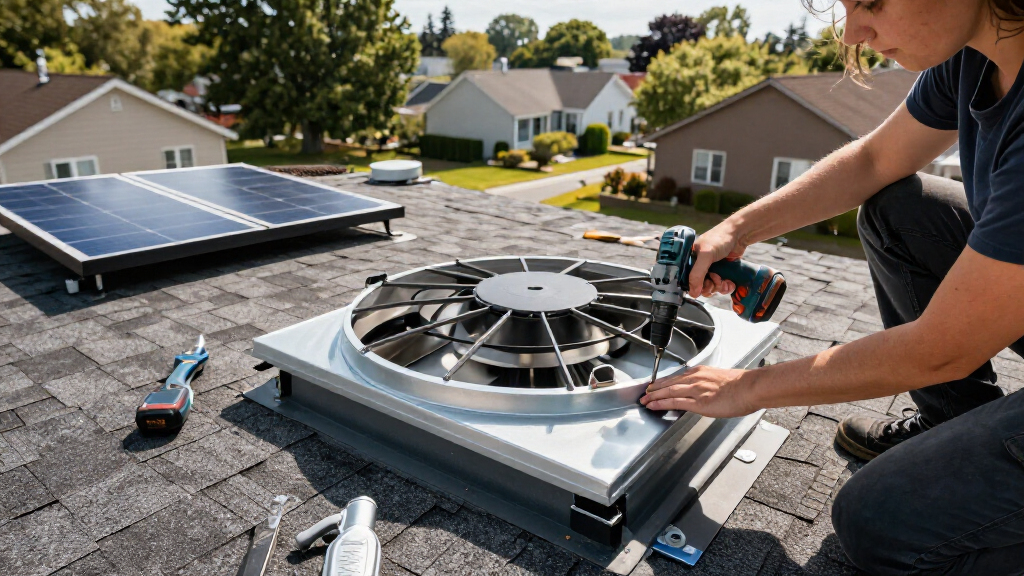

Solar attic fans use sunlight to move hot air out of an attic, but airflow, controls, and operation after sunset vary widely. My best overall pick is the OmniPV Hybrid Solar Attic Exhaust Fan, 2850 CFM, which pairs strong stated airflow with a 50W panel and adjustable thermostat. The VEVOR 42W stands out for its temperature and humidity sensors and remote, while the Remington Solar 30-Watt offers a simpler roof-mounted format. The main tradeoffs are solar-only operation versus AC backup, higher airflow versus roof and attic fit, and convenience features versus installation complexity. Read on for the full breakdown of all 15 options and the factors that matter before choosing.

Get backup power and energy gear delivered free with Prime
- Fast, free delivery on millions of items
- Prime Video, Amazon Music and more included
- Member-only deals all year
Key Takeaways
- The OmniPV 2850 CFM hybrid model leads on stated capacity: its 50W panel and adjustable thermostat make it the strongest all-around feature set here, though actual performance depends on sun, installation, and attic conditions.
- Hybrid power is a meaningful dividing line: models listing an AC adapter or dual power can keep running when sunlight falls, unlike solar-only choices.
- Controls separate convenience picks from basic exhaust fans: VEVOR adds temperature and humidity sensors plus a remote, while simpler models have fewer settings to manage.
- Higher CFM is not an automatic win: the 2850 CFM and 2800 CFM listings should be matched to attic size and available intake ventilation, not chosen by headline airflow alone.
- Roof shape and installation details narrow the field: the Solatube RM2400 includes a low-profile flat-roof kit, while several other picks are roof-mount designs that need a compatible opening and sound flashing.
| 14-Inch Solar Exhaust Fan with 24,000mAh Rechargeable Battery |  | Best for Overnight Ventilation | Fan diameter: 14 inches | Maximum airflow: 825 CFM | Solar panels: Two 30W panels; 60W combined | VIEW LATEST PRICE | See Our Full Breakdown |
| RYLENE 35W Solar Attic Fan with 110V AC Adapter, 1600 CFM |  | Best for High Airflow with Automatic Temperature Control | Model: JBSF-320B | Fan size: 12 inches | Solar panel power: 35 watts | VIEW LATEST PRICE | See Our Full Breakdown |
| Remington Solar 30-Watt Roof-Mount Solar Attic Fan |  | Best for Automatic Temperature and Humidity Sensing | Model: SF30-BLK | Solar power: 30 watts | Airflow capacity: 1,550 CFM | VIEW LATEST PRICE | See Our Full Breakdown |
| iLIVING 14-Inch Solar Roof Attic Exhaust Fan with Smart Thermostat |  | Best for Adjustable Panel Positioning | Model: ILG8SF301 | Fan diameter: 14 inches | Solar panel output: 40 watts | VIEW LATEST PRICE | See Our Full Breakdown |
| Hon&Guan 10-Inch Solar Shutter Exhaust Fan with AC Adapter |  | Best Compact Option with Included AC Backup | Model: ZV0087 | Fan size: 10 inches | Maximum airflow: 647 CFM | VIEW LATEST PRICE | See Our Full Breakdown |
| Solatube RM2400 33W Solar Attic Fan with Low-Profile Flat Roof Kit |  | Best for Flat Roofs | Wattage: 33 W | Mounting: Roof mount; flat-roof kit | Fan diameter: 20 in | VIEW LATEST PRICE | See Our Full Breakdown |
| DC HOUSE 32W Solar Attic Fan, 2500 CFM Roof Exhaust Vent with Metal Shell |  | Best High-Airflow Solar-Only Pick | Wattage: 32 W | Airflow capacity: Up to 2500 CFM | Stated coverage: Up to 3000 sq ft | VIEW LATEST PRICE | See Our Full Breakdown |
| OmniPV Hybrid Solar Attic Exhaust Fan, 2850 CFM, 50W Panel, Adjustable Thermostat |  | Best for Backup-Powered Ventilation | Solar panel: 50 W | Airflow capacity: Up to 2850 CFM | Recommended coverage: Up to 4000 sq ft | VIEW LATEST PRICE | See Our Full Breakdown |
| VEVOR 42W Solar Attic Fan with Temperature and Humidity Sensors, Remote Control, and 2800 CFM Airflow |  | Best for Sensor-Based Controls | Power: 42 W | Airflow capacity: Up to 2800 CFM | Solar panel: MPPT | VIEW LATEST PRICE | See Our Full Breakdown |
| OmniPV Solar Hybrid Roof-Mount Attic Fan, 40 W, 2100 CFM |  | Best Simple Hybrid Pick | Wattage: 40 W | Airflow capacity: Up to 2100 CFM | Power: Solar with included AC adapter | VIEW LATEST PRICE | See Our Full Breakdown |
| 40W Solar Attic Fan with Thermostat, 12-Inch Roof Vent, 2000 CFM, Adjustable Speeds and Dual Power |  | Best for Adjustable, Dual-Power Ventilation | Power: 40 watts; solar powered with AC/DC adapter | Airflow: Up to 2,000 CFM | Coverage: Up to 2,500 sq. ft. | VIEW LATEST PRICE | See Our Full Breakdown |
| 40W Solar-Powered Attic Exhaust Fan, 12-Inch, 2000 CFM |  | Best for Simple Daytime Operation | Solar panel: 40 watts | Airflow: 1,800–2,000 CFM | Blade size: 12 inches | VIEW LATEST PRICE | See Our Full Breakdown |
| LANGY Solar Attic Fan with Thermostat and Remote Control |  | Best for Remote Adjustments | Solar panel: 55W adjustable monocrystalline | Airflow: 1,300 CFM | Coverage: Up to 1,800 sq. ft. | VIEW LATEST PRICE | See Our Full Breakdown |
| 32W Solar Attic Fan, 1600 CFM, Weatherproof Roof Vent Exhaust Fan |  | Best for Wiring-Free Multi-Space Use | Model: SLAT-02 | Maximum power: 32 watts | Airflow: 1,600 CFM | VIEW LATEST PRICE | See Our Full Breakdown |
| Maxx Air Solar Attic Fan with 50W Adjustable Solar Panel and Thermostat |  | Best for a Rugged, Simple Roof-Mount Build | Model: CX1050SOL | Solar panel: 50W, 24V monocrystalline; adjustable | Blade diameter: 12 inches | VIEW LATEST PRICE | See Our Full Breakdown |
| solar attic fan | Motor |
|---|---|
| 14-Inch Solar Exhaust Fan with | — |
| RYLENE 35W Solar Attic Fan wit | Brushless DC |
| Remington Solar 30-Watt Roof-M | Brushless |
| iLIVING 14-Inch Solar Roof Att | — |
| Hon&Guan 10-Inch Solar Shutter | — |
| Solatube RM2400 33W Solar Atti | Brushless |
| DC HOUSE 32W Solar Attic Fan | Brushless |
| OmniPV Hybrid Solar Attic Exha | Brushless DC |
| VEVOR 42W Solar Attic Fan with | Brushless DC |
| OmniPV Solar Hybrid Roof-Mount | Brushless DC |
| 40W Solar Attic Fan with Therm | — |
| 40W Solar-Powered Attic Exhaus | — |
| LANGY Solar Attic Fan with The | 55W brushless DC |
| 32W Solar Attic Fan | Copper brushless; IP68 waterproof rating |
| Maxx Air Solar Attic Fan with | IP68 brushless DC |
More Details on Our Top Picks
14-Inch Solar Exhaust Fan with 24,000mAh Rechargeable Battery
I’d choose this model when ventilation needs to continue after sunlight fades. Its 24,000mAh battery is rated for up to eight hours of operation when fully charged, giving it an advantage over the Remington Solar 30-Watt Roof-Mount Solar Attic Fan, which needs a separately sold adapter for nighttime use. The two panels provide 60W combined output, and an AC adapter adds another way to run or charge the system. A timer and automatic shutters add useful control, while the adjustable panel mount helps with placement. The tradeoff is a more involved setup: the fan, battery, and panels need to be mounted and connected, and actual battery runtime depends on charge and sunlight. This is a versatile ventilation kit, not a simple roof-only fan.
Pros:- Rechargeable battery is rated for up to eight hours of operation when fully charged.
- Two 30W panels provide 60W combined output, with an AC adapter for backup operation or charging.
- Automatic gravity-operated shutters help limit backdrafts and dust when the fan is off.
- Timer settings and a 180° adjustable panel mount allow more control over operation and placement.
Cons:- Battery runtime and recharge performance depend on available sunlight and the battery’s charge level.
- Installation requires mounting and wiring the fan, battery, and solar panels.
- The stated 1,800-square-foot coverage and maximum airflow may not suit larger spaces.
Best for: Owners of attics, sheds, or garages who want ventilation to continue into the evening and can install a multi-part system.
Not ideal for: Buyers seeking a straightforward roof-mounted attic fan with minimal wiring, or anyone who needs guaranteed overnight runtime regardless of solar charge.
- Fan diameter:14 inches
- Maximum airflow:825 CFM
- Solar panels:Two 30W panels; 60W combined
- Battery capacity:24,000mAh
- Power options:Solar, rechargeable battery, AC adapter
- Controls and shutters:1–8 hour timer; automatic gravity-operated shutters
- Panel mount:Adjustable up to 180°
Our verdict“Choose this kit if you value battery-backed evening ventilation and are comfortable with a more involved installation.”
RYLENE 35W Solar Attic Fan with 110V AC Adapter, 1600 CFM
The RYLENE is a strong fit for buyers who want substantial airflow without stepping up to a larger, higher-output panel. It is rated at 1,600 CFM for spaces up to 2,500 square feet, exceeding the iLIVING’s 1,150 CFM rating while using a 35W panel. Its AC adapter and remote add operating flexibility, and the built-in temperature control starts the fan above 78.8°F and stops it below 75.2°F. That narrow temperature band makes operation easy to understand, but it also means the fan will not automatically respond to humidity or to cooler conditions. Compared with the Remington Solar, RYLENE offers a remote and backup power in the box, while the Remington lists a built-in humidistat. Roof mounting remains a real installation commitment, and the stated airflow alone does not establish fit for every attic.
Pros:- Rated airflow of up to 1,600 CFM, with recommended coverage up to 2,500 square feet.
- AC adapter provides an alternative power source when solar output is limited.
- Temperature control automates operation around its specified on/off thresholds.
- Remote control offers convenient operation after roof installation.
Cons:- Roof mounting requires an appropriate roof opening and installation work.
- Temperature control is limited to the listed thresholds and does not include humidity sensing.
- No rechargeable battery is listed for operation after solar output drops.
Best for: Homeowners with a roof-mounted attic installation who want high stated airflow, temperature-based automatic operation, and an included AC backup adapter.
Not ideal for: Buyers who need humidity sensing, a battery for off-grid nighttime operation, or a fan that can be installed without roof work.
- Model:JBSF-320B
- Fan size:12 inches
- Solar panel power:35 watts
- Maximum airflow:1,600 CFM
- Recommended coverage:Up to 2,500 sq. ft.
- Power options:Solar and AC
- Motor:Brushless DC
- Temperature control:On above 26°C (78.8°F); off below 24°C (75.2°F)
- Mount and controls:Roof mount; remote control
Our verdict“Pick the RYLENE if you want higher stated airflow than the iLIVING and value an included AC backup and remote.”
Remington Solar 30-Watt Roof-Mount Solar Attic Fan
I’d favor the Remington Solar when the goal is a largely self-regulating roof fan rather than a system with multiple power accessories. Its built-in thermostat and humidistat respond to both heat and moisture, a useful distinction from the temperature-only controls on the RYLENE. The brushless motor is rated at 1,550 CFM, close to RYLENE’s 1,600 CFM, and the product data lists a quiet 0.08-sones operating level. Oversized steel flashing supports a roof installation, but the unit weighs 30 pounds and still needs suitable roof work. Solar is the standard power source; unlike the battery-equipped 14-inch exhaust fan in this lineup, nighttime operation calls for a separately sold hybrid adapter. I’d shortlist it for automatic sensing, not for buyers who want included backup power or adjustable speeds.
Pros:- Built-in thermostat and humidistat respond to both heat and humidity.
- Brushless motor is rated at 1,550 CFM and a low 0.08 sones.
- Oversized steel flashing is included as part of the roof-mounted design.
- Product data lists DIY installation and a limited lifetime warranty.
Cons:- Nighttime operation requires a hybrid adapter sold separately.
- Roof mounting and a 30-pound unit make installation a substantial project.
- Single-speed operation offers less manual adjustment than the Hon&Guan when using its AC adapter.
Best for: Homeowners who want a roof-mounted solar fan that responds automatically to both attic temperature and humidity.
Not ideal for: Buyers who need nighttime operation from included components, multiple fan speeds, or a non-roof installation.
- Model:SF30-BLK
- Solar power:30 watts
- Airflow capacity:1,550 CFM
- Motor:Brushless
- Controls:Built-in thermostat and humidistat; button control
- Noise level:0.08 sones
- Flashing dimensions:22.5 × 22.5 inches
- Weight:30 pounds
- Night operation:Optional hybrid adapter sold separately
Our verdict“Choose the Remington if built-in temperature and humidity sensing matter more than included backup power or speed choices.”
iLIVING 14-Inch Solar Roof Attic Exhaust Fan with Smart Thermostat
The iLIVING stands out for buyers who need flexibility in how the solar panel faces the sun. Its 40W panel has four tilt positions, while the RYLENE’s product data does not specify comparable panel adjustment. A smart thermostat covering 50°F to 122°F, with an enable/disable feature, gives owners a way to set operating boundaries. The listed airflow is 1,150 CFM, below the RYLENE and Remington Solar, so I would not rank it for maximum extraction. Its IP68-rated brushless motor and 15-year limited warranty are useful points in its favor, but the AC/DC adapter for non-stop operation is sold separately. One speed also limits fine-tuning. This is a roof-mounted option for buyers who value panel orientation and thermostat range over the stronger airflow ratings elsewhere in the lineup.
Pros:- 40W solar panel offers four tilt positions: 0°, 15°, 30°, and 45°.
- Thermostat spans 50°F–122°F and includes an enable/disable feature.
- IP68-rated brushless motor is designed for water resistance.
- Listed airflow reaches up to 1,150 CFM, with stated coverage up to 2,900 sq. ft.
Cons:- AC/DC adapter for non-stop operation is sold separately.
- One-speed design does not allow manual airflow adjustment.
- Its listed airflow is lower than the RYLENE and Remington Solar.
Best for: Homeowners who want a roof fan with multiple solar-panel tilt positions and a broad thermostat range for automatic control.
Not ideal for: Buyers prioritizing the highest listed airflow, multiple fan speeds, or included AC/DC backup for continuous operation.
- Model:ILG8SF301
- Fan diameter:14 inches
- Solar panel output:40 watts
- Airflow capacity:1,150 CFM
- Stated coverage:Up to 2,900 sq. ft.
- Thermostat range:50°F–122°F
- Panel tilt positions:0°, 15°, 30°, and 45°
- Motor water resistance:IP68
- AC/DC adapter:Sold separately; model ILG8SF304
Our verdict“Choose the iLIVING if panel-angle flexibility and thermostat settings matter more to you than higher airflow or included backup power.”
Hon&Guan 10-Inch Solar Shutter Exhaust Fan with AC Adapter
For a smaller attic or outbuilding, the Hon&Guan offers more control in a compact format than the roof-focused Remington Solar. Its 10-inch fan is rated at 647 CFM, and the included AC adapter means buyers have a backup power option without adding a battery. Four-speed control is available when connected to that adapter; on solar alone, that flexibility is limited, so the headline control range does not apply in every setup. The thermostat, two operating modes, and 10-minute run-on delay add practical automation, while automatic louvers close when the fan stops. Compared with the 14-inch battery-equipped exhaust fan, this unit is smaller and avoids battery wiring, but it does not offer stored power for after-dark use. I’d pick it for modest spaces and adjustable AC operation, not for large attics.
Pros:- Compact 10-inch fan delivers up to 647 CFM for smaller spaces.
- Includes both a 30W solar panel and AC adapter, with no battery required.
- Thermostat, two operating modes, and 10-minute run-on delay support automated operation.
- Automatic louvers and adjustable panel bracket are included with mounting hardware.
Cons:- Four-speed control is available when connected to the AC adapter, not as a stated solar-only feature.
- No battery is included for operation after sunlight fades.
- Lower airflow capacity makes it a poor match for large attic spaces.
Best for: Owners of smaller attics, sheds, or garages who want a compact fan with included AC backup and adjustable operation when plugged in.
Not ideal for: Buyers ventilating large attic spaces, needing battery-backed nighttime airflow, or expecting four-speed control while running on solar alone.
- Model:ZV0087
- Fan size:10 inches
- Maximum airflow:647 CFM
- Solar panel power:30 watts
- Power options:Solar and AC adapter
- Speed and modes:4 speeds with AC adapter; 2 operating modes
- Thermostat range:68°F–113°F
- Run-on delay:10 minutes
- Dimensions and weight:10.75 × 10.75 × 3.94 inches; 14.07 pounds
Our verdict“Choose the Hon&Guan for a smaller space where compact size and included AC backup matter more than high airflow or battery storage.”
Solatube RM2400 33W Solar Attic Fan with Low-Profile Flat Roof Kit
The Solatube RM2400 is the most roof-specific pick here: its low-profile flashing is designed for flat-roof installation, a useful fit advantage over the more general roof-mount DC HOUSE 32W. Its 33-watt solar panel powers a quiet brushless motor, while weather-resistant construction and an HVHZ rating suit exposed roof conditions. DIY hardware is included, but that does not remove the need to match the flashing carefully to the roof assembly. Unlike the OmniPV 2850 CFM hybrid fan, this Solatube has one speed and no stated AC backup, so airflow control and operation without useful sun are limited. I’d choose it for a flat-roof attic where a low-profile fit and quiet solar operation matter more than backup power or adjustable output.
Pros:- Low-profile flashing is specifically designed for flat roofs.
- Quiet brushless motor supports less intrusive attic ventilation.
- Weather-resistant construction with an HVHZ rating.
- DIY installation hardware is included.
Cons:- Flat-roof-specific design limits its fit for other roof types.
- Single-speed operation offers no airflow adjustment.
- No AC backup is listed for cloudy conditions or nighttime use.
Best for: Homeowners with a flat-roof attic who want a low-profile, solar-only installation and value quiet operation.
Not ideal for: Buyers with pitched roofs, or anyone needing nighttime operation, AC backup, or multiple fan speeds.
- Wattage:33 W
- Mounting:Roof mount; flat-roof kit
- Fan diameter:20 in
- Motor:Brushless
- Speeds:1
- Blades:5
- Construction:Metal and plastic; water- and weather-resistant
- Motor and panel warranty:10 years
Our verdict“Choose the Solatube RM2400 for a flat-roof attic where a low-profile fit and quiet solar operation outweigh variable speed and backup power.”
DC HOUSE 32W Solar Attic Fan, 2500 CFM Roof Exhaust Vent with Metal Shell
The DC HOUSE 32W pairs a relatively modest solar rating with a stated 2500 CFM airflow capacity, making it a compelling choice for buyers focused on moving air during sunny hours. Its aluminum housing and IP68 waterproof rating give it a more weather-focused profile than the flat-roof-specific Solatube RM2400, while the brushless motor is rated at 43 dB. The tradeoff is that it is solar-only: it runs during daylight, and output may fall under heavy cloud cover. Its fixed-speed design also gives less control than the VEVOR 42W, which offers three speeds and sensors. I’d shortlist the DC HOUSE for a suitable roof and an attic where daytime ventilation is the priority, not around-the-clock operation or finely managed airflow.
Pros:- Stated airflow capacity reaches 2500 CFM.
- Aluminum housing is paired with an IP68 waterproof rating.
- Brushless motor has a stated noise level of 43 dB.
- Solar operation avoids a routine electrical connection for fan power.
Cons:- Daylight-dependent operation limits ventilation after sunset and in poor sun.
- Fixed-speed control does not allow airflow adjustment.
- Performance can vary in heavily overcast conditions.
Best for: Owners of larger attics who want high stated airflow from a solar-only roof fan and can accept daylight-dependent operation.
Not ideal for: Buyers who need reliable nighttime or cloudy-weather ventilation, adjustable speeds, or a fan matched to a flat-roof flashing system.
- Wattage:32 W
- Airflow capacity:Up to 2500 CFM
- Stated coverage:Up to 3000 sq ft
- Mounting:Roof mount
- Motor:Brushless
- Noise level:43 dB
- Housing:Aluminum; IP68 waterproof design
- Power source:Solar
Our verdict“Pick the DC HOUSE when high daytime airflow and a weather-resistant metal shell matter more than backup power or speed control.”
OmniPV Hybrid Solar Attic Exhaust Fan, 2850 CFM, 50W Panel, Adjustable Thermostat
The OmniPV Hybrid stands apart from solar-only options such as the DC HOUSE 32W because its included 12V AC adapter allows operation when sunlight is unavailable. Its 50W panel and stated airflow of up to 2850 CFM make it the highest-capacity option in this five-product group, and the adjustable thermostat lets buyers set a trigger within a 50–104°F range. That makes it better suited to people who want temperature-based control than the single-speed Solatube RM2400. The added flexibility comes with installation demands: roof shape may require adapting the mounting plate, and the thermostat range may not suit every preferred setting. I’d favor this model for larger spaces where backup operation and adjustable temperature control justify a more involved roof setup.
Pros:- Included AC adapter supports operation without solar power.
- Up to 2850 CFM is the highest stated airflow in this group.
- Thermostat adjusts across a 50–104°F range.
- Panel angle can be adjusted horizontally and vertically.
Cons:- Mounting plate may need adaptation to suit the roof shape.
- Thermostat settings are limited to the stated 50–104°F range.
- The hybrid controls and adjustable panel make setup less straightforward than the solar-only DC HOUSE.
Best for: Owners of larger attics or outbuildings who want solar ventilation with AC-backed operation and an adjustable temperature trigger.
Not ideal for: Buyers seeking a simple solar-only fan, a flat-roof-specific low-profile kit, or installation with no mounting adaptation.
- Solar panel:50 W
- Airflow capacity:Up to 2850 CFM
- Recommended coverage:Up to 4000 sq ft
- Power:Solar with included 12V 2A AC adapter
- Thermostat range:50–104°F
- Motor:Brushless DC
- Mounting:Roof mount
- Panel adjustment:Horizontal: -45° to +45°; vertical: 0° to 60°
Our verdict“Choose this OmniPV if you need high stated airflow, adjustable temperature control, and backup operation more than a straightforward solar-only install.”
VEVOR 42W Solar Attic Fan with Temperature and Humidity Sensors, Remote Control, and 2800 CFM Airflow
The VEVOR JBSF-320G is the control-focused choice: its temperature and humidity sensors, smoke detection, and remote distinguish it from the simpler single-speed DC HOUSE 32W. A 42W MPPT panel and stated 2800 CFM airflow put it close to the OmniPV 50W model’s stated capacity, while an included adapter offers operation when solar power is unavailable. It also provides three speeds, giving more adjustment than the one-speed Solatube RM2400. There are tradeoffs: its listed noise level is 60 dB, higher than the DC HOUSE’s 43 dB, and the temperature control is described as switching around 26°C rather than offering a broad adjustable range. Roof installation is required, and the remote’s range is limited. This suits buyers who value monitoring and controls over quieter operation.
Pros:- Temperature and humidity sensors add automatic control beyond basic solar operation.
- Three speeds provide more airflow choice than the one-speed Solatube RM2400.
- Included adapter supports operation when sunlight is unavailable.
- Aluminum construction and adjustable-angle panel suit outdoor roof installation.
Cons:- Listed noise level is 60 dB, higher than the DC HOUSE 32W’s 43 dB.
- Temperature switching is described around 26°C rather than as a broad adjustable range.
- Roof mounting is required, and remote range is limited to 9.75 m.
Best for: Homeowners who want sensor-based fan control, multiple speeds, and adapter-backed operation for a metal or masonry roof.
Not ideal for: Buyers prioritizing lower stated noise, a wide adjustable thermostat range, or a roof type outside the listed metal and masonry compatibility.
- Power:42 W
- Airflow capacity:Up to 2800 CFM
- Solar panel:MPPT
- Motor:Brushless DC
- Speeds:3
- Noise level:60 dB
- Controls:Remote; temperature and humidity sensors
- Roof compatibility:Metal and masonry
Our verdict“Choose the VEVOR if sensor controls and three speeds matter more to you than quieter operation or a broadly adjustable thermostat.”
OmniPV Solar Hybrid Roof-Mount Attic Fan, 40 W, 2100 CFM
The OmniPV OP-SAF-40 offers a simpler hybrid setup than the 2850 CFM OmniPV model: it pairs a 40W panel with an included AC adapter and uses a fixed thermostat trigger at 75°F. That automatic on/off behavior is easier to understand than a manually adjustable 50–104°F range, though it gives less control over when the fan runs. Its stated 2100 CFM airflow is also below the DC HOUSE 32W’s 2500 CFM and the VEVOR’s 2800 CFM, making this a less compelling pick when maximum stated airflow is the main goal. A 45 dB noise rating and aluminum-alloy body suit buyers who want a moderate-capacity hybrid fan for a roof or other listed structure. The single speed and roof-mount installation remain real limits.
Pros:- Included AC adapter supports operation beyond solar-only conditions.
- Fixed 75°F thermostat automatically switches the fan on and off.
- Stated airflow reaches 2100 CFM.
- Aluminum-alloy body is designed for outdoor installation.
Cons:- Lower stated airflow than the DC HOUSE 32W and VEVOR models.
- Single speed and one power level limit adjustment.
- Requires roof-mount installation.
Best for: Buyers who want a straightforward hybrid fan with automatic temperature switching and AC-adapter backup for a home, garage, shed, or similar space.
Not ideal for: Owners of very large spaces who prioritize the highest stated airflow, or buyers who want adjustable speeds or a variable thermostat setting.
- Wattage:40 W
- Airflow capacity:Up to 2100 CFM
- Power:Solar with included AC adapter
- Thermostat:Automatic on/off at 75°F (24°C)
- Motor:Brushless DC
- Noise level:45 dB
- Speeds:1
- Mounting:Roof mount
Our verdict“Pick the OP-SAF-40 for simple thermostat-led hybrid operation, but choose the higher-airflow DC HOUSE or VEVOR if ventilation capacity is your main priority.”
40W Solar Attic Fan with Thermostat, 12-Inch Roof Vent, 2000 CFM, Adjustable Speeds and Dual Power
The 40W Solar Attic Fan with Thermostat is the most configurable pick in this group: it combines up to 2,000 CFM, four speeds, and a temperature trigger with an AC/DC adapter for cloudy conditions or powered operation. Its panel adjusts both horizontally and vertically, which can help when roof orientation limits direct sun. Compared with the simpler 40W Solar-Powered Attic Exhaust Fan, this model adds temperature and speed controls instead of running only with daylight. That flexibility comes with setup complexity, and its Mode 2 speed adjustment requires the adapter. It also has no battery backup, so solar operation still depends on available sunlight. I’d choose it for a larger attic where controllability matters more than a basic, automatic daytime fan.
Pros:- Up to 2,000 CFM airflow and stated coverage up to 2,500 sq. ft.
- Four speeds and adjustable temperature-triggered operation
- AC/DC adapter provides an alternative to solar power in limited sunlight
- Adjustable panel and weatherproof metal construction
Cons:- No battery backup for operation when neither sunlight nor adapter power is available
- Mode 2 speed adjustment requires the AC/DC adapter
- More controls and connections may make setup less simple than the pre-connected 40W Solar-Powered Attic Exhaust Fan
Best for: Homeowners with larger attics who want temperature-triggered operation, several speed settings, and an AC/DC power option.
Not ideal for: Buyers seeking battery-backed ventilation after sunset or a straightforward solar-only installation with minimal controls.
- Power:40 watts; solar powered with AC/DC adapter
- Airflow:Up to 2,000 CFM
- Coverage:Up to 2,500 sq. ft.
- Fan diameter:12 inches
- Speed settings:4
- Temperature range:68–113°F
- Panel adjustment:0–70° horizontally and vertically
- Motor and housing:Brushless copper motor; metal housing
- Battery backup:None
Our verdict“Choose this model if you want high airflow with more control and dual-power flexibility, but skip it if battery backup or simple solar-only operation is your priority.”
40W Solar-Powered Attic Exhaust Fan, 12-Inch, 2000 CFM
The 40W Solar-Powered Attic Exhaust Fan keeps the operating setup simple: its panel and fan arrive pre-connected, and it runs from sunrise to dusk without a separate thermostat or controller. That makes it a more direct DIY choice than the 40W Solar Attic Fan with Thermostat, which offers more controls and an AC/DC option but asks buyers to manage a more involved setup. This fan provides up to 2,000 CFM and uses metal components with an IP65 weather-resistance rating. The tradeoff is that operation follows daylight rather than attic temperature, and there is no listed alternative power source for cloudy periods or nighttime. Its roof-mount design also limits where it can be installed. I’d favor it when uncomplicated daytime exhaust matters more than scheduling or fine-grained control.
Pros:- Pre-connected fan and panel simplify installation
- Automatic sunrise-to-dusk operation needs no separate controller
- Airflow is rated at 1,800–2,000 CFM
- Metal construction and IP65 weather resistance
Cons:- No thermostat or speed control is listed
- Solar-only operation depends on available sunlight
- Roof mounting may not suit every building or installation location
Best for: DIY-minded owners of roof-accessible attics, garages, or greenhouses who want a pre-connected fan that runs during daylight.
Not ideal for: Buyers who need thermostat control, night operation, an AC power fallback, or ventilation in a space that cannot accommodate roof mounting.
- Solar panel:40 watts
- Airflow:1,800–2,000 CFM
- Blade size:12 inches
- Mounting:Roof mount
- Material:Metal
- Weather resistance:IP65
- Dimensions:19.29 x 19.29 x 8.07 inches
- Weight:25.4 pounds
- Warranty:1 year manufacturer
Our verdict“Pick this for straightforward, daylight-only ventilation and an uncomplicated setup; choose the thermostat-equipped 40W model if you need more control or an AC power option.”
LANGY Solar Attic Fan with Thermostat and Remote Control
The LANGY Solar Attic Fan is the convenience-focused option: its remote can adjust speed, runtime, and modes from up to 80 feet, while the thermostat activates ventilation above 77°F. The included 110V adapter also gives it a way to run when sunlight is limited. Against the 40W Solar Attic Fan with Thermostat, LANGY trades higher listed airflow and four speeds for remote operation and a larger 55W adjustable panel. Its 1,300 CFM capacity and stated coverage up to 1,800 sq. ft. make it a better fit for more modest spaces than the 2,000 CFM alternatives. The roof-mounted installation and solar dependence remain real constraints, and two speeds offer less range than the four-speed model. I’d shortlist it when remote control matters more than maximum airflow.
Pros:- Remote controls speed, runtime, and operating modes from up to 80 feet
- Thermostat activates the fan above 77°F
- 55W adjustable monocrystalline solar panel
- 110V adapter supports operation in low-light conditions
Cons:- 1,300 CFM capacity is below the 2,000 CFM options in this group
- Only two speed settings
- Requires roof mounting and solar operation depends on sunlight unless using the adapter
Best for: Owners of modest-sized attics who want remote speed and mode adjustments, temperature-based operation, and an AC adapter for low-light periods.
Not ideal for: Buyers ventilating larger spaces who prioritize airflow above 1,300 CFM or want more than two speed settings.
- Solar panel:55W adjustable monocrystalline
- Airflow:1,300 CFM
- Coverage:Up to 1,800 sq. ft.
- Motor:55W brushless DC
- Thermostat:Activates above 77°F
- Speed settings:2
- Remote range:Up to 80 ft (24 m)
- Mounting:Roof mount
- Wind resistance:Tested up to 130 mph
Our verdict“Choose LANGY for remote control and automated temperature response in a modest attic, but look to a higher-airflow model for larger spaces.”
32W Solar Attic Fan, 1600 CFM, Weatherproof Roof Vent Exhaust Fan
The DC HOUSE 32W Solar Attic Fan is the lower-output choice for buyers who want a self-contained solar installation across spaces such as an attic, workshop, RV, or greenhouse. Its integrated setup needs no extra cables or household wiring, and it starts in sunlight and stops at dusk. At 1,600 CFM, it moves less air than either 2,000 CFM 40W fan, so I’d reserve it for a smaller space or a more modest ventilation need. Its copper brushless motor, aluminum blades, and steel housing are specified for demanding weather conditions, including winds up to 130 mph. Unlike the 40W fan with an adapter, it has no stated fallback for weak sunlight. Buyers should also have a location with strong, direct sun for dependable daytime operation.
Pros:- Integrated solar unit needs no extra cables or household wiring
- Automatic operation starts in sunlight and stops at dusk
- Copper brushless motor with IP68 waterproof rating
- Designed for temperatures from -40°F to 150°F and winds up to 130 mph
Cons:- 1,600 CFM is lower than the 2,000 CFM 40W options
- No AC adapter or battery backup is listed
- Performance depends on strong, direct sunlight
Best for: Owners of smaller attics, workshops, RVs, or greenhouses who want a wiring-free, integrated solar fan and have a sunny installation spot.
Not ideal for: Buyers with larger spaces, shaded roof locations, or a need for ventilation when direct sunlight is weak.
- Model:SLAT-02
- Maximum power:32 watts
- Airflow:1,600 CFM
- Solar panel efficiency:18%
- Motor:Copper brushless; IP68 waterproof rating
- Blade material:Aluminum alloy
- Housing:Impact-resistant steel
- Noise level:43 dB
- Wind resistance:Up to 130 mph
Our verdict“This is a sensible wiring-free pick for smaller, sunny spaces, while buyers needing more airflow or operation beyond direct-sun hours should choose a higher-capacity or dual-power model.”
Maxx Air Solar Attic Fan with 50W Adjustable Solar Panel and Thermostat
The Maxx Air CX1050SOL emphasizes a robust roof-mounted assembly rather than a long list of operating controls. Its 50W adjustable monocrystalline panel, built-in thermostat, and IP68 brushless DC motor make it a more hardware-focused choice than the remote-equipped LANGY, which offers more ways to change operation but has a lower 1,300 CFM rating. Maxx Air’s provided specifications do not state airflow capacity, coverage, or temperature settings, so buyers cannot readily match it to an attic size from the listed data. It also has one power level and a button control, with no AC adapter or battery backup specified. The 35.9-pound weight and roof-mount requirement call for planning during installation. I’d consider it when weather-protected components matter more than published airflow figures or adjustable controls.
Pros:- 50W, 24V adjustable monocrystalline solar panel
- Built-in thermostat provides temperature-based control
- IP68-rated brushless DC motor
- Aluminum mesh guard and 12-blade assembly
Cons:- Airflow capacity and recommended coverage are not provided in the listed specs
- Only one power level and button control
- Roof mounting and sunlight-dependent operation limit installation and operating flexibility
Best for: Homeowners prioritizing a weather-protected motor, adjustable solar panel, and thermostat in a permanent roof-mounted installation.
Not ideal for: Buyers who need a stated CFM or coverage figure before sizing a fan, multiple speed settings, remote control, or a non-solar power fallback.
- Model:CX1050SOL
- Solar panel:50W, 24V monocrystalline; adjustable
- Blade diameter:12 inches
- Number of blades:12
- Motor:IP68 brushless DC
- Thermostat:Built-in
- Power levels:1
- Mounting:Roof mount
- Weight:35.9 pounds
Our verdict“Choose Maxx Air if its weather-protected roof-mount design suits your priorities, but favor a model with published CFM and coverage if you need to size ventilation precisely.”
How We Picked
I compared the 15 listed models on the details that shape real buying decisions: stated airflow, panel wattage, backup power, control options, construction and mounting format. I gave more weight to combinations that can serve different weather and operating conditions than to a high CFM figure on its own. Thermostats, sensors, adjustable speeds, and remotes counted as useful only when they addressed a clear need, such as limiting unnecessary operation or simplifying adjustment.
The order reflects practical fit, not a claim that one fan suits every roof or attic. Hybrid models and models with useful controls rank ahead when their added capability addresses a common limitation of solar-only ventilation; simpler fans remain relevant for buyers who want fewer components. Roof compatibility, stated specifications, and installation requirements also shape the picks. Product listings do not establish real-world airflow under every condition, so I treat CFM and wattage as comparison points rather than guarantees.
Factors to Consider When Choosing Solar Attic Fans
Choosing among solar attic fans starts with the attic and roof, not the largest number on a product page. I would first check whether the home has enough intake ventilation, then decide how important evening operation and automatic controls are. These factors help prevent mismatched equipment, unnecessary electrical work, and expectations that a solar panel cannot meet on cloudy days.
Match Airflow to the Attic and Its Intake Vents
A fan can only exhaust air effectively when replacement air has a route into the attic. Check existing soffit, gable, or other intake vents before selecting a high-CFM model; restricted intake can reduce performance and may draw conditioned air from the home through ceiling leaks. Treat listed CFM as a comparison figure, not a promise of delivered airflow, since sun, wiring, installation, and vent layout all affect operation. A larger number is not automatically better for a small or poorly balanced attic. If the attic is unusually large or divided into separate areas, ask a qualified installer how many fans and intake vents the layout needs. This check often matters more than moving from a moderate to a higher listed capacity.
Decide Whether You Need Backup Power
Solar-only fans generally depend on available sunlight, so their output can fall when the sky is overcast and stop after dark. An AC adapter or dual-power design can address that gap, but it brings an electrical connection and may require a suitable outlet or professional wiring. Before paying for hybrid capability, decide whether ventilation during nighttime heat or prolonged cloudy weather is a priority. A battery-equipped fan, such as the 14-inch model listed with a 24,000mAh battery, follows a different approach, but the listing alone does not establish how long it runs at a given speed. Ask how a product changes power sources and whether backup operation is automatic or manually selected. The right choice depends on local weather and when the attic tends to overheat.
Check Roof Type, Pitch, and Flashing Requirements
Roof compatibility is a functional requirement, not a cosmetic detail. Confirm whether the fan is intended for a flat or pitched roof, what opening dimensions it needs, and whether the supplied flashing suits the roof material. The Solatube RM2400 specifically lists a low-profile flat-roof kit, while many other products are described as roof-mount fans without the same flat-roof detail. A mismatch can mean added parts, a more complex installation, or a vulnerable point for water entry. If the roof is under warranty or has a specialty covering, ask the roofer how a new penetration affects it. Have an installer confirm placement before buying when roof geometry or access is uncertain.
Choose Controls for the Way You Want to Run the Fan
A thermostat can make operation less dependent on manual switching, while temperature and humidity sensors add another input to the fan’s control logic. A remote may make adjustments easier when the controller is hard to reach, but it does not replace checking sensor placement or understanding the available modes. Simpler models can be a better fit if you want fewer settings and fewer components that require setup. Look for clear information about thermostat range, sensor location, speed adjustment, and whether controls work with both solar and AC power. Do not assume that a product name mentioning a thermostat means every setting is adjustable. Match the control package to a real use case, such as managing a remote attic or responding to both heat and moisture.
Read the Warranty and Weather-Protection Details
A roof-mounted fan faces rain, wind, dust, and temperature swings, so check the stated housing material, weatherproofing, and warranty terms. A metal shell may appeal to buyers focused on a more substantial housing, but material alone does not confirm that seams, fasteners, or roof flashing are protected. Confirm what the warranty covers, whether installation by a qualified contractor is required, and how the solar panel is secured. Ask how to reach the fan for cleaning or service without damaging the roof seal. These details can matter more over time than a small difference in panel wattage. If product documentation is vague about water protection or replacement parts, treat that uncertainty as a buying drawback.
Compare Complete Installation Cost, Not Just the Fan
Installation may involve cutting a roof opening, fitting flashing, running backup-power wiring, and checking attic intake ventilation. A model with an adapter, remote, or specialized roof kit can reduce some work but may add setup steps elsewhere. Ask an installer to quote the full job using the exact fan model and roof type, rather than estimating from the unit alone. If replacing an existing vent, check whether the new fan fits the opening or requires roof repairs. DIY installation may be feasible for an experienced homeowner, but roof work carries fall and water-intrusion risks. Paying for professional fitting is most worthwhile when roof access, electrical backup, or ventilation balance is uncertain.
Frequently Asked Questions
Will a solar attic fan keep running after sunset?
A solar-only fan usually loses power when sunlight is no longer available, so it should not be treated as an all-night ventilation solution. Hybrid models that list an AC adapter or dual power can extend operation beyond daylight, subject to their wiring and control setup. A battery-equipped model may store energy, but runtime depends on battery capacity, fan draw, and operating speed. Check the manufacturer’s instructions for how power sources switch and whether backup operation is automatic. If nighttime operation is a firm requirement, choose a documented backup method rather than relying on panel wattage alone.
Can a solar attic fan cool my whole house?
An attic fan is intended to exhaust hot attic air; it does not directly cool living spaces like an air conditioner. Its benefit depends on the home’s insulation, air sealing, intake ventilation, climate, and how much heat is accumulating in the attic. If ceiling leaks let conditioned air escape, an exhaust fan may pull more indoor air into the attic and increase cooling demand. Check attic air sealing and intake vents before adding powered exhaust. A contractor can help determine whether ventilation, insulation, or air sealing is the more relevant fix for your home.
Is a higher CFM solar attic fan always better?
No. A higher listed CFM can be useful for a larger attic, but the fan needs enough intake air and a suitable roof location to work as intended. If intake vents are restricted, increasing exhaust capacity does not solve the underlying imbalance. Product CFM figures may also reflect stated or rated conditions rather than the airflow your roof will deliver in everyday weather. Compare the attic’s size and vent layout against manufacturer guidance, and seek installer advice for complex layouts. In this roundup, the highest listed capacities are useful differentiators, not automatic winners for every home.
Do I need an AC-powered or hybrid model if I already have solar panels?
It depends on whether you need the attic fan to operate when its dedicated panel receives little or no sunlight. A home’s rooftop solar system does not automatically power a separate attic fan unless the fan is connected to that system through a compatible, approved setup. Hybrid models listing an AC adapter or dual power offer a defined alternative, but they may need wiring or an outlet. If daytime ventilation is your main goal, a solar-only fan may be simpler. Confirm the wiring method and power-source behavior with the manufacturer or installer before assuming a fan can use household solar electricity.
Can I install a solar attic fan on a flat roof or under trees?
Some models are specifically supplied with flat-roof hardware, while others may require a different kit or may not suit that roof design. Confirm roof pitch limits, flashing requirements, and opening dimensions before ordering; the RM2400 listing is the one here that explicitly names a low-profile flat-roof kit. Shade is another constraint because trees or nearby structures can limit panel output for part of the day. Ask whether the panel can be positioned separately from the fan and what cable or mounting options are supported. A roofer or installer can assess both roof sealing and sun exposure at the planned location.
Conclusion
For the broadest mix of stated airflow, hybrid operation, and adjustable control, I would start with the OmniPV Hybrid Solar Attic Exhaust Fan, 2850 CFM as the best overall pick. The 32W Solar Attic Fan, 1600 CFM is a value-oriented option for buyers who prefer a simpler setup and do not need the highest listed capacity; confirm its installation and warranty details before deciding. For a premium feature set, the VEVOR 42W offers temperature and humidity sensing, a remote, and 2800 CFM on its listing, while the RYLENE 35W pairs 1600 CFM with an AC adapter for buyers who value backup power. Beginners who want a more straightforward roof-mounted design can compare the Remington Solar 30-Watt with the 14-inch battery-equipped fan, checking roof fit and operating details first. For flat-roof installations, the Solatube RM2400 is the clearest specific match because its listing includes a low-profile flat-roof kit. Pick by attic ventilation, roof compatibility, and expected run time before letting airflow figures decide for you.