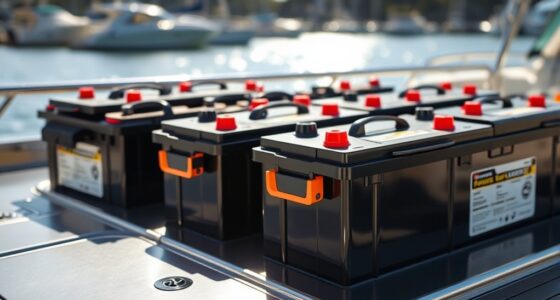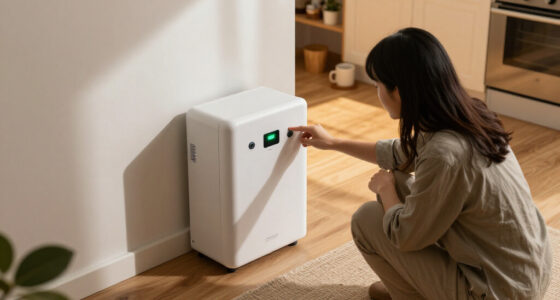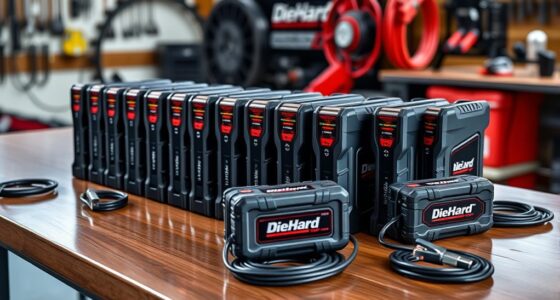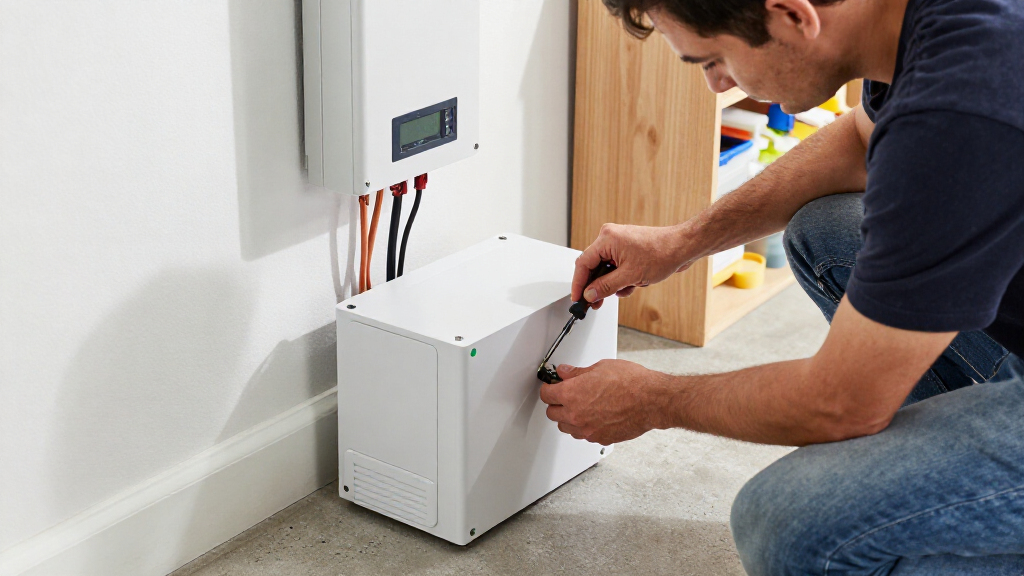
Among these home battery backup systems, I’d name the EcoFlow Delta Pro Ultra with 12 kWh and an extra battery the best overall for households seeking substantial stored energy, while the ECO-WORTHY 48V system with a 30,720 Wh battery and 10kW inverter stands out for larger backup needs. The Jackery HomePower 3600 Plus is a more approachable middle ground, pairing useful capacity with a portable power-station format. The main tradeoff is between plug-and-play convenience and the greater capacity and setup demands of a 48V system; solar bundles add generation equipment but still depend on sunlight and installation choices. Read on for how all 12 options compare and which one fits your outage plan.

Get backup power and energy gear delivered free with Prime
- Fast, free delivery on millions of items
- Prime Video, Amazon Music and more included
- Member-only deals all year
Complete the kit


Key Takeaways
- The lineup splits into two distinct styles: portable power stations such as the EcoFlow Delta 3 Classic and Jackery HomePower 3600 Plus are simpler to place and use, while the ECO-WORTHY 48V systems target larger, more involved backup setups.
- More capacity does not automatically mean whole-home backup: the 30,720 Wh ECO-WORTHY system and 12 kWh EcoFlow Delta Pro Ultra offer more stored energy, but a home’s loads, inverter output, wiring, and transfer setup still determine what can run.
- Solar bundles trade flexibility for a ready-made starting point: Jackery’s HomePower 3000 and HomePower 3600 Plus bundles, plus the Growatt Helios 3600 bundle, include panels, but the panel wattage and your local sunlight affect recharge expectations.
- Inverter output separates appliances from essentials: the 10kW ECO-WORTHY system and 7200W Jackery Explorer 5000 Plus can suit higher simultaneous loads better than compact units, though actual appliance startup demands still matter.
- Battery-only products need a system plan: the ECO-WORTHY Powermega battery choices offer substantial storage, but buyers must account for a compatible inverter, controls, wiring, and installation rather than treating them as complete portable backup stations.


| home battery backup system | Battery capacity | Weight |
|---|---|---|
| EcoFlow Delta 3 Classic Portab | 1,024 Wh | 26.7 lb |
| Jackery HomePower 3600 Plus Po | 3,584 Wh | 77.2 lb |
| ECO-WORTHY 48V Home Backup Pow | — | — |
| Jackery Explorer 5000 Plus Pow | 5,040 Wh | 134.5 lb |
| ECO-WORTHY Powermega 48V 314Ah | — | — |
| Anker SOLIX S2000 Portable Pow | 2010Wh | 35.7 lbs |
| ECO-WORTHY Powermega 48V 314Ah | — | — |
| Jackery HomePower 3000 and 2×2 | 3072Wh | 59.5 lbs |
| EcoFlow Delta Pro Ultra Power | 12kWh, expandable to 90kWh | 293.6 lbs |
| Growatt Helios 3600 Portable P | 3600Wh | 149 lbs |
| Jackery HomePower 3600 Plus wi | — | 77.2 lb |
| ECO-WORTHY Powermega 48V 314Ah | 314Ah | — |
More Details on Our Top Picks
EcoFlow Delta 3 Classic Portable Power Station, 1024 Wh, 1800 W AC
The EcoFlow Delta 3 Classic is a practical fit for buyers who want a grab-and-go battery for essential circuits or electronics, rather than whole-home coverage. Its 1,024 Wh capacity is much smaller than the Jackery HomePower 3600 Plus, so it is better suited to shorter outages and lighter loads than extended appliance use. The tradeoff is a more manageable 26.7-pound body, six AC outlets, and 45-minute charging to 80% when AC power is available. Sub-10 ms UPS protection can keep sensitive electronics running through brief interruptions, while LiFePO4 chemistry supports long service life. I would skip it for large appliances or long outages: it cannot take Delta-series smart extra batteries, limiting a straightforward capacity upgrade.
Pros:- Reaches 80% charge in 45 minutes from AC power.
- Sub-10 ms UPS switching helps protect sensitive electronics from brief outages.
- Six AC outlets and 100 W USB-C output support several kinds of devices.
- LiFePO4 battery is rated for more than 10 years of daily use.
Cons:- At 1,024 Wh, it has far less stored energy than the Jackery HomePower 3600 Plus.
- Not compatible with Delta 2 or Delta 3 Series Smart Extra Batteries.
- Its 26.7-pound weight is substantial for a unit positioned as portable.
Best for: Apartment residents or homeowners seeking a portable backup for a router, computer, lights, and other modest essential loads.
Not ideal for: Households needing overnight support for major appliances or a battery they can expand with EcoFlow Delta-series smart extra batteries.
- Battery capacity:1,024 Wh
- Continuous output:1,800 W
- Surge power:3,600 W
- Battery chemistry:LiFePO4
- AC outlets:6
- USB-C output:100 W
- AC charging time:0–80% in 45 minutes
- Weight:26.7 lb
Our verdict“Choose the Delta 3 Classic for fast-recharging backup of smaller essentials, not for long runtimes or high-demand home appliances.”
Jackery HomePower 3600 Plus Power Station, 3584Wh, 3600W AC Output
The Jackery HomePower 3600 Plus offers a useful middle ground between compact power stations and the much larger ECO-WORTHY 48V home backup system. Its 3,584 Wh capacity and 3,600 W output can support more demanding backup loads than the EcoFlow Delta 3 Classic, while its luggage-style design makes moving it more manageable than the 134.5-pound Jackery Explorer 5000 Plus. Jackery also lists expansion up to 21 kWh, giving buyers a path to longer backup without starting with a fixed installation. Multiple charging options, including AC, solar, and a gas generator, add flexibility when grid power is unavailable. The compromises are real: at 77.2 pounds it is not easy to lift, and just two outlets may require careful load planning or additional distribution equipment.
Pros:- 3,584 Wh capacity provides much longer potential runtime than the EcoFlow Delta 3 Classic.
- Expandable to 21 kWh for buyers whose backup needs may grow.
- Supports AC, solar, and gas-generator charging.
- Luggage-style design aids movement compared with the heavier Jackery Explorer 5000 Plus.
Cons:- Weighs 77.2 pounds, making stairs and solo lifting difficult.
- Only two outlets limit how many appliances can connect directly.
- Its capacity is below the Jackery Explorer 5000 Plus and ECO-WORTHY 48V system.
Best for: Homeowners who want substantial portable backup for several essential appliances and the option to add capacity later.
Not ideal for: Buyers who need many built-in outlets, frequent one-person carrying, or a fixed high-capacity system for extended whole-home backup.
- Battery capacity:3,584 Wh
- AC output:3,600 W
- Voltage:120 V; 120 V and 240 V in parallel
- Battery chemistry:LFP
- Expansion capacity:Up to 21 kWh
- AC charging time:About 2.5 hours
- Solar charging time:About 4 hours
- Outlets:2
- Weight:77.2 lb
Our verdict“Pick the HomePower 3600 Plus if you want expandable, portable backup with more capacity than a compact station and can work around its two outlets.”
ECO-WORTHY 48V Home Backup Power System with 30,720 Wh Battery and 10kW Inverter
The ECO-WORTHY 48V Home Backup Power System is the lineup’s move away from portable stations and toward a substantial off-grid setup. Six 51.2 V, 100 Ah LiFePO4 batteries provide 30,720 Wh of stored energy, paired with a 10 kW pure sine wave inverter for loads such as refrigerators and air conditioners. That is a different scale from the Jackery HomePower 3600 Plus, which is easier to reposition but has far less capacity and output. Bluetooth and Wi-Fi monitoring offer a way to check system status without relying only on the inverter display. The tradeoff is installation complexity: this is not a suitcase-style backup unit, and expansion or parallel inverter setup may demand technical planning and dedicated space. Buyers should also confirm the listed configuration and integration requirements before building it into a home system.
Pros:- 30,720 Wh of listed battery capacity supports longer backup than the portable Jackery HomePower 3600 Plus.
- 10 kW pure sine wave inverter is suited to higher-demand appliances.
- Six LiFePO4 batteries provide a modular battery-bank configuration.
- Bluetooth and Wi-Fi monitoring provide remote system visibility.
Cons:- Multi-battery installation and expansion require more planning than a single portable station.
- Large system needs dedicated installation space and is not designed for routine carrying.
- The supplied specifications do not give a complete setup weight or a detailed charging-time figure.
Best for: Off-grid homeowners or property owners who need substantial stored energy and inverter capacity for multiple high-draw appliances.
Not ideal for: Renters, buyers who need a ready-to-move portable power station, or anyone without space and technical support for a multi-battery installation.
- Battery bank:Six 51.2 V, 100 Ah LiFePO4 batteries
- Total battery capacity:30,720 Wh
- Inverter output:10,000 W
- Input voltage:48 V
- Output voltage:120 V
- Inverter type:Pure sine wave
- Monitoring:Bluetooth and Wi-Fi
- Dimensions:25.59 × 21.26 × 9.45 in
Our verdict“Choose this ECO-WORTHY system for a planned off-grid or high-demand installation, not for portable emergency power.”
Jackery Explorer 5000 Plus Power Station, 5040Wh, 7200W AC Output
The Jackery Explorer 5000 Plus is the strongest fit here for buyers who want high output from a preconfigured portable power station. Its 5,040 Wh battery and 7,200 W rated output put it ahead of the Jackery HomePower 3600 Plus for demanding loads, while support for 120 V and 240 V makes it more adaptable to home backup needs. Expansion up to 60 kWh gives it a path beyond its base capacity, and the stated maximum input of 4,000 W can shorten recharge time when suitable charging equipment is available. Compared with the ECO-WORTHY 48V system, the Explorer is packaged as a power station rather than a battery-and-inverter setup. The cost of that convenience is weight: 134.5 pounds makes frequent repositioning difficult, and the two outlets may not suit a household that wants to connect many appliances directly.
Pros:- 7,200 W output supports more demanding loads than the Jackery HomePower 3600 Plus.
- 120 V and 240 V support broadens its home backup applications.
- Expandable capacity reaches up to 60 kWh.
- LiFePO4 battery chemistry is suited to long-term use.
Cons:- At 134.5 pounds, it is difficult to move without help.
- Two outlets limit direct connections for a multi-appliance setup.
- Fast recharging depends on having appropriate high-input charging equipment.
Best for: Homeowners who want a high-output portable station with 120 V and 240 V support and a substantial expansion path.
Not ideal for: Buyers who need an easily carried unit, lots of direct-connect outlets, or a lower-capacity setup for basic electronics.
- Battery capacity:5,040 Wh
- Maximum power:14.4 kW
- Voltage:120 V and 240 V
- Battery chemistry:LiFePO₄
- Expandable capacity:Up to 60 kWh
- Maximum charging input:4,000 W
- Outlets:2
- Weight:134.5 lb
Our verdict“Choose the Explorer 5000 Plus when high output and large-scale expansion matter more than easy handling or numerous built-in outlets.”
ECO-WORTHY Powermega 48V 314Ah UL1973 LiFePO4 Battery (2 Pack)
The ECO-WORTHY Powermega 48V 314Ah battery pack makes the most sense for buyers assembling a stationary backup system around a compatible inverter, rather than shoppers seeking an all-in-one power station. Its 16.07 kWh of LiFePO4 storage is far beyond the EcoFlow Delta 3 Classic’s capacity, and the pack can expand in parallel up to 241 kWh for larger off-grid or home storage projects. Active cell balancing, a 7-inch touchscreen, and Wi-Fi and Bluetooth monitoring give owners more visibility into battery status than the Jackery Explorer 5000 Plus’s portable-station format may offer. Safety protections include thermal and short-circuit protection plus aerosol fire suppression. The tradeoff is that this is a battery, not a complete backup system: buyers need compatible power-conversion equipment, and missing weight and dimensions make delivery and installation logistics harder to plan.
Pros:- 16.07 kWh of storage is substantially more than the EcoFlow Delta 3 Classic.
- Parallel expansion supports systems up to 241 kWh.
- Active balancing and multi-layer electrical protections support battery management and safety.
- Touchscreen, Wi-Fi, Bluetooth, RS485, and CAN offer varied monitoring and integration options.
Cons:- Requires a compatible inverter and other system components; it is not a standalone power station.
- Weight and dimensions are not provided, complicating transport and installation planning.
- A high-capacity stationary battery pack requires careful handling and dedicated installation space.
Best for: Homeowners and off-grid system builders who already have, or plan to source, a compatible 48 V inverter and need scalable battery storage.
Not ideal for: Buyers seeking a plug-and-play power station, or those who need confirmed package dimensions and weight before arranging delivery.
- Nominal voltage:48 V
- Capacity:314 Ah
- Energy:16.07 kWh
- Cell chemistry:LiFePO4
- Certification:UL1973
- BMS:200 A active balancing
- Parallel expansion:Up to 241 kWh
- Connectivity:Wi-Fi, Bluetooth, RS485, CAN
- Warranty:10 years
Our verdict“Choose the Powermega pack if you are building a compatible stationary 48 V system and want substantial, expandable storage.”
Anker SOLIX S2000 Portable Power Station, 2010Wh, 1500W
The Anker SOLIX S2000 fits buyers who want backup for essential devices without committing to a large, installed battery system. Its 2010Wh LiFePO4 battery and 1500W continuous output can support modest loads such as communications gear, lights, and some small appliances, while its 35.7-pound weight is easier to manage than the Jackery HomePower 3000 at 59.5 pounds. That portability comes with a clear capacity and power ceiling: it is not the pick for running several demanding household appliances or extending an outage across multiple days. Solar, AC, and car charging add flexibility, but the lack of a 12V DC port limits some vehicle-oriented setups, and eight outlets may feel restrictive as devices pile up. I’d choose it for essentials and mobility, not whole-home coverage.
Pros:- 2010Wh LiFePO4 battery offers more stored energy than small emergency power banks
- 1500W continuous output supports a range of essential household devices
- 35.7-pound weight is easier to move than larger units such as the Jackery HomePower 3000
- AC, solar, and car charging options give buyers several ways to replenish it
Cons:- 1500W output and 2010Wh capacity limit support for heavy loads and long outages
- No 12V DC port for equipment that needs a direct DC connection
- Eight outlets may be limiting when several devices need power at once
Best for: Households seeking a relatively portable battery for essential electronics, lights, and modest appliances during short outages
Not ideal for: Buyers who need to run high-draw appliances, connect 12V DC equipment directly, or power a home for multiple days
- Battery capacity:2010Wh
- Battery type:LiFePO4
- Continuous output:1500W
- Peak output:3000W
- Listed runtime:Up to 35 hours
- Weight:35.7 lbs
- Dimensions:8.19 x 11.1 x 12.7 in
- Warranty:5 years
Our verdict“Choose the Anker SOLIX S2000 if you want a manageable, portable source for essential loads rather than a system for whole-home backup.”
ECO-WORTHY Powermega 48V 314Ah LiFePO4 Battery, 16.07kWh, UL1973 Certified
The ECO-WORTHY Powermega 48V battery is a storage component for buyers building a substantial home or off-grid system, not a plug-and-play power station. Its 16.07kWh capacity is far beyond the Anker SOLIX S2000’s 2010Wh, making it better suited to storing energy for longer backup periods when paired with compatible inverter equipment. That capacity also brings installation demands: the battery is described as large and heavy, while its dimensions and weight are not provided, so planning space, transport, and secure mounting will take extra work. Active cell balancing, aerosol fire-suppression modules, and UL1973 certification are meaningful system-level considerations, and Wi-Fi and Bluetooth monitoring add visibility. Unlike the EcoFlow DELTA Pro Ultra, this listing does not provide an integrated inverter or household AC output, so buyers need to plan the rest of the system separately.
Pros:- 16.07kWh capacity provides substantially more storage than portable units such as the Anker SOLIX S2000
- 48V LiFePO4 design is suited to compatible home and off-grid storage systems
- UL1973 certification, active cell balancing, and aerosol fire-suppression modules are included
- Wi-Fi and Bluetooth monitoring provide remote system visibility
Cons:- Requires compatible inverter equipment and system planning rather than offering plug-in AC backup on its own
- Weight and dimensions are not specified, complicating installation and transport planning
- Large capacity can be excessive for buyers who only need portable backup for a few essential devices
Best for: Off-grid homeowners and experienced system builders who need a large 48V battery for a compatible inverter-based backup setup
Not ideal for: Buyers seeking a ready-to-use power station, a clearly specified installation footprint, or a complete inverter-and-battery package
- Nominal voltage:48V
- Capacity:314Ah
- Energy:16.07kWh
- Battery type:LiFePO4
- Certification:UL1973
- Cell balancing:Active 200A BMS
- Fire protection:Aerosol fire-suppression modules
- Warranty:10 years
Our verdict“Choose this battery for a planned 48V storage system with a compatible inverter, not as a standalone emergency power station.”
Jackery HomePower 3000 and 2x200W Solar Panels, 3072Wh, 3600W AC Output
The Jackery HomePower 3000 bundle suits buyers who want a portable battery with solar panels included, rather than sourcing a panel setup separately. Its 3072Wh capacity and 3600W continuous output give it more room for household essentials and higher-demand devices than the Anker SOLIX S2000, while the included pair of 200W panels can help replenish the battery away from the grid. The tradeoff is that two panels do not make this a fast solar-charging system: the listed solar estimate is up to 80% in nine hours, conditions permitting. At 59.5 pounds, the power station is also a substantial lift, so it is less convenient to move than the Anker. Fast AC charging and a TT-30 RV port widen its use, but this remains portable backup, not an expandable home battery installation.
Pros:- 3072Wh capacity and 3600W continuous output exceed the Anker SOLIX S2000’s storage and output
- Bundle includes two 200W solar panels for charging away from wall power
- AC and hybrid AC/DC charging are listed at 2.2 hours and 1.7 hours respectively
- TT-30 RV port joins AC, USB-C, USB-A, and DC connections
Cons:- At 59.5 pounds, moving it is less convenient than handling the Anker SOLIX S2000
- Listed solar charging takes up to nine hours to reach 80% with the included panels
- Its 3072Wh capacity is limited for extended outages compared with expandable systems such as the EcoFlow DELTA Pro Ultra
Best for: Households and RV owners who want a higher-output portable backup station with a basic solar panel bundle included
Not ideal for: Buyers who need a lightweight unit, rapid solar replenishment, or expandable multi-day whole-home storage
- Battery capacity:3072Wh
- Battery type:LiFePO4
- Continuous AC output:3600W
- Surge power:7200W
- AC charging time:2.2 hours
- Hybrid AC/DC charging time:1.7 hours
- Solar panels:2 x 200W; listed estimate is up to 80% charge in 9 hours
- Weight:59.5 lbs
- Ports:AC, USB-C, USB-A, DC, TT-30 RV port
Our verdict“Pick this Jackery bundle if you want portable, higher-output backup with solar panels included and can manage its weight.”
EcoFlow Delta Pro Ultra Power Station – 12 kWh with Extra Battery
The EcoFlow DELTA Pro Ultra is the strongest fit here for buyers whose priority is backing up major household loads, not carrying a battery around. It starts at 12kWh of storage, delivers 7200W continuous output at 120/240V, and can expand to 90kWh, a very different scale from the 3072Wh Jackery HomePower 3000. That makes it a more plausible choice for demanding appliances and longer outages, though actual runtime depends on the loads connected. The price of that capability is a 293.6-pound system with separate inverter and battery packages that require assembly; portability is largely theoretical once installed. Its zero-millisecond UPS feature is useful for sensitive electronics, and multiple charging sources add flexibility, but buyers should confirm their electrical setup and installation needs before choosing it.
Pros:- 7200W continuous output and 120/240V support suit heavier household loads
- 12kWh starting capacity can expand up to 90kWh for longer backup plans
- Zero-millisecond UPS transfer is designed to keep sensitive electronics powered through interruptions
- Solar, EV charger, wall outlet, and generator charging options provide multiple replenishment paths
Cons:- At 293.6 pounds, the system is not meaningfully portable for routine repositioning
- Inverter and battery ship in separate packages and require assembly
- A high-capacity home system is excessive for buyers who only need a small portable source for essentials
Best for: Homeowners planning substantial backup for 120/240V household loads who have space for a heavy, expandable system
Not ideal for: Buyers who need a carryable station, a simple plug-in setup, or only enough capacity for phones, lights, and small electronics
- Battery capacity:12kWh, expandable to 90kWh
- Continuous output:7200W
- Peak output:21.6kW
- AC voltage:120/240V
- Inverter configuration:Triple inverter
- Weight:293.6 lbs
- Dimensions:27.2 x 18.9 x 8.4 in
- Charging options:Solar, EV charger, wall outlet, generator
- Outlets:6
Our verdict“Choose the DELTA Pro Ultra for expandable, high-output household backup when its weight and setup requirements fit your home.”
Growatt Helios 3600 Portable Power Station with 400W Solar Panel
The Growatt Helios 3600 is aimed at buyers who want a portable starting point that can grow into a larger backup setup. Its 3600Wh battery, 3600W output, and stated expansion ceiling of 36kWh put it closer to a home-support system than the Anker SOLIX S2000, while still offering solar charging and a listed cold-start function. The product data also describes two 200W panels, though the title says a 400W panel; buyers should confirm exactly what is included before planning around the bundle. A 149-pound weight makes moving it a job for careful placement or help, and the multiple expansion and split-phase features may require more setup knowledge than a straightforward portable station. I’d choose it for scalable solar backup, not for frequent carrying or the simplest emergency kit.
Pros:- 3600Wh battery and 3600W output provide more capacity and power than the Anker SOLIX S2000
- Stated expansion support up to 36kWh gives the system a growth path
- Solar charging, 99% MPPT efficiency, and a listed 2.5-hour solar charge time support solar-focused use
- Sixteen outlets and split-phase connection support a broader setup than a small portable station
Cons:- 149-pound weight makes routine movement difficult and may call for help with placement
- Expansion and split-phase features can make setup more involved than a basic portable power station
- Product details differ on whether the bundle includes one 400W panel or two 200W panels
Best for: RV owners and homeowners who want solar charging now with the option to expand storage for larger backup needs
Not ideal for: Buyers who need a lightweight, simple-to-set-up station or require certainty about the included panel configuration before purchase
- Battery capacity:3600Wh
- Output wattage:3600W
- Maximum expansion:36kWh
- Solar charging:Listed 2.5-hour solar charging; 99% MPPT efficiency
- Voltage:120V
- Maximum starting wattage:4500W
- Total outlets:16
- Weight:149 lbs
- Dimensions:20.4 x 12.3 x 16.5 in
Our verdict“Choose the Helios 3600 if you want a solar-capable system with room to expand and can handle its weight and setup complexity.”
Jackery HomePower 3600 Plus with 2x200W Solar Panels, 3584Wh, 3600W AC Output
With 3,584Wh of capacity and 3,600W AC output, this Jackery can keep several household essentials running without requiring a permanently installed battery system. Its wheeled design and telescopic handle make moving a 77.2-pound unit more manageable than lifting it, while the listed recharge times give owners options after an outage: AC and DC together take about two hours, and solar charging about four. Compared with the Jackery Explorer 5000 Plus, it offers less capacity and output, but is a more portable fit for backup that can move between rooms or travel. The included solar panels add an off-grid charging route, though they ship separately and may arrive at a different time. This is still a substantial appliance, and expanding capacity requires additional units.
Pros:- 3,584Wh capacity can support essential household loads during an outage.
- 3,600W AC output provides more appliance headroom than smaller portable stations such as the EcoFlow Delta 3 Classic.
- Wheels and telescopic handle ease movement despite the unit’s weight.
- AC-plus-DC charging is listed at about two hours, with solar charging also supported.
Cons:- At 77.2 pounds, it remains cumbersome to lift or carry.
- Solar panels ship separately and may arrive in different packages.
- Larger capacity expansion requires multiple units.
Best for: Households wanting a wheeled, movable backup station with included solar panels for essential appliances and shorter outages.
Not ideal for: Buyers seeking installed whole-home backup, a light unit to carry up stairs, or a high-capacity system without adding more units.
- Capacity:3,584Wh
- AC output:3,600W
- Voltage:120V; 240V in parallel
- Weight:77.2 lb
- Dimensions:19.3 × 15.2 × 12.2 in
- Outlets:4
- Charging time:About 2 hours AC+DC; 4 hours solar; 2.5 hours with gas generator
- Included solar panels:2 × 200W
Our verdict“Choose this Jackery if you want substantial portable backup and solar charging in one package, but skip it for installed whole-home coverage or easy hand carrying.”
ECO-WORTHY Powermega 48V 314Ah UL1973 LiFePO4 Energy Storage System with Liber 10KP 10kW Hybrid Inverter
This ECO-WORTHY system is aimed at a different job than portable stations: its 16.1kWh usable energy and 10kW hybrid inverter are built for a substantial home or off-grid installation, not quick room-to-room backup. Its 120V single-phase and 240V split-phase outputs give an installer more flexibility for household circuits than the portable Jackery HomePower 3600 Plus, while the LiFePO4 battery, active-balancing BMS, and listed protection features focus on system-level use. Wi-Fi and Bluetooth monitoring provide a way to check operation through an app. The tradeoff is scale: at 293.2 pounds, it needs ample space and freight delivery, and this is not a plug-and-play substitute for a portable power station. The randomly shipped inverter appearance may also confuse buyers expecting a specific version.
Pros:- 16.1kWh usable energy supports longer backup periods than portable units such as the Jackery HomePower 3600 Plus.
- 10kW hybrid inverter provides considerably more output capacity than the portable systems in this roundup.
- Supports both 120V single-phase and 240V split-phase output.
- LiFePO4 battery includes active balancing, fire-suppression, circuit-breaker protection, and app monitoring.
Cons:- The 293.2-pound system is bulky, requires ample space, and ships by truck freight.
- A fixed 48V system is less convenient to deploy than a portable power station and may require installation planning.
- The inverter version is shipped randomly, so its appearance may differ from expectations.
Best for: Homeowners or off-grid cabin owners planning a fixed 48V battery-and-inverter installation with substantial usable capacity and 240V output.
Not ideal for: Renters, buyers who need a portable or ready-to-use backup station, or households without installation space and freight access.
- Battery capacity:314Ah
- Nominal voltage:48V (51.2V peak)
- Usable energy:16.1kWh
- Inverter output:10kW
- Output voltage:120V single-phase / 240V split-phase
- Battery type:LiFePO4, UL1973 certified
- Cycle life:9,000+ cycles at 80% DoD
- Weight and dimensions:293.2 lb; 32.56 × 20.47 × 9.92 in
- Warranty:10-year limited warranty
Our verdict“Pick this system for a planned, high-capacity home or cabin installation with 120V and 240V needs, not for portable or simple plug-in backup.”
How We Picked
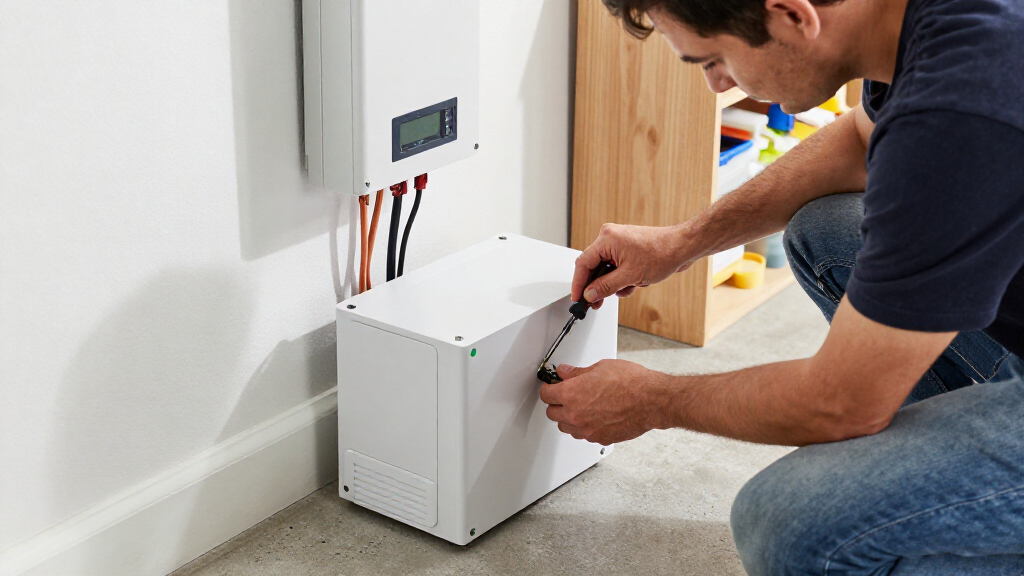
I compared each option by the parts of backup that change real household decisions: usable capacity, inverter output, system format, expandability, and solar readiness. Capacity indicates how long stored energy may last, while output helps determine whether several devices or higher-demand appliances can run at once. I also separated complete portable power stations from battery-and-inverter components, since they call for different levels of planning and installation.
The ranking favors products that balance practical outage coverage with a clear path to use, while giving larger systems credit for higher-capacity or higher-output needs. Bundles are judged for the convenience of included panels, not as a guarantee of fast or reliable solar charging in every location. The ECO-WORTHY battery-only listings rank differently from complete systems because their value depends on selecting compatible equipment and arranging a suitable installation. I treat the named specifications as comparison points, not promises of whole-home coverage; household loads, wiring, operating limits, and local requirements can change the result.
Factors to Consider When Choosing Home Battery Backup Systems
Choosing a backup system starts with the outage you want to handle, not the largest capacity figure on a product page. I’d work from your essential loads, how long you need them, and how much setup you’re prepared to manage; those answers often narrow the field faster than comparing every specification.
Size for Your Loads and the Outage You Want to Cover
List the devices you expect to run during an outage and note their wattage, including startup surges from equipment such as refrigerators or pumps. Add the loads you’d use at the same time to estimate the inverter output you need, then estimate runtime from energy use rather than relying on capacity alone. A larger battery stores more energy, but it cannot compensate for an inverter that cannot support the appliance load. Many buyers make the mistake of planning around every circuit in the house when a smaller set of essentials would meet their actual needs. If outages are short and intermittent, a compact station may be a better fit than paying in complexity for storage you rarely use. For long outages, plan how you will recharge as well as how much energy you can store.
Choose Portable Backup or a Home-Integrated System
Portable stations are designed to be easier to move and use without building a full home energy setup, making them a sensible starting point for devices and selected appliances. A larger battery-and-inverter system can support a more substantial backup plan, but it brings questions about placement, wiring, compatibility, and who will install it. Do not assume that a product described as a home backup system automatically connects to every household circuit. Before buying, ask how the system will connect to the loads you care about and whether a transfer switch or other electrical work is required. Moving a portable unit between rooms may suit renters or households seeking flexible backup, while a fixed system may better serve owners with defined backup circuits. Match the format to your property and installation appetite, not just the capacity.
Read Capacity, Output, and Runtime as Separate Measures
Capacity, usually shown in watt-hours, represents stored energy; inverter output, shown in watts, represents the load the system can serve at a given moment. Runtime also depends on the appliance’s consumption, conversion losses, operating conditions, and whether other devices are running. A higher output rating does not mean the battery will last longer, and a large capacity does not mean it can start a demanding motor. A common buying error is comparing one headline number while overlooking the other two. Write down both the running and startup requirements of your priority appliances, then compare them with the system’s documented limits. If the manufacturer does not make those limits clear, ask before treating the unit as suitable for a critical load.
Treat Solar Panels as a Recharge Plan, Not a Runtime Promise
Included panels can make it easier to begin recharging from sunlight, but their rated wattage does not describe how much energy they will deliver throughout a day. Sun angle, shade, weather, season, panel placement, and the unit’s solar input limits all affect charging. A panel bundle may be convenient for occasional recharge, yet it may not restore a large battery quickly enough to support repeated heavy use. Check the power station’s supported solar input and connector requirements before adding other panels later. If dependable charging during extended outages matters, compare solar with other available charging methods and plan for days with poor sun. Avoid assuming a bundle alone makes a system self-sufficient.
Check Compatibility and Installation Before Buying Battery Components
A standalone 48V battery is not the same purchase as a complete power station: it needs compatible equipment to convert stored energy into usable household power. Confirm the battery chemistry and voltage match the inverter, and check the system’s communications, protection, and approved operating limits. For a home connection, ask a qualified installer about the required wiring, transfer equipment, permits, and local electrical rules. Buyers can underestimate the cost and effort of these supporting parts because the battery’s capacity is the most visible specification. A matched battery-and-inverter package can reduce compatibility guesswork, but it still may require professional setup. If you want backup with minimal planning, a self-contained portable station is usually a simpler category to compare.
Plan for Expansion, Maintenance, and the Next Outage
Think about whether your needs are likely to grow, such as adding a sump pump, more backup circuits, or additional battery storage. Before selecting an expandable system, verify which batteries and accessories the manufacturer supports and whether expansion changes output, charging, or installation requirements. Battery systems also need sensible storage conditions and occasional checks of cables, connections, and operating status, especially if they sit unused between outages. Ask about warranty coverage, service access, software support, and replacement options rather than assuming every component has the same support terms. Paying more can make sense when a system supports a clear expansion path or higher loads you already need, but extra capacity is poor value when it has no defined job. Base the purchase on a realistic plan for use, charging, and upkeep.
Frequently Asked Questions
Can a home battery backup system run my whole house?
Sometimes, but the label alone does not establish whole-home capability. You need enough inverter output for the loads that run together and enough stored energy for the runtime you expect. Heating and cooling equipment, pumps, and other motor-driven appliances may have high startup demands that differ from their normal running draw. A system may instead connect to selected essential circuits, which can be a more practical plan for many households. Have an electrician review your panel, target circuits, and transfer setup before buying a system for whole-home use.
How do I know whether I need a portable power station or a 48V battery system?
Choose based on how much setup and household integration you want, not capacity alone. Portable stations are generally a more self-contained option for moving power to selected devices, while a 48V battery system requires compatible inverter equipment and a considered electrical plan. If you rent, want backup for a few devices, or prefer a less involved setup, a portable unit may fit better. If you own your home and need greater storage or a fixed backup arrangement, a 48V system may be worth exploring with an installer. Confirm the full system requirements before comparing their headline energy figures.
Will a solar panel bundle recharge the battery during a long outage?
It can contribute energy, but the bundle does not guarantee a full recharge on a set schedule. Actual production changes with sunlight, shade, weather, season, panel orientation, and the unit’s input limits. Compare the panels’ combined rated output with the battery’s capacity and your daily energy use, then allow for less-than-ideal conditions. Also check whether the power station accepts the panel connectors and input voltage supplied or planned. For extended outages, have a backup charging plan for cloudy periods or higher-than-expected loads.
Can I buy an ECO-WORTHY Powermega battery now and add an inverter later?
That can be possible, but only if the later inverter is compatible with the battery’s voltage, chemistry, communication requirements, and protection limits. Compatibility should be confirmed with the manufacturers or a qualified installer before you buy the battery, not assumed from a shared 48V label. A battery-only purchase also leaves you responsible for the inverter, wiring, controls, and any required transfer equipment. Adding those components later may affect installation cost and how quickly you can use the storage. If you want a ready-to-use backup option, compare a complete system instead.
What should I check before connecting a battery system to household circuits?
Ask which circuits the system can serve, what transfer equipment is required, and whether the proposed setup needs permits or inspection in your area. A direct connection to household wiring should not be improvised; improper connections can create serious electrical hazards. Have an electrician review the system’s inverter output, circuit loads, panel arrangement, and installation instructions. Also confirm whether the system supports the appliances you intend to run, including their startup demands. These checks help prevent buying a system that has ample stored energy but cannot safely deliver power the way your home needs.
Conclusion
For a broad mix of substantial storage and a power-station format, I’d start with the EcoFlow Delta Pro Ultra with 12 kWh and an extra battery as the best overall choice in this lineup. The best value for straightforward backup is the EcoFlow Delta 3 Classic if your plan centers on smaller loads and portability, while the best premium direction is the Jackery Explorer 5000 Plus for buyers who prioritize its 5040Wh capacity and 7200W output. Beginners should compare the Jackery HomePower 3600 Plus for a simpler middle ground, especially if a panel bundle suits their charging plan. For large fixed-system needs, examine the ECO-WORTHY 48V 30,720 Wh system with a 10kW inverter; for buyers who already have a compatible system plan, the Powermega battery options may be more relevant. Before choosing any of them, match the unit to your loads, charging method, and installation requirements.
Halloween Picks
halloween
As an affiliate, we earn on qualifying purchases.