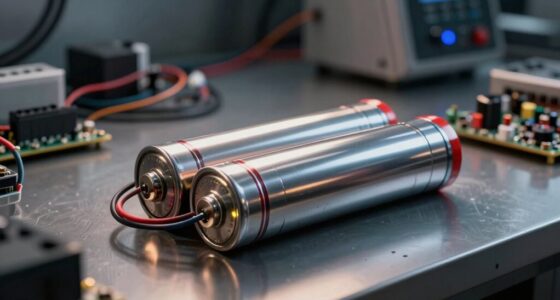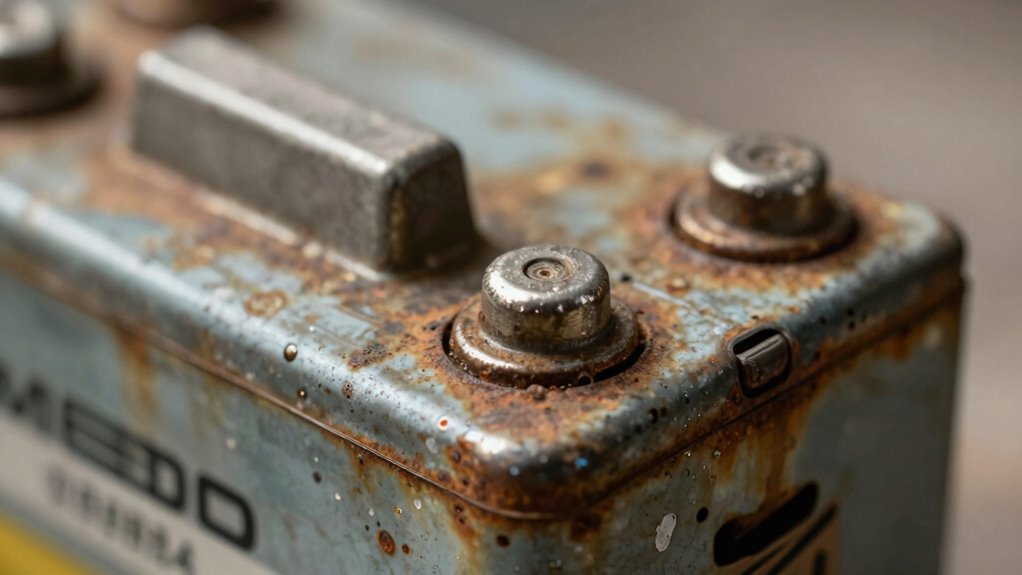

Even as batteries age and lose overall capacity, their internal chemistry and structure often still enable them to deliver quick bursts of power when needed. Chemistries like lithium-ion and nickel-metal hydride are good at maintaining high-current outputs over time, especially if well maintained and stored properly. Their internal design allows rapid energy release, which isn’t as affected by capacity decline. Keep exploring to discover how proper care can help your batteries perform in those critical moments.

Get backup power and energy gear delivered free with Prime
- Fast, free delivery on millions of items
- Prime Video, Amazon Music and more included
- Member-only deals all year
Key Takeaways
- Lithium-ion and nickel-metal hydride chemistries maintain high-current output even as they age.
- Proper storage and maintenance prevent internal deterioration, preserving quick burst capabilities.
- Internal structure damage affects capacity more than the ability to deliver short-term high power.
- Increased internal resistance with age has less impact on short, rapid energy releases.
- Resilient battery chemistries and good conditions enable old batteries to still provide quick power surges.
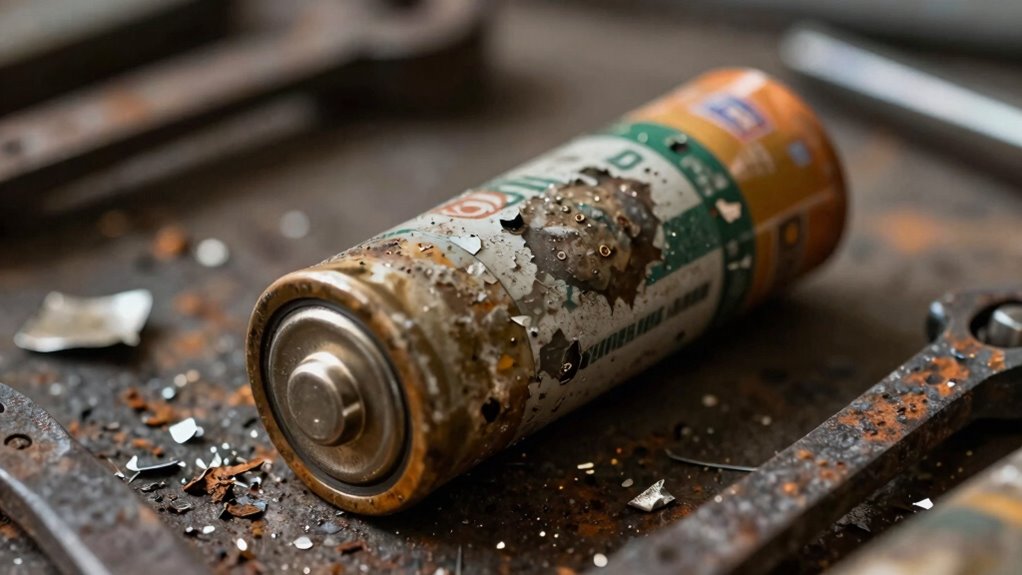
Even as batteries age, some still manage to deliver impressive short bursts of power, surprising many users. This phenomenon often puzzles people, especially when they expect old batteries to underperform across the board. This is because certain chemistries, like lithium-ion or nickel-metal hydride, are better at maintaining their ability to produce quick, high-current outputs, even after years of use. These chemistries tend to have a more stable internal structure, which allows them to generate those rapid energy surges needed for tasks like camera flashes, power tools, or remote controls.
Certain battery chemistries like lithium-ion and nickel-metal hydride excel at delivering quick power surges even as they age.
Power longevity, or how long a battery can sustain its charge over time, doesn’t always directly correlate with its ability to deliver short bursts of power. You might find that an older battery, while no longer holding a full charge for extended periods, can still deliver quick, intense bursts when needed. This is because short bursts rely on the battery’s ability to provide a rapid release of energy, which is often less affected by overall capacity loss. Even as the overall power reserve diminishes, the internal chemistry can still facilitate these quick demands, especially if the battery has been well-maintained or stored properly. Proper maintenance and storage conditions can significantly influence how well a battery performs in these critical moments. Additionally, understanding battery chemistry can help users make better choices about which batteries to keep on hand for quick energy needs.
The key to why some old batteries perform well in short-term power delivery lies in their internal structure and how they age. Over time, chemical reactions within a battery can cause electrode degradation or buildup of byproducts that reduce overall capacity. However, the electrodes themselves might still be capable of supporting rapid discharge if they haven’t suffered significant structural damage. In some cases, batteries that have been used carefully or stored in ideal conditions experience less deterioration of their ability to produce these high-current bursts. Proper storage conditions, such as keeping batteries in a cool, dry place, can significantly extend their ability to perform when it counts most. Furthermore, internal resistance plays a role in how effectively a battery can deliver quick power, and it tends to increase with aging, but certain chemistries are more resilient to this change. That’s why, even after many months or years, some batteries can still deliver that surprising power when a sudden jolt is needed.
Additionally, the internal chemistry of a battery plays a crucial role in its ability to handle quick energy demands, often remaining resilient despite other forms of deterioration. Ultimately, the chemistry determines how well a battery can handle quick energy demands, while proper maintenance and storage influence its power longevity. If you keep batteries in a cool, dry place and avoid deep discharges, you extend their ability to perform when it counts most. So, even as batteries age and their total capacity declines, their internal chemistry can still support short bursts of power, giving you a boost when you least expect it. That’s why some old batteries still surprise you with their resilience and performance in critical moments.
high current lithium-ion batteries
As an affiliate, we earn on qualifying purchases.
As an affiliate, we earn on qualifying purchases.
Frequently Asked Questions
Can Old Batteries Be Safely Reused or Refurbished?
Old batteries can sometimes be safely reused or refurbished if you perform proper battery recycling and voltage restoration. You should test their voltage and capacity carefully before reuse, as some may no longer hold a charge or could be unsafe. Consider professional refurbishment services for reliable results. Always prioritize safety, avoid using damaged batteries, and follow proper disposal methods if refurbishment isn’t possible.
Do Certain Battery Types Age Better Than Others?
Surprisingly, some battery types age better than others. Lithium-ion batteries, for instance, often withstand time and use better thanks to their stable chemistry. You might think all batteries degrade equally, but proper storage conditions—cool, dry places—can considerably slow their aging process. So, if you want your batteries to last, choose wisely and store them properly, or you’ll find some just keep surprising you with their longevity.
How Does Temperature Affect a Battery’s Short-Term Power?
Temperature directly impacts your battery’s short-term power by affecting its thermal conductivity and charge retention. When it’s cold, thermal conductivity decreases, making it harder for the battery to transfer heat, which reduces power output. Conversely, warm temperatures improve conductivity and help retain charge temporarily, boosting short bursts of power. However, extreme heat can damage the battery long-term, so moderate temperatures are best for ideal short-term performance.
What Are the Signs an Old Battery Is Still Viable?
They say “Don’t judge a book by its cover,” and the same applies to batteries. If an old battery still powers devices briefly, it indicates good battery chemistry. Look for signs like consistent voltage, no corrosion, and proper storage conditions—keep it cool and dry. If it holds a charge and performs well in short bursts, it’s still viable. Otherwise, it’s time to replace it.
Can Charging Habits Extend an Old Battery’s Power Output?
Charging habits can influence your old battery’s power retention, but they won’t change its fundamental battery chemistry. To maximize its output, avoid overcharging or deep discharging, which can damage the internal cells. Instead, charge it gently and periodically. Proper charging helps preserve the existing power, but over time, chemical changes inside the battery reduce overall capacity. So, good habits can help, but won’t reverse aging or restore lost power.
Conclusion
So next time you grab an old battery and it still powers your device with surprising strength, remember—you’re holding a tiny miracle in your hand. Despite years of aging, some batteries retain enough juice to deliver short bursts of power that can outshine even the newest, most hyped batteries. It’s like discovering a secret weapon in your drawer—proof that even in old age, batteries can pack a punch stronger than a thunderclap, ready to surprise you when you least expect it.
Halloween Picks
halloween
As an affiliate, we earn on qualifying purchases.