
TL;DR

Get backup power and energy gear delivered free — and shop member deals
- Fast, free delivery on millions of items
- Access to Prime Big Deal Days deals on October 6–7
- Prime Video, Amazon Music and more included
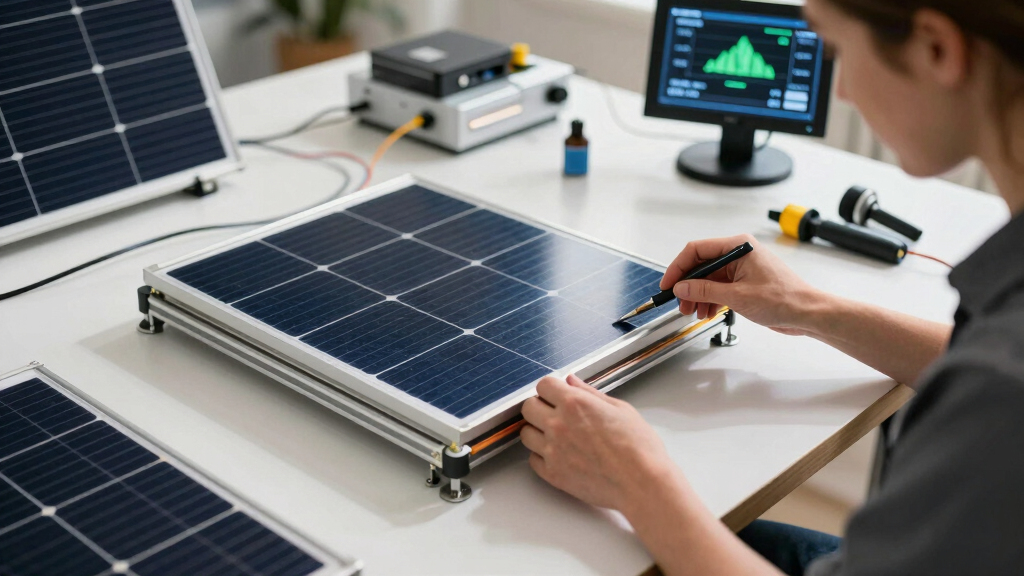
A recent study by Spanish researchers finds that tandem photovoltaic technologies can reduce environmental impacts by around 30% compared to traditional silicon-based panels, mainly due to higher efficiency. However, their benefits depend on long operational lifetimes and stability. Cadmium telluride (CdTe) panels still show the lowest overall impacts.
A Spanish research team has found that perovskite-silicon tandem photovoltaic (PV) modules can deliver approximately 30% lower environmental impacts than traditional silicon-based panels, according to a recent study. This suggests potential sustainability benefits if these emerging technologies achieve long operational lifetimes and stability. The findings are based on a comprehensive cradle-to-gate life cycle assessment (LCA) of eight PV technologies across three generations.
The study, conducted by a research group from Universitat Politècnica de Catalunya (UPC), analyzed the environmental impacts of PV systems from raw material extraction through manufacturing, focusing on six impact categories including global warming and resource scarcity. It compared first-generation silicon technologies like PERC, second-generation thin-film cadmium telluride (CdTe), and third-generation tandem systems.
The results show that CdTe panels have the lowest overall environmental impacts, driven by minimal material and energy requirements. In contrast, silicon-based technologies, despite efficiency improvements, exhibit higher impacts. Tandem PV modules, which combine perovskite and silicon layers, demonstrate lower impacts per kilowatt-hour due to higher efficiencies, but their performance is sensitive to degradation rates and operational lifetime. The study emphasizes that tandem systems need a minimum of 15 years of operation to outperform silicon panels environmentally.
Researchers noted that the high material consumption in silicon wafer production and the energy-intensive manufacturing process are key impact hotspots. They also highlighted challenges related to recycling, especially for tandem modules, due to difficulties in separating the layered materials. Toxicity concerns are associated with lead-based perovskites, although research into lead-free alternatives like tin perovskites is ongoing. The study underscores that technological improvements are essential for tandem PV to realize its full sustainability potential.
Implications of Tandem PV’s Environmental Benefits
This research indicates that tandem PV technologies could play a significant role in advancing solar energy sustainability, offering higher efficiency and lower environmental impacts than traditional silicon panels. If long-term stability and recycling challenges are addressed, tandem modules could become a more eco-friendly option for large-scale deployment. The findings also reaffirm the continued environmental advantage of CdTe thin-film panels, which currently lead in low-impact performance. Overall, the study highlights the importance of operational longevity and technological innovation in maximizing PV sustainability benefits.
high efficiency tandem solar panels
As an affiliate, we earn on qualifying purchases.
As an affiliate, we earn on qualifying purchases.
Background on PV Technologies and Environmental Assessments
Previous assessments of PV technologies have shown that material use, manufacturing energy, and end-of-life recycling significantly influence environmental impacts. Silicon-based panels dominate the market but are resource-intensive, while thin-film technologies like CdTe and CIGS offer lower impacts due to reduced material thickness. Recent developments in tandem PV, combining perovskite and silicon layers, have demonstrated efficiencies over 30% in laboratory settings, but their environmental performance at scale remains under investigation. The current study builds on this knowledge by providing a comprehensive cradle-to-gate comparison across multiple PV generations.
“Perovskite-silicon tandem technologies have shown a reduced environmental impact compared to current dominant silicon-based cells.”
— Julia Otero
Uncertainties and Challenges in Tandem PV Sustainability
While the study shows promising environmental advantages for tandem PV, several uncertainties remain. The long-term stability of perovskite layers, especially lead-based variants, is a concern, as degradation rates significantly impact environmental performance. Recycling processes for layered tandem modules are still under development, and current methods face technical hurdles. Additionally, the study’s results depend heavily on assumed operational lifetimes; real-world performance may vary. Further research is needed to confirm these findings at industrial scale and over extended periods.
Future Research and Development Priorities for Tandem PV
Next steps include improving perovskite stability and encapsulation to extend operational lifetime and reduce degradation. Advances in recycling techniques for layered tandem modules are also critical to address end-of-life environmental impacts. Industry efforts to scale up tandem PV manufacturing and real-world testing will help validate these findings. Policymakers and investors may consider supporting innovations that enhance durability and recyclability, enabling tandem PV to fulfill its sustainability promise.
Key Questions
How much lower is the environmental impact of tandem PV compared to silicon?
The study estimates that tandem PV modules can have approximately 30% lower environmental impacts than traditional silicon-based panels, primarily due to higher efficiencies and material savings.
What are the main challenges for tandem PV to become more sustainable?
Key challenges include improving perovskite stability to ensure longer operational lifetimes, developing effective recycling methods for layered modules, and reducing toxicity concerns related to lead-based perovskites.
Does this mean tandem PV is ready for widespread deployment?
Not yet. While promising, tandem PV technologies still require further technological development to address stability, recyclability, and scaling issues before large-scale deployment can be considered truly sustainable.
How does the environmental impact of CdTe panels compare?
Cadmium telluride (CdTe) panels currently show the lowest overall environmental impacts among PV technologies, owing to their low material and energy requirements, and high recyclability potential.
Will tandem PV technologies become cheaper over time?
Cost trends depend on technological advancements, manufacturing scale, and material availability. As research progresses, tandem PV could become more cost-competitive, especially if durability and stability improve.
Source: PV Magazine
Halloween Picks
halloween
As an affiliate, we earn on qualifying purchases.