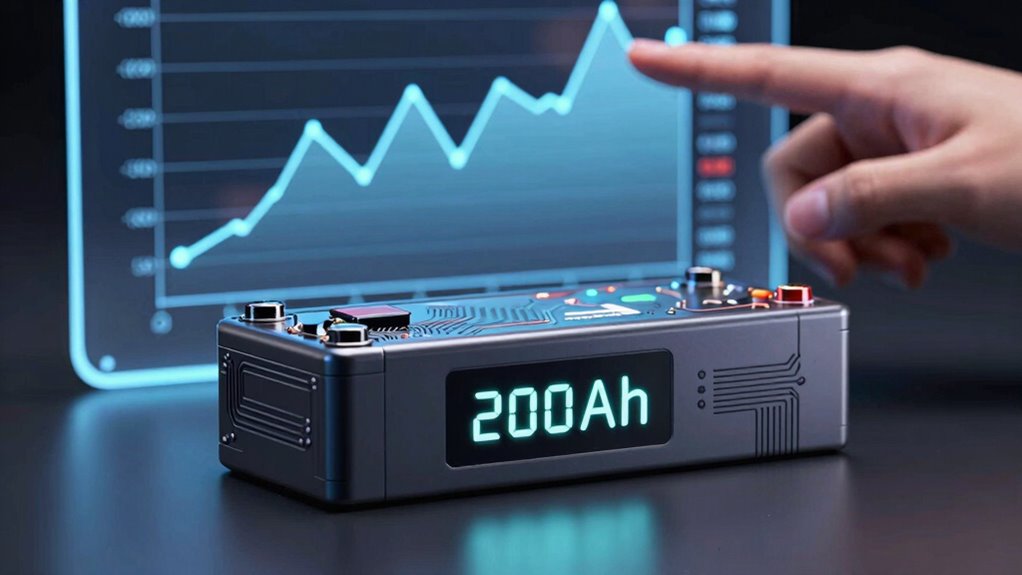

You might see a “200Ah” label on a battery and assume it guarantees that capacity, but the truth is, that number often reflects ideal test conditions not your real-world use. Hidden factors like battery chemistry, manufacturing standards, and certifications greatly influence how much actual power you get and how long it lasts. To really understand what you’re buying, it’s essential to look beyond the label—keep exploring to uncover the full story behind your battery’s true performance.
Key Takeaways
- The “200Ah” label is nominal and often based on ideal test conditions, not real-world performance.
- Battery chemistry, such as lithium-ion versus lead-acid, significantly impacts actual usable capacity.
- Manufacturing standards and quality control influence how closely a battery’s performance matches its rated capacity.
- Certifications and industry standards help verify whether the rated capacity reflects real-world performance.
- Understanding hidden ratings prevents overestimating battery power, ensuring safer and more reliable equipment operation.

When shopping for batteries, it’s easy to overlook the ratings that aren’t always visible on the packaging. You might see a label stating “200Ah,” but that number alone doesn’t tell the whole story. The actual performance of a battery hinges on factors like battery chemistry and manufacturing standards, which can vary markedly between brands and models. Understanding these hidden ratings is vital because they directly impact how long your battery will last and how reliably it will perform under different conditions. Additionally, battery certification standards can provide insight into the quality and reliability you can expect from a particular product.
Battery chemistry plays a pivotal role in determining a battery’s true capacity and longevity. Different chemistries—such as lead-acid, lithium-ion, or AGM—have unique characteristics that influence how efficiently they store and deliver power. For example, a lithium-ion battery might advertise 200Ah, but it can often provide higher usable capacity and faster charging compared to traditional lead-acid types. Conversely, a lead-acid battery with the same rating might have a shorter lifespan or require more maintenance. Recognizing the chemistry behind the label helps you set realistic expectations and choose a battery that matches your needs.
Battery chemistry affects capacity, lifespan, and maintenance needs, making it essential for choosing the right battery for your needs.
Manufacturing standards are equally important but less obvious. High-quality batteries adhere to strict manufacturing protocols that ensure consistency, safety, and durability. When a manufacturer follows rigorous standards, the rated capacity is more likely to reflect the actual performance you’ll experience in real-world use. On the other hand, batteries produced with lower standards might have inflated ratings that aren’t backed by reliable quality control. This can lead to premature failures or substantially reduced capacity over time, even if the label claims otherwise.
In many cases, the “200Ah” label is a simplified figure that doesn’t account for these underlying factors. It’s a nominal rating, which means it might be based on ideal test conditions or outdated standards. If you don’t dig deeper, you risk overestimating your battery’s capabilities, which could cause power shortages or damage your equipment. To avoid this, always research the battery’s chemistry and verify the manufacturer’s standards. Look for independent reviews or certifications that confirm the battery’s performance under real-world conditions.
Frequently Asked Questions
How Do Temperature Variations Affect Actual Battery Capacity?
Temperature variations cause thermal effects that impact your battery’s capacity fluctuation. When it’s cold, your battery’s chemical reactions slow down, reducing its effective capacity and making it seem like it’s weaker. Conversely, high temperatures can temporarily boost capacity but may damage the battery over time. You should be mindful of these thermal effects, as they directly influence how much energy your battery can reliably store and deliver in different conditions.
What Impact Does Discharge Rate Have on True Battery Capacity?
A higher discharge rate reduces your battery’s true capacity because of capacity variation. When you draw current quickly, the battery can’t deliver its full rated capacity, leading to lower available Ah. Conversely, slower discharge allows the battery to perform closer to its nominal capacity. So, always consider the discharge rate, as it considerably impacts how much usable energy you get from your battery in real-world use.
Are There Industry Standards for Measuring Real Battery Capacity?
Battery benchmarks bolster your understanding by establishing industry standards for measuring real capacity. You’ll find that these standards, like those from the IEEE or IEC, account for variables such as battery aging and charge cycles. They guarantee consistent testing and accurate comparisons, helping you assess true capacity under real-world conditions. So, when you evaluate batteries, rely on standardized methods to get honest, reliable insights beyond the nominal ratings.
How Can I Identify Hidden Ratings on a Battery Label?
To identify hidden ratings on a battery label, check for details beyond the capacity number. Look for information about chemical differences, such as lithium-ion versus lead-acid, which impact actual performance. Verify label accuracy by cross-referencing manufacturer specifications and testing reports. Be cautious of vague or missing details, and consider third-party reviews, to make sure you’re understanding the true capacity and quality of the battery.
Do Different Battery Chemistries Influence Hidden Capacity Ratings?
Yes, battery chemistry substantially influences capacity differences and hidden ratings. Different chemistries, like lithium-ion, lead-acid, or NiMH, have unique energy densities and degradation rates that affect how capacity is rated and perceived. You might see similar labels, but the actual usable capacity can vary based on chemistry. Always consider these factors when evaluating battery performance, as chemistry impacts both capacity and longevity beyond the label’s stated Ah rating.
Conclusion
Remember, not all ratings are created equal—what looks like a solid 200Ah battery might not deliver the same performance everywhere. Always dig deeper and understand the true specifications before trusting the label. As the saying goes, “Don’t judge a book by its cover.” Knowing the hidden ratings can save you headaches and money down the line. Stay informed, ask questions, and make smarter choices to keep your power game strong.