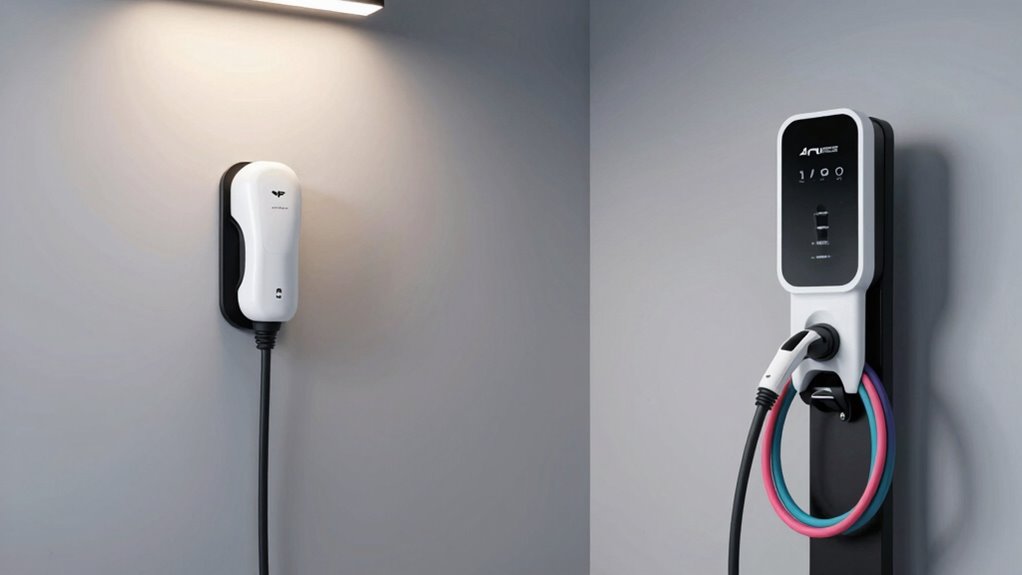

When deciding between hardwired and plug-in EV charging setups, you need to evaluate installation costs, charging speed, and flexibility. Hardwired stations usually cost more to install but offer faster charging and require less maintenance. Plug-in chargers, on the other hand, are more affordable and portable, making them great for renters or those who might move. Each option has its pros and cons, so stick around to see what fits your needs best.

Get backup power and energy gear delivered free with Prime
- Fast, free delivery on millions of items
- Prime Video, Amazon Music and more included
- Member-only deals all year
Key Takeaways
- Hardwired charging stations typically incur higher installation costs but offer faster charging speeds, enhancing energy efficiency and minimizing downtime.
- Plug-in charging stations are generally more affordable to install and provide flexibility for renters or those who may move.
- Charging speed varies, with hardwired systems usually delivering quicker charging, which improves user convenience and overall experience.
- Maintenance requirements differ; hardwired systems need less ongoing care, while plug-in chargers may require regular checks on connector condition.
- Safety standards apply to both setups, but hardwired systems are often less prone to wear and tear from frequent use.
As electric vehicles (EVs) gain popularity, understanding the various charging setups becomes crucial. One of the most significant decisions you’ll face is choosing between hardwired and plug-in charging systems. This choice directly impacts your home charging experience, including installation costs, charging speed, and user convenience.
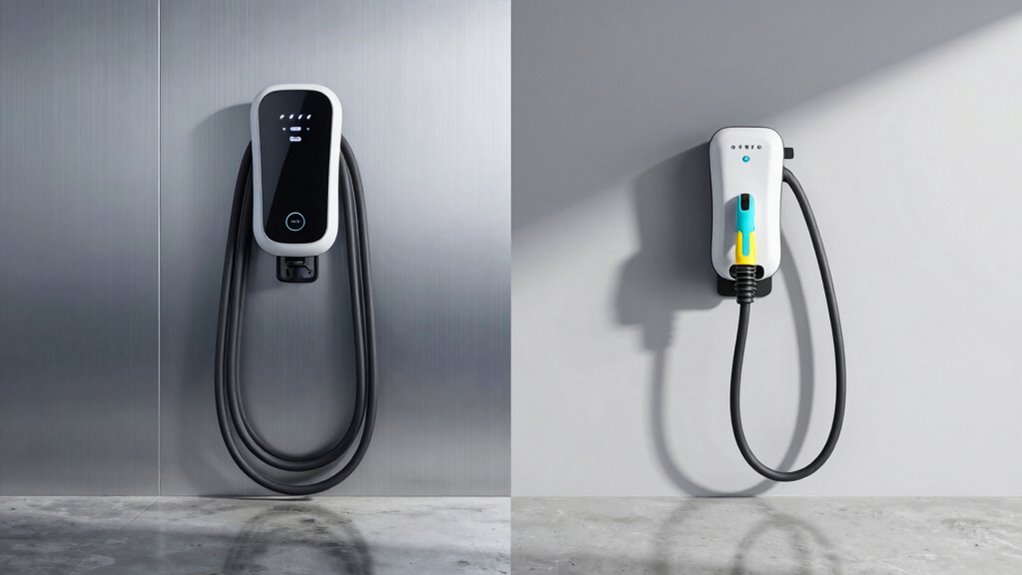
Hardwired charging stations are permanently installed into your home’s electrical system. They typically offer faster charging speeds, making them a great option if you’re looking to minimize downtime. However, the installation costs can be higher due to the electrical work required. You’ll need to evaluate the upfront investment, but many find that the benefits in energy efficiency and charging speed justify the expense. With a hardwired setup, you won’t have to worry about plugging and unplugging your vehicle—simply park and let it charge. Proper installation procedures are essential to ensure safety and efficiency regardless of the type of system you choose. Incorporating professional electrical services can help ensure that your system meets all safety standards and performs optimally.
Hardwired charging stations provide faster charging speeds and convenience, though they come with higher installation costs.
On the other hand, plug-in charging stations offer a different set of advantages. They’re usually more affordable to install since they don’t require extensive electrical work. You can set them up in various locations, giving you location flexibility that hardwired options might lack. If you rent your home or plan to move, a plug-in charger could be more practical. You can easily take it with you when you relocate, making it a user-friendly choice. Additionally, understanding climate control can be important in maintaining the optimal operation of your charging setup in different weather conditions.
When it comes to safety features, both options can be equally reliable, provided you choose models that meet industry standards. However, hardwired systems may offer a slight edge in that they’re less susceptible to wear and tear associated with frequent plugging and unplugging. Maintenance requirements can also vary; hardwired stations generally need less ongoing care, while plug-in units might require more attention to guarantee the connectors remain in good condition. Choosing a reliable charging system is vital for long-term performance and safety.
As an affiliate, we earn on qualifying purchases.
Frequently Asked Questions
How Long Does Installation Take for Each Charging Setup?
The installation timeframe for a hardwired EV charger usually takes about 4 to 8 hours due to its setup complexity, which often involves electrical panel upgrades. In contrast, a plug-in charger can typically be set up in 1 to 3 hours since it requires less extensive electrical work. Your choice will affect how quickly you can start charging your vehicle, so consider your needs and the complexity of each setup.
What Are the Costs Associated With Each Charging Option?
When you’re choosing between charging options, think of it like picking a car. A hardwired setup may cost you more upfront—installation permits and labor add up—but it often means lower maintenance costs down the road. On the other hand, a plug-in option is usually cheaper to install, but you might face higher maintenance expenses. Just like choosing a reliable vehicle, consider long-term benefits over initial savings.
Are There Specific EV Models That Prefer One Setup Over the Other?
Yes, some EV models show a preference for specific charging setups. For instance, higher-end models like the Tesla Model S often benefit from hardwired installations, enhancing charging efficiency. Conversely, certain budget-friendly models handle plug-in setups well, maintaining compatibility without sacrificing performance. Always check your vehicle’s specifications to guarantee ideal model compatibility with your charging choice, as this can greatly impact your overall charging experience and efficiency.
Can I Switch From Plug-In to Hardwired Later?
Yes, you can switch from plug-in to hardwired later. This change offers you more charging flexibility, allowing for potentially faster charging speeds. However, keep in mind that installation challenges may arise, such as needing an electrician to set up the hardwired system. It’s essential to assess your current electrical infrastructure and any local codes before making the switch, ensuring everything’s safe and compliant for your EV charging needs.
What Safety Features Are Included in Both Setups?
Both setups prioritize charging safety through features like ground fault circuit interrupters (GFCI) and overcurrent protection. Installation requirements can vary, often influenced by your home’s electrical capacity and voltage considerations. You’ll find that user preferences also play a role; some prefer the convenience of plug-in chargers, while others opt for hardwired setups for permanent solutions. Whichever you choose, make certain the system meets safety standards to protect both you and your vehicle.
Conclusion
When choosing between hardwired and plug-in EV charging setups, think of it as picking the right tool for the job. Hardwired chargers offer a streamlined, permanent solution, while plug-ins provide flexibility and ease of use. Depending on your needs, one might feel like a trusty old hammer, while the other’s a versatile Swiss Army knife. Ultimately, it’s all about finding the perfect fit for your electric driving journey. Choose wisely, and you’ll charge ahead with confidence!
Halloween Picks
halloween
As an affiliate, we earn on qualifying purchases.