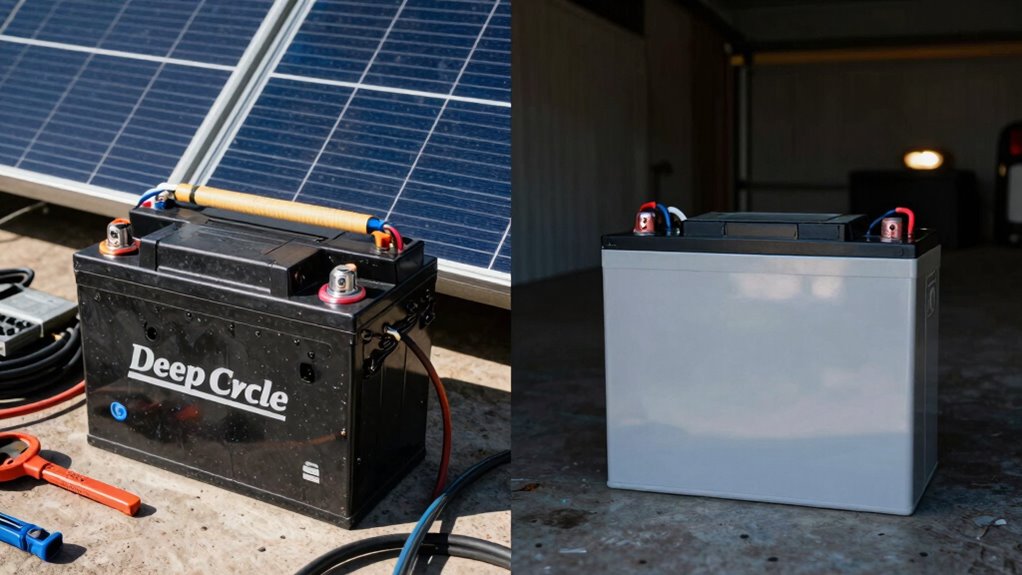

The real difference between deep cycle use and backup use lies in their designed applications. You’ll find deep cycle batteries are meant for regular, prolonged discharge and recharge cycles, perfect for solar systems and electric vehicles. In contrast, backup batteries are for short-term use during power outages. If you rely on consistent energy, deep cycle is your best bet. But if you need emergency power, go for backup. There’s more to explore on choosing the right battery.

Get backup power and energy gear delivered free with Prime
- Fast, free delivery on millions of items
- Prime Video, Amazon Music and more included
- Member-only deals all year
Key Takeaways
- Usage Pattern: Deep cycle batteries are for regular, prolonged use, while backup batteries are meant for short-term, intermittent power supply during outages.
- Charging Cycles: Deep cycle batteries handle frequent charging and discharging without significant capacity loss, unlike backup batteries that suffer from shortened lifespan with frequent cycling.
- Energy Storage: Deep cycle batteries efficiently store energy for extended periods, whereas backup batteries provide reliable power only during emergencies.
- Lifespan: Deep cycle batteries generally have a longer lifespan due to consistent use, while backup batteries can degrade faster with poor maintenance.
- Application Specifics: Selecting between the two depends on whether consistent energy needs or emergency power supply is more critical for your situation.

When you’re choosing a battery for your needs, understanding the difference between deep cycle and backup use is vital. Each type serves a distinct purpose, and knowing how they fit into your specific usage patterns can greatly impact your battery lifespan and overall satisfaction.
Deep cycle batteries are designed for regular, prolonged discharge and recharge cycles. They’re perfect for applications where you need to draw energy over extended periods, such as in solar energy systems or electric vehicles. You’ll find that these batteries can handle frequent charging cycles without suffering from substantial capacity loss. Their robust design enables them to store energy efficiently, making them ideal for situations where consistent power is necessary.
On the other hand, backup batteries are meant for short-term use. They provide power during outages or when your main source fails. These batteries typically don’t undergo as many charging cycles as deep cycle batteries because they’re only used intermittently. If you’re looking for a solution that kicks in during emergencies, a backup battery is the way to go. However, you should keep in mind that their lifespan can be shorter if they’re frequently cycled or not properly maintained. Additionally, understanding the battery technology behind these types can help you select the most durable option for your application. Being aware of battery management practices can further extend their lifespan and performance.
When considering your energy storage needs, think about how you’ll be using the battery. If you’re using energy for daily tasks or extended periods, a deep cycle battery will serve you well. You’ll be able to draw considerable power and recharge it regularly without worrying about damage. Furthermore, taking into account the application can help you determine the best fit, as different uses may require different battery characteristics. Alternatively, if your primary concern is having a reliable power supply during unexpected outages, investing in a backup battery system might be more appropriate.
Your usage patterns play an important role in determining which battery type is right for you. If you need flexibility and consistent energy availability, deep cycle batteries can adapt to your lifestyle. If you only need a reliable power source occasionally, then backup batteries can fit the bill.
Ultimately, understanding the differences in battery technology can save you time and money. By considering both the intended use and the potential for energy storage, you’ll be better equipped to make a decision that aligns with your needs, ensuring you get the most out of your investment. Choose wisely, and you’ll enjoy the benefits for years to come.
As an affiliate, we earn on qualifying purchases.
Frequently Asked Questions
How Long Do Deep Cycle Batteries Last Compared to Backup Batteries?
Deep cycle batteries typically last 4 to 10 years, depending on usage scenarios, while backup batteries usually last around 3 to 5 years. You’ll find that deep cycle batteries, designed for regular discharge and recharge cycles, offer a longer lifespan under consistent use. In contrast, backup batteries, which are often used less frequently, may not endure as long due to less ideal charging and discharging patterns. Choosing the right battery impacts longevity considerably.
Can I Use a Backup Battery for Deep Cycle Applications?
Sure, you can use a backup battery for deep cycle applications, but it’s like using a sprinter to run a marathon. Backup batteries aren’t designed for repetitive deep discharges, so they’ll wear out quickly in those scenarios. Each battery type has its own usage scenarios; deep cycle batteries thrive on regular cycling, while backup batteries prefer a quick burst of energy. Choose wisely to guarantee you’re getting the best performance!
What Are the Best Brands for Deep Cycle Batteries?
When you’re looking for the best brands for deep cycle batteries, consider options like Trojan, Battle Born, and VMAX. These brands excel in battery types suited for longevity factors, ensuring your battery lasts through multiple cycles. Trojan is known for its durability, while Battle Born offers lightweight lithium options. VMAX provides great performance for various applications. Selecting the right brand can make a significant difference in your deep cycle experience.
How Do Temperature Changes Affect Battery Performance?
Ah, the whims of nature! Temperature changes can greatly affect your battery’s performance. In cold weather, you might notice a drop in capacity, while high temperatures can increase self-discharge rates. These temperature effects create a performance impact that can shorten lifespan and efficiency. To keep your battery in top shape, store it in a stable environment and avoid exposing it to extreme conditions. Your attention now can save you headaches later!
What Maintenance Is Needed for Deep Cycle and Backup Batteries?
To keep your batteries in top shape, regular maintenance is key. For both deep cycle and backup batteries, check the fluid levels and top them off with distilled water as needed. Clean the terminals to prevent corrosion, and guarantee proper charging practices to extend battery lifespan. Monitor the temperature and avoid overcharging. Following these maintenance tips will help you maximize performance and longevity, guaranteeing your batteries stay reliable when you need them most.
Conclusion
In the end, choosing between deep cycle and backup use is like deciding between a marathon and a sprint. If you’re powering your RV for an extended trip, go for the deep cycle—it’ll carry you through the long haul. But if you just need a quick boost for your home during a storm, backup use is your best bet. Think of it as training for different races; knowing your needs makes all the difference in performance.
Fall Picks
fall essentials
As an affiliate, we earn on qualifying purchases.