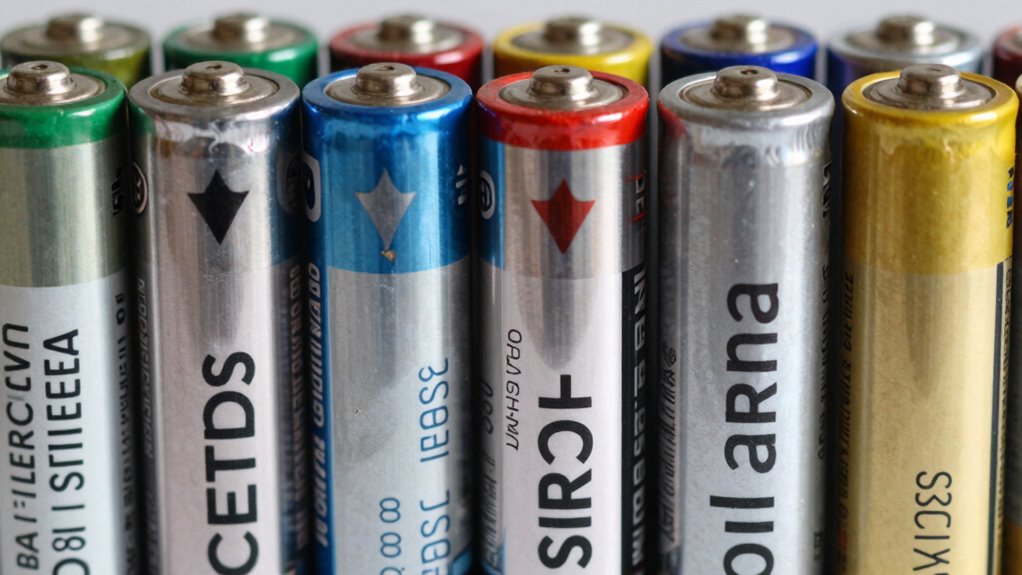

Many battery labels mislead first-time buyers with exaggerated claims about capacity, voltage, or lifespan, making it hard to choose the right one. Manufacturers often use vague terms like “long-lasting” without providing real test data, and they hide important info about chemistry and standards. This can lead to poor device performance and wasted money. If you want to avoid these pitfalls, understanding common tricks and what to look for can help you make smarter choices.

Get backup power and energy gear delivered free with Prime
- Fast, free delivery on millions of items
- Prime Video, Amazon Music and more included
- Member-only deals all year
Key Takeaways
- Manufacturers often use misleading chemistry labels to exaggerate battery performance and longevity.
- Labels may show ideal capacity and voltage, which don’t reflect real-world device use.
- Vague or incomplete labeling makes it difficult to assess true battery quality and suitability.
- Lack of standardized testing details reduces reliability of advertised claims.
- First-time buyers should seek transparent, detailed specifications to ensure better battery choices.
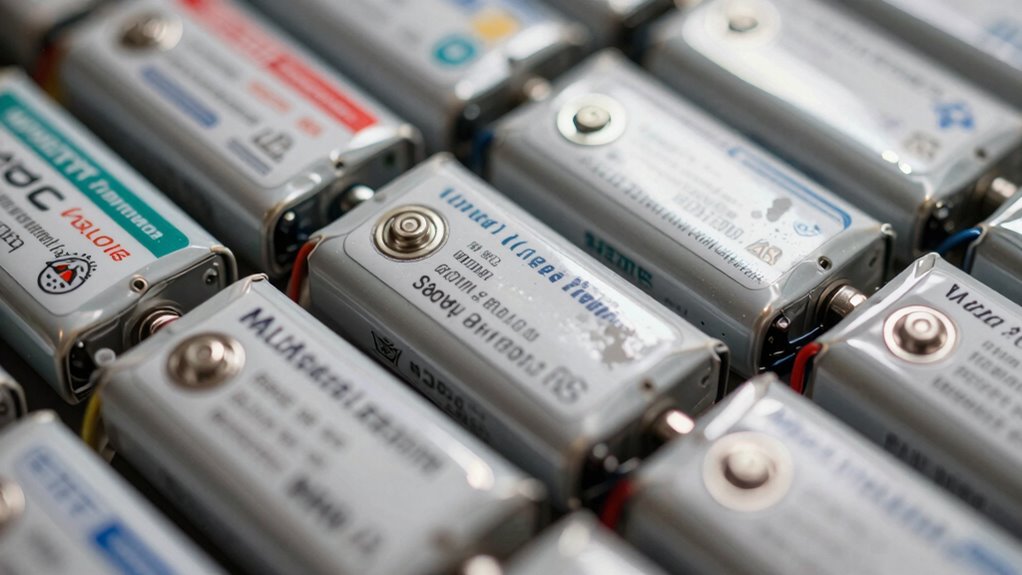
When shopping for batteries for the first time, you might think that all labels and ratings are straightforward, but many are designed to be misleading. Manufacturers often use confusing or exaggerated claims to make their batteries seem more appealing. One common area of deception involves battery chemistry. Different chemistries, such as alkaline, lithium-ion, or nickel-metal hydride, have distinct performance characteristics. Without understanding these differences, you might assume all batteries are interchangeable, but that’s rarely the case. For example, lithium batteries typically last longer and perform better at extreme temperatures, while alkaline batteries are cheaper but tend to drain faster. If a label doesn’t specify the chemistry, you could end up with a product that doesn’t meet your needs, leading to frustration and additional expenses.
Another significant issue is label accuracy. Many batteries are marketed with claims about capacity, voltage, or lifespan that aren’t entirely truthful. Manufacturers might highlight the maximum capacity under ideal conditions, which rarely reflect real-world use. For instance, a battery labeled as having 2,000 mAh might deliver considerably less in everyday scenarios. Similarly, voltage ratings can be misleading; a battery might state a nominal voltage that doesn’t account for voltage drops during use. This can cause confusion, especially if you’re trying to match batteries to specific devices that require precise power specifications. You might assume that a higher mAh rating guarantees longer life, but other factors like discharge rate or internal resistance also influence performance. The problem is compounded when labels omit important details or use vague language, making it hard for first-time buyers to make informed choices. Inaccurate labeling can lead to purchasing products that don’t meet your expectations or device requirements.
Furthermore, some labels are intentionally vague or omit key information, which can lead to misjudging a battery’s true capabilities. For example, a battery might be marketed as “long-lasting” without concrete data or standardized testing results. This lack of transparency makes it difficult for you to compare products reliably. To avoid falling for misleading labels, you need to look beyond the marketing hype. Check the fine print for details on battery chemistry, capacity, and testing standards. Seeking out reliable brands known for accurate labeling and consistent quality can help ensure you’re making a smarter choice. Recognizing labeling inaccuracies can help you avoid disappointment and ensure you select the best battery for your needs. It’s also helpful to pay attention to testing standards, which can give you a clearer idea of a battery’s real-world performance. Remember, a battery that’s clearly labeled with specific, honest information will serve you better in the long run than one with flashy claims that don’t hold up under real-world conditions. Being informed helps you buy smarter and ensures your devices operate reliably.
high capacity lithium-ion batteries
As an affiliate, we earn on qualifying purchases.
As an affiliate, we earn on qualifying purchases.
Frequently Asked Questions
How Can I Identify Misleading Battery Labels Quickly?
To spot misleading battery labels quickly, focus on labeling practices that emphasize capacity and performance claims. Look for clear, consistent ratings like mAh or Ah, and compare them across brands. Enhance your consumer awareness by researching brand reputations and reading reviews. Be cautious of exaggerated claims or vague language. By paying attention to detailed, transparent labels and staying informed, you can avoid being misled by deceptive marketing tactics.
Are There Official Standards for Battery Labeling Accuracy?
Yes, there are official standards for battery labeling accuracy, guided by labeling regulations set by organizations like the FTC and UL. These standards aim to guarantee labels honestly reflect the battery’s capacity and performance. As a consumer, staying aware of these regulations boosts your awareness, helping you identify misleading labels quickly. Always look for recognized certification marks and compare specifications across reputable brands to make confident, informed purchases.
Do All Batteries With High Ratings Last Longer?
Not all batteries with high ratings last longer, as battery chemistry and label design heavily influence performance. A battery with a high rating might use a different chemistry, affecting actual lifespan. Label design can also be misleading, emphasizing peak performance without considering real-world durability. So, always look beyond the ratings, understand the chemistry, and check reviews to gauge how long a battery will truly last in your device.
Can Counterfeit Batteries Have Fake Ratings and Labels?
Counterfeit batteries can easily display fake ratings and labels, creating the illusion of superior quality. Through deceptive battery manufacturing and label fraud, these copies can seem just as reliable as genuine ones, but often perform poorly or even dangerously. You must be cautious, as counterfeiters excel at mimicking authentic packaging, making it essential to buy from trusted sources and scrutinize labels carefully to avoid falling victim to these fraudulent tricks.
What Are the Risks of Trusting Misleading Battery Ratings?
Trusting misleading battery ratings can be risky because it may lead you to choose batteries with poor battery chemistry, resulting in shorter lifespan or potential safety hazards. Fake labels can also damage your device or cause unexpected failures. You might rely on a brand reputation that’s falsely boosted by deceptive ratings, making you believe you’re buying quality when the battery might not meet your needs or safety standards.
Conclusion
Understanding battery labels is like reading a map—you’ll navigate more confidently and avoid getting lost in confusion. Don’t let misleading ratings or vague labels steer you wrong. Instead, arm yourself with knowledge so you can spot the real deal from the shiny illusion. Remember, the right battery isn’t just about the label—it’s about what’s underneath. Stay sharp, ask questions, and keep your device powered with confidence, not guesswork.
Fall Picks
fall essentials
As an affiliate, we earn on qualifying purchases.