
If you’re choosing between NMC and LFP batteries for everyday use, consider your priorities. NMC batteries offer higher energy density, so they store more power in less space, but they tend to wear out faster with deep cycles. LFP batteries last longer and are more environmentally friendly, making them ideal if durability and sustainability matter most. To find out how each option suits your needs and explore the latest advancements, keep going.

Get backup power and energy gear delivered free with Prime
- Fast, free delivery on millions of items
- Prime Video, Amazon Music and more included
- Member-only deals all year
Key Takeaways
- NMC batteries offer higher energy density, providing more power in a smaller size, ideal for longer-range needs.
- LFP batteries excel in cycle life, offering longer durability and requiring fewer replacements over time.
- NMC involves resource-intensive materials like cobalt, raising environmental and ethical concerns.
- LFP batteries are more eco-friendly, using abundant materials like iron and phosphate, with lower environmental impact.
- Advances in recycling and technology are improving sustainability for both battery types, shaping future preferences.
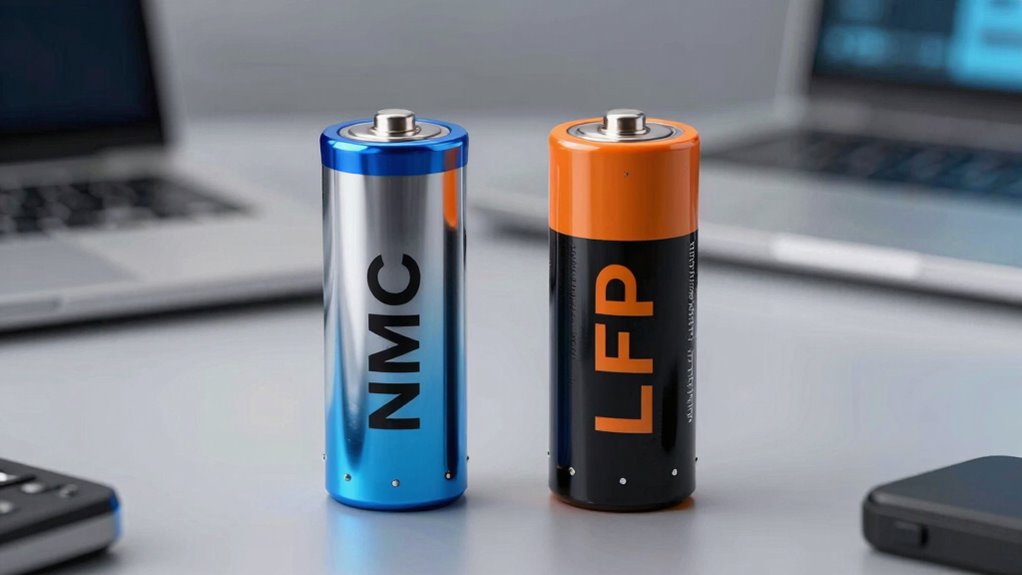
When choosing between NMC (Nickel Manganese Cobalt) and LFP (Lithium Iron Phosphate) batteries, understanding their differences can substantially influence your decision. If you’re looking at how long your battery lasts, battery longevity is a key factor. NMC batteries tend to have a higher energy density, which means they can store more power in a smaller space. This often translates into longer-lasting performance over the lifespan of the battery, especially if you regularly cycle it through deep discharges. However, their capacity to maintain performance over many charge cycles can decline faster compared to LFP batteries. LFP batteries, on the other hand, are renowned for their cycle life. They typically endure more charge-discharge cycles before their capacity diminishes markedly, making them a reliable choice if longevity is your priority. This durability often results in a longer overall lifespan, even if the initial energy density isn’t as high. Additionally, advancements in battery manufacturing are improving the performance and sustainability of both types. Environmental impact is another critical aspect to consider. NMC batteries contain nickel, manganese, and cobalt, metals that are more resource-intensive to mine and process, and often linked to environmental and ethical concerns. The extraction of cobalt, in particular, has raised issues related to sustainability and labor practices. These factors contribute to a higher environmental footprint for NMC batteries. Conversely, LFP batteries use iron and phosphate, which are abundant, less environmentally damaging to extract, and more ethically sourced. This makes LFP batteries generally more eco-friendly throughout their lifecycle—from manufacturing to disposal. Furthermore, ongoing research and development are driving improvements in both battery types, enhancing their efficiency and reducing environmental impacts over time. Additionally, because LFP batteries tend to last longer in terms of cycle life, they generate less waste over time, reducing the environmental burden associated with battery replacement and recycling. Innovations in battery recycling technology are also making it easier to recover valuable materials and minimize waste. The development of sustainable extraction methods is further supporting the shift toward environmentally responsible battery solutions.
As an affiliate, we earn on qualifying purchases.
Frequently Asked Questions
Which Battery Type Is More Environmentally Friendly?
LFP batteries are more environmentally friendly because they involve less harmful materials, making recycling easier and safer. They also promote material sustainability since their components are more abundant and less toxic. When you choose LFP, you support better battery recycling practices and reduce environmental impact. NMC batteries contain more valuable metals but pose higher environmental risks during disposal and recycling. Overall, LFP batteries are a greener choice for everyday use.
How Do Cost Differences Impact Long-Term Savings?
Imagine saving enough money to buy a small island—that’s how much long-term savings can be with batteries that have longer lifespans. LFP batteries typically have lower manufacturing costs and last longer, meaning fewer replacements and less maintenance over time. While NMC batteries might be pricier upfront, their shorter lifespan can chip away at your savings. So, choosing a more affordable, longer-lasting battery ultimately keeps more cash in your pocket over the years.
Are There Safety Concerns With Either Battery Type?
You might worry about safety with both battery types, but LFP batteries are generally considered safer because they’re more stable and less prone to thermal runaway. NMC batteries have a longer lifespan but pose higher recycling challenges and potential safety risks if damaged. Overall, proper handling and quality manufacturing minimize safety concerns for either type, ensuring your battery remains reliable and safe over its lifespan.
Which Battery Type Is Better for Cold Climates?
In cold climates, LFP batteries tend to be your gentle hero, offering better temperature resilience and consistent performance. They’re less affected by chilly conditions, maintaining battery longevity where NMCs might struggle. While NMC batteries may deliver higher energy density, LFP’s stability in low temperatures guarantees your vehicle keeps running smoothly. So, if you face harsh winters, LFP batteries are the reliable choice that keeps your journeys safe and steady.
How Does Charging Speed Compare Between NMC and LFP?
You’ll find that LFP batteries typically charge faster than NMC ones, partly because of their chemistry and thermal stability, which benefits your overall battery lifespan. With the growing charging infrastructure, LFP’s quick charging becomes more practical, helping you reduce downtime. NMC batteries, while slightly slower to charge, tend to have a longer lifespan under certain conditions, but LFP’s speed advantage makes it a popular choice for everyday users seeking efficiency and durability.
Conclusion
Think of NMC and LFP batteries as two different roads leading to the same destination. If you prefer a smoother, longer journey with more flexibility, NMC is your highway. But if you want a sturdy, reliable path that withstands the test of time, LFP is your trail. Both paths have their merits, so choose based on your needs. Whichever road you take, understanding their differences helps you navigate your energy journey with confidence.
Fall Picks
fall essentials
As an affiliate, we earn on qualifying purchases.