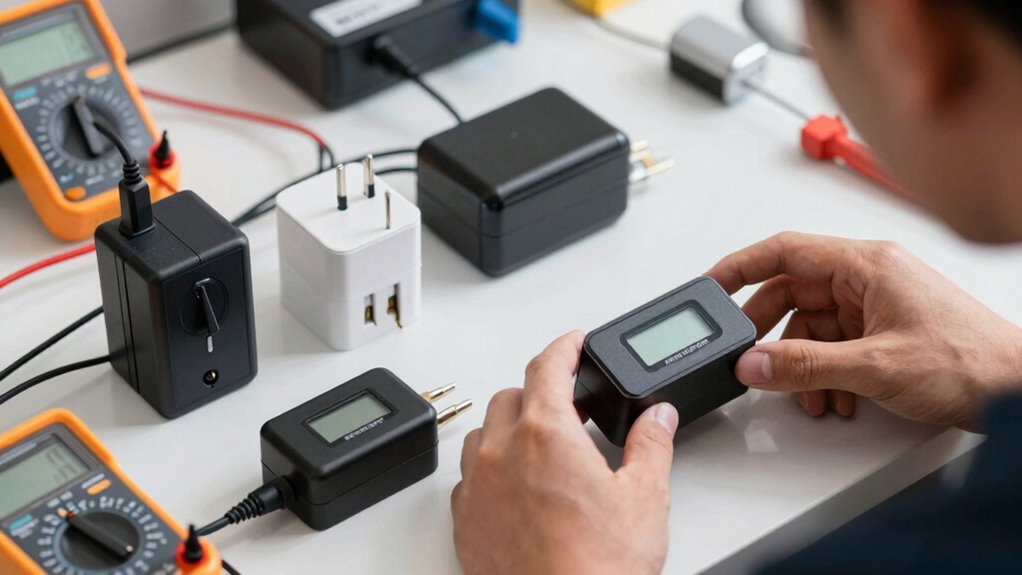

To pick the right amps for your battery charger without overpaying, start by checking your battery’s capacity in amp-hours (Ah). A safe rule is to choose a charger that provides around 10% of your battery’s capacity, balancing speed and safety. Avoid overspending on high-amp chargers unless your battery can handle it. If you want to learn how to tailor your charger to your specific battery, keep exploring suitable guidelines and tips.

Get backup power and energy gear delivered free with Prime
- Fast, free delivery on millions of items
- Prime Video, Amazon Music and more included
- Member-only deals all year
Key Takeaways
- Check your battery’s capacity (Ah) and aim for a charger rated around 10% of that value for safety.
- Consult the manufacturer’s recommendations to match the charger amps with your battery’s specifications.
- Balance charging speed and safety by choosing a charger with appropriate amps to avoid overheating or long charging times.
- Opt for chargers with safety features like automatic shut-off or temperature regulation to prevent overcharging.
- Avoid overspending on high-amp chargers if your battery only needs moderate charging; select a model that meets your needs.
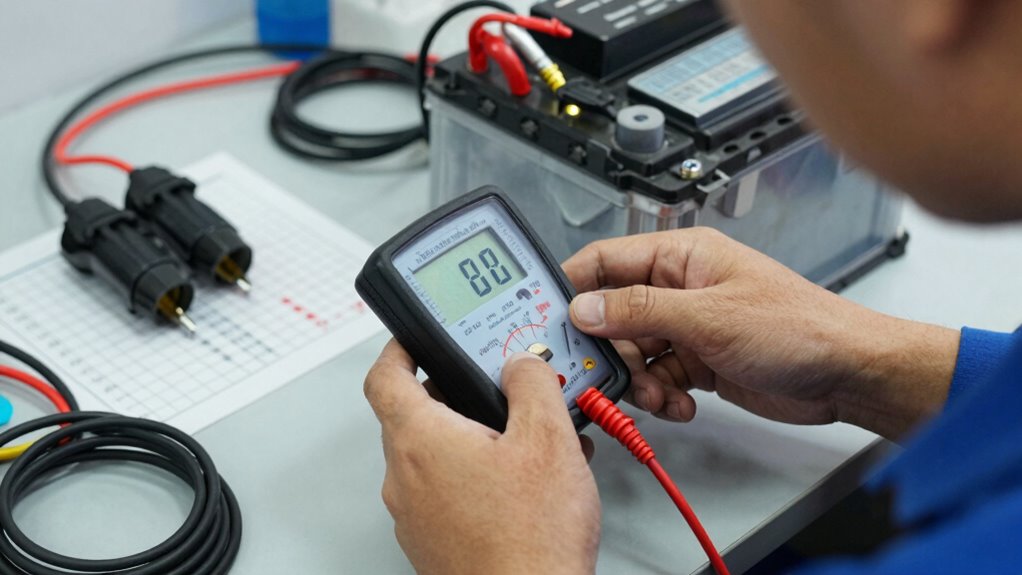
Choosing the right amps for your battery charger is essential to guarantee efficient and safe charging. The amps you select directly influence how quickly your battery charges and ensure you don’t damage it in the process. When considering amps, it’s important to think about your battery’s capacity, which is usually measured in amp-hours (Ah). A battery with a higher capacity can handle more current, allowing for faster charging if the charger provides the appropriate amps. Conversely, if your battery has a smaller capacity, using a charger with too many amps can lead to overheating or reduced lifespan.
To determine the correct charging current, start by looking at your battery’s specifications. Many manufacturers recommend a charging rate that’s a percentage of the battery’s capacity—often around 10%. For example, if you have a 50Ah battery, a charger rated at 5 amps would be ideal for a safe, moderate charge. This approach balances charging speed with safety, preventing the risk of overcharging or damaging the battery. If you’re in a hurry and need quicker charging, some batteries can handle slightly higher amps, but only if they’re rated for it. Always double-check the manufacturer’s guidelines to avoid overloading your battery.
Start by checking your battery’s specifications; a common safe rate is around 10% of capacity.
Your goal should be to match the charger’s amps with your battery’s capacity to optimize charging speed without compromising safety. A charger with too few amps will take longer to charge the battery, which might be fine for maintenance but inefficient for regular use. On the other hand, selecting a charger with too many amps can cause rapid, uncontrolled charging that heats up the battery and shortens its lifespan. Remember, faster isn’t always better; it’s about finding the right balance that respects your battery’s limits.
If you’re unsure about the best amps for your particular battery, consider starting with a conservative rating and increasing gradually if your battery supports it. This way, you avoid overtaxing the battery or decreasing its longevity. Also, pay attention to your charger’s features, such as automatic shut-off or temperature regulation, which can help prevent overcharging regardless of the amps you choose. When in doubt, consulting your battery’s manual or an expert can save you from costly mistakes. Understanding battery capacity is crucial for selecting the appropriate charging amps, ensuring both safety and optimal performance. Ultimately, choosing the right amps means understanding your battery’s capacity, aligning it with a suitable charging speed, and prioritizing safety to keep your batteries healthy and performing their best over time.
battery charger with automatic shut-off
As an affiliate, we earn on qualifying purchases.
As an affiliate, we earn on qualifying purchases.
Frequently Asked Questions
Can I Use a Higher Amp Charger Than My Battery’s Rating?
Yes, you can use a higher amp charger than your battery’s rating, but be cautious. A higher amp charger can increase charging speed, which is convenient, but it may harm your battery’s longevity if it’s too powerful. Always verify the charger’s output matches your battery’s specifications to balance fast charging with preserving battery health. Properly matched amps help extend your battery’s lifespan while providing efficient charging.
How Does Temperature Affect Charging Amp Requirements?
Imagine a chilly morning when your car’s battery struggles—temperature effects play a big role here. Cold temperatures increase the thermal impact, causing batteries to require higher charging amps to compensate for slower chemical reactions. Conversely, hot weather reduces the amps needed but risks overheating. You should adjust your charger’s amps based on temperature effects to make certain of safe, efficient charging, preventing damage and optimizing battery health in varying thermal conditions.
Is It Better to Oversize or Undersize the Charger?
It’s better to choose a charger with an appropriate capacity rather than oversize or undersize. Oversizing increases cost without much benefit, while undersizing can slow charging and damage your battery. Focus on your battery’s needs and select a charger with the right capacity for efficient charging. Considering cost, avoid unnecessary extras and pick a charger that balances performance and affordability, ensuring safe and quick charging without overspending.
How Do I Identify the Correct Amperage for Different Battery Types?
Think of your battery like a garden—each type needs the right watering. To identify the correct amperage, check its capacity (measured in amp-hours) and how many charging cycles it can handle. Smaller batteries, like those in gadgets, need low amps, while larger ones, like car batteries, require more. Match the charger’s amps to your battery’s capacity, ensuring a gentle, steady flow that preserves health without rushing, like a careful gardener.
What Safety Features Should I Look for in a Charger?
You should look for safety features that guarantee charging safety, like over-voltage, over-current, and short-circuit protection. Automatic shut-off and reverse polarity protection are essential to prevent damage and accidents. These protection features help you avoid hazards and extend your battery’s lifespan. A charger with these safety features gives you peace of mind, making your charging process safer and more reliable. Always prioritize chargers with extensive safety protections.
Conclusion
Choosing the right amps for your battery charger guarantees efficient charging without overpaying or damaging your battery. For example, if you have a small car battery, a charger with 10-15 amps works perfectly and charges quickly without harm. Remember, selecting a charger with too high amps for a small battery can cause damage, while too low amps may take forever. Always match the charger’s amps to your battery’s needs for safe, effective charging.
Halloween Picks
halloween
As an affiliate, we earn on qualifying purchases.