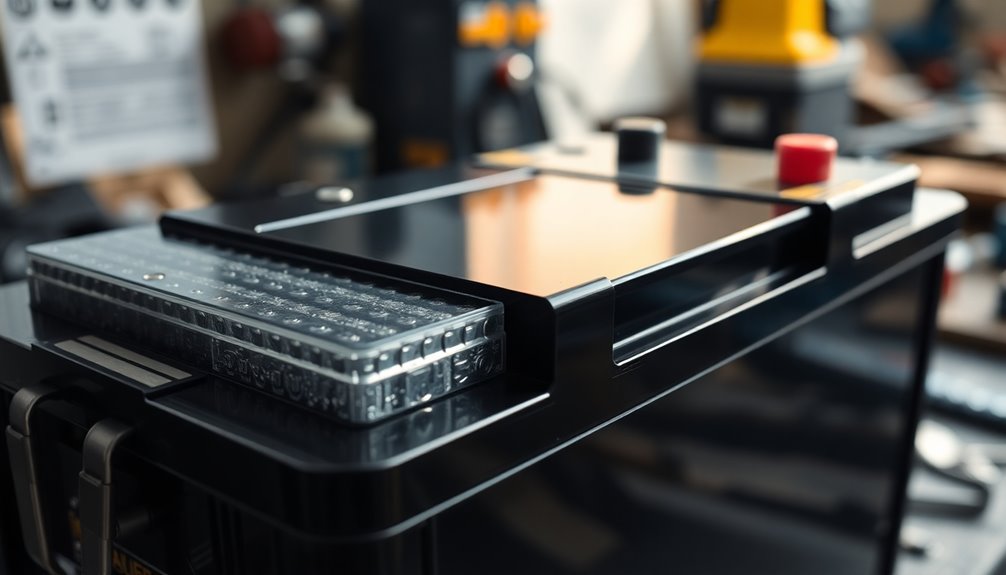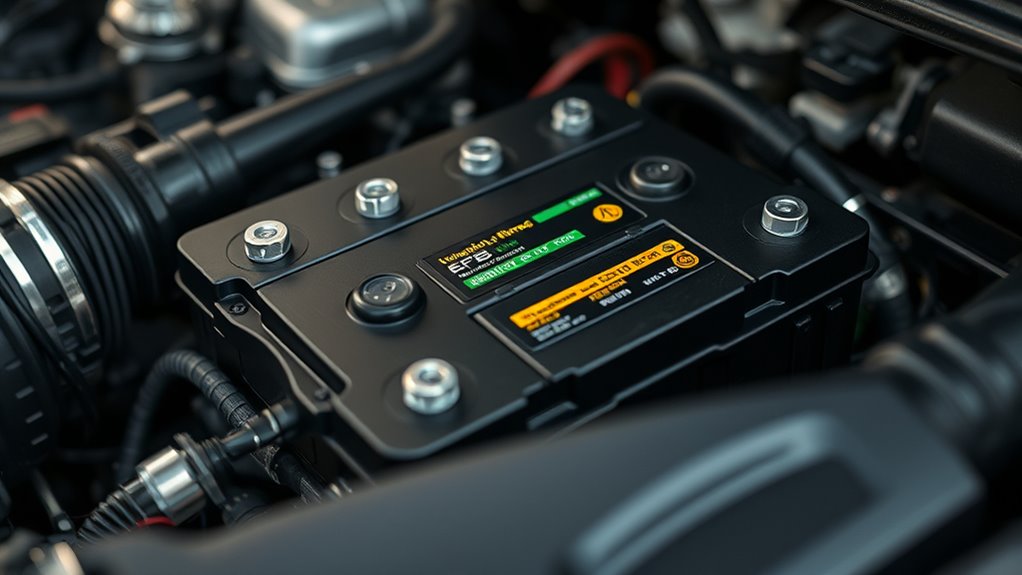

Enhanced Flooded Batteries (EFBs) are designed to give you reliable starting power and longer life in start-stop cars. They handle frequent cycling better than traditional batteries, making them more durable and efficient. Proper charging, maintenance, and monitoring are key to keeping your EFB in top shape. Paying attention to electrical issues and caring for your battery can extend its lifespan. To discover more about maximizing your EFB’s performance, continue exploring these essential tips.
Key Takeaways
- EFBs are designed to withstand frequent cycling in start-stop vehicle systems for improved durability.
- Proper charging and maintenance extend EFB lifespan and ensure reliable engine starts.
- EFBs handle the increased demands of stop-start operations better than traditional flooded batteries.
- Regular monitoring and correct charging prevent sulfation and prolong battery performance.
- Well-maintained EFBs contribute to vehicle reliability and reduce premature replacement costs.
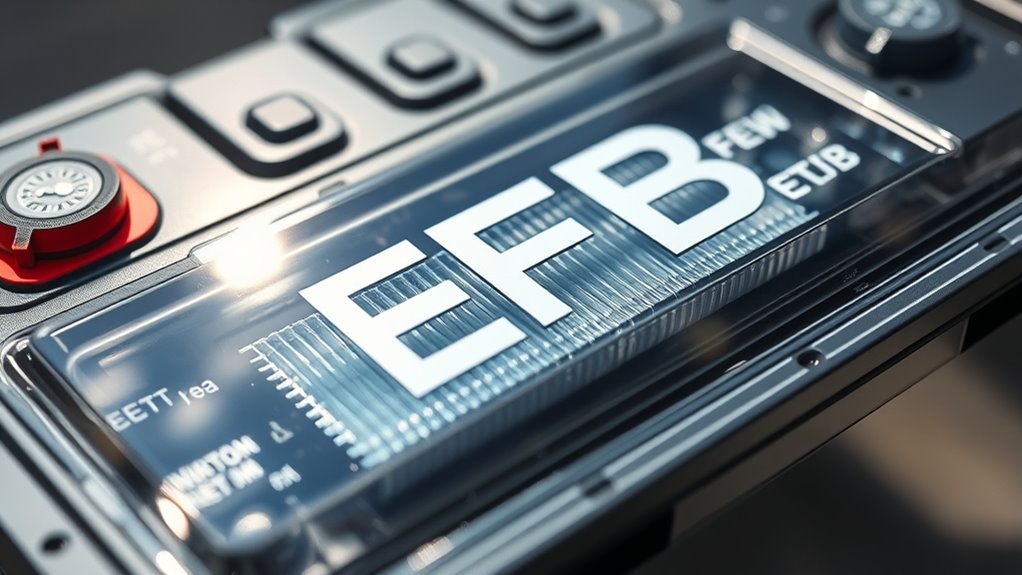
Enhanced flooded batteries (EFBs) are designed to deliver better performance and durability compared to traditional flooded batteries. If you’re driving a start-stop vehicle, understanding how this technology benefits your car can help you make smarter choices about maintenance and battery care. EFBs are built to withstand the frequent cycling of the battery, which is common in vehicles with start-stop systems. This means they last longer and maintain their ability to start your engine reliably, even after many starts and stops. Their enhanced durability is achieved through improved plate design and better internal construction, allowing them to handle the increased demands placed on them.
To maximize the lifespan and performance of your EFB, paying attention to proper charging techniques is essential. Unlike standard batteries, EFBs require specific care to maintain their health. It’s important to avoid deep discharges and ensure your battery stays within ideal charge levels. Overcharging can damage the internal components, while undercharging can lead to sulfation, reducing the battery’s overall capacity and lifespan. Using a compatible, high-quality charger that can monitor and regulate charging voltage is one of the best ways to protect your investment. When charging, ensure the voltage remains within the manufacturer’s recommended range, typically around 14.4 to 14.8 volts. Fast charging should be avoided unless your charger specifically supports it, as it can generate excessive heat and strain the battery.
Regularly checking your battery’s condition can also help you catch potential issues early. Many start-stop vehicles are equipped with diagnostic systems that alert you to battery health concerns. If your vehicle’s indicator shows a weak or failing battery, addressing it promptly prevents unexpected breakdowns and prolongs the battery’s life. Keep the terminals clean and free of corrosion, as these can interfere with proper charging and starting performance. Proper maintenance practices, such as ensuring your alternator is functioning correctly and avoiding frequent short trips, also contribute to battery durability. Additionally, understanding Rhythm Failure can help you recognize signs of electrical issues that may impact battery performance.
In essence, caring for your EFB isn’t complicated; it’s about understanding its specific needs. With the right charging techniques and regular maintenance, you can ensure your start-stop system operates smoothly, your battery lasts longer, and your vehicle remains dependable. Remember, a well-maintained EFB not only delivers better performance but also saves you money by reducing the need for premature replacements. By following these guidelines, you’ll get the most out of your enhanced flooded battery and enjoy reliable vehicle operation for years to come.
Frequently Asked Questions
How Long Do EFB Batteries Typically Last?
EFB batteries typically last between 3 to 5 years, depending on your driving habits and maintenance. To maximize their lifespan, you should follow proper maintenance requirements, like keeping the terminals clean and ensuring the battery is properly charged. Regular inspections and avoiding frequent deep discharges also assist. By taking good care of your EFB battery, you can ensure it performs reliably and lasts as long as possible.
Are EFB Batteries Recyclable?
Yes, EFB batteries are recyclable. When you replace your battery, it’s important to participate in battery recycling programs to reduce environmental impact. These programs safely recover valuable materials like lead and plastic, preventing harmful waste from polluting the environment. By recycling your EFB battery, you help conserve resources and support sustainability efforts, making a positive difference for the planet while ensuring responsible disposal.
What Are the Cost Differences Between EFB and AGM Batteries?
You’ll find that EFB batteries generally have a lower initial cost compared to AGM batteries, making them more budget-friendly upfront. The cost comparison shows that AGM batteries tend to be more expensive due to their advanced design and better performance features. Battery pricing reflects these differences, with AGM options often costing 30-50% more than EFBs. If you’re on a tight budget, EFBs are a cost-effective choice, but AGM batteries offer longer lifespan and higher durability.
Can EFB Batteries Be Used in Non-Start-Stop Vehicles?
Yes, you can use EFB batteries in non-start-stop vehicles, but you should verify battery compatibility and vehicle integration first. EFB batteries are designed to handle frequent cycling, so they might offer benefits even if your car doesn’t have start-stop technology. However, confirm your vehicle’s electrical system can support this type of battery, and consult your owner’s manual or a professional to avoid potential issues.
Do EFB Batteries Require Special Maintenance or Charging?
Yes, EFB batteries require specific charging requirements and maintenance procedures. You should verify they are regularly checked for proper voltage and kept clean from corrosion. Use a compatible charger to prevent overcharging, which can damage the battery. Follow the manufacturer’s guidelines for maintenance, including periodic inspections and ensuring the terminals are tight and free of dirt. Proper care helps extend the battery’s lifespan and maintains maximum performance.
Conclusion
Enhanced Flooded Batteries (EFB) are a smart choice for start-stop cars, offering better durability and performance. Imagine you’re driving a hybrid that frequently switches between engine and battery power; an EFB ensures reliable starts and longer battery life. For example, a city driver in a hybrid vehicle notices fewer battery issues over two years, thanks to EFB technology. Choosing EFB means you’ll enjoy smoother starts and dependability, especially in stop-and-go traffic.