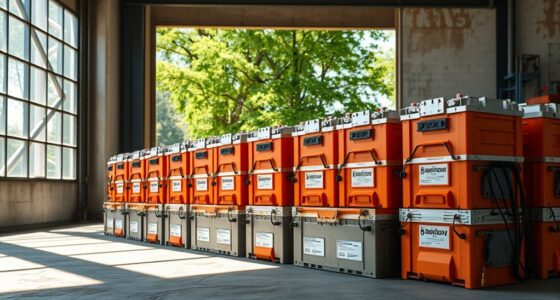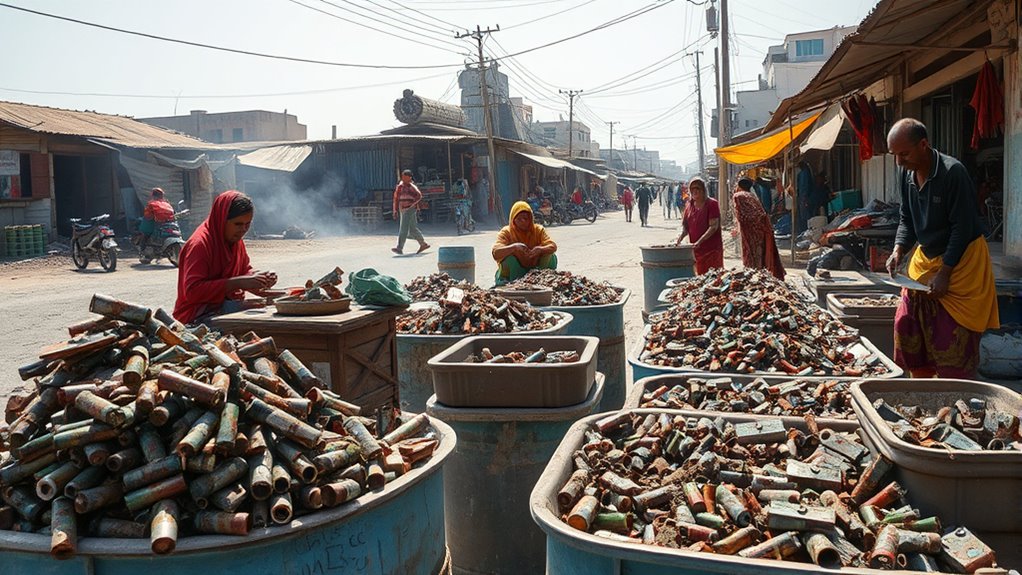

In developing countries, recycling batteries faces many challenges like lack of proper infrastructure, reliance on unsafe informal methods, and environmental risks from open burning and acid leaching. While informal sector recycling provides livelihoods, it also causes pollution and health hazards. Efforts are underway to integrate safer practices, establish regulated facilities, and promote awareness. By exploring these initiatives further, you’ll discover innovative solutions driving sustainable battery management in these regions.
Key Takeaways
- Developing countries face infrastructure gaps, leading to reliance on unsafe informal recycling practices that risk environmental and health hazards.
- Informal sector methods like open burning and acid leaching release toxic chemicals, harming ecosystems and communities.
- Initiatives include integrating informal recyclers into formal systems, training workers, and establishing designated recycling centers.
- Mobile collection units and community awareness programs help improve proper battery disposal and recycling participation.
- International collaboration and innovation are essential to develop sustainable, safe, and efficient battery recycling solutions globally.

Battery recycling is becoming increasingly important in developing countries as the demand for electronic devices and renewable energy solutions grows rapidly. As more people use smartphones, laptops, and solar energy systems, the amount of waste batteries generated skyrockets. Proper e waste management becomes essential to prevent environmental contamination and health hazards. However, many developing nations face significant challenges in establishing effective recycling systems, often relying heavily on informal sector recycling. In these regions, informal recyclers play a pivotal role in recovering valuable materials from discarded batteries, but their methods are often unsafe and environmentally damaging. These informal sector recycling practices typically involve manual dismantling, open burning, or acid leaching, which release toxic chemicals into the air, soil, and water. Although this approach provides livelihoods for many, it poses serious health risks to workers and communities nearby, making it clear that safer, more sustainable solutions are urgently needed.
In many developing countries, the lack of structured e waste management infrastructure leaves informal recyclers operating without regulation or oversight. This situation complicates efforts to guarantee safe disposal and recovery of battery materials like lithium, cobalt, and nickel. Furthermore, improper handling of hazardous waste can lead to long-term environmental degradation, affecting agriculture, water quality, and public health. Governments and organizations are increasingly recognizing the importance of integrating informal sector recycling into formal e waste management strategies. This integration involves training informal workers in safer recycling techniques, providing protective equipment, and establishing designated recycling centers. Such initiatives aim to formalize the sector, reducing health risks and improving material recovery rates.
Efforts are also underway to promote awareness about the dangers of improper battery disposal and the benefits of recycling. Public education campaigns encourage consumers to return used batteries to authorized collection points rather than dumping them in regular trash. Additionally, some developing countries are exploring innovative approaches like mobile collection units and community-based recycling programs that empower local residents and informal workers to participate safely. International collaboration and funding also play essential roles in developing scalable, sustainable models for battery recycling. These initiatives aim to create a circular economy, where valuable materials are recovered efficiently and safely, reducing reliance on extracting virgin resources. Recognizing the importance of imagination in developing innovative solutions, stakeholders are exploring new technologies and approaches to improve recycling efficiency and safety.
While challenges remain, progress toward better e waste management and safer informal sector recycling methods is pivotal. Developing comprehensive policies, investing in infrastructure, and fostering community engagement will help transition informal recycling practices toward sustainable solutions. Ultimately, addressing these issues benefits not just the environment but also public health, economic development, and the responsible stewardship of finite resources. As the demand for batteries continues to grow, so must your commitment to implementing safer, more effective recycling practices in developing countries.
Frequently Asked Questions
What Are the Health Risks for Workers Handling Battery Waste?
When you handle battery waste, workplace exposure to toxic chemicals poses serious health risks. These chemicals, like lead, cadmium, and acids, can cause respiratory issues, skin irritation, and long-term health problems if you’re exposed repeatedly or without proper protection. Always use safety gear, work in well-ventilated areas, and follow safety protocols to minimize risks from toxic chemicals and protect your health while recycling batteries.
How Are Informal Recyclers Integrated Into Official Recycling Programs?
You can see that informal recyclers are integrated into official programs through informal sector collaboration and community engagement. Authorities often partner with local recyclers, providing training, safety gear, and incentives to encourage their participation. This approach recognizes their essential role, helps formalize their activities, and improves recycling efficiency. By engaging communities, programs foster trust and cooperation, ensuring informal recyclers contribute safely and sustainably to the broader waste management system.
What Technologies Are Most Effective for Battery Recycling in Developing Countries?
You need to leverage innovative sorting technologies and eco-friendly smelting methods for effective battery recycling. These advanced techniques help separate valuable materials efficiently while minimizing environmental harm. By adopting such technologies, you can improve recovery rates and safety, turning a challenge into an opportunity. Don’t put all your eggs in one basket—embrace these sustainable solutions to boost recycling efforts and foster a greener future in developing countries.
How Do Cultural Attitudes Influence Battery Recycling Practices?
Your cultural perceptions critically influence your battery recycling practices. If your community values environmental protection, you’re more likely to participate actively in recycling initiatives. Conversely, if there’s a lack of awareness or misconceptions, engagement drops. Community engagement plays a vital role in shifting attitudes, fostering collective responsibility. By understanding and addressing cultural perceptions, you can help promote more effective recycling habits, ultimately improving environmental health in your community.
What Funding Sources Support Battery Recycling Initiatives in These Regions?
Funding sources for battery recycling initiatives in developing regions are like a lifeline, offering crucial support. You’ll find government grants often tailored to environmental projects, providing essential financial backing. International aid from organizations such as the UN or World Bank also plays a key role, helping communities establish proper recycling infrastructure. These combined efforts enable local programs to grow, reduce pollution, and promote sustainable practices for a healthier future.
Conclusion
You can see that battery recycling in developing countries faces many hurdles, but initiatives are making a difference. For example, over 20% of used batteries in some regions are now being recycled properly, reducing environmental harm. By supporting these efforts and raising awareness, you help create a safer, cleaner future. Every small action counts—your involvement can turn challenges into opportunities for sustainable growth and health in these communities.