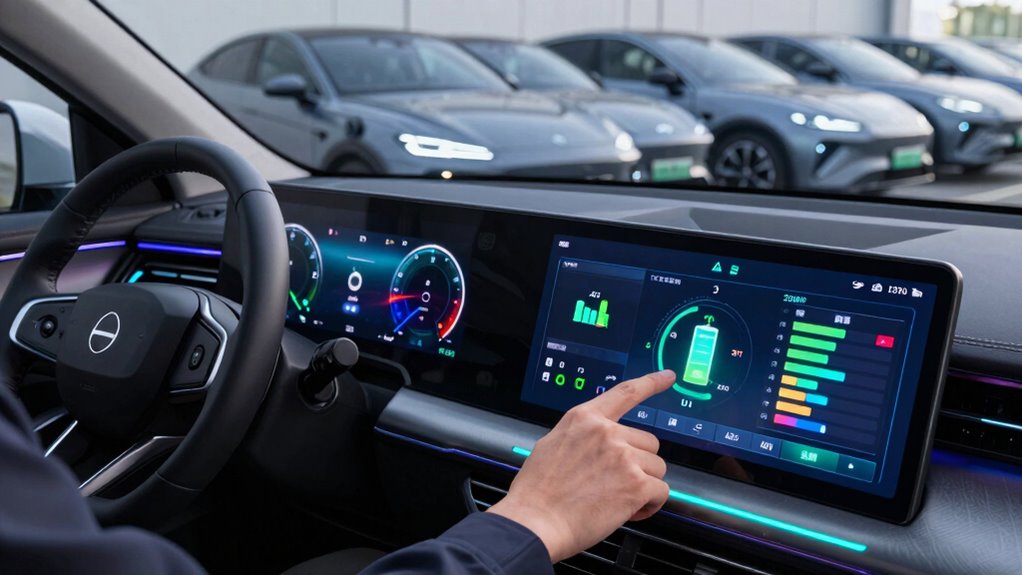

As a fleet operator, tracking key battery KPIs like State of Charge (SoC), State of Health (SoH), and battery lifecycle helps you plan maintenance, reduce downtime, and extend battery life. Monitoring charging efficiency and temperature management ensures essential performance and prevents costly degradation. By analyzing these data points, you can make smarter decisions, cut costs, and keep your vehicles running smoothly. To discover more about these crucial metrics, keep exploring these insights.

Get backup power and energy gear delivered free with Prime
- Fast, free delivery on millions of items
- Prime Video, Amazon Music and more included
- Member-only deals all year
Key Takeaways
- Battery Lifecycle Management to monitor aging, capacity decline, and schedule replacements proactively.
- Charging Efficiency to optimize energy use, reduce costs, and identify charging issues early.
- State of Charge (SoC) and State of Health (SoH) for effective route planning and maintenance decisions.
- Temperature Management to maintain optimal conditions, prevent degradation, and extend battery lifespan.
- Data-Driven Decision Making through KPI tracking for predictive maintenance and operational efficiency.
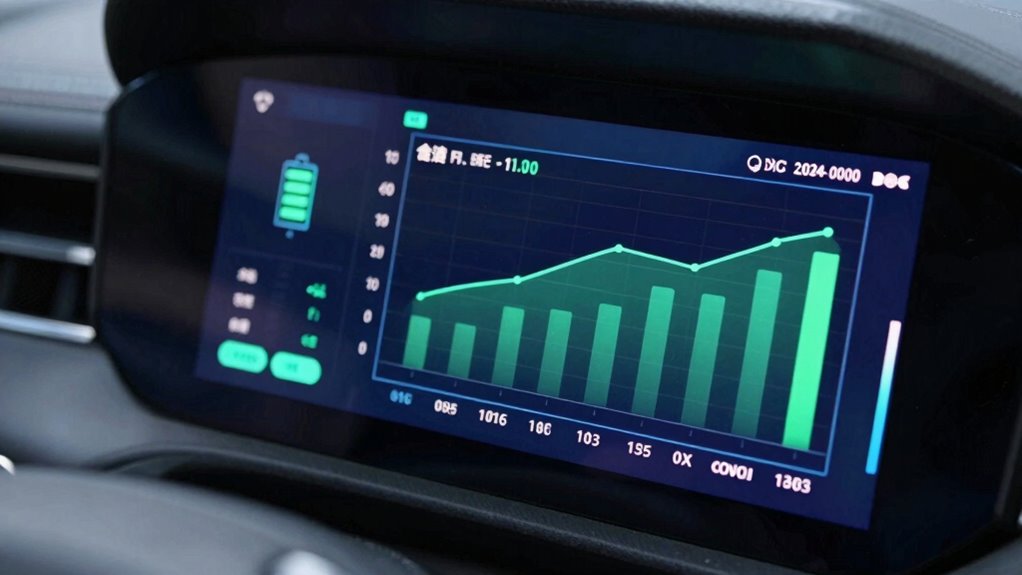
Managing a fleet of electric vehicles requires tracking the right battery KPIs to guarantee peak performance and longevity. One of the most critical KPIs you should monitor is the battery lifecycle. This metric helps you understand how well your batteries are aging and how many charge cycles they can endure before their capacity diminishes considerably. By keeping a close eye on battery lifecycle, you can schedule timely replacements, avoid unexpected breakdowns, and optimize your maintenance routines. Knowing the current state of each battery’s lifecycle allows you to extend its usable life, saving costs and enhancing fleet reliability. Additionally, understanding the factors that influence battery degradation can help you implement strategies to slow down capacity loss over time.
Monitoring battery lifecycle is essential for maintenance, cost savings, and extending your electric fleet’s operational life.
Charging efficiency is another essential KPI you need to focus on. It measures how effectively your batteries convert electrical energy during charging, impacting both operational costs and vehicle availability. High charging efficiency means less energy waste, shorter charging times, and reduced energy expenses. If your charging efficiency drops, it could indicate issues like charger-battery incompatibility, aging batteries, or suboptimal charging practices. Monitoring this KPI helps you identify and rectify inefficiencies early, ensuring your fleet spends less time plugged in and more time on the road.
In addition to lifecycle and charging efficiency, you should also track State of Charge (SoC) and State of Health (SoH). SoC tells you how much energy remains in a battery at any given moment, essential for route planning and avoiding unexpected downtime. SoH, on the other hand, provides an overall assessment of the battery’s capacity compared to when it was new, giving you a clear picture of its current health status. Regularly analyzing these metrics allows you to optimize charging schedules, prevent overcharging, and plan maintenance before issues become serious. Paying attention to battery monitoring can significantly improve your ability to predict and prevent failures. Moreover, understanding the impact of temperature management on battery performance is vital for maintaining optimal operation conditions.
Temperature management is also a key KPI, as batteries perform best within specific temperature ranges. Excessive heat or cold can accelerate degradation, reduce efficiency, and shorten battery life. By continuously monitoring battery temperature during operation and charging, you can adjust environmental controls or charging protocols to preserve battery health. This proactive approach helps in maintaining consistent performance and prolonging battery life over the fleet’s operational lifespan.
Ultimately, tracking these KPIs—battery lifecycle, charging efficiency, SoC, SoH, and temperature—empowers you to make data-driven decisions that enhance your fleet’s performance and longevity. Staying attentive to these metrics not only minimizes costs but also guarantees your electric fleet remains reliable and efficient over time.
electric vehicle battery monitor
As an affiliate, we earn on qualifying purchases.
As an affiliate, we earn on qualifying purchases.
Frequently Asked Questions
How Do Battery KPIS Impact Overall Fleet Maintenance Costs?
Battery KPIs directly impact your fleet maintenance costs by highlighting issues like battery degradation and charging efficiency. If you monitor these KPIs, you can identify early signs of battery wear, reducing unexpected breakdowns and costly replacements. Improving charging efficiency ensures batteries last longer, lowering costs over time. Overall, tracking these KPIs helps optimize your maintenance schedules, saving you money and keeping your fleet running smoothly.
What Is the Ideal Battery Lifespan for Fleet Vehicles?
The ideal battery lifespan for fleet vehicles typically ranges from 8 to 15 years, depending on usage and maintenance. You should monitor battery degradation closely to optimize lifespan; regular checks can reveal when replacement is necessary. By focusing on lifespan optimization, you prevent unexpected failures and extend battery life, saving costs and ensuring reliable vehicle operation. Proper care and timely replacements keep your fleet efficient and cost-effective over time.
How Often Should Battery Performance Be Monitored?
You should monitor battery performance regularly, ideally every few months, to catch issues early. Keep an eye on battery degradation and charging efficiency because declines in these areas can signal the need for maintenance or replacement. Frequent monitoring helps you optimize vehicle uptime, extend battery life, and guarantee safe, efficient operation. Use data-driven insights from these KPIs to make informed decisions about your fleet’s battery management.
Can KPIS Predict Battery Failure Before It Happens?
Yes, KPIs like battery degradation rates combined with predictive analytics can forecast failures before they happen, almost like seeing into the future. You can spot subtle signs of wear and tear that escape the naked eye, giving you time to act. By tracking these essential KPIs, you can prevent sudden breakdowns, save costs, and keep your fleet running smoothly, turning potential disasters into manageable maintenance tasks.
How Do Environmental Factors Influence Battery KPIS?
Environmental conditions profoundly influence battery KPIs by accelerating battery degradation and affecting performance. Extreme temperatures, humidity, and exposure to elements can reduce a battery’s lifespan and efficiency. You should monitor these environmental factors closely, as they impact key KPIs like capacity retention and charge cycles. By understanding how environmental conditions affect your batteries, you can optimize maintenance schedules and improve overall fleet reliability.
Conclusion
By tracking these key battery KPIs, you’ll find that your fleet runs smoother and more efficiently. It’s almost like discovering a secret shortcut—suddenly everything feels easier and more predictable. When you understand your batteries better, you can prevent surprises and optimize performance without breaking a sweat. So, keep an eye on these metrics; you might just stumble upon the perfect balance between cost, longevity, and reliability—making your fleet truly unstoppable.
Halloween Picks
halloween
As an affiliate, we earn on qualifying purchases.