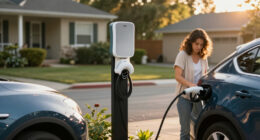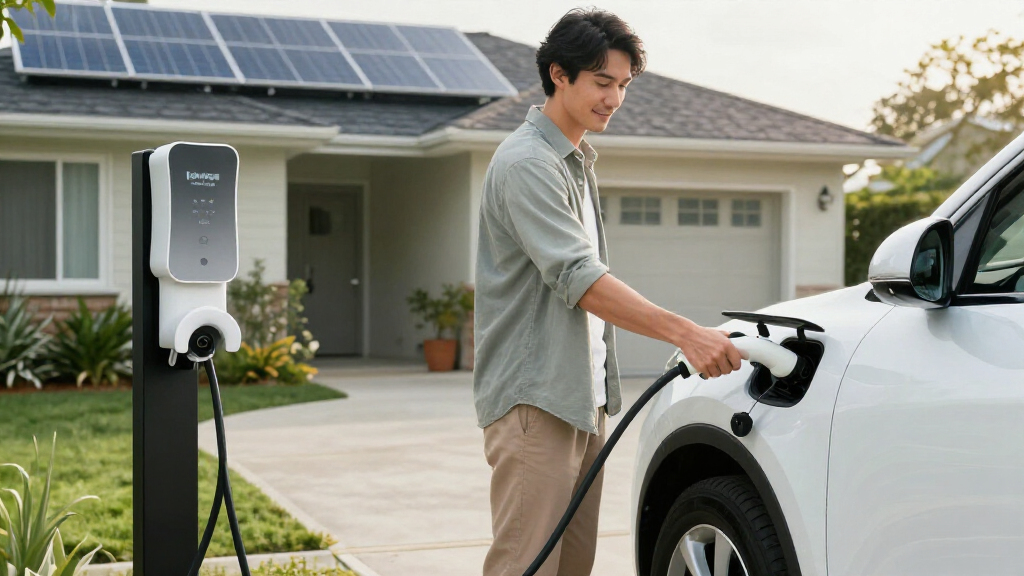
Among the best EV charging stations in this roundup, the Emporia Pro stands out for buyers who want a 48-amp hardwired charger with PowerSmart features, while the ChargePoint HomeFlex offers a familiar connected option in both J1772 and NACS versions. For flexible installation, the Autel MaxiCharger 40A pairs Level 2 charging with a NEMA 14-50 plug. The main tradeoffs are charging capacity versus circuit limits, plug-in convenience versus hardwired installation, and a connector that fits your car now versus one that suits future vehicles. Dual-port units add shared charging capacity but need a suitable electrical setup and space. Read on for the full comparison and guidance on which type fits your home.

Get backup power and energy gear delivered free with Prime
- Fast, free delivery on millions of items
- Prime Video, Amazon Music and more included
- Member-only deals all year
Key Takeaways
Hardwired 48-amp models lead for capable home circuits: Emporia Pro and Emporia’s Wi-Fi charger suit buyers who can support higher-output installation, while a 40-amp plug-in unit may fit existing wiring better.
Connector choice splits the lineup: J1772 models cover many non-Tesla EVs, while the SEGUMA and NACS ChargePoint versions are designed around vehicles with NACS inlets; check vehicle compatibility before ordering.
Plug-in does not mean universally simple: NEMA 14-50 chargers such as the Autel 40A, Grizzl-E Avalanche, and EVIQO still require a properly rated outlet and circuit.
Dual-port charging is a household-specific advantage: Enphase’s 32A dual charger and REV+’s 50-amp dual-port design address two-car charging, but shared output and installation capacity matter more than port count alone.
Portability trades charging speed for flexibility: EVDANCE can work with Level 1 or Level 2 power, making it useful for travel or temporary setups, but its 12A/16A limits make it a different proposition from fixed 40A–80A stations.




| EV charging station | Cable length | Warranty | Connector |
|---|---|---|---|
| EV Range Commercial EV Chargin | 25 ft | 2 years | J1772, single port |
| EVwallbox Level 2 EV Charger | 25 ft | — | SAE J1772 |
| BETUMODA Level 2 EV Charger | 25 ft | — | — |
| Enphase HCS-D40 Level 2 Dual E | 25 ft per cable | 5-year limited manufacturer warranty | — |
| Autel MaxiCharger Level 2 Hard | 25 ft | 5 years | — |
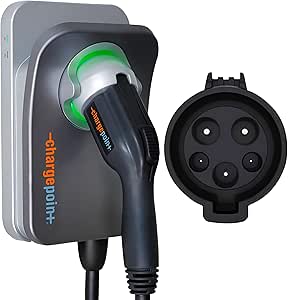
| ChargePoint HomeFlex Level 2 H | 23 ft | 3 years | J1772 |
| Emporia Pro Level 2 EV Charger | 25 ft | 3 years | J1772 |
| EVDANCE Level 1 and Level 2 Po | 25 ft | 1 year | J1772 |
| SEGUMA Level 2 EV Charger for | 25 ft | 1 year | NACS |
| ChargePoint HomeFlex Level 2 H | — | 3 years | NACS |
| Grizzl-E Avalanche Edition Lev | 24 feet | — | — |
| REV+ Dual-Port Level 2 EV Char | 18 feet | 5 years | J1772 |
| EVIQO Level 2 J1772 EV Charger | 25 feet | 3 years | J1772 |
| Autel MaxiCharger Level 2 EV C | 25 feet | 3 years | — |
| Emporia Level 2 WiFi EV Charge | 25 feet | 3 years | SAE J1772 |
More Details on Our Top Picks
EV Range Commercial EV Charging Station, 32A Level 2, J1772, OCPP 1.6J
I’d rank this commercial-focused station ahead of basic home chargers for buyers who need to manage access and collect charging fees. Its OCPP 1.6J network support includes driver payments, custom pricing, idle fees, and usage reports, making it a better fit for shared parking or a small fleet than the portable BETUMODA. The IK10, NEMA 4 enclosure is built for exposed locations, while the 25-foot cable gives drivers room to park flexibly. The tradeoff is its 32A output: it offers less charging power than the 40A EVwallbox and is not a fast charger. It also needs a separate pedestal if wall mounting is unsuitable, and Tesla drivers need an adapter. I’d choose it for managed charging, not simply for the highest home charging rate.
Pros:- OCPP 1.6J network features support payments, custom pricing, idle fees, access control, and usage reporting.
- NEMA 4, IK10-rated enclosure suits demanding indoor or outdoor locations.
- 25-foot J1772 cable works with many North American EVs and plug-in hybrids.
- Wall or pedestal mounting gives installers placement flexibility.
Cons:- 32A output is lower than the 40A EVwallbox and BETUMODA chargers.
- Pedestal must be sourced separately when wall mounting is not suitable.
- Tesla vehicles require an adapter, and no DC fast-charging output is specified.
Best for: Property managers, small fleet operators, and businesses that need access control, payment features, and usage reporting at a single charging point.
Not ideal for: Homeowners seeking the highest available Level 2 output or buyers who need a ready-to-install pedestal; this station is limited to 32A and the pedestal is not included.
- Output:240V AC, 32A
- Connector:J1772, single port
- Cable length:25 ft
- Network protocol:OCPP 1.6J
- Enclosure:Polycarbonate, NEMA 4, IK10 impact resistance
- Mounting:Wall or pedestal; pedestal not included
- Certifications:CTEP, UL, Energy Star
- Warranty:2 years
Our verdict“Choose the EV Range if payment management and rugged shared-site installation matter more than maximizing charging power.”
EVwallbox Level 2 EV Charger, 40A, 9.6 kW, 240V, J1772 Connector, 25 ft Cable
The EVwallbox is a practical middle ground for drivers who want more control than a basic portable unit without committing to hardwiring. Its 40A, 9.6 kW output matches the BETUMODA on maximum power, while the NEMA 14-50 plug supports a plug-in installation where the right outlet is already available. App scheduling and adjustable current help fit charging around household routines or circuit limits; the display and RFID card also offer clear, direct controls. Compared with the BETUMODA, it adds app-based operation and a weatherproof enclosure, but the available product details don’t list the BETUMODA’s five specific current steps or delay-timer range. Setup may involve assembly, and J1772 compatibility means some vehicles need an adapter. I’d pick it for a home garage or sheltered outdoor spot with a 14-50 outlet.
Pros:- 40A, 9.6 kW output provides substantial Level 2 charging power.
- App control and adjustable current support scheduling and adapting charging to household needs.
- NEMA Type 4, IP65 enclosure is suited to indoor or outdoor installation.
- 25-foot cable, RFID card, and 4.3-inch display provide multiple ways to connect and control charging.
Cons:- Requires a compatible NEMA 14-50 outlet for its plug-in installation.
- J1772 connector may require an adapter for vehicles with another inlet type.
- Installation accessories and setup may require assembly.
Best for: EV owners with a NEMA 14-50 outlet who want app scheduling, adjustable current, and a physical screen without a hardwired installation.
Not ideal for: Buyers who need a hardwired high-amperage station or a charger whose current settings and delay timer are fully specified; it tops out at 40A and setup may require assembly.
- Charging level:Level 2
- Maximum output:40A, 9.6 kW
- Voltage:240V
- Connector:SAE J1772
- Plug:NEMA 14-50
- Cable length:25 ft
- Controls and display:Smartphone app, RFID card, 4.3-inch display
- Enclosure:NEMA Type 4, IP65
Our verdict“Choose the EVwallbox if you have a 14-50 outlet and want app scheduling plus a screen in a weatherproof 40A charger.”
BETUMODA Level 2 EV Charger, 40A 240V 9.6kW, 25-Foot Cable
For buyers who want a straightforward portable charger with useful power controls, the BETUMODA stands out for its five selectable current settings, ranging from 8A to 40A. That makes it more adaptable than the EVwallbox, whose product details say its current is adjustable without listing specific steps. Its 0–12-hour delay timer can also help shift charging to a preferred time, while built-in electrical protections add safeguards during operation. The shared 25-foot cable and 9.6 kW maximum output put it on similar footing to the EVwallbox for reach and peak charging capacity. The difference is that the EVwallbox adds app control, a display, RFID activation, and a weatherproof enclosure. BETUMODA is recommended for a dry environment with a properly grounded outlet, so I’d skip it for exposed outdoor placement or buyers seeking connected controls.
Pros:- Five current settings—8A, 16A, 24A, 32A, and 40A—offer clear adjustment choices.
- 25-foot cable gives flexibility in how the vehicle parks near the outlet.
- Programmable 0–12-hour delay timer supports scheduled charging.
- Over-voltage, over-current, overheating, and short-circuit protections are included.
Cons:- Tesla adapter is sold separately.
- Recommended for dry use with a properly grounded outlet, limiting suitability for exposed locations.
- No app controls, RFID activation, or display are listed, unlike the EVwallbox.
Best for: Drivers with a grounded NEMA 14-50 outlet who want portable Level 2 charging and specific current choices to match different circuits or charging needs.
Not ideal for: Buyers who need app control, a weatherproof enclosure, or a charger for an exposed outdoor location; those features are not specified here, and use is recommended in a dry environment.
- Charging level:Level 2
- Maximum output:40A, 9.6 kW
- Voltage:240V AC
- Plug:NEMA 14-50
- Vehicle connector:SAE J1772
- Current settings:8A, 16A, 24A, 32A, 40A
- Cable length:25 ft
- Delay timer:0–12 hours
Our verdict“Choose the BETUMODA if you want portable 40A charging with clearly defined current steps and a delay timer, and can keep it in a dry location.”
Enphase HCS-D40 Level 2 Dual EV Charger, 32A, 240V, Hardwired, J1772, 25-ft Cables
The Enphase HCS-D40 earns a distinct place in this lineup because it can serve two vehicles from one hardwired station. It supplies up to 32A to one vehicle or divides output into 16A per vehicle when both cables are in use. That arrangement can be more useful to a two-EV household than buying a single-port charger such as the Autel MaxiCharger 80A, though the Autel delivers much more power to one car. The Enphase’s two 25-foot J1772 cables, weather-resistant NEMA 4 enclosure, UL 2594 safety certification, and five-year warranty suit a permanent installation. The tradeoff is straightforward: dual charging shares the available output, so neither car gets the full 32A at once. Hardwiring may also call for professional electrical work. I’d choose it for shared overnight charging, not for drivers prioritizing maximum speed per vehicle.
Pros:- Two charging cables allow simultaneous charging of two vehicles from one station.
- Can deliver up to 32A to one vehicle or 16A per vehicle when both are connected.
- NEMA 4 enclosure and rugged connectors suit demanding installation conditions.
- UL 2594 certification and a five-year limited warranty support a permanent setup.
Cons:- Output is divided to 16A per vehicle when both ports are in use.
- Hardwired installation may require professional electrical work.
- 32A maximum is substantially lower than the single-vehicle Autel MaxiCharger’s 80A capacity.
Best for: Households or workplaces with two J1772 vehicles that need one permanent charging station and can accept reduced power when both cars charge.
Not ideal for: Drivers who need the fastest single-vehicle Level 2 charging or want a plug-in installation; this unit is hardwired and caps at 32A total.
- Charging level:Level 2
- Maximum output:32A, 7.7 kW
- Dual charging output:16A per vehicle when both charge
- Voltage:240V
- Connectors and cables:Two J1772 cables
- Cable length:25 ft per cable
- Installation:Hardwired, wall-mounted
- Enclosure and certification:NEMA 4; UL 2594, ETL, Energy Star
- Warranty:5-year limited manufacturer warranty
Our verdict“Choose the Enphase if two vehicles need charging from one permanent station and shared output is acceptable.”
Autel MaxiCharger Level 2 Hardwired EV Charger, 80A, J1772
The Autel MaxiCharger is the clear choice in this group for drivers whose priority is high-power, single-vehicle Level 2 charging. Its 80A, 19.2 kW maximum output is well above the 40A EVwallbox and BETUMODA, which top out at 9.6 kW; the added capacity may matter to compatible vehicles and installations where faster AC charging is the goal. App scheduling, remote controls, current adjustment, and energy monitoring give it more connected management than the simpler portable BETUMODA. That power comes with real installation demands: it is hardwired, and full output calls for a recommended 100A circuit, so electrical capacity and professional installation need attention. It has one J1772 cable, not the Enphase’s dual-vehicle setup, and Tesla owners need a separate NACS adapter. I’d shortlist it only when the home electrical system and vehicle can make use of its output.
Pros:- 80A and 19.2 kW maximum output exceed the 40A, 9.6 kW chargers in this batch.
- App supports scheduled and remote charging, current adjustment, and energy monitoring.
- 25-foot J1772 cable is compatible with many North American EVs and plug-in hybrids.
- CSA and UL certifications and a five-year warranty support a permanent installation.
Cons:- Full 80A output requires a recommended 100A circuit, which may not suit every home electrical service.
- Hardwired installation is recommended to be performed by a professional electrician.
- Tesla vehicles require a NACS adapter, which is not included.
Best for: Owners of EVs capable of high-amperage AC charging who have, or can install, a suitable electrical circuit and want app-based monitoring.
Not ideal for: Drivers with limited panel capacity, those seeking plug-in installation, or households that need two charging ports; full output requires a recommended 100A circuit and this is a single-port hardwired unit.
- Charging level:Level 2
- Maximum output:80A, 19.2 kW
- Voltage:240V AC
- Connector and ports:SAE J1772, one port
- Cable length:25 ft
- Installation:Hardwired
- Recommended circuit:100A for full 80A output
- Certifications:CSA, UL
- Warranty:5 years
Our verdict“Choose the Autel MaxiCharger if your vehicle and electrical service can use its 80A output and you want connected charging controls.”
ChargePoint HomeFlex Level 2 Hardwired EV Charger, J1772, 50A
I’d put the J1772 ChargePoint HomeFlex near the top for households that want a hardwired charger with room to adjust output as their electrical setup or charging needs change. Its adjustable 16–50A range supports different circuit capacities, while the 23-foot cable gives more parking-position flexibility than a short-reach setup. Wi-Fi app controls add charging information and remote management, and indoor/outdoor installation broadens placement options.
Compared with the Emporia Pro, this model lacks the included home energy monitor and load-balancing feature, but its 50A maximum and ChargePoint app make it a strong straightforward choice. The tradeoff is a required electrician-installed hardwire connection; Tesla drivers also need a J1772 adapter, and some app functions rely on Wi-Fi.
Pros:- Adjustable 16–50A output can suit different home circuit capacities.
- 23-foot cable offers useful reach around a garage or driveway.
- Wi-Fi app provides charging controls and charging information.
- UL-certified and Energy Star compliant for indoor or outdoor installation.
Cons:- Hardwired installation requires an electrician.
- Some app features and troubleshooting depend on Wi-Fi.
- Tesla vehicles need a separate J1772 adapter.
Best for: J1772 vehicle owners seeking an adjustable, hardwired home charger for indoor or outdoor installation.
Not ideal for: Renters or drivers who need a plug-in charger, and Tesla owners who do not want to use a separate J1772 adapter.
- Connector:J1772
- Installation:Hardwired
- Amperage:Adjustable 16–50A
- Input voltage:240V
- Cable length:23 ft
- Connectivity:Wi-Fi and mobile app
- Installation location:Indoor or outdoor
- Certification:UL-certified, Energy Star
- Warranty:3 years
Our verdict“Choose this HomeFlex if you want a versatile hardwired J1772 charger and do not need the Emporia Pro’s included load monitor.”
Emporia Pro Level 2 EV Charger with PowerSmart, 48 Amp, J1772 Connector, and 25-Foot Cable
The Emporia Pro earns a distinct place for households where available electrical capacity is a bigger concern than maximizing charger amperage. Its included Vue Home Energy Monitor with PowerSmart is designed to balance charging against the home’s electrical load, helping buyers coordinate EV charging with other active circuits. The app also supports schedules and real-time energy tracking, so charging can fit household routines rather than run without oversight.
Unlike the hardwired-only ChargePoint HomeFlex J1772, the Emporia can connect through a NEMA 14-50 plug or be hardwired, and its 25-foot cable reaches farther than ChargePoint’s 23-foot lead. The compromise is a 48A maximum rather than 50A, plus installation may still call for an electrician—especially for hardwiring. Its J1772 connector may also require an adapter for some vehicles.
Pros:- Included Vue monitor and PowerSmart software balance charging with home electrical demand.
- App supports charging schedules and real-time energy tracking.
- Can be installed with a NEMA 14-50 plug or hardwired.
- 25-foot cable provides more reach than the 23-foot ChargePoint HomeFlex J1772.
Cons:- Hardwired installation may require an electrician.
- 48A maximum is lower than the 50A ChargePoint HomeFlex J1772.
- J1772 compatibility may require an adapter for some vehicles.
Best for: Homeowners with a busy electrical panel who want charging load management, energy tracking, and a choice of plug-in or hardwired installation.
Not ideal for: Buyers who want the simplest charger setup without a separate energy monitor or who need a native NACS connector.
- Connector:J1772
- Input voltage:240V AC
- Maximum current:48A
- Installation:NEMA 14-50 plug or hardwired
- Cable length:25 ft
- Connectivity:Wi-Fi and Bluetooth
- Included energy monitor:Vue Home Energy Monitor with PowerSmart
- Certifications:Energy Star, NEMA, UL
- Warranty:3 years
Our verdict“Pick the Emporia Pro if managing household electrical load matters more to you than a slightly higher maximum amperage.”
EVDANCE Level 1 and Level 2 Portable EV Charger, 25 ft Cable, 12A 120V / 16A 240V, J1772
The EVDANCE portable charger is the flexible pick for drivers who may need to charge from an ordinary 120V outlet sometimes and a compatible 240V outlet at other times. That Level 1 and Level 2 support makes it easier to keep one charger for home and travel, while the 25-foot cable and carry bag help when parking is not close to an outlet. Its LED display gives a visible charging-status check without relying on an app.
It is far less powerful than the SEGUMA 40A NACS charger and the hardwired ChargePoint options, so it suits occasional or slower charging rather than buyers prioritizing rapid overnight replenishment. The 240V connection is limited to NEMA 6-20, and other outlet types need a separately sold adapter. The one-year warranty is also shorter than the three-year coverage listed for both ChargePoint models.
Pros:- Supports Level 1 charging at 120V and Level 2 charging at 240V.
- 25-foot cable and included carry bag suit portable use.
- LED display shows charging status and errors.
- IP66-rated housing is designed for protection against dust and water ingress.
Cons:- 16A at 240V is much slower than the 40A SEGUMA or hardwired ChargePoint models.
- 240V use requires a NEMA 6-20 outlet; other outlet types may need a separate adapter.
- One-year warranty is shorter than the three-year coverage on the ChargePoint options.
Best for: New EV or plug-in hybrid owners who need a portable charger for compatible 120V and NEMA 6-20 outlets at home or on trips.
Not ideal for: Drivers who need high-power daily charging, a broad range of outlet compatibility, or a longer warranty.
- Charging levels:Level 1 and Level 2
- Charging current:12A at 120V; 16A at 240V
- Power:3.84 kW
- Connector:J1772
- Plugs:NEMA 5-15 adapter and NEMA 6-20
- Cable length:25 ft
- Housing protection:IP66
- Weight:7 lb
- Warranty:1 year
Our verdict“Choose EVDANCE if outlet flexibility and portability matter more than fast charging or broad 240V outlet support.”
SEGUMA Level 2 EV Charger for Tesla, 40A, 9.6 kW, NACS Connector, NEMA 14-50 Plug
For Tesla drivers with a suitable 240V outlet, the SEGUMA 40A NACS charger offers a direct-connector alternative to the hardwired ChargePoint HomeFlex NACS. Its NEMA 14-50 plug avoids hardwiring, while selectable current settings from 10A to 40A let drivers match charging to their circuit and preferences. A delay-start timer can help shift charging to a later time, and the screen makes charging status visible at the unit.
The portable setup gives up the ChargePoint’s app controls and three-year warranty, and the outlet requirement narrows where it can be used. Buyers need a compatible NEMA 14-50 receptacle and a 50A power source; the one-year warranty offers less coverage than ChargePoint’s. This is a practical fit for Tesla owners who want a plug-in unit, not for households seeking load management or app-based oversight.
Pros:- Native NACS connector avoids the J1772 adapter needed with the ChargePoint HomeFlex J1772.
- Current settings from 10A to 40A provide charging-rate flexibility.
- NEMA 14-50 plug offers a portable alternative to hardwired installation.
- 25-foot cable, delay-start timer, and TFT screen support flexible use and status checks.
Cons:- Requires a compatible NEMA 14-50 outlet and 50A power source.
- One-year warranty is shorter than the three-year ChargePoint HomeFlex warranty.
- Does not list the app controls or home energy monitoring offered by the ChargePoint and Emporia options.
Best for: Tesla owners with a properly installed NEMA 14-50 outlet who want a portable NACS charger with adjustable current and delayed start.
Not ideal for: Drivers without a compatible NEMA 14-50 setup, or buyers who want app controls, included load management, or longer warranty coverage.
- Connector:NACS
- Maximum output:40A, 240V, 9.6 kW
- Current settings:10A, 16A, 20A, 24A, 32A, 40A
- Plug:NEMA 14-50
- Cable length:25 ft
- Display:2.4-inch TFT screen
- Operating temperature:-22°F to 122°F
- Weight:11.55 lb
- Warranty:1 year
Our verdict“Choose SEGUMA if you have the required outlet and want a portable NACS charger rather than a hardwired, app-connected unit.”
ChargePoint HomeFlex Level 2 Hardwired EV Charger with NACS Connector
The ChargePoint HomeFlex NACS is the hardwired pick for Tesla households that want a direct vehicle connection and app-based charging controls. Its NACS connector avoids the separate adapter required by the J1772 HomeFlex, while the app adds controls, reminders, and charging information. Indoor or outdoor installation and a cold-resistant cable make it a fit for a fixed home charging spot exposed to changing conditions.
Compared with the SEGUMA 40A NACS charger, this ChargePoint requires electrician installation but offers app features and a three-year warranty rather than a plug-in format and one-year warranty. The stated charging rate of up to 45 miles of range per hour depends on the vehicle, so it is not a guaranteed result for every Tesla. The product data lists a 20A or 80A circuit requirement, which buyers should confirm with an electrician before installation.
Pros:- Native NACS connector is suited to compatible Tesla vehicles.
- App offers charging controls, reminders, and charging information.
- UL-certified for indoor or outdoor home installation.
- Three-year warranty is longer than the SEGUMA NACS charger’s one-year coverage.
Cons:- Hardwired installation requires an electrician.
- Listed circuit requirement of 20A or 80A should be checked with an electrician before purchase.
- Charging speed varies by vehicle and is not guaranteed to reach the stated maximum.
Best for: Tesla owners planning a permanent indoor or outdoor charging station who want native NACS compatibility and app controls.
Not ideal for: Renters or drivers who want a portable plug-in charger, and owners who need J1772 compatibility for non-Tesla vehicles.
- Connector:NACS
- Charger type:Level 2, hardwired
- Input and output voltage:240V
- Charging speed:Up to 45 miles of range per hour, depending on vehicle
- Circuit requirement:20A or 80A circuit
- Installation:Indoor or outdoor; electrician required
- Dimensions:7.06 × 11.19 × 5.2 in
- Certification:UL-certified
- Warranty:3 years
Our verdict“Choose this model for a permanent Tesla-focused installation with app controls; choose SEGUMA if you need a plug-in charger instead.”
Grizzl-E Avalanche Edition Level 2 EV Charger, 40A, NEMA 14-50 Plug
The Grizzl-E Avalanche Edition is a sensible pick for drivers who want a plug-in charger that can handle indoor or outdoor placement without relying on app controls. Its IP67-rated housing, built-in GFCI, and range of electrical protections prioritize durability and fault protection, while the 24-foot cable gives more placement flexibility than the REV+ Dual-Port’s 18-foot leads. Four current settings let you match charging to the circuit and reduce output when needed. That flexibility does not remove the need for a properly rated circuit, though, and this unit weighs 16.79 pounds. Compared with the app-connected EVIQO, the Grizzl-E gives up scheduling and energy tracking in exchange for a simpler, more rugged setup. Choose it for dependable single-vehicle charging, not smart-home features.
Pros:- Adjustable current settings from 16A to 40A
- 24-foot cable provides useful reach
- IP67 rating and multiple built-in electrical protections
- NEMA 14-50 plug supports plug-in installation
Cons:- Requires a circuit and breaker suited to the selected amperage
- At 16.79 pounds, it is heavy for frequent transport
- No Wi-Fi or app-based charging controls are listed
Best for: Drivers who want a durable plug-in charger for a garage or exposed outdoor location and value adjustable current over app features.
Not ideal for: Buyers who need charging schedules or energy tracking in an app, or who need a lightweight unit to carry frequently.
- Maximum current:40A
- Current settings:16A, 24A, 32A, 40A
- Voltage:240V
- Power:10 kW
- Plug type:NEMA 14-50
- Cable length:24 feet
- Ingress protection:IP67
- Weight:16.79 pounds
Our verdict“Choose the Grizzl-E for rugged, adjustable plug-in charging; pick the EVIQO instead if app scheduling and energy tracking matter more.”
REV+ Dual-Port Level 2 EV Charger, 50 Amp, 18-Foot Cable
The REV+ Dual-Port earns its place by addressing a problem most chargers here do not: serving two vehicles from one station. Its two J1772 ports can charge compatible EVs or plug-in hybrids at once, and Wi-Fi and Bluetooth add scheduling, remote controls, and energy monitoring. That makes it a stronger fit for a shared household than the single-port Autel MaxiCharger or EVIQO. The tradeoff is reach: its 18-foot cables are shorter than the 25-foot cables on those alternatives, so the mounting location needs careful planning. The listed 50A and 12 kW output should not be read as a promise that both cars each receive that full capacity simultaneously; available output depends on the installation and charger operation. Tesla drivers also need a compatible adapter.
Pros:- Two J1772 ports support charging two compatible vehicles
- Wi-Fi and Bluetooth app controls include scheduling and remote operation
- Energy monitoring helps track charging use
- UL certified with a five-year manufacturer warranty
Cons:- 18-foot cables may not reach every parking position
- Tesla vehicles require a compatible adapter
- Simultaneous charging capacity may depend on the electrical installation
Best for: Households with two J1772-compatible vehicles that want one installed station and app-based charging management.
Not ideal for: Drivers with a single vehicle who want a longer cable, or Tesla owners who prefer a connector that fits without an adapter.
- Ports:2
- Current:50A
- Output voltage:240V
- Power:12 kW
- Connector:J1772
- Cable length:18 feet
- Connectivity:Wi-Fi and Bluetooth
- Installation:Indoor or outdoor; plug-in or hardwired
- Warranty:5 years
Our verdict“Pick the REV+ when two compatible vehicles need one charging station; for one car and more cable reach, compare the 25-foot EVIQO or Autel.”
EVIQO Level 2 J1772 EV Charger, 40A, NEMA 14-50, 240V
The EVIQO EVIPOWER-2 pairs a familiar NEMA 14-50 plug with Wi-Fi scheduling and energy tracking, making it a good fit for drivers who want smart controls without hardwiring a charger. Its 25-foot cable gives it more reach than the REV+ Dual-Port, and the app can adjust current as well as set charging schedules. That combination makes it more flexible for a single-car setup than the simpler Grizzl-E Avalanche, which has a longer list of physical safety protections but no listed app features. The EVIQO is limited to 40A and needs a dedicated 50A circuit with a suitable outlet. Its Wi-Fi features also require 2.4 GHz service. J1772 is broadly useful for compatible North American vehicles, but Tesla drivers need an adapter.
Pros:- 25-foot cable gives more reach than the REV+ Dual-Port
- App supports schedules, current settings, and energy tracking
- IP66 and NEMA 4-rated housing is suited to indoor or outdoor use
- UL, ETL, FCC, and Energy Star certifications are listed
Cons:- Requires a NEMA 14-50 outlet on a dedicated 50A circuit
- Smart features require a 2.4 GHz Wi-Fi network
- Tesla vehicles need a J1772 adapter
Best for: EV owners with a NEMA 14-50 outlet who want app scheduling, current adjustment, and a long cable for one vehicle.
Not ideal for: Buyers without a dedicated 50A circuit or 2.4 GHz Wi-Fi, and Tesla drivers who do not want to use an adapter.
- Maximum current:40A
- Voltage:240V
- Connector:J1772
- Plug type:NEMA 14-50
- Cable length:25 feet
- Wi-Fi:2.4 GHz
- Warranty:3 years
Our verdict“Choose the EVIQO for smart controls and long reach from a plug-in 40A charger; choose the Grizzl-E if rugged simplicity matters more than app features.”
Autel MaxiCharger Level 2 EV Charger, 40A, 240V, with 25-Foot Cable and NEMA 14-50 Plug
The Autel MaxiCharger 40A is a flexible single-port choice for drivers who want to plug in at home and set charging around their circuit or routine. Its four current settings—from 16A through 40A—make it easier to reduce output when the electrical setup calls for it, while the 25-foot cable and NEMA 4X rating suit installations where the vehicle parks away from the outlet or the unit is exposed to the elements. Unlike the Wi-Fi-equipped EVIQO, the supplied feature list here emphasizes app scheduling but does not specify energy tracking or current control through the app. It also needs a compatible NEMA 14-50 receptacle, so it is not a substitute for an installation that requires hardwiring. The three-year warranty matches the EVIQO’s stated term.
Pros:- Four selectable current settings from 16A to 40A
- 25-foot cable reaches farther than the REV+ Dual-Port cables
- NEMA 4X rating supports indoor or outdoor placement
- App-based scheduling is available
Cons:- Requires a compatible NEMA 14-50 receptacle
- Single port cannot serve two vehicles at once
- RFID access control is optional rather than a standard feature
Best for: Drivers with a NEMA 14-50 receptacle who need a long-reach, weather-rated charger with selectable current levels.
Not ideal for: Buyers seeking dual-vehicle charging, detailed app energy monitoring, or a hardwired installation.
- Maximum current:40A
- Adjustable current:16A, 24A, 32A, 40A
- Voltage:240V
- Plug type:NEMA 14-50
- Cable length:25 feet
- Number of ports:1
- Ingress protection:NEMA 4X
- Warranty:3 years
Our verdict“Choose the Autel for adjustable, weather-rated plug-in charging with a long cable; choose the EVIQO if app-based energy tracking is a priority.”
Emporia Level 2 WiFi EV Charger, 48A, 240V, J1772 Connector, 25-Foot Cable, Hardwired
The Emporia Level 2 WiFi EV Charger is the strongest fit here for a homeowner ready to hardwire a higher-output station. At up to 48A and 46 miles of range per hour, it offers more charging capacity than the 40A plug-in Autel, Grizzl-E, and EVIQO, provided the vehicle and electrical installation support it. Its 25-foot J1772 cable covers a broad range of parking layouts, while Wi-Fi supports scheduled charging and energy monitoring. The tradeoff is installation: unlike those NEMA 14-50 models, this charger is hardwired, and professional installation is recommended. It is also a single J1772 port, so Tesla and NACS vehicles need a suitable adapter. For buyers who want a plug-in setup or lower electrical requirements, the EVIQO is the easier alternative.
Pros:- Up to 48A output and a stated charging speed of up to 46 miles per hour
- Wi-Fi supports energy monitoring and scheduled charging
- 25-foot cable offers useful parking flexibility
- UL listed and Energy Star certified
Cons:- Hardwired installation can require a qualified professional
- J1772 connector requires a suitable adapter for NACS or Tesla charge ports
- Higher output depends on a compatible vehicle and electrical installation
Best for: Homeowners with a suitable electrical service who want higher-output hardwired charging and Wi-Fi scheduling or energy monitoring.
Not ideal for: Renters, drivers who need a plug-in charger, or owners of NACS vehicles who do not want to use an adapter.
- Maximum current:48A
- Output voltage:240V
- Connector:SAE J1772
- Cable length:25 feet
- Installation:Hardwired with whip
- Wi-Fi:2.4 GHz
- Maximum stated charging speed:Up to 46 miles per hour
- Certifications:UL listed; Energy Star certified
- Warranty:3 years
Our verdict“Choose the Emporia for higher-output, hardwired home charging; choose the EVIQO or Autel if you need a NEMA 14-50 plug-in setup.”
How We Picked
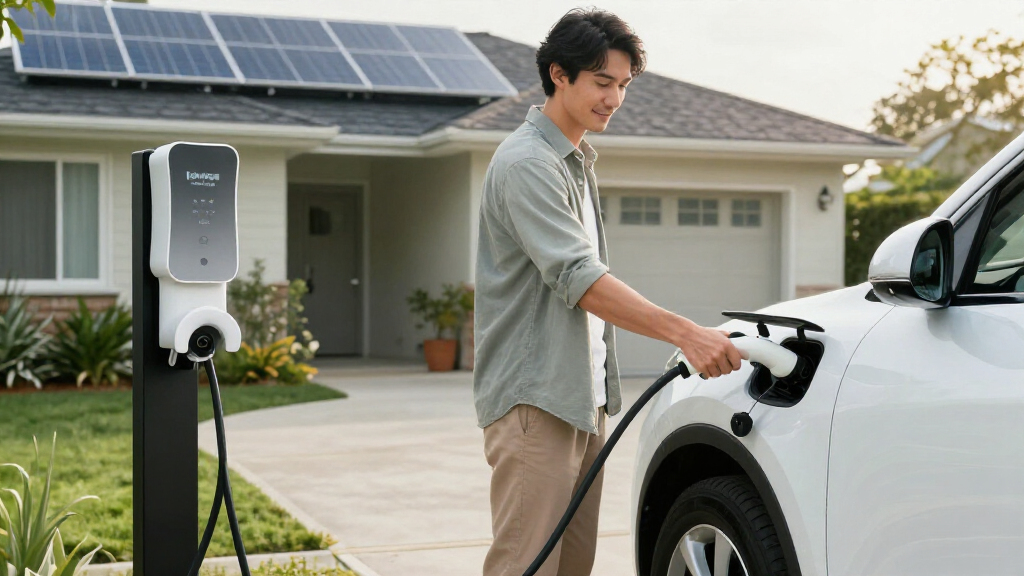
I compared these 15 stations by the factors that shape daily home charging: available charging output, electrical connection, vehicle connector, cable reach, and single- or dual-port design. I also weighed practical ownership needs, including whether a charger is portable, hardwired, or connected through a plug, and whether smart features add useful control. A higher amp rating does not automatically mean a better fit: the home circuit, vehicle acceptance rate, and installation plan set the real ceiling.
The ranking favors versatility and a clear fit for common home setups first, then gives distinct places to products that serve narrower needs such as NACS vehicles, two-car households, or portable charging. I treat similar models as alternatives rather than interchangeable picks: connector, output, and installation type can change the recommendation even when the product family is the same. Since installation requirements vary by home and local electrical rules, buyers should confirm circuit capacity and charger compatibility before purchase.
Factors to Consider When Choosing Best EV Charging Stations
Choosing among home EV charging stations starts with the vehicle and electrical setup, not the longest feature list. I would settle these questions before comparing connected features or cable design, since a mismatch can limit charging or call for extra electrical work.
Match the Connector to Your Car and Plans
Check the inlet on your vehicle and the connector supplied with the charger before comparing amperage. This roundup includes J1772 and NACS options, and the right choice depends on the car, not a general preference for one standard. Some vehicles can use an adapter, but buyers should verify the vehicle maker’s guidance and charging limits rather than assume every adapter supports every setup. If you expect to change vehicles, think about which connector will serve the next car and whether an approved adapter is a practical bridge. A connector mismatch can turn an otherwise capable station into a less convenient purchase, so settle compatibility before focusing on smart functions.
Set Output to the Circuit, Not Just the Charger Rating
A charger’s advertised amperage is its capacity, not a promise that every home can deliver that output. The electrical circuit, breaker, wiring, installation method, and vehicle’s onboard charger all affect the charging rate. Higher-output hardwired units can suit homes with adequate electrical capacity, but may call for electrical upgrades; a lower-output model can be the more sensible fit when the existing circuit is limited. Plug-in chargers also need a correctly rated outlet and circuit, so a NEMA 14-50 plug does not remove the need to verify the installation. Ask an electrician to confirm what your home supports before paying for capacity you cannot use.
Choose Plug-In or Hardwired Around Your Home
Plug-in stations can be easier to remove or replace, while hardwired installation gives a fixed setup and is used by several higher-output models here. Neither approach is automatically better: the right choice depends on the circuit, local requirements, placement, and whether you value future flexibility. A common mistake is buying a plug-in model before checking that the outlet is suitable for sustained EV charging. Hardwired equipment may require an electrician and can make relocation less straightforward. Decide where the charger will live and how permanent you want the installation to be before choosing between connection styles.
Measure Cable Reach and Parking Position
Cable length affects whether the car can reach the station from its usual parking position, especially when the charge port is on the opposite side from the charger. Several products in this group offer 25-foot cables, while the REV+ lists an 18-foot cable; that difference can matter more than a small feature gap. Measure the path from the proposed mounting spot to the vehicle inlet, allowing for routing around the car without stretching the cable across a walkway. Consider more than one parking position if household vehicles rotate spaces. A longer cable adds reach, but it also needs a tidy storage plan and should not create a trip hazard.
Decide Whether Smart Features Solve a Real Need
Wi-Fi, scheduling, and power-management features are useful when they help coordinate charging with household routines or electrical limits. They are less valuable if you plan to plug in and charge without changing schedules. Power management can matter in homes where other major electrical loads compete for capacity, but buyers should check exactly how a system works and what equipment or configuration it requires. Do not treat an app connection as a substitute for a correctly sized circuit or compatible vehicle. Choose smart controls for a specific task—such as scheduled charging—not simply because a feature list is longer.
Buy Dual-Port Only When Two Cars Need Shared Charging
Dual-port stations can make one installation serve two vehicles, but two connectors do not necessarily mean both cars receive full rated output at once. Check how the unit allocates power, what total electrical capacity it needs, and whether both cars commonly charge at the same time. Shared output and daily timing matter more than the port count alone: a household with staggered overnight parking may be well served by one station, while simultaneous charging can make a dual-port design more useful. Also measure the mounting area and cable paths for both parking spots. Compare the installation needs against the convenience of managing two separate stations.
Frequently Asked Questions
Should I choose a 40-amp or 48-amp home EV charger?
Choose based on your circuit and vehicle, not the charger’s maximum rating alone. A 48-amp station can offer more output when the installation and vehicle support it, but it may require a higher-capacity hardwired circuit. A 40-amp model can be a better match for a suitable plug-in setup or a home with more limited electrical capacity. Ask an electrician to verify the circuit, and check the vehicle’s charging limit. If either one is below the station’s capacity, the lower limit determines your actual charging rate.
Can I use a J1772 charger with a vehicle that has a NACS inlet?
Possibly, but compatibility depends on the vehicle and an appropriate adapter. Check the vehicle maker’s instructions for supported AC charging adapters and any operating limits before buying. The station’s connector should also suit the place where you expect to charge most often, particularly if multiple vehicles share it. A charger with the matching connector can avoid extra adapter handling, while a compatible adapter may provide flexibility for a mixed-connector household. Do not assume an adapter works for every car or charger combination.
Is a NEMA 14-50 EV charger ready to use as soon as I buy it?
No. A 14-50 plug only describes the connection; the outlet, wiring, circuit, and installation still need to be suitable for sustained EV charging and the charger’s draw. An existing outlet may not be wired or rated appropriately, even if the plug fits. Have a qualified electrician inspect the circuit and confirm the station’s requirements before use. Also check whether the charger’s maximum current is compatible with the circuit. This step helps prevent buying a plug-in model that needs electrical work before it can be used safely.
When does a dual-port charging station make sense for a two-EV household?
A dual-port station makes the most sense when two cars often need to charge at the same time and a shared installation suits the parking layout. Check how the unit divides available power between vehicles; the combined load may not let both charge at their individual maximum rates. If the cars are usually parked and charged at different times, one station may be enough and could simplify the electrical plan. Compare total circuit capacity, cable reach to both spaces, and mounting location before choosing. The convenience is real only when the station can serve both cars where they are parked.
Is a portable Level 1/Level 2 charger enough as my only home charger?
It can be enough for a driver with modest daily mileage, long parking periods, or limited access to a dedicated charging installation. A portable unit that supports Level 1 and Level 2 offers flexibility, but its output is lower than the fixed 40A–80A stations in this roundup. Level 1 charging can be especially slow after a longer drive, while Level 2 use depends on access to a suitable outlet. Estimate how much energy you need to replace overnight and compare that with the vehicle’s charging behavior. If you regularly need faster replenishment, a fixed Level 2 station may be a better primary setup.
Conclusion
For most buyers with a compatible vehicle and a suitable circuit, I would start with the Emporia Pro as the best overall because its 48-amp hardwired design and PowerSmart features suit a capable home setup. The best value direction is a 40-amp plug-in model such as the Autel MaxiCharger 40A when its NEMA 14-50 connection matches the home’s verified electrical capacity; the best premium choice is the Autel 80A for buyers whose vehicle and electrical service can use its higher output. For beginners who want a familiar connected home option, I’d compare the ChargePoint HomeFlex versions by connector and installation type. Choose EVDANCE for portability, Enphase or REV+ when two charging ports fit the household’s routine, and the SEGUMA or NACS ChargePoint when a matching NACS connector is the priority. Confirm vehicle fit and circuit capacity before selecting a station.
Evergreen bestsellers Picks

Dyson Ball Animal 3 Upright Vacuum

Breville Barista Express Espresso Machine, Black Sesame

Apple AirPods Pro 3 Wireless Earbuds with Active Noise Cancellation
As an affiliate, we earn on qualifying purchases.