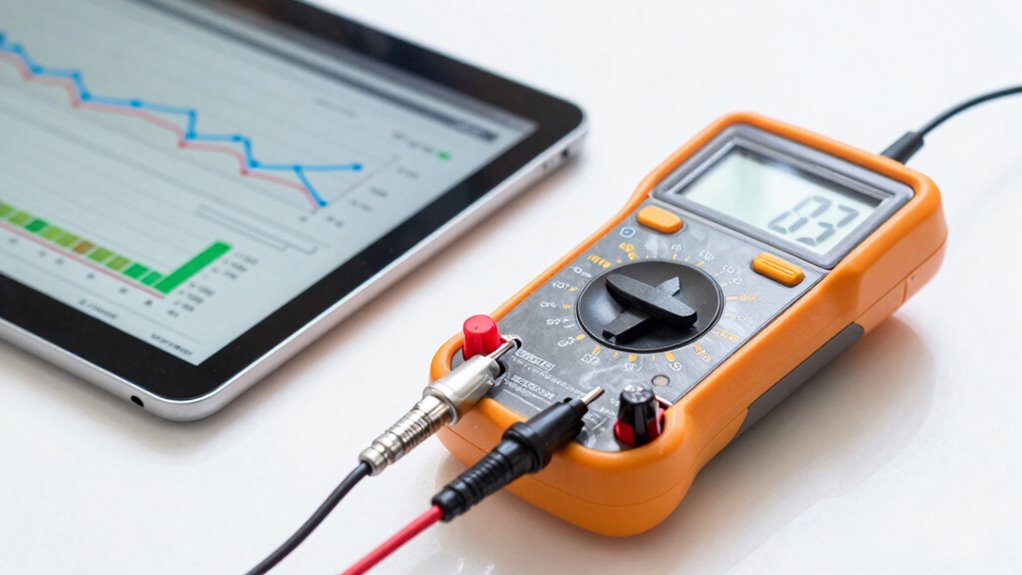

To compare battery test results across different days, you should keep your testing environment and procedures consistent. Use the same testing device and follow the same steps each time. Record external conditions like temperature and humidity, and note details such as battery age and charge level. Focus on identifying patterns and trends rather than isolated results. Controlling these factors helps guarantee reliable comparisons; continue exploring to understand better how to get accurate, meaningful data.

Get backup power and energy gear delivered free with Prime
- Fast, free delivery on millions of items
- Prime Video, Amazon Music and more included
- Member-only deals all year
Key Takeaways
- Ensure testing conditions, such as temperature and humidity, are consistent across all testing days.
- Use the same testing device and standardized procedures every time.
- Record detailed data, including battery age, charge level, and environmental factors.
- Focus on analyzing trends and patterns rather than individual test results.
- Account for external influences or fluctuations that may impact battery performance.

Comparing battery test results across different days can be challenging because various factors may influence the outcomes. When you’re trying to determine whether a battery’s performance is declining or stable, it’s essential to take into account that external conditions and testing methods can skew results. To get accurate insights into a battery’s lifespan, you need to focus on testing consistency—making sure your testing process remains uniform each time you measure. Small variations, like changes in temperature, load, or testing equipment, can considerably impact your readings, so maintaining consistency is key.
Start by standardizing your testing environment. Always perform tests at the same temperature and humidity levels whenever possible. Extreme heat or cold can artificially shorten or lengthen perceived battery lifespan, leading to misleading comparisons. Use the same testing device or method each time to guarantee your results are comparable. If you’re using a specific software or hardware setup, keep it consistent. This reduces the chance that differences in test results are due to equipment variability rather than actual battery performance.
Standardize testing conditions and equipment to ensure consistent, accurate battery performance comparisons.
It’s also helpful to record detailed data each time you test. Include information about the battery’s age, charge level, and the exact conditions during testing. By maintaining a detailed log, you can identify patterns or anomalies that might influence results. For example, if a battery performs worse during one test, check if the device was under a heavier load or if the ambient temperature was higher. This helps you distinguish genuine changes in battery capacity from external factors. Documenting testing conditions is essential for accurate comparisons over time. Additionally, understanding how external environmental factors like temperature fluctuations impact battery performance can help you interpret results more accurately. Recognizing the influence of external environmental factors further emphasizes the importance of consistent testing environments. Consistent testing practices also help reduce measurement variability, making your conclusions more reliable.
When analyzing results over multiple days, look for trends rather than isolated data points. A single dip or spike might not be meaningful, but consistent patterns can reveal whether the battery’s lifespan is truly diminishing. If your tests show a gradual decline in capacity under the same conditions, it’s a strong indicator that the battery is aging. Conversely, if results fluctuate without a clear pattern, it suggests external influences or testing inconsistencies are affecting your data.
Finally, remember that batteries naturally degrade over time, but the rate of decline varies based on usage and environmental factors. To accurately compare results, always take into account these external influences and aim to keep your testing conditions as uniform as possible. Conducting consistent testing protocols ensures more reliable data, making it easier to assess the true health of your batteries. Doing so allows you to make confident, meaningful assessments about battery health and lifespan, rather than jumping to conclusions based on inconsistent data.
As an affiliate, we earn on qualifying purchases.
Frequently Asked Questions
How Do Environmental Factors Affect Battery Test Results?
Environmental factors, like temperature, humidity, and altitude, greatly impact your battery test results. High or low temperatures can cause your battery to perform differently, making testing less consistent. Humidity and air quality can also influence results, creating variability across tests. To guarantee testing consistency, you should perform tests in a controlled environment where environmental factors are minimized. This helps you get accurate, comparable battery data over different days.
What Are the Best Tools for Tracking Battery Performance Over Time?
Think of your tools as a trusted compass guiding you through battery performance. You should use apps like BatteryMon or GSam Battery Monitor for tracking battery life and data accuracy over time. These tools provide detailed insights, helping you identify trends and anomalies. By consistently monitoring, you can make informed decisions to optimize your device’s battery health, ensuring you stay ahead of any potential issues before they become major problems.
How Can I Identify Inconsistent Testing Conditions?
To identify inconsistent testing conditions, you should review your testing protocols carefully, ensuring each test follows the same procedures, environment, and device settings. Look for variations in temperature, load, or test duration that could skew results. Use data normalization techniques to adjust for minor differences, making comparisons more accurate. Consistently documenting your testing conditions helps you spot discrepancies and maintain reliable, comparable battery performance data.
What Are Common Mistakes When Comparing Battery Data?
A common mistake is overlooking battery aging effects, which can skew comparisons over time. You might also neglect data normalization, making results seem inconsistent. Failing to account for temperature variations or test conditions can lead to inaccurate conclusions. Always compare data under similar conditions and adjust for aging effects to guarantee you’re making valid comparisons. This way, you get a clearer picture of your battery’s true performance trends.
How Often Should Battery Tests Be Conducted for Accurate Comparison?
Did you know that testing intervals critically impact battery lifespan insights? You should conduct tests weekly or biweekly for consistent, accurate comparisons. Regular testing helps you identify subtle changes and trends over time, ensuring you catch issues early. Too infrequent, and you risk missing essential data; too often, and it becomes unnecessary. Find a balance that suits your usage, and stick to your testing schedule for the best results.
Conclusion
By comparing battery test results across different days, you can better understand your battery’s performance trends and identify potential issues early. Keep in mind that even small fluctuations matter—did you know that a 10% difference in capacity can considerably impact your device’s runtime? Tracking these changes helps you make informed decisions about maintenance or replacements, ultimately extending your battery’s lifespan and ensuring reliable performance day after day.
Halloween Picks
halloween
As an affiliate, we earn on qualifying purchases.