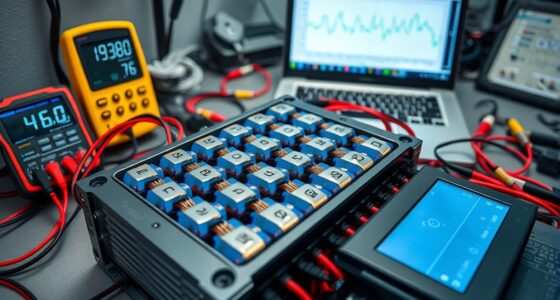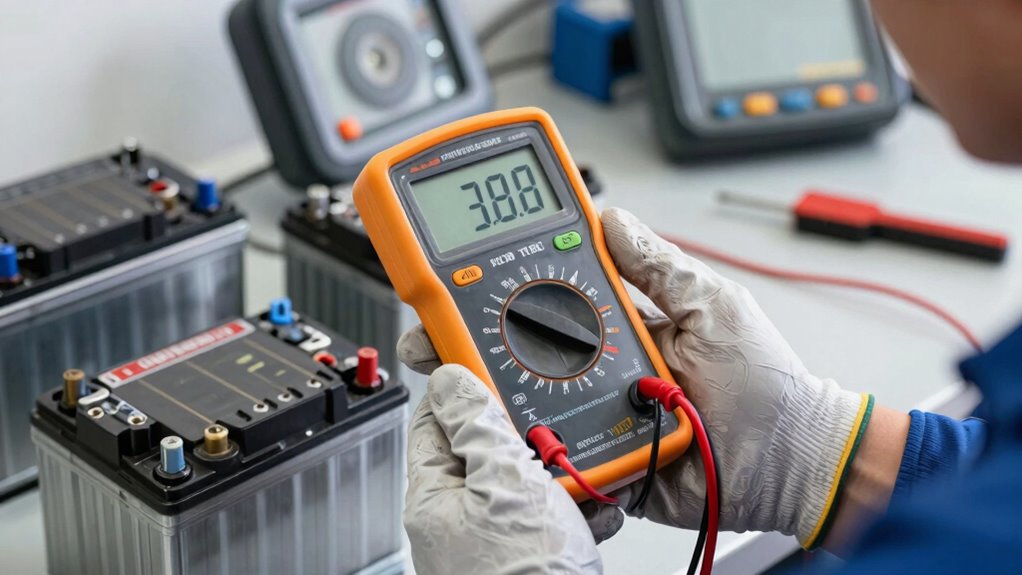

To recondition batteries effectively, focus on key metrics like capacity, internal resistance, and charging efficiency. Capacity shows how much energy the battery can hold and helps predict its remaining lifespan. Internal resistance affects performance, while charging efficiency indicates how well the battery accepts and retains a charge. Monitoring these factors regularly helps you determine if a battery is worth repairing or replacing. Keep exploring to gain deeper insights into optimizing battery health and longevity.

Get backup power and energy gear delivered free with Prime
- Fast, free delivery on millions of items
- Prime Video, Amazon Music and more included
- Member-only deals all year
Key Takeaways
- Battery capacity decline indicates overall health and potential for successful reconditioning.
- Internal resistance and voltage stability are critical for assessing internal damage.
- Charging efficiency reflects how well a battery accepts and retains charge post-reconditioning.
- Monitoring lifespan helps determine if reconditioning efforts are worthwhile or if replacement is needed.
- Identifying signs of internal damage prevents futile repairs and guides maintenance decisions.

Have you ever wondered how to determine if reconditioning a battery is truly worth the effort? When it comes to deciding whether to recondition or replace your battery, understanding the key metrics can make all the difference. Two of the most vital factors to consider are battery lifespan and charging efficiency. These metrics directly influence how well a battery performs after reconditioning and help you evaluate whether the process will save you money or just delay the inevitable replacement.
Battery lifespan measures how long a battery can deliver reliable performance before it reaches the end of its functional life. When reconditioning, you want to see if the battery’s remaining capacity justifies the effort. If the battery can still hold a significant charge, reconditioning may extend its life and offer a cost-effective solution. Conversely, if the battery is fundamentally degraded, no amount of reconditioning will restore it to its original state, making replacement the smarter choice. Regularly examining the battery’s lifespan helps you avoid wasting time on futile repairs and guarantees you’re making informed decisions about maintenance. Additionally, understanding the battery’s capacity decline over time can give you a clearer picture of its overall health and potential for reconditioning. Monitoring battery degradation patterns can further assist in predicting its future performance and determining the most suitable course of action. Recognizing the signs of internal damage can also prevent unnecessary reconditioning attempts on irreparably damaged batteries. Incorporating knowledge about battery aging processes can help you better interpret the signs of deterioration.
Battery lifespan indicates whether reconditioning can restore performance or if replacement is the smarter choice.
Charging efficiency is another critical metric to monitor. It indicates how effectively the battery can accept and hold a charge after reconditioning. If your battery’s charging efficiency is high, it means it’s able to store energy quickly and retain it longer, leading to improved performance. When reconditioning, checking this metric helps you determine whether the process has successfully restored the battery’s ability to charge efficiently. A significant boost in charging efficiency after reconditioning suggests that the process was successful and that the battery can perform reliably for a longer period. On the other hand, if the efficiency remains low, it may be a sign that the battery is nearing the end of its usable life, and further reconditioning efforts might not be worthwhile.
Beyond these two metrics, it’s also essential to evaluate other factors like internal resistance and voltage stability, which can influence overall performance. However, focusing on battery lifespan and charging efficiency gives you a clear snapshot of whether reconditioning will genuinely benefit your battery. By regularly examining these metrics, you guarantee that your reconditioning efforts are targeted and effective, saving you money and time in the long run. Ultimately, understanding these key battery metrics helps you make smarter choices about maintenance, enabling your batteries to serve you better for longer periods. Recognizing the importance of battery health metrics ensures that you stay informed about your battery’s condition and optimize its performance over time.
As an affiliate, we earn on qualifying purchases.
Frequently Asked Questions
How Do Temperature Variations Affect Battery Reconditioning Success?
Temperature effects play a vital role in battery reconditioning success. When temperatures are too high or low, battery performance declines, making reconditioning more challenging. Excessive heat can cause electrolyte evaporation, while cold temperatures slow chemical reactions. To optimize results, you should work in a moderate temperature environment, ensuring the battery isn’t exposed to extreme conditions. Controlling temperature helps restore battery capacity and prolongs its lifespan effectively.
What Safety Precautions Are Essential During Reconditioning?
Think of reconditioning as steering a stormy sea—you need safety gear. Always wear protective gear like gloves and goggles to shield yourself from harmful chemicals. Guarantee good ventilation safety to prevent fumes from accumulating, like keeping the ship’s hatch open during a storm. Stay alert, handle batteries carefully, and follow safety guidelines strictly. These precautions protect you from potential hazards, making your reconditioning journey safer and more successful.
Can Reconditioning Extend Battery Lifespan Significantly?
Yes, reconditioning can substantially extend your battery’s lifespan. By understanding battery chemistry and applying proper reconditioning techniques, you can restore capacity and improve performance. These methods help reverse degradation, reduce waste, and save money. However, success depends on the battery’s condition and correct procedures. With careful attention to battery chemistry and consistent reconditioning techniques, you’ll get more use from your batteries, making them last longer and perform better.
Are Specific Tools Required for Different Battery Types?
Think of reconditioning batteries like tuning different musical instruments; each needs specific tools. Yes, you need tools compatible with the battery chemistry, like a multimeter for lead-acid or a specialized charger for lithium-ion. Using incompatible tools can damage the battery or reduce effectiveness. So, always make sure your tools match the battery type to safely and effectively restore its performance.
How Often Should I Recondition a Battery for Optimal Performance?
You should recondition your battery based on its chemistry and usage, typically every 3 to 6 months for peak performance. Regular reconditioning helps maintain capacity and extends lifespan, especially for lead-acid or lithium-ion batteries. Keep an eye on signs of decline, like reduced runtime or increased charging time. Adjust your reconditioning frequency accordingly, ensuring that you maintain a healthy battery and avoid unnecessary replacements.
Conclusion
Remember, what you measure is what you manage. By focusing on key battery metrics like capacity, internal resistance, and voltage, you can effectively recondition and extend your battery’s life. Don’t overlook these essential signs—they’re your roadmap to better performance and savings. Keep a close eye on these metrics, and you’ll be on your way to revitalizing batteries like a pro. After all, a stitch in time saves nine, so act now to maintain your batteries’ health!
Halloween Picks
halloween
As an affiliate, we earn on qualifying purchases.