Never puncture, crush, or handle a swollen lithium battery, as this can lead to dangerous chemical leaks, fires, or explosions. Don’t try to repair or dismantle it yourself. Instead, dispose of it properly at an authorized recycling center and keep it away from flammable materials. Keep in mind, knowing the correct steps is essential to stay safe—continue exploring to learn the safest way to deal with swollen batteries.

Get backup power and energy gear delivered free with Prime
- Fast, free delivery on millions of items
- Prime Video, Amazon Music and more included
- Member-only deals all year
Key Takeaways
- Never puncture or crush a swollen lithium battery to prevent fires or chemical leaks.
- Avoid attempting repairs or DIY fixes on swollen batteries to prevent dangerous chemical reactions.
- Do not dispose of swollen batteries in regular trash or recycling bins; use authorized disposal methods.
- Never expose a swollen battery to heat, flames, or open flames, as it may ignite or explode.
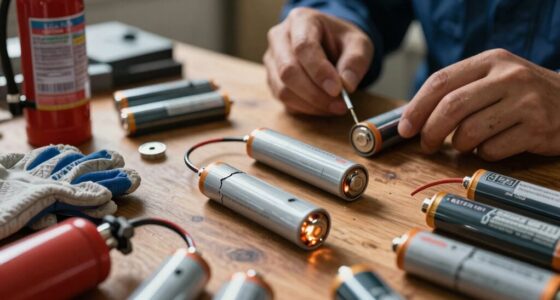
- Do not handle swollen batteries without protective gear, such as gloves and eye protection, to ensure safety.

Swollen lithium batteries are a clear sign that something is wrong, and ignoring this issue can be dangerous. When you notice that a battery has become swollen or bloated, it’s a warning sign that the internal chemical reactions are out of control. This swelling can lead to leaks, fires, or even explosions if not handled properly. Your first priority should be to prioritize battery safety by avoiding any attempt to puncture, crush, or try to repair the swollen battery. Doing so can release hazardous chemicals or cause a fire, putting you and others at risk. Instead, you need to act quickly and responsibly.
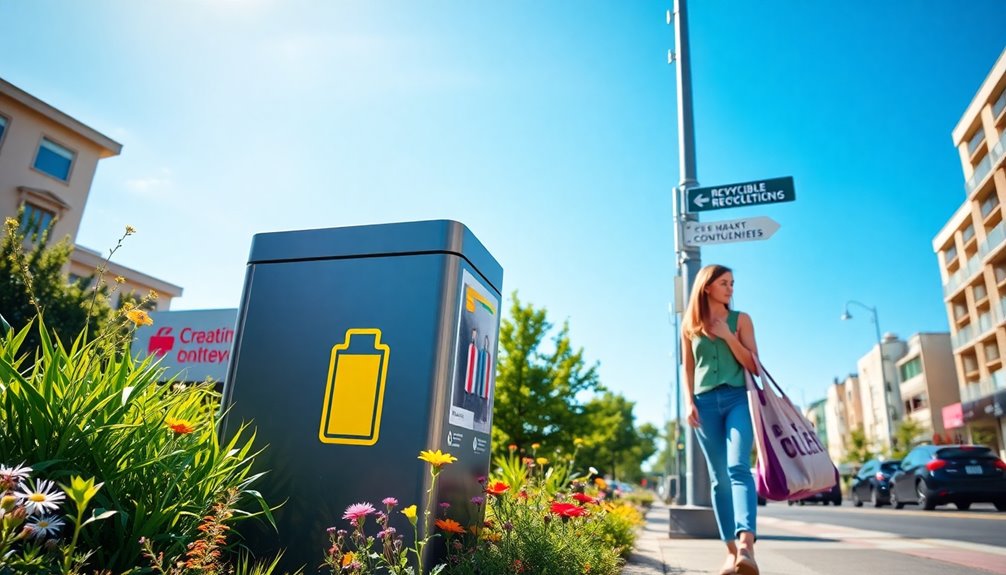
The safest course of action is to dispose of the swollen lithium battery following proper disposal guidelines. Many local recycling centers or electronic waste facilities accept damaged batteries, but it’s essential to check their specific requirements before bringing it in. Never throw a swollen lithium battery in your regular trash or recycling bin, as this can cause fires or contaminate the environment. If you’re unsure where to take it, contact your local waste management authority or look for designated battery recycling stations online. Remember, handling a swollen battery with care is vital; wear gloves and eye protection if possible, and avoid any contact with the electrolyte or chemicals that may leak out.
When disposing of a swollen lithium battery, make sure it’s stored securely to prevent accidental puncture or damage during transport. Place it in a non-conductive container, such as a plastic bag or a fireproof container, and keep it away from flammable materials. If you’re unsure about how to safely package or transport the battery, consult the disposal guidelines provided by your local authorities or the battery manufacturer. Following these guidelines ensures that you’re minimizing the risk of fire or chemical exposure. Proper handling and disposal are essential components of battery safety and help prevent potential hazards.
Prevention is also key to avoiding swollen batteries in the first place. Proper battery safety includes avoiding overcharging, exposing batteries to extreme heat, or using incompatible chargers. Regularly inspecting your devices and batteries for signs of damage can help you catch issues early. If you notice swelling, don’t delay—dispose of the battery correctly and replace it with a new, manufacturer-approved unit. By respecting disposal guidelines and adhering to battery safety practices, you help protect yourself, others, and the environment from the dangers associated with swollen lithium batteries.
Products Worth Considering

Jackery Explorer 300 Portable Power Station, 292Wh

Jackery Explorer 2000 v2 Portable Power Station with Two 200W Solar Panels

Bose QuietComfort Headphones (2nd Gen), Wireless Noise-Cancelling Over-Ear Headphones, Eucalyptus Green
As an affiliate, we earn on qualifying purchases.
Frequently Asked Questions
Can Swollen Batteries Be Safely Recycled at Home?
You shouldn’t DIY disposal of swollen lithium batteries at home. These batteries are dangerous and can catch fire or explode if mishandled. Instead, take them to a proper household recycling or hazardous waste facility. Never puncture, crush, or throw swollen batteries in the trash. Proper disposal guarantees safety for you and the environment, so always follow local guidelines for recycling or hazardous waste collection.
What Are the Signs of a Swollen Lithium Battery?
You’ll notice signs of a swollen lithium battery through visible bulging, distortion, or a rounded shape that wasn’t there before. Battery chemistry changes and swelling causes, like overcharging or age, lead to this. You might also feel the device heat up or notice leaks. If you see these signs, stop using the battery immediately, as continuing to use it can be dangerous. Always handle swollen batteries with care and dispose of them properly.
How Long Does It Take for a Lithium Battery to Swell?
Like a ticking time bomb, a lithium battery’s swelling can happen surprisingly fast, often within weeks or months depending on usage, age, and swelling causes. If your battery’s nearing the end of its lifespan or encounters damage, it may start to swell unpredictably. The swelling process varies, but prompt action is vital—ignoring it can lead to leaks, fires, or explosions. Always monitor and replace batteries before they reach this dangerous stage.
Are All Swollen Lithium Batteries Dangerous?
Yes, all swollen lithium batteries are dangerous because they indicate a failure in battery manufacturing or a problem with the lithium chemistry that causes gas buildup. When a battery swells, it can leak, catch fire, or even explode. You should handle it carefully, avoid puncturing it, and dispose of it properly. Never ignore swelling signs, as safety risks increase markedly with compromised lithium chemistry and manufacturing defects.
What Is the Best Way to Prevent Battery Swelling?
Ever wondered how to prevent battery swelling? You should store your batteries properly and follow safe charging practices. Keep batteries in a cool, dry place and avoid exposing them to extreme temperatures. Use the correct charger and don’t overcharge or leave devices charging overnight. Regularly check for signs of swelling or damage. By practicing good battery storage and charging habits, you reduce the risk of swelling and ensure safety.
Conclusion
If your lithium battery starts to swell like a balloon ready to pop, don’t ignore it. Imagine holding a ticking time bomb in your hand—dangerous and unpredictable. Never puncture, force open, or try to drain it yourself. Instead, carefully place it in a safe, cool spot and seek professional help immediately. Protect yourself from fiery explosions and costly damages—swollen batteries are warning signs, so listen closely before disaster strikes.