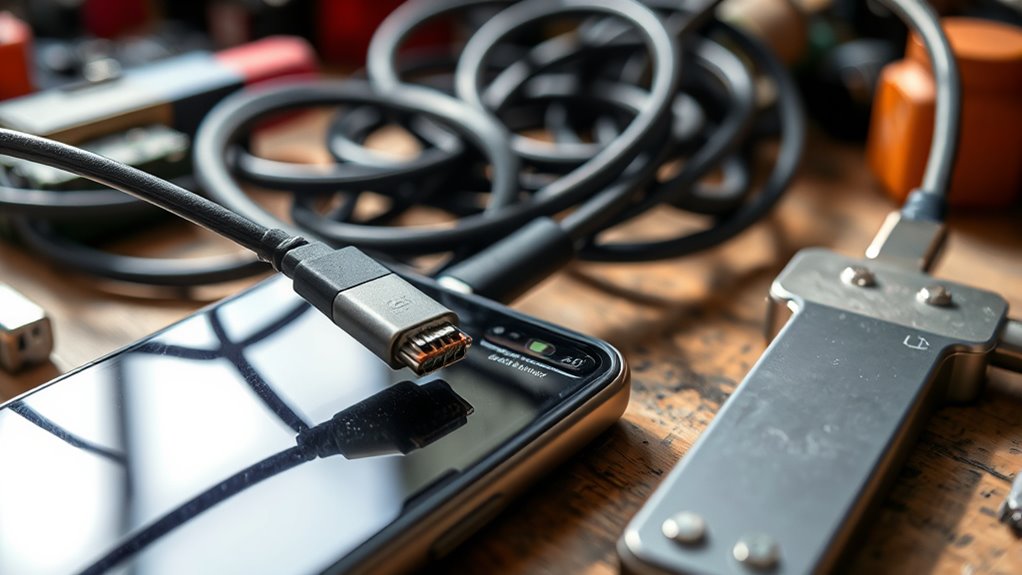

Overcharging and overdischarging your batteries can cause serious problems. Overcharging leads to overheating, swelling, or even fires, while overdischarging damages internal components and reduces battery life. To prevent these risks, use smart chargers, avoid draining batteries below safe levels, and follow manufacturer guidelines. Proper maintenance and avoiding extreme temperatures help prolong battery life and ensure safety. If you want to learn more about preventing damage and hazards, keep exploring these important tips.

Get backup power and energy gear delivered free with Prime
- Fast, free delivery on millions of items
- Prime Video, Amazon Music and more included
- Member-only deals all year
Key Takeaways
- Overcharging causes chemical instability, overheating, and potential explosions, especially in larger batteries like EVs.
- Overdischarging leads to irreversible damage, voltage depression, and increased risk of internal short circuits.
- Using smart chargers and avoiding deep discharges help prevent battery degradation and safety hazards.
- Maintaining proper temperature and using quality charging equipment extend battery lifespan and safety.
- Regular monitoring and following manufacturer guidelines reduce risks of fires, explosions, and long-term damage.
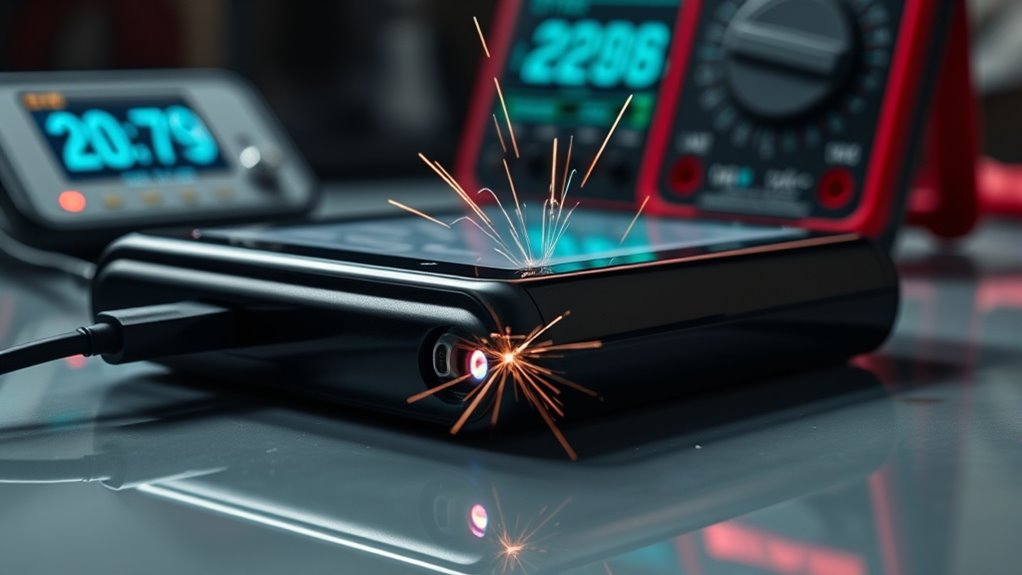
Have you ever wondered what happens to a battery when it’s overcharged or overdischarged? When you push a battery beyond its recommended limits, you’re risking more than just a shorter lifespan. Overcharging and overdischarging can cause considerable battery degradation, which means the battery’s capacity to hold a charge diminishes over time. This degradation results from chemical changes inside the battery, weakening its internal components and reducing overall efficiency. As a result, you might notice your device’s battery drains faster or fails to hold a charge altogether. But the risks go beyond just losing performance; they also pose serious safety hazards. Overcharged batteries can overheat, swell, or even explode if the thermal runaway process occurs. These safety hazards aren’t hypothetical—they happen in real-world scenarios when batteries are improperly charged or damaged.
When you overcharge a lithium-ion battery, the excess energy can lead to the formation of unstable compounds within the cells. This instability increases the likelihood of internal short circuits, which generate heat and can cause the battery to catch fire or burst. The danger isn’t limited to small devices—these incidents can be catastrophic in larger batteries used in electric vehicles or energy storage systems. Conversely, overdischarging a battery isn’t safe either. Draining a battery below its minimum voltage causes irreversible damage to its internal structure. This can result in a phenomenon called voltage depression, making it difficult or impossible to recharge the battery to its full capacity again. Over time, repeated overdischarging accelerates battery degradation, diminishing both performance and safety. When a battery is overdischarged, its internal chemistry becomes unstable, increasing the risk of internal corrosion or formation of dendrites—tiny, needle-like structures that can pierce the separator and cause short circuits. These problems elevate the chances of thermal runaway, where heat buildup spirals out of control, potentially leading to fires.
Additionally, proper battery maintenance practices, such as calibrating your device regularly and avoiding extreme temperatures, can further help prevent damage. Prevention is essential to avoid these risks. Using smart chargers designed to stop charging once the battery reaches its full capacity helps prevent overcharging. Similarly, avoiding deep discharges—by keeping your device’s battery level above a certain threshold—preserves battery health. Regularly monitoring your battery’s status and following manufacturer guidelines can considerably extend its lifespan while ensuring safety. Proper maintenance, like avoiding exposure to high temperatures and using quality charging equipment, further reduces safety hazards. Remember, taking simple precautions not only prolongs your battery’s life but also keeps you safe from avoidable accidents caused by overcharging or overdischarging.
smart battery charger for lithium-ion batteries
As an affiliate, we earn on qualifying purchases.
As an affiliate, we earn on qualifying purchases.
Frequently Asked Questions
How Do I Detect if My Battery Is Overcharged or Overdischarged?
To detect if your battery is overcharged or overdischarged, you should perform battery monitoring regularly. Use a multimeter or a dedicated battery management system to check voltage levels. If the voltage exceeds the recommended voltage thresholds, your battery might be overcharged; if it drops below the threshold, it could be overdischarged. Monitoring these voltage thresholds helps you prevent damage and extend your battery’s lifespan.
Can Overcharging Damage Specific Types of Batteries More Than Others?
Yes, overcharging can damage specific battery chemistries more than others. For example, lithium-ion batteries are sensitive to overcharging, which can cause swelling, capacity loss, or even fires. Nickel-based batteries, like NiMH, are also affected but tend to handle overcharging slightly better with proper management. Repeated overcharging during many charging cycles accelerates degradation, so always use chargers designed for your battery chemistry to prevent damage and extend lifespan.
Are There Safety Devices to Prevent Overcharging and Overdischarging?
You can’t afford to overlook safety devices—they’re your battery’s best defense! Battery management systems and safety circuitry are designed to prevent overcharging and overdischarging, acting like vigilant guardians. These devices monitor voltage and current levels constantly, shutting down power before damage occurs. Without them, you risk catastrophic failure or even fire. Installing proper safety circuitry ensures your batteries stay safe, reliable, and long-lasting, saving you from potential disasters.
What Are the Long-Term Effects of Repeated Overcharging?
Repeated overcharging shortens your battery’s lifespan and causes capacity degradation over time. As you overcharge, the battery’s internal chemistry gets stressed, leading to reduced ability to hold a charge. You might notice your device’s battery drains faster or won’t last as long. Continual overcharging accelerates these issues, ultimately forcing you to replace the battery sooner. To avoid this, use proper charging practices and safety devices that prevent overcharging.
How Do Environmental Factors Influence Battery Overcharge and Discharge Risks?
Environmental factors can dramatically increase your battery’s risks. Temperature fluctuations cause rapid expansion and contraction, risking internal damage and overcharge or discharge issues. High humidity impacts the battery’s chemistry, leading to corrosion and reduced lifespan. Extreme heat accelerates chemical reactions, while cold temperatures slow them down, causing imbalance. You need to keep batteries in stable, moderate environments to prevent these risks, because neglecting environmental conditions is like inviting trouble into your device’s health.
Conclusion
To keep your batteries safe, never ignore the risks of overcharging and overdischarging. Think of your battery as a delicate creature that can collapse under even the slightest misstep—no exaggeration! Always follow proper charging guidelines and use quality chargers. By staying vigilant, you’ll extend your battery’s lifespan and avoid costly damage. Remember, a little prevention now can save you from catastrophic failures later. Protect your investment and keep your devices running smoothly!
Fall Picks
fall essentials
As an affiliate, we earn on qualifying purchases.