
Future innovations in battery safety focus on solid-state batteries and advanced thermal management systems. Solid electrolytes replace liquid ones, making batteries safer, more energy-dense, and resistant to fires and dendrites. Meanwhile, thermal controls like heat pipes and sensors help maintain ideal temperatures, preventing overheating and extending lifespan. Combining these technologies results in safer, longer-lasting energy storage solutions. Keep exploring how these cutting-edge safety features will shape the batteries of tomorrow and enhance your everyday devices.
Key Takeaways
- Adoption of solid electrolytes to eliminate flammable liquids and prevent dendrite formation.
- Integration of advanced thermal management systems with real-time sensors for early fault detection.
- Development of smarter battery materials that resist thermal runaway and degradation.
- Implementation of adaptive cooling solutions like phase change materials and heat pipes.
- Enhanced safety protocols combining material improvements with predictive analytics for proactive maintenance.

Have you ever wondered how future battery safety technology could prevent fires and extend battery lifespan? As the demand for safer, more reliable energy storage grows, researchers are making considerable strides in solid state advancements and thermal management. These innovations are set to revolutionize how batteries operate, making them safer and more durable for everyday use.
Solid state advancements are at the forefront of this transformation. Unlike traditional lithium-ion batteries that rely on liquid electrolytes, solid state batteries use solid electrolytes, which drastically reduce the risk of leaks, fires, and explosions. You’ll find that these batteries are inherently safer because the solid materials are less flammable and more resistant to dendrite formation — tiny, needle-like structures that can pierce the separator and cause short circuits. With solid state technology, the risk of thermal runaway, the process that leads to fires, diminishes greatly. Plus, these batteries tend to hold more energy in a smaller space, which means longer-lasting power for your devices and vehicles. As scientists perfect these materials, you can expect batteries that not only last longer but also operate at higher voltages and temperatures without compromising safety. Additionally, ongoing research into filtering and cleaning methods aims to further improve battery safety by reducing contaminants that could cause degradation or failure.
Solid state batteries use safer, solid electrolytes, reducing fire risk and increasing energy density for longer-lasting devices.
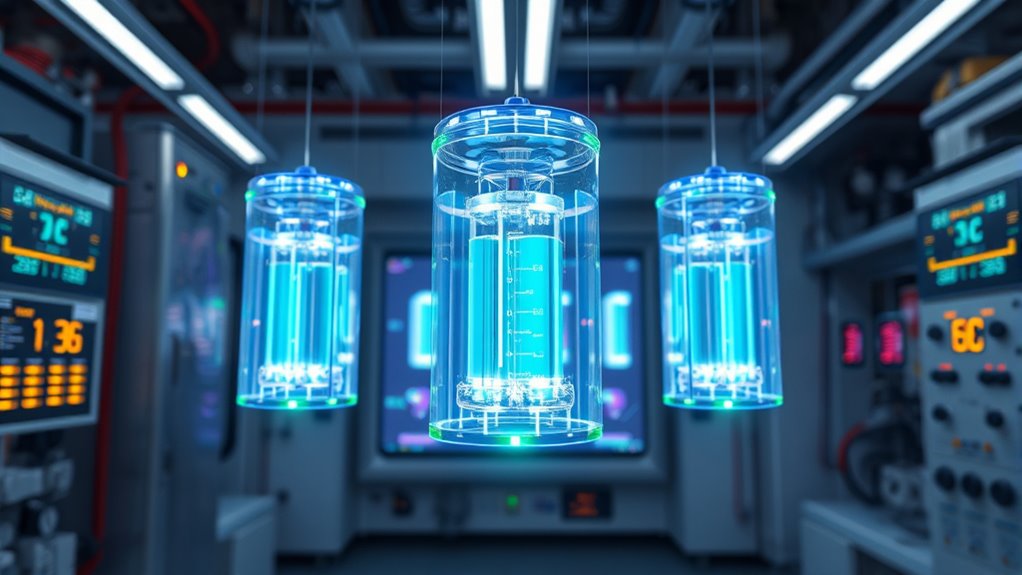
Thermal management plays a critical role in ensuring battery longevity and safety. As batteries charge and discharge, they generate heat, which, if unmanaged, can lead to overheating and failure. Future innovations focus on advanced thermal management systems that actively monitor and control temperature fluctuations. You’ll see smarter cooling solutions integrated directly into battery packs, using materials like phase change materials or heat pipes that efficiently dissipate heat. These systems help maintain ideal operating temperatures, preventing hotspots that can accelerate degradation or trigger thermal runaway. Additionally, the integration of sensors and real-time data analytics allows for early detection of potential issues, so you can be confident your battery is operating safely. Improved thermal management doesn’t just prevent fires; it also extends the overall lifespan of batteries by reducing the wear and tear caused by thermal stress.
Together, these advancements in solid state technology and thermal management are shaping a future where batteries are safer, more reliable, and longer-lasting. You’ll benefit from devices that charge faster, last longer, and pose fewer safety risks. As researchers continue to refine these solutions, the gap between laboratory breakthroughs and real-world applications narrows. The combination of safer electrolytes and smarter thermal controls promises a new era of energy storage that’s not only more resilient but also more aligned with the safety demands of modern technology. In this evolving landscape, you’ll soon see batteries that are less of a safety concern and more of a dependable part of your daily life.
Frequently Asked Questions
How Will AI Improve Battery Safety Monitoring?
AI will improve battery safety monitoring by providing real-time diagnostics and predictive analytics, allowing you to identify potential issues before they become dangerous. You’ll benefit from AI-powered systems that continuously analyze data, detect anomalies, and predict failures early. This proactive approach helps prevent accidents, extend battery lifespan, and guarantees safer usage, giving you peace of mind knowing that advanced AI diagnostics keep your batteries secure and reliable at all times.
Are There Eco-Friendly Materials for Safer Batteries?
Sure, eco-friendly materials exist that can make batteries safer. You can explore safer electrolyte development with sustainable substances like bio-based electrolytes and recyclable components. These eco-friendly materials reduce environmental impact while enhancing safety by preventing leaks and fires. By adopting these innovative ingredients, you help create batteries that are both safer and kinder to the planet. Embracing eco-friendly options empowers you to support sustainable, safer energy storage solutions today.
What Are the Costs of New Safety Tech Implementations?
You’ll find that the costs of new safety tech implementations vary based on the complexity of the solutions. Conducting a thorough cost analysis helps you understand expenses for materials, manufacturing, and integration. Keep in mind, you may face implementation challenges like compatibility issues or increased production time. While upfront costs can be high, these safety upgrades often save money long-term by preventing failures and reducing liability.
How Do Safety Innovations Impact Battery Recycling?
Safety innovations can positively impact battery recycling by extending battery lifespan and improving thermal management. When batteries last longer, you reduce waste and need fewer replacements, easing recycling demands. Enhanced thermal management prevents overheating, which minimizes hazardous waste and makes the recycling process safer. You benefit from more sustainable batteries that are easier to recycle, reducing environmental impact and supporting a circular economy for battery materials.
Will Safety Tech Increase Battery Production Speed?
Yes, safety tech can increase battery manufacturing speed by streamlining processes and reducing safety concerns. When safety standards improve, manufacturers can implement advanced safety features more efficiently, leading to faster production cycles. Enhanced safety measures also minimize downtime caused by safety incidents, keeping the assembly lines moving. Overall, integrating innovative safety tech helps accelerate battery manufacturing without compromising quality, ensuring a quicker response to market demands.
Conclusion
As you look ahead, these innovations in battery safety will be the shining beacon guiding us through potential hazards. By staying ahead of the curve, you can prevent problems before they start, turning the tide in favor of safer energy solutions. Remember, it’s better to nip issues in the bud than to let them grow into a storm. With these advances, you’ll be riding the wave of a safer, brighter energy future.