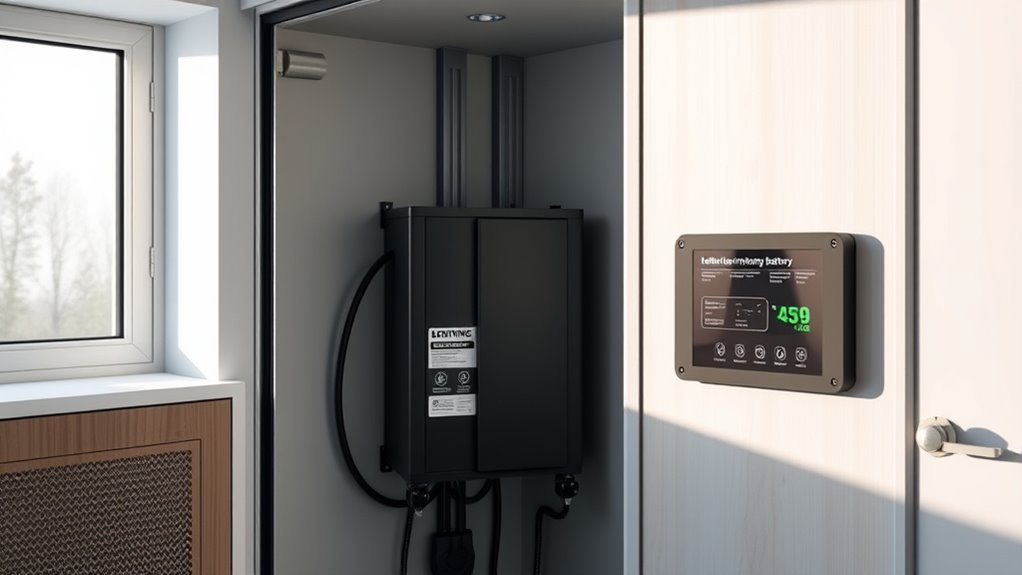

To safely install and maintain your home batteries, follow the manufacturer’s instructions carefully and choose a well-ventilated, dry location away from flammable materials. Secure the system properly and regularly inspect for damage, corrosion, or overheating. Keep fire safety equipment nearby and stay informed about safety updates. Using circuit breakers and monitoring tools adds extra protection. Proper installation and maintenance considerably reduce fire risks—continue exploring how to keep your system safe and efficient.
Key Takeaways
- Follow manufacturer instructions carefully and hire certified professionals for proper installation.
- Choose well-ventilated, dry locations away from flammable materials to prevent hazards.
- Regularly inspect batteries for damage, swelling, and corrosion; clean terminals routinely.
- Use appropriate mounting, ensure secure placement, and maintain clearance for ventilation and access.
- Equip systems with safety features like circuit breakers, thermal management, and emergency protocols.

As more households adopt energy storage systems to power their homes, ensuring safety becomes increasingly important. Home batteries offer convenience and backup power, but they also come with potential risks like battery fire hazards. Understanding how to prevent these hazards starts with proper installation practices. When installing your home battery system, it’s essential to follow the manufacturer’s guidelines meticulously. This includes selecting a suitable location—ideally a well-ventilated, dry, and temperature-controlled area—to minimize the risk of overheating or moisture damage. Avoid placing batteries near flammable materials or in confined spaces where heat could build up, as these conditions can elevate the danger of fire.
Safe installation practices also mean ensuring your wiring and connections are done correctly. Poor wiring can lead to short circuits or overheating, both of which greatly increase the risk of battery fires. If you’re not experienced with electrical work, hire a certified professional to handle the installation. They’ll know how to connect the system safely, adhere to local electrical codes, and incorporate necessary safety features such as circuit breakers and fuses. Properly securing the battery system is equally important—use appropriate brackets or mounts to prevent accidental tip-overs or damage that could compromise the battery’s integrity or cause a fire.
Beyond installation, regular maintenance plays a critical role in ensuring safety and minimizing battery fire hazards. Keep an eye out for any signs of damage or swelling, which could indicate internal issues. Clean the battery terminals periodically to prevent corrosion, which can lead to poor connections and heat build-up. Monitor the battery’s temperature during operation; if it feels excessively hot, shut down the system and consult a professional. Many modern batteries come with built-in safety features like thermal management systems and automatic shut-off mechanisms that help prevent fires, but these should never replace routine checks and maintenance.
Additionally, educate yourself about the safety protocols recommended by the manufacturer and local fire authorities. Keep fire extinguishers rated for electrical fires nearby, and develop an emergency plan in case of fire or other hazards. Incorporating AI-powered safety monitoring systems can further enhance early detection of issues, providing an extra layer of protection. Remember, a small investment in proper installation and maintenance can greatly reduce your risk of battery fire hazards and protect your home and loved ones. By prioritizing safe installation practices and staying vigilant about maintenance, you make sure your energy storage system remains a reliable, safe source of power.
Frequently Asked Questions
Can Home Batteries Cause Fire Hazards During Power Outages?
Home batteries can pose a fire risk during power outages if safety precautions aren’t followed. Faulty installation, damage, or improper maintenance increase this risk. You should verify professional installation, regularly inspect your system, and follow manufacturer guidelines. Keep batteries in a well-ventilated area, avoid overcharging, and use appropriate safety devices. These precautions help minimize fire hazards and keep your home safe during power outages.
What Are the Signs of a Failing Home Energy Storage System?
You’re wise to watch for signs of a failing home energy storage system, as battery degradation can reduce capacity by up to 20% annually. Look for system warning alerts, strange odors, excessive heat, or smoke near the batteries. These signs indicate problems and should prompt immediate inspection. Regular maintenance and monitoring help catch issues early, preventing potential safety hazards and ensuring your system functions efficiently and safely.
How Does Weather Impact the Safety of Home Batteries?
Weather vulnerability can substantially impact your home batteries’ safety. Extreme temperatures, humidity, or storms may cause overheating, freezing, or environmental stress, increasing the risk of battery failure or fire. You should monitor weather forecasts and protect your batteries from harsh conditions. Proper installation and maintenance help minimize environmental impact and ensure safety, while avoiding weather-related hazards keeps your system running smoothly and reduces potential damage.
Are There Specific Safety Certifications Required for Home Battery Systems?
Sure, because who wouldn’t want their home batteries certified like a fancy gourmet meal? You need to make certain your system meets specific safety certifications and adheres to safety regulations. These certification standards verify that your batteries are safe and reliable, preventing fires or malfunctions. Always check that your home battery system complies with local codes and standards—after all, safety isn’t just a suggestion, it’s a must-have.
What Emergency Procedures Should Be Followed if a Battery Malfunctions?
If you experience a battery malfunction, you should prioritize safety by unplugging the system immediately and avoiding contact with leaking or damaged batteries. Use a fire extinguisher rated for electrical fires if needed, and ventilate the area to disperse harmful fumes. Contact emergency services if there’s smoke, fire, or dangerous fumes. Follow your manufacturer’s emergency response instructions carefully, and never attempt to repair a malfunctioning battery yourself.
Conclusion
By taking proper care when installing and maintaining your home batteries, you’re nurturing a safe and peaceful energy future. When you treat your energy storage system with respect and attention, you help assure it serves you reliably, quietly supporting your daily life. Remember, gentle diligence today cultivates a secure and harmonious home tomorrow. Embrace these small steps, and you’ll foster a comforting environment where innovation and safety bloom side by side.