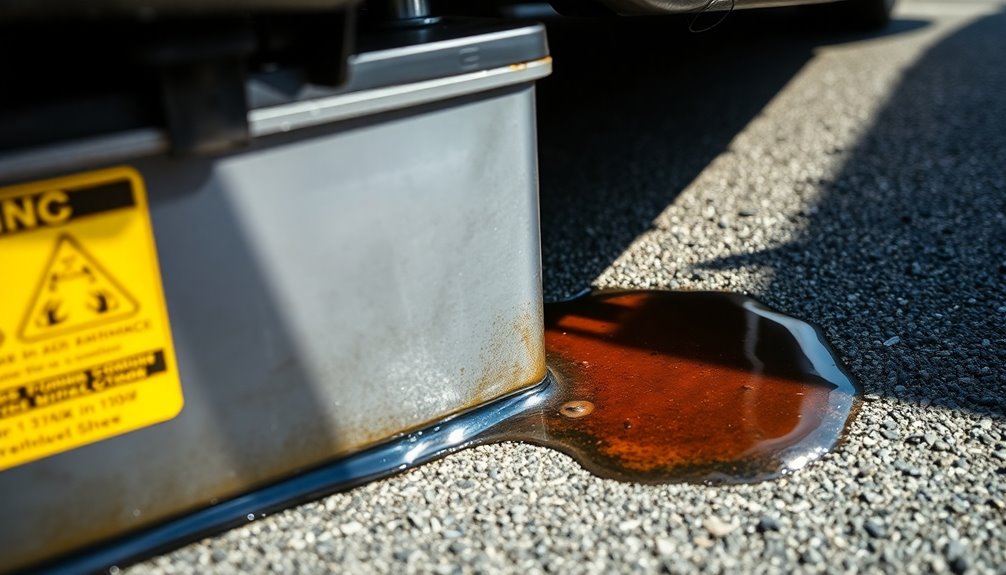
Lithium batteries pose significant fire risks because their high energy density can trigger thermal runaway, leading to explosions and fires, especially if damaged, overcharged, or exposed to high temperatures. Incidents involving lithium battery fires are rising, with reports linked to smartphones, laptops, electric vehicles, and storage systems. Understanding these hazards is vital for safety, as early signs can be overlooked. If you want to learn more about how these fires happen and how to prevent them, keep exploring the details ahead.
Key Takeaways
- Lithium battery fires are a significant safety concern, with increasing incidents linked to widespread use in electronics and EVs.
- Thermal runaway incidents often result from overcharging, physical damage, or manufacturing defects, leading to fires or explosions.
- Data shows a rising trend in lithium battery-related fire incidents, especially during transportation, storage, and charging.
- Major recalls and safety investigations highlight the risks associated with lithium battery fires and the need for improved safety measures.
- Ongoing research aims to reduce fire hazards through advanced thermal management, safer materials, and stricter handling protocols.
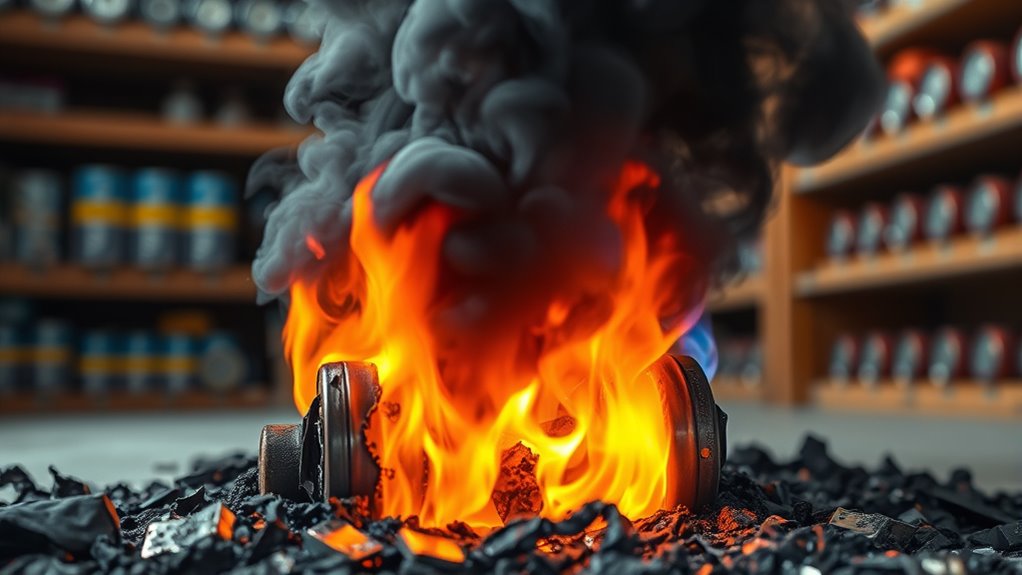
Have you ever wondered what makes lithium batteries particularly prone to fires? The answer lies in their chemistry and how they can sometimes undergo explosive reactions. Lithium batteries pack a lot of energy into a small space, which makes them incredibly useful but also risky if not handled properly. When a battery experiences a fault or damage, it can enter a dangerous process called thermal runaway. This is when the internal temperature spirals out of control, causing the battery to heat up rapidly and release flammable gases. Once thermal runaway begins, it often leads to an explosive reaction, releasing energy suddenly and violently. That explosion can produce intense heat, flames, and even shrapnel, making lithium batteries a fire hazard in various applications.
Your awareness of this process is vital because thermal runaway can be triggered by multiple factors. Overcharging, physical damage, manufacturing defects, or exposure to high temperatures can all initiate this chain reaction. When a lithium battery starts to overheat, the chemical reactions inside accelerate. The electrolyte, which conducts ions between the electrodes, becomes unstable and can break down, releasing flammable gases. These gases build up pressure inside the sealed cell. If the pressure isn’t released or contained, it results in a rupture. The rupture often ignites the gases, leading to a fire or explosion. This is why lithium batteries are particularly hazardous during crashes, punctures, or when they’re exposed to extreme heat.
Understanding the risks associated with these explosive reactions helps you appreciate why incidents involving lithium batteries can be so severe. Once thermal runaway takes hold, it’s challenging to stop the process; it snowballs quickly, producing enough heat to ignite surrounding materials. That’s why safety measures, such as protective circuits and thermal management systems, are critical to prevent these scenarios. Despite advances in technology, the inherent instability of lithium-ion chemistries means that, under specific conditions, these batteries can still pose significant fire hazards. Being aware of how thermal runaway occurs highlights the importance of proper handling, storage, and disposal of lithium batteries to reduce the risk of catastrophic failures. Additionally, ongoing research into improving safety protocols aims to mitigate these dangers and enhance battery stability.
Frequently Asked Questions
How Can Lithium Battery Fires Be Effectively Extinguished?
To effectively extinguish lithium battery fires, you should use a Class D fire extinguisher designed for metal fires, as water can intensify the blaze. Employ proper fire suppression techniques by calmly isolating the battery and avoiding water contact. If unavailable, smother the fire with a fire blanket or dry sand. Always prioritize safety, alert emergency services, and do not attempt to extinguish large fires without professional help.
What Are the Latest Safety Innovations for Lithium Batteries?
You should look into the latest safety innovations like fire-resistant coatings and improved battery recycling methods. Fire-resistant coatings help contain fires if they occur, reducing damage and risk. Advanced battery recycling not only recycles materials but also enhances safety by identifying and removing potentially hazardous components. These innovations make lithium batteries safer for everyday use, ensuring you’re better protected and contributing to environmental sustainability.
Are There Specific Environments More Prone to Lithium Battery Fires?
Imagine walking through a volatile volcano, where molten lava threatens to ignite everything. High risk environments and hazardous settings, like industrial facilities with flammable chemicals or spaces with extreme temperatures, are more prone to lithium battery fires. These conditions weaken batteries’ safety features, making fires more likely. You should exercise extra caution in such environments, ensuring proper storage, ventilation, and handling to prevent potential disasters.
How Do Manufacturing Defects Influence Fire Risks?
Manufacturing flaws markedly increase the fire risks of lithium batteries. If quality control isn’t strict, defects like poor sealing, internal short circuits, or inconsistent electrode coatings can occur. These flaws compromise the battery’s safety, making it prone to overheating and fires. As a manufacturer, you must prioritize rigorous quality control to detect and eliminate such defects early, reducing the chances of dangerous failures and ensuring safer lithium batteries for users.
What Are the Long-Term Health Effects of Lithium Battery Fires?
You might not realize it, but long-term exposure to lithium battery fires can pose serious health risks. Chronic health risks include respiratory issues, skin irritation, and potential neurological effects from inhaling toxic fumes. Over time, these hazards can accumulate, leading to lasting damage. Staying aware of these dangers helps you take precautions, ensuring your safety and minimizing the long-term health effects associated with lithium battery fire incidents.
Conclusion
Think of lithium batteries as tiny volcanoes—small but capable of erupting unexpectedly. By understanding their fire hazards and staying vigilant, you become the guardian of your own safety, preventing sparks from turning into destructive flames. Remember, each battery is a seed of potential and risk. Handle them with care, like tending a delicate garden, so you can enjoy their power without risking a wildfire. Your caution is the shield that keeps the flame at bay.