
Low-voltage disconnects are the one feature that can save your expensive batteries by preventing over-discharge, which causes irreversible damage and shortens their lifespan. They automatically monitor voltage levels and disconnect loads when the voltage drops too low, protecting your investment. With adjustable settings, you can customize this safeguard for your specific batteries and applications. Knowing how they work and choosing the right one helps guarantee your batteries stay healthy longer—keep going to discover more about this essential device.

Get backup power and energy gear delivered free with Prime
- Fast, free delivery on millions of items
- Prime Video, Amazon Music and more included
- Member-only deals all year
Key Takeaways
- Low-voltage disconnects automatically shut off power before batteries over-discharge, preventing irreversible damage.
- They continuously monitor voltage levels and respond instantly to protect battery health.
- Adjustable voltage thresholds customize protection for different battery types and applications.
- Proper installation ensures effective safeguarding, prolonging battery lifespan and reducing replacement costs.
- They are essential for maintaining safe operation in solar, RV, marine, and other critical battery systems.
Have you ever wondered how to protect your batteries from over-discharge? If so, you’re not alone. Many people overlook the importance of proper battery protection, which can lead to costly damage or shortened lifespan. That’s where low-voltage disconnects come in. These devices act as a safeguard, automatically disconnecting the load when the battery voltage dips to a preset level. By doing so, they prevent your batteries from dropping too low, which can cause irreversible damage and reduce their overall capacity.
Battery protection is essential, especially if you’re using expensive or sensitive batteries like lithium-ion or deep-cycle types. Without a reliable way to monitor and control voltage levels, you risk over-discharging your batteries, which can lead to reduced capacity, increased internal resistance, and even total failure. Low-voltage disconnects serve as an indispensable barrier, ensuring your batteries stay within safe voltage ranges. They’re simple yet effective tools that give you peace of mind, knowing your investment is protected.
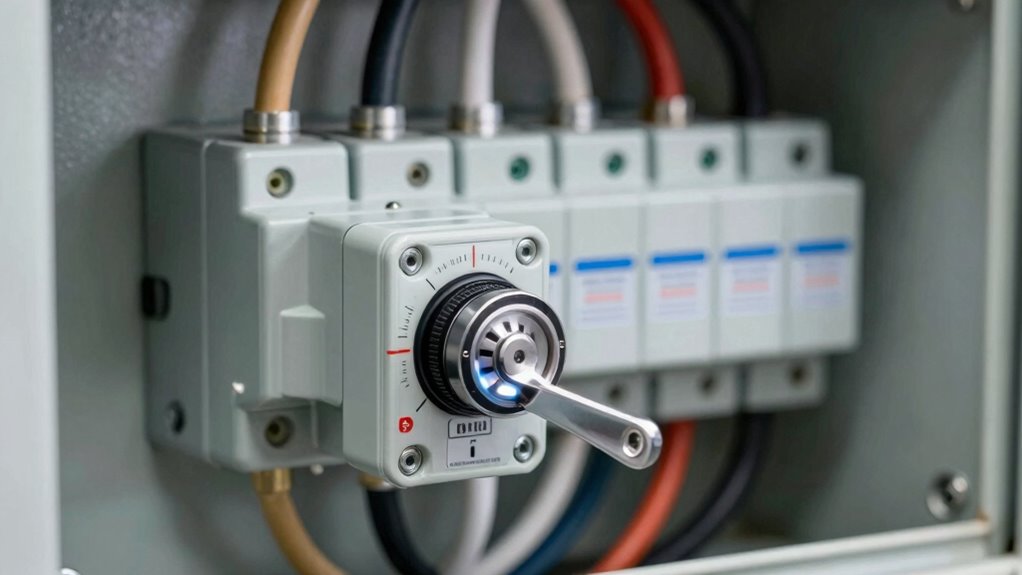
Voltage regulation plays a key role in this process. These disconnects monitor voltage continuously and act swiftly when the threshold is reached. Some systems are adjustable, allowing you to set the precise voltage level that best suits your batteries and application. This customization guarantees ideal performance without risking damage. When the voltage drops to the set point, the disconnect isolates the battery from the load, effectively halting further discharge. This automatic action is essential for maintaining battery health, especially during extended use or in situations where you might forget to manually disconnect the load.
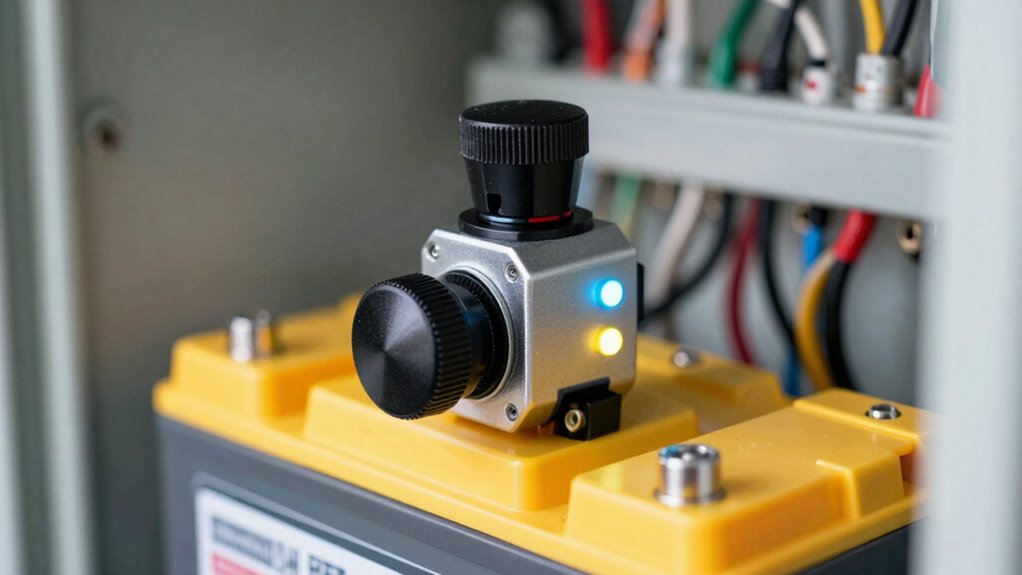
Implementing a low-voltage disconnect is straightforward and highly effective. You simply connect it between your battery and your load, and let it do the work. This device responds instantly to voltage drops, giving you a buffer zone that prevents accidental over-discharge. It’s particularly useful in off-grid solar setups, RVs, marine systems, or any application where batteries are critical to operation. Not only does this device protect your batteries, but it also helps prolong their life, reducing replacement costs and downtime.
In essence, low-voltage disconnects are an essential component for anyone serious about battery maintenance. They provide necessary battery protection through precise voltage regulation, ensuring your batteries operate safely within their recommended parameters. By preventing over-discharge, you extend their lifespan and safeguard your investment. Proper wiring basics and installation are crucial to ensure these devices function correctly and safely. When you prioritize these simple yet indispensable devices, you’re making a smart choice that pays off in the long run, keeping your batteries reliable and efficient for years to come.
low voltage disconnect for batteries
As an affiliate, we earn on qualifying purchases.
As an affiliate, we earn on qualifying purchases.
Frequently Asked Questions
How Do Low-Voltage Disconnects Impact Battery Lifespan?
Low-voltage disconnects help extend your battery’s lifespan by protecting its health through proper voltage regulation. When the voltage drops too low, they automatically disconnect the load, preventing deep discharges that can damage the battery. This guarantees your battery doesn’t operate at harmful levels, maintaining its capacity and overall health. By avoiding excessive discharges, you preserve battery life and ensure reliable performance over time.
Can Low-Voltage Disconnects Be Used With All Battery Types?
You can’t use low-voltage disconnects with all battery types, as disconnect compatibility varies based on battery chemistry. Some batteries, like lead-acid, work well with standard disconnects, while others, such as lithium-ion, may need specialized ones to prevent damage. Always check the manufacturer’s recommendations to verify the disconnect you choose corresponds with your battery’s chemistry, so you protect your investment and optimize performance effectively.
What Maintenance Is Required for Low-Voltage Disconnect Systems?
You should regularly inspect connections to guarantee they’re tight and corrosion-free, and perform battery calibration to keep the system accurate. Check for any signs of wear or damage, and clean terminals as needed. Calibration helps maintain correct voltage readings, preventing unnecessary disconnection. By maintaining these aspects, you’ll ensure your low-voltage disconnect system functions properly, protecting your batteries and extending their lifespan effectively.
Are There Any Safety Concerns With Installing Low-Voltage Disconnects?
You should be aware that installing low-voltage disconnects can pose safety concerns if not done correctly. Battery safety is paramount, so verify system compatibility before installation. Improper wiring or incompatible components might cause electrical hazards or damage your batteries. To avoid risks, follow manufacturer instructions carefully, and consider consulting a professional. Stay vigilant—safety isn’t just a precaution, it’s your best safeguard against potential dangers.
How Do I Choose the Right Low-Voltage Disconnect for My Setup?
To select the appropriate low-voltage disconnect, first consider your battery capacity and the maximum load it handles. Match the disconnect’s voltage and current ratings to your system’s specifications. Also, look for units with adjustable settings for better control. For installation tips, place it close to the battery bank and guarantee proper wiring to prevent accidental disconnections. This way, you protect your batteries and optimize performance effectively.
Conclusion
A low-voltage disconnect saves your batteries by preventing over-discharge, protecting your investment, and extending your system’s lifespan. It acts as your safeguard, your shield, and your saver—stopping damage before it starts. By choosing a reliable low-voltage disconnect, you guarantee your batteries stay healthy, your power remains steady, and your worries stay minimal. Don’t overlook this essential feature—invest in protection, prioritize longevity, and enjoy the peace of mind you deserve.
Fall Picks
fall essentials
As an affiliate, we earn on qualifying purchases.