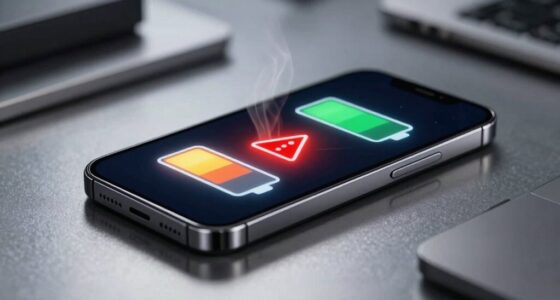
Cheap chargers may seem to work fine at first, but their poor build quality and lack of safety features hide serious fire risks. Inconsistent power delivery, subpar materials, and inadequate insulation can cause batteries to overheat or short circuit, even when the charger appears normal. Over time, hidden flaws worsen, increasing the danger of fires or explosions. To stay safe, it’s important to understand what makes cheap chargers risky — and why it’s worth investing in better options.

Get backup power and energy gear delivered free — and shop member deals
- Fast, free delivery on millions of items
- Access to Prime Big Deal Days deals on October 6–7
- Prime Video, Amazon Music and more included
Key Takeaways
- Cheap chargers often deliver inconsistent or excessive power, causing battery overheating and increasing fire risk.
- Lack of proper safety features and poor insulation in low-cost chargers heighten chances of short circuits and fires.
- Inferior materials and manufacturing shortcuts compromise internal components, leading to potential overheating and fires over time.
- Visual inspection may show normal operation, but hidden faults and component degradation can cause dangerous failures later.
- Poor quality assurance testing means defects go unnoticed, elevating the likelihood of fire hazards even when the charger appears to work.

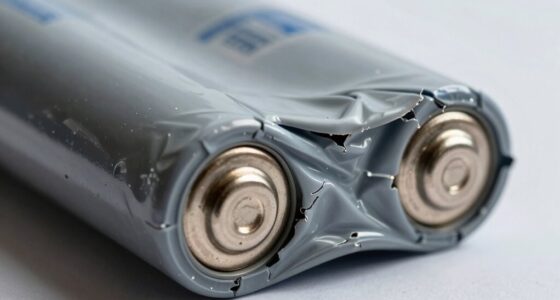
Although cheap chargers may seem like a good deal, they often pose serious fire risks. You might think that saving a few dollars is worth the convenience, but these low-cost options can compromise safety in ways you don’t immediately see. One major concern is battery overheating. When a charger isn’t built with proper quality assurance, it can deliver inconsistent or excessive power to your device’s battery. This fluctuation can cause the battery to heat up dangerously, increasing the chance of a fire or explosion. Even if your device seems to charge normally, the hidden risks of subpar manufacturing can build up over time, leading to catastrophic failures.
Cheap chargers pose fire risks by causing battery overheating over time.
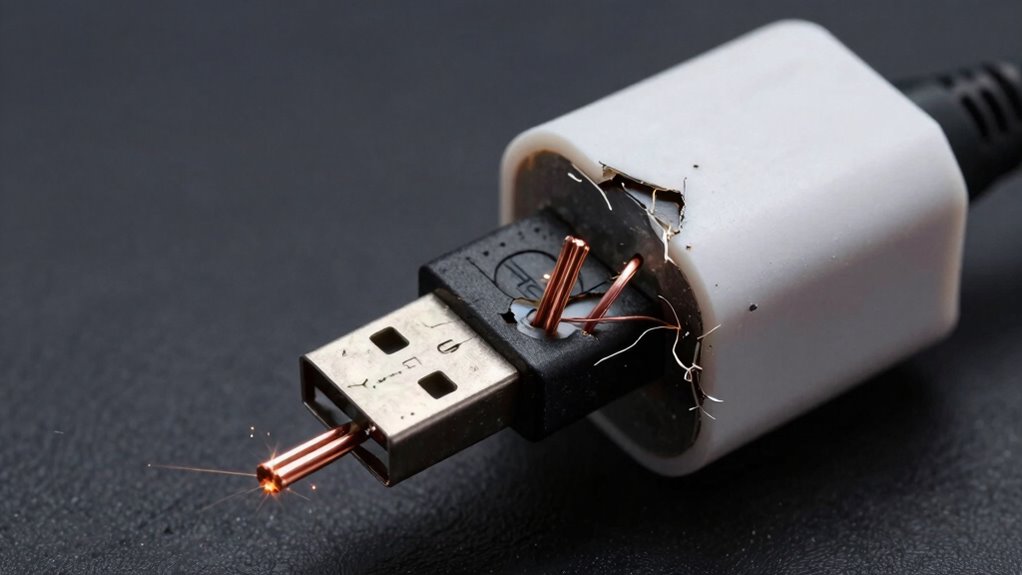
Many cheap chargers skip rigorous quality assurance testing, which is a critical step in ensuring safety and reliability. Quality assurance involves thorough checks to make sure each charger adheres to safety standards, uses proper internal components, and maintains consistent output. Without this process, manufacturers might cut corners by using inferior materials or neglecting proper insulation, which can lead to short circuits or sparks. These issues are often invisible until it’s too late, and you might only notice a problem when the charger or device gets excessively hot or starts emitting a burning smell. Poor build quality and lack of safety features also significantly increase fire risks, especially when combined with substandard materials.
As an affiliate, we earn on qualifying purchases.
Frequently Asked Questions
How Can I Tell if My Charger Is Genuine or Fake?
You can tell if your charger is genuine or fake by checking for certification marks like UL, FCC, or CE, which authentic chargers display. Look closely at the logo, font, and build quality—counterfeit chargers often have misspelled labels or poor craftsmanship. Authentic chargers also usually come with proper packaging and serial numbers. If anything seems off or unoriginal, it’s safer to replace it with a certified, genuine charger to avoid risks.
Are There Specific Brands More Prone to Safety Issues?
You should know that some brands, especially lesser-known or counterfeit accessories, are more prone to safety issues. Counterfeit accessories, which often mimic reputable brands, lack proper safety standards and are responsible for over 60% of related fires. Brand reputation plays a vital role; trusted brands invest in safety, but counterfeit products ignore regulations, increasing fire risks. Always choose reputable brands to guarantee safety and avoid dangerous, fake chargers.
Can Using a Cheap Charger Damage My Device?
Using a cheap charger can damage your device if it’s not compatible or if it causes a power surge. Low-quality chargers often lack proper circuitry, which can lead to inconsistent power delivery, overheating, or surges that harm your battery or internal components. Always make certain your charger matches your device’s compatibility requirements and invest in reputable brands to protect your device from potential damage.
What Safety Features Should I Look for in Chargers?
Think of a good charger as a trusted guard dog—reliable and protective. When choosing one, look for charger certification and safety standards that guarantee it meets strict safety criteria. These features act like a shield, preventing overheating and electrical faults. Prioritize chargers with built-in protection circuits, surge protection, and auto shut-off. A certified, standards-compliant charger keeps your devices safe and your home secure, unlike unregulated, cheap options.
Do Cheap Chargers Pose Risks to Other Electronics?
Cheap chargers can pose risks to your other electronics because they often lack proper safety features, increasing fire hazards and risking electrical failures. When you use inexpensive chargers, you might experience inconsistent power delivery or surges, which can damage your devices or cause malfunctions. To protect your electronics, always choose chargers with certified safety features and avoid cutting corners on quality, especially with cheaper options.
Conclusion
So, next time you reach for that cheap charger, think twice. It might seem harmless now, but what if that tiny flaw turns into a disaster? The dangerous truth is, these low-cost chargers can silently put your home—and your safety—at risk. Don’t let a quick save turn into a lifetime of regret. The real question is, are you willing to gamble with fire just to save a few bucks? The choice is yours.
Halloween Picks
halloween
As an affiliate, we earn on qualifying purchases.