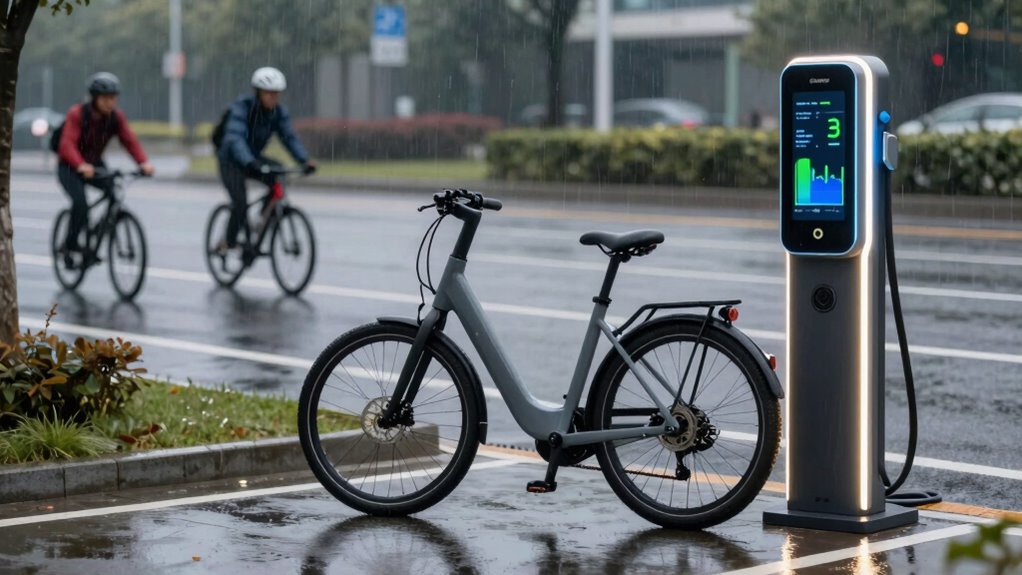

E-bike charging becomes safer and more predictable when you prioritize proper battery management and use certified accessories. Always choose charging stations that meet safety standards and check for any visible damage to your bike’s battery or wiring before charging. Avoid overloads by not daisy-chaining devices on a single outlet. Staying informed about ideal charging practices can further enhance safety. You’ll find even more tips and best practices to keep your charging process secure and efficient.

Get backup power and energy gear delivered free with Prime
- Fast, free delivery on millions of items
- Prime Video, Amazon Music and more included
- Member-only deals all year
Key Takeaways
- Utilizing certified chargers specific to the e-bike’s battery type minimizes risks of overheating and damage during charging.
- Regular inspections of the battery and wiring help identify potential hazards before they escalate.
- Choosing charging stations that comply with safety standards ensures reliable and secure charging experiences.
- Implementing proper battery management techniques optimizes charging efficiency and extends battery lifespan.
- Staying informed about safety practices and risks enhances overall charging safety and predictability.
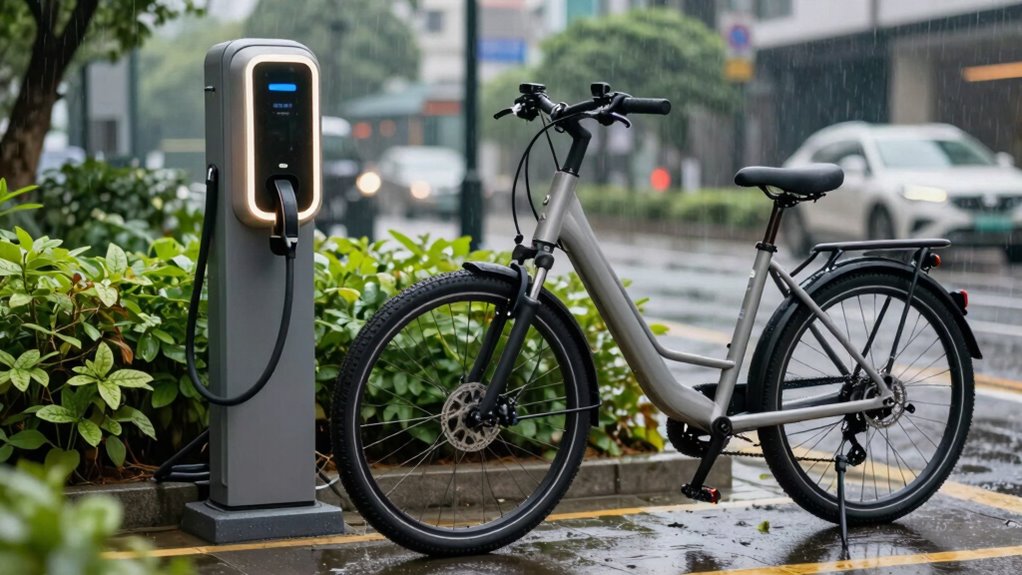
When you charge your e-bike, safety should always be a top priority. To guarantee a smooth charging experience, understanding battery management is essential. Proper battery management not only extends the life of your e-bike battery but also minimizes the risks associated with charging. Make certain you’re using the right charger designed for your specific battery type. Using incompatible charging accessories can lead to overheating or even battery failure.
You also need to take into account the charging infrastructure where you plug in your e-bike. Look for charging stations that meet safety standards. These standards are in place to protect users and confirm the reliability of the charging process. Familiarize yourself with local charging options and their compliance with safety regulations. This awareness helps you select safe charging environments and ensures you’re not just relying on your home charging setup but have a backup plan when you’re out and about. Charging station safety is crucial to ensure a secure charging environment wherever you go.
Conducting a risk assessment before charging can further enhance your safety. Check for any visible damage to your e-bike’s battery or wiring. If you notice anything unusual, it’s best to refrain from charging until you’ve consulted with a professional. Always inspect the outlet you’re using as well. A damaged or overloaded outlet can pose a considerable risk. Additionally, understanding battery management can help you optimize the safety and longevity of your e-bike’s battery. Properly managing your battery’s charge cycles and storage conditions can significantly enhance its lifespan and safety. Moreover, staying informed about renewable energy options for charging can contribute to a more sustainable and safe charging process.
When using charging accessories, confirm they’re certified and suitable for your e-bike’s battery. Using high-quality cables and connectors can greatly reduce the chances of electrical faults. Avoid daisy-chaining multiple devices to one outlet, as this can increase the risk of overheating or electrical fires. Regularly monitoring your charging setup and being aware of overheating risks can prevent potential hazards during the process.
As an affiliate, we earn on qualifying purchases.
Frequently Asked Questions
How Long Does It Take to Fully Charge an E-Bike Battery?
It usually takes about 4 to 6 hours to fully charge an e-bike battery, but charging time can vary based on battery capacity. If you’ve got a larger capacity battery, it might take longer. Using a compatible charger can help speed things up, too. Always check your manufacturer’s guidelines for specific recommendations, as this guarantees you’re maintaining your battery’s health while enjoying your rides without unnecessary delays.
Can I Use Any Charger for My E-Bike?
No, you can’t use just any charger for your e-bike. Charger compatibility is essential to guarantee safe and efficient charging. Always check the voltage specifications of your e-bike’s battery and match them with the charger’s output. Using an incompatible charger can damage your battery or even pose safety risks. Stick to the manufacturer’s recommendations for chargers to keep your e-bike running smoothly and safely.
What Temperature Is Best for Charging E-Bike Batteries?
Think of your e-bike battery like a delicate flower; it thrives best in the right environment. The best charging temperature for e-bike batteries is between 20°C to 25°C (68°F to 77°F). Staying within this range guarantees battery safety and longevity, preventing overheating or damage. When you charge your battery in these perfect conditions, you’re helping it bloom into its full potential, assuring a reliable ride every time.
Are There Specific Charging Stations for E-Bikes?
Yes, there are specific charging stations for e-bikes! You’ll find various charging station types, including public docking stations and dedicated e-bike chargers in urban areas. These stations are part of the growing e-bike infrastructure, designed to make charging more accessible and convenient. Using these stations not only speeds up the charging process but also guarantees your battery stays healthy, so you can get back on the road quickly!
How Can I Extend My E-Bike Battery’s Lifespan?
To extend your e-bike battery’s lifespan, focus on battery maintenance and ideal charging. Always charge your battery when it’s around 20-80% full; don’t let it drop too low or stay fully charged for long periods. Keep it clean and dry, and avoid extreme temperatures. Regularly check for any signs of wear or damage, and store it in a cool, dry place when not in use. These steps will help keep your battery healthy longer.
Conclusion
To sum up, prioritizing e-bike charging safety guarantees you ride with peace of mind. Always use quality chargers, avoid overcharging, and regularly inspect your battery. Remember, “an ounce of prevention is worth a pound of cure.” By taking these simple steps, you not only protect your investment but also enhance your riding experience. Stay safe and enjoy the ride, knowing you’ve done your part to keep your e-bike charging predictable and secure.
Halloween Picks
halloween
As an affiliate, we earn on qualifying purchases.