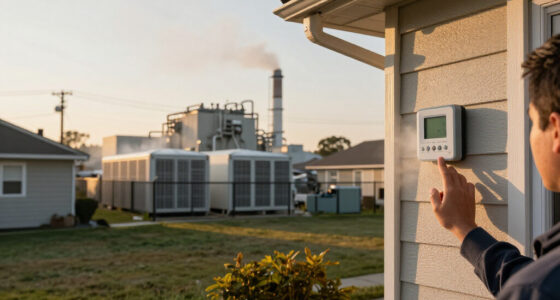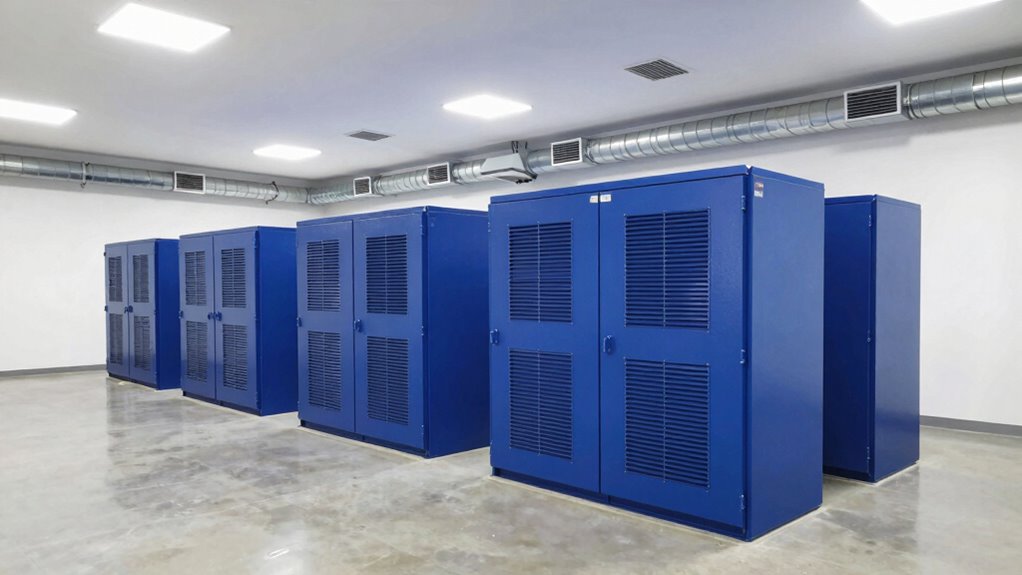

In battery rooms, ensuring proper ventilation is crucial for reducing fire risk and preventing hydrogen buildup. You should install exhaust fans or ducts to effectively remove flammable gases during charging and discharging cycles. Regularly inspect and maintain your ventilation systems, including filters and fans, to keep airflow consistent. Additionally, incorporate gas detection sensors and fire suppression systems for added safety. By following these rules, you’ll create a safer environment—keep going to discover more essential tips.

Get backup power and energy gear delivered free with Prime
- Fast, free delivery on millions of items
- Prime Video, Amazon Music and more included
- Member-only deals all year
Key Takeaways
- Install and regularly maintain exhaust fans or ventilation ducts to ensure continuous airflow and gas removal.
- Use gas detection sensors to monitor hydrogen levels and trigger alarms or ventilation activation.
- Design ventilation systems to provide adequate air exchange, preventing flammable gas buildup.
- Ensure personnel are trained to recognize signs of poor ventilation and gas accumulation for prompt action.
- Implement fire suppression systems suited for electrical fires and conduct routine testing for reliability.
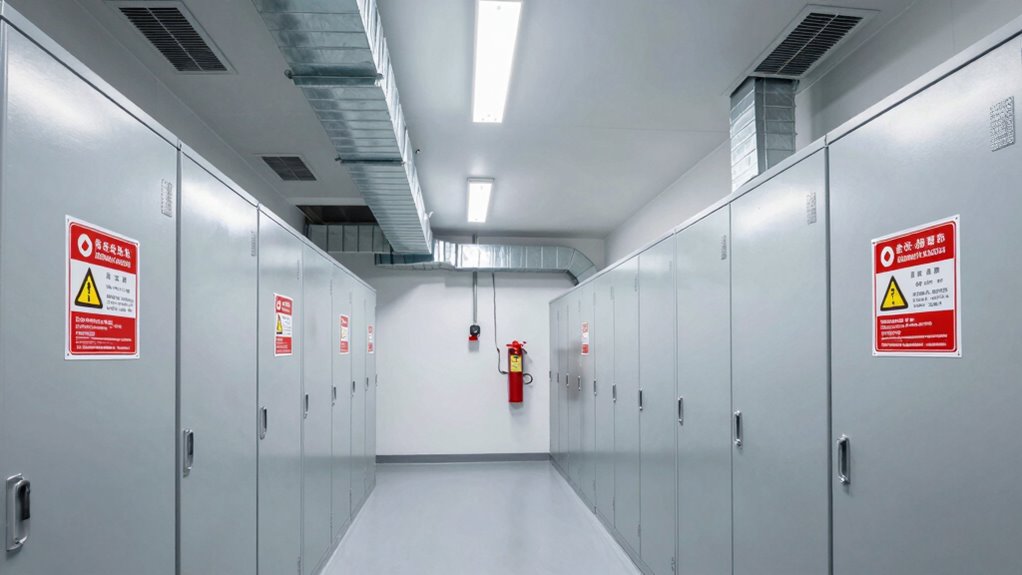
Battery rooms are essential spaces that house large-scale power sources, such as backup batteries and energy storage systems. Because these rooms contain potentially hazardous materials, it’s critical to implement proper ventilation and safety protocols to reduce fire risk. Poor ventilation can lead to the accumulation of explosive gases like hydrogen, which are emitted during battery charging and discharging cycles. Without adequate airflow, these gases can build up to dangerous levels, increasing the chance of ignition and fire.
Battery rooms contain hazardous materials; proper ventilation reduces fire risk by preventing explosive gas buildup.
Your first priority should be ensuring that your battery room has a well-designed ventilation system that continuously exchanges air. This means installing exhaust fans or ventilation ducts that draw gases out of the room efficiently. Regularly inspecting and maintaining these systems is crucial because clogged filters or malfunctioning fans can compromise their effectiveness. Good ventilation not only disperses flammable gases but also helps prevent heat buildup, which is another fire hazard. Overheated batteries can deteriorate faster and become more prone to failure or thermal runaway, leading to fires that are difficult to control.
In addition to ventilation, strict safety protocols are vital to protecting personnel and equipment. You should develop and enforce clear procedures for handling batteries, including proper charging, discharging, and maintenance routines. Training staff on safety measures ensures they understand the importance of ventilation and how to recognize signs of gas buildup or overheating. Incorporate gas detection systems that monitor hydrogen levels in real time, alerting you immediately if concentrations become unsafe. These sensors can serve as an early warning, allowing you to activate emergency responses before conditions escalate.
Fire suppression systems are another essential component of your safety protocols. Installing automatic fire suppression equipment, such as clean agent systems or foam-based extinguishers, can help contain fires if they occur. Make sure these systems are appropriately rated for electrical fires and that they are regularly tested and maintained. Your safety protocols should also include clear evacuation procedures and emergency contact information, ensuring everyone knows what to do if a fire starts or if a gas leak is detected.
Ultimately, reducing fire risk in battery rooms hinges on combining effective ventilation with rigorous safety protocols and fire suppression measures. By prioritizing these elements, you create a safer environment for your equipment and personnel. Regular training, maintenance, and monitoring are your best tools for preventing fires and responding swiftly if one occurs. Staying proactive in managing these safety aspects helps protect your investment and ensures continuous, reliable operation of your energy storage systems.
As an affiliate, we earn on qualifying purchases.
Frequently Asked Questions
How Often Should Ventilation Systems in Battery Rooms Be Inspected?
You should inspect your ventilation systems monthly to guarantee they’re functioning correctly. Regular maintenance schedules help catch issues early and prevent fire risks. Additionally, check emergency ventilation systems quarterly, so they’re ready if needed. Consistent inspections keep your battery room safe, ensuring proper airflow and reducing buildup of hazardous gases. Don’t forget to document all inspections and maintenance activities to stay compliant and maintain a safe environment.
Are There Specific Ventilation Standards for Different Battery Types?
Yes, there are specific ventilation standards for different battery types. You should follow ventilation standards tailored to each battery type, such as lead-acid, lithium-ion, or nickel-cadmium batteries, since each produces different gases and heat levels. For example, lithium-ion batteries require more robust ventilation to prevent heat buildup and gas accumulation. Always consult manufacturer guidelines and local safety codes to guarantee your ventilation system meets the appropriate standards for your battery type.
What Are the Signs of Inadequate Ventilation in a Battery Room?
You’ll notice signs of inadequate ventilation if you see persistent, strong chemical odors or excessive heat buildup. About 60% of battery fires are linked to poor airflow patterns, which can cause dangerous gas accumulation. Inadequate airflow increases fire hazards, so you should monitor for uneven temperature distribution, stagnant air, or foggy, hazy air. These signs indicate poor ventilation, risking dangerous gas build-up and potential fires.
How Do Ventilation Rules Vary Between Indoor and Outdoor Battery Rooms?
In indoor battery rooms, ventilation design emphasizes continuous airflow and proper exhaust systems to prevent gas buildup, and fire suppression systems are vital for safety. Outdoor rooms typically require less complex ventilation but still need adequate airflow to disperse gases. You should guarantee both environments follow local codes, maintain proper ventilation rates, and integrate fire suppression measures to reduce fire risks effectively.
Can Natural Ventilation Be Sufficient for Large Battery Room Safety?
Natural ventilation can sometimes be sufficient for large battery room safety if designed properly. You should depend on natural airflow and passive cooling methods to disperse heat and reduce fire risk. However, it’s essential to assess the room’s size, layout, and external conditions. In many cases, supplemental mechanical ventilation becomes necessary to ensure adequate airflow and prevent dangerous buildup of heat or gases.
Conclusion
By following proper ventilation rules, you can keep your battery room safe, much like a healthy lung keeps a person alive. Good airflow prevents dangerous buildup of gases and reduces fire risk, ensuring your equipment stays protected. Remember, neglecting ventilation is like ignoring a warning sign—you’re risking a fire waiting to happen. Stay vigilant, maintain proper airflow, and treat your battery room like a essential organ that needs care to keep everything running smoothly and safely.
Halloween Picks
halloween
As an affiliate, we earn on qualifying purchases.