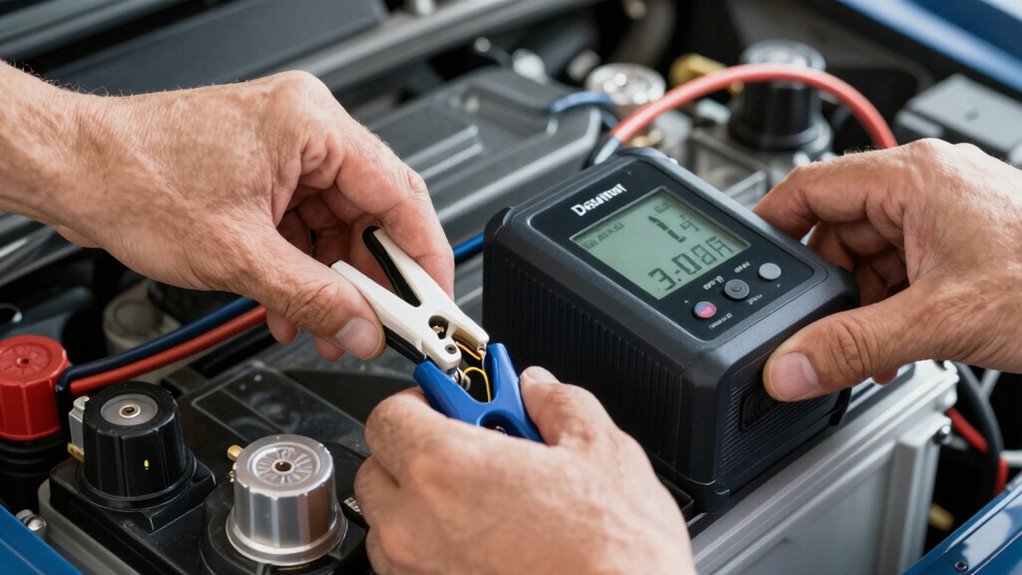

To safely use a desulfator without damaging your battery, you should disconnect the battery before connecting the device, guarantee all connections are tight and correct, and verify compatibility with your battery type. Start with the lowest setting and monitor the battery for any signs of overheating, swelling, or abnormal odors. Keep vents clear, wear protective gear, and never leave it unattended during operation. For detailed steps and safety tips, continue exploring the proper procedures.
Key Takeaways
- Always disconnect the battery before connecting the desulfator to prevent sparks or shorts.
- Use the lowest adjustable setting initially and increase gradually if needed.
- Confirm all connections are secure and correctly placed according to manufacturer instructions.
- Monitor the battery closely during operation for signs of overheating, swelling, or fumes.
- Wear protective gloves and eye protection, and work in a well-ventilated area for safety.

Using desulfators can help extend your battery’s life, but it’s essential to prioritize safety during operation. Proper battery maintenance is indispensable not only for maximizing performance but also for preventing accidents or damage. When working with electrical devices, understanding and practicing electrical safety ensures you avoid shocks, short circuits, or even fires. Before you start, make sure you’re familiar with the desulfator’s instructions and any safety warnings provided by the manufacturer. This step helps you avoid common pitfalls and operate the device correctly.
One of the primary safety concerns when using a desulfator is ensuring that your battery is handled properly. Always disconnect the battery from any power source before attaching the desulfator. This reduces the risk of electrical shock or accidental short circuits. When connecting the desulfator, double-check all connections—ensure wires are secure and correctly placed according to the instructions. Loose connections can cause sparks or overheating, so take your time to verify everything is tight and correct. Remember, a well-maintained connection promotes safe operation and effective desulfation.
It’s also indispensable to monitor the process actively. Never leave a desulfator unattended while it’s running. Keep an eye on your battery and the device; if you notice any unusual heat, swelling, or strange smells, disconnect everything immediately. Overcharging or improper use can lead to overheating, which is dangerous. Make sure you work in a well-ventilated area to prevent the buildup of any potentially harmful gases, especially if your battery type is known to emit fumes under stress. Proper ventilation is an often-overlooked aspect of electrical safety during battery maintenance. Additionally, being aware of projector specifications and safety features can help you operate equipment more securely in related maintenance tasks.
Always wear appropriate personal protective equipment—gloves and eye protection—when handling batteries and desulfators. Batteries can leak acid or produce harmful vapors, and protective gear helps prevent injury. Additionally, keep flammable materials away from your workspace, as electrical sparks or overheating can ignite fires. If your desulfator has adjustable settings, start with the lowest setting to gauge how your battery responds. Gradually increase the intensity if necessary, but never push the device beyond recommended limits. This cautious approach minimizes the risk of damaging your battery or causing safety hazards.
Frequently Asked Questions
Can Using a Desulfator Void My Battery Warranty?
Using a desulfator might affect your warranty, so check your manufacturer’s policies first. Some brands consider desulfator use as voiding warranty if it’s not approved or recommended. To avoid warranty concerns, always follow the manufacturer’s instructions and use the desulfator safely. Contact customer support if you’re unsure, and keep records of your usage to protect yourself in case warranty issues arise.
How Often Should I Use a Desulfator on My Batteries?
You should use a desulfator for battery maintenance every 3 to 6 months, depending on your battery’s condition and usage. Regular use helps prolong the desulfator’s lifespan and keeps your batteries healthy. Avoid excessive use, which can be counterproductive. Keep an eye on your battery’s performance, and adjust the frequency accordingly. Proper timing ensures effective desulfation without risking damage, keeping your batteries in ideal shape longer.
Is There a Risk of Overcharging During Desulfation?
Think of overcharge risks as a storm threatening your battery’s safety. When using a desulfator, if you don’t monitor it, you might push too far, risking damage or overheating. To protect your battery, follow the recommended settings and keep an eye on charge levels. Proper use guarantees your battery stays safe, avoiding the dangers of overcharging while maintaining its longevity and performance.
Can a Desulfator Damage Batteries if Used Improperly?
Using a desulfator improperly can definitely cause battery damage and compromise desulfator safety. If you apply the wrong settings or leave it on too long, you risk overheating or damaging the battery’s internal components. Always follow manufacturer instructions carefully, monitor the process, and avoid overuse. Properly used, a desulfator is safe and effective, but mishandling can lead to costly damage and safety hazards.
What Safety Precautions Should I Take When Operating a Desulfator?
When operating a desulfator, you should wear protective gear like gloves and goggles to shield against sparks or acid splashes. Guarantee proper ventilation in your workspace to avoid inhaling fumes. Always follow the manufacturer’s instructions carefully, avoid overusing the device, and keep a fire extinguisher nearby. Staying cautious and prepared helps prevent accidents and ensures safe, effective desulfation without damaging your battery.
Conclusion
Using a desulfator safely can extend your battery’s life considerably—some users report up to 50% improvement. Remember, always follow manufacturer instructions and avoid overcharging or overheating your battery. Did you know that sulfation accounts for nearly 80% of battery failures? By using a desulfator correctly, you not only protect your investment but also ensure reliable power when you need it most. Stay cautious, stay informed, and keep your batteries healthy for the long haul.