
To recondition batteries, you’ll need essential tools like a multimeter to check voltage and identify issues, a reliable charger that controls the charging process and matches your battery chemistry, and a desulfator to break down sulfate crystals in lead-acid batteries and restore capacity. These tools guarantee safety, efficiency, and environmental responsibility in your process. Keep going to discover how each tool helps you extend your batteries’ life and work effectively.
Key Takeaways
- A multimeter is essential for testing voltage, current, and resistance to assess battery health and safety.
- A compatible charger controls charging rates and prevents overvoltage, ensuring safe reconditioning for different chemistries.
- A desulfator helps restore lead-acid batteries by breaking down sulfate crystals, extending battery life and performance.
- Understanding battery chemistry guides tool selection, reducing hazards like leaks, fires, or explosions during reconditioning.
- Using proper tools ensures safety, efficiency, and compliance with environmental regulations throughout the reconditioning process.
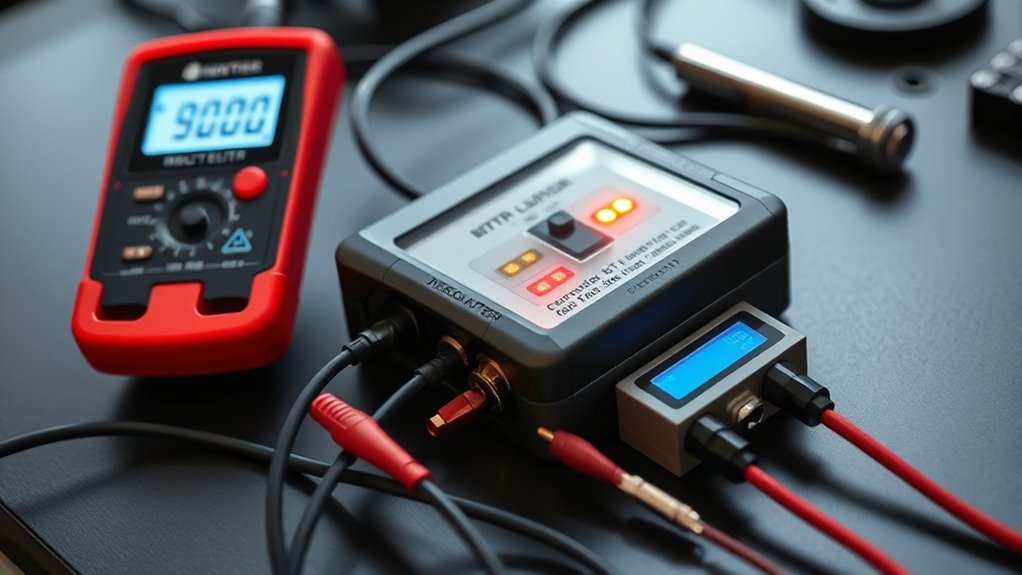
Reconditioning batteries requires the right tools to guarantee safety and effectiveness. When you’re working with batteries, understanding their chemistry is essential because it influences how you handle, test, and restore them. Different battery chemistries, such as lead-acid, lithium-ion, or nickel-cadmium, have unique characteristics and risks. Knowing the specific chemistry helps you select appropriate tools and follow proper procedures, minimizing hazards. Additionally, recycling safety is a top priority. Proper tools can prevent accidents, prevent toxic leaks, and ensure that the process aligns with environmental regulations. Using the right equipment not only protects you but also safeguards the environment from harmful emissions and waste.
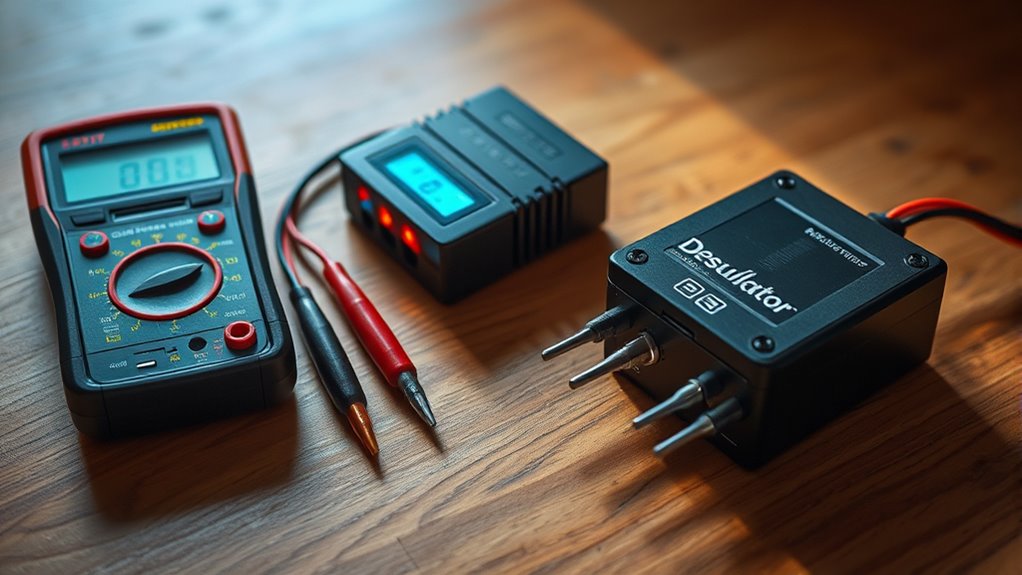
A high-quality multimeter is an indispensable tool in your battery reconditioning kit. It allows you to measure voltage, current, and resistance accurately, giving you a clear picture of the battery’s health. With a multimeter, you can identify whether a battery is holding charge or if it’s degraded beyond recovery. This prevents you from wasting time on batteries that aren’t worth reconditioning and helps you diagnose issues like internal shorts or poor connections. When working with different battery chemistries, a multimeter helps you understand the specific voltage levels expected, ensuring you handle each type safely and appropriately. Monitoring voltage levels closely, especially in sensitive chemistries, can prevent safety incidents.
A reliable charger is equally essential. It’s not just about giving batteries a boost; it’s about doing so safely and effectively. An adjustable charger allows you to control the charging rate, which is especially important for sensitive chemistries like lithium-ion. Overcharging or charging too quickly can damage the battery or cause safety hazards, such as overheating or fires. A good charger also helps you monitor the charging process, preventing overvoltage situations that could lead to leaks or explosions. Always choose a charger compatible with your battery’s chemistry and capacity to ensure safe and efficient reconditioning.
A desulfator is a specialized tool used primarily for lead-acid batteries. It emits high-frequency pulses designed to break down lead sulfate crystals that form on the plates over time. This process can restore some capacity and extend the battery’s life. Using a desulfator properly can save you money and reduce waste, aligning with recycling safety principles. It’s essential to understand the chemistry involved because applying a desulfator to incompatible chemistries, like lithium or nickel-based batteries, can be dangerous. Proper knowledge and equipment ensure you recondition safely and sustainably, minimizing environmental impact and promoting responsible recycling practices. Being aware of battery chemistry is crucial for safe and effective reconditioning.
Frequently Asked Questions
Can I Recondition Any Type of Battery With These Tools?
You can’t recondition every type of battery with these tools because battery chemistry affects the process and safety. For example, lead-acid batteries respond well to desulfation, but lithium-ion batteries require different handling, making tool compatibility essential. Always check the battery’s specifications and chemistry before attempting reconditioning. Using incompatible tools or methods can be dangerous or ineffective, so make certain you’re suited to the specific battery type you want to recondition.
How Often Should I Test My Batteries During Reconditioning?
You should test your batteries during reconditioning at regular intervals, ideally every few hours or after each significant step. This testing frequency helps you monitor progress and prevents overcharging or damage. For ideal intervals, check the voltage and health every 2-3 hours, especially during the initial stages. Consistent testing ensures you’re on track, allowing you to adjust the process as needed for the best reconditioning results.
Are There Safety Precautions When Using a Desulfator?
A stitch in time saves nine, so always prioritize battery safety. When using a desulfator, follow desulfator precautions carefully to avoid accidents. Wear protective gloves and eye gear, guarantee proper ventilation, and keep a fire extinguisher nearby. Avoid touching terminals during operation, and never leave the device unattended. These precautions help prevent electrical shocks, sparks, or damage, ensuring you safely recondition your batteries without risking harm.
What Is the Average Cost of These Reconditioning Tools?
The average cost of battery reconditioning tools varies, with a basic multimeter costing around $20-$50, a charger between $50-$150, and a desulfator from $100-$300. For a solid cost analysis, consider tool durability; investing in higher-quality tools might be pricier upfront but saves money long-term by lasting longer and performing reliably. Balancing cost with durability guarantees you get the best value for your reconditioning needs.
How Long Does the Reconditioning Process Typically Take?
Ever wonder how long the battery reconditioning process takes? Typically, it spans across several stages, from diagnosing to restoring, often lasting 4 to 12 hours depending on battery condition. This process can breathe new life into your battery, extending its lifespan substantially. Patience is key—each reconditioning stage plays a crucial role in rejuvenating your battery and ensuring it performs like new.
Conclusion
With the right tools—multimeter, charger, and desulfator—you hold the keys to breathing new life into old batteries. Think of these tools as your trusted toolkit, turning a challenging task into a manageable craft. When used correctly, they can reveal hidden potential, much like a key opening a treasure chest. With patience and precision, you’ll find that reconditioning batteries isn’t just a skill, but a rewarding journey into sustainable energy.