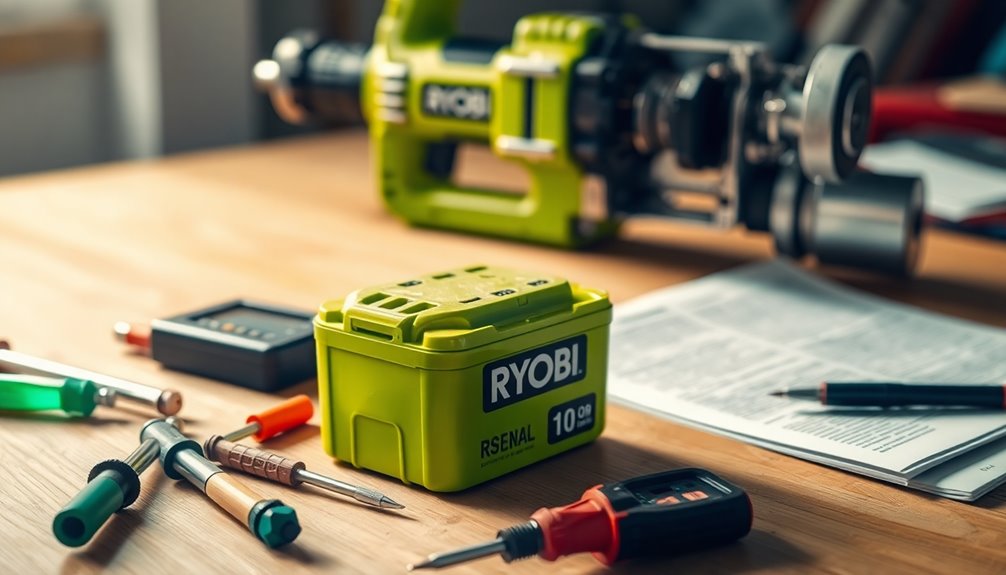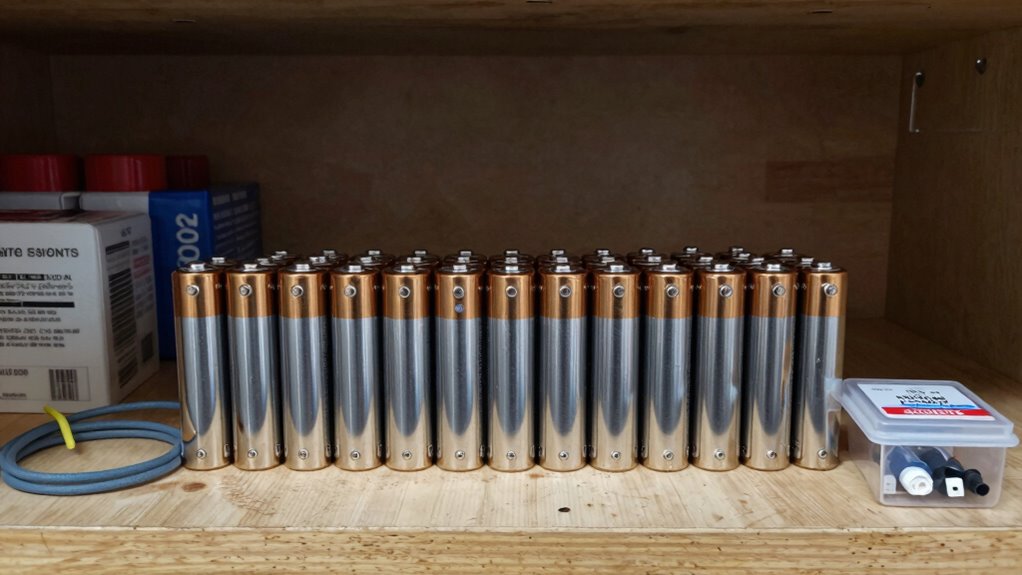
To store backup batteries for storm season, keep them in a cool, dry place between 50°F and 77°F, away from direct sunlight and humidity. Make certain they are charged to 50-70% and check their levels regularly with a battery monitor. Store each battery separately on non-conductive surfaces to prevent shorts, and inspect them periodically for leaks or corrosion. Proper storage and maintenance can extend their lifespan, and you’ll find more helpful tips ahead.

Get backup power and energy gear delivered free — and shop member deals
- Fast, free delivery on millions of items
- Access to Prime Big Deal Days deals on October 6–7
- Prime Video, Amazon Music and more included
Key Takeaways
- Store batteries in a cool, dry, well-ventilated area between 50°F and 77°F, away from direct sunlight and humidity.
- Keep batteries at a 50-70% charge to prevent damage from over-discharge or overcharging.
- Use non-conductive containers and separate batteries to avoid contact, short circuits, and physical damage.
- Regularly inspect batteries for corrosion, leaks, or damage, and clean terminals gently if needed.
- Track maintenance and performance to ensure readiness and plan for replacements before storm season.
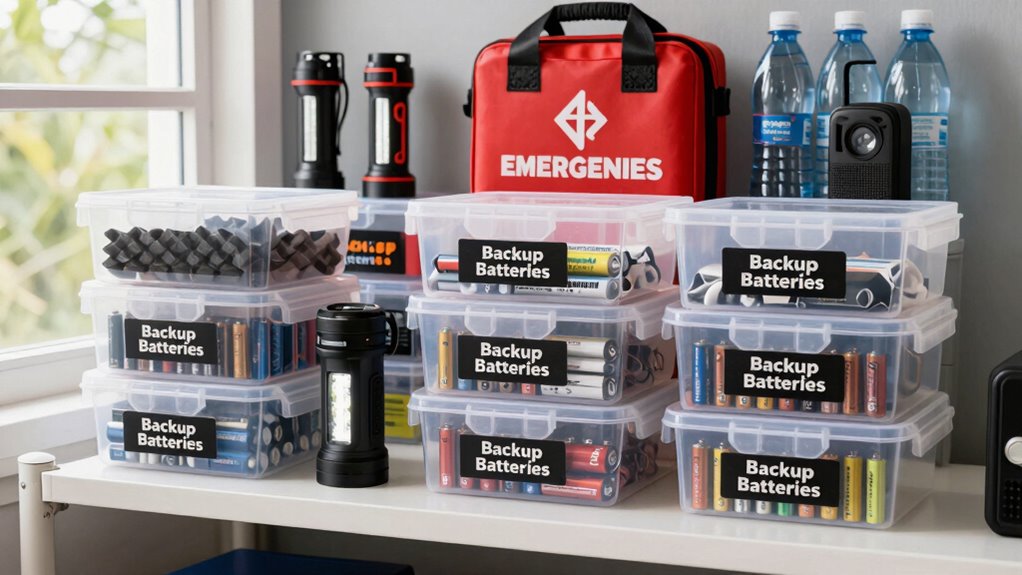
As storm season approaches, guaranteeing your backup batteries are properly stored can make all the difference when power outages occur. Proper storage not only helps maintain your batteries’ efficiency but also extends their overall lifespan. One of the first things to contemplate is the compatibility of your batteries with solar systems. If you plan to use solar panels to recharge your backup batteries, verify that they are designed for solar compatibility. This ensures your batteries can efficiently harness solar energy during the day, reducing reliance on grid power and increasing your preparedness during outages.
Temperature control is critical when storing backup batteries. Extreme heat accelerates chemical reactions inside the batteries, leading to faster degradation and reduced battery lifespan. Conversely, very cold temperatures can diminish performance temporarily. Aim to store your batteries in a cool, dry place, ideally between 50°F and 77°F (10°C and 25°C). Avoid places with direct sunlight, high humidity, or fluctuating temperatures, as these conditions can harm the internal components and decrease battery effectiveness over time. Additionally, understanding the importance of proper storage conditions can help you optimize your battery maintenance practices. Ensuring proper ventilation can also prevent heat buildup, further protecting your batteries from damage.
It’s crucial to keep your batteries at a proper state of charge before storage. Most manufacturers recommend storing batteries around 50% to 70% charged to prevent over-discharge, which can damage the cells, and overcharging, which can cause overheating. Regularly check the charge level during the off-season and top them up as needed. This practice not only preserves the battery’s health but also ensures they’re ready for immediate use when a storm hits. Maintaining the correct charge level is essential for preventing capacity loss over time. Additionally, utilizing a battery monitor can help you track the charge status more accurately. Being aware of battery lifespan can also help you plan for replacements and upgrades, ensuring your backup power remains reliable.
Proper casing and insulation are also essential. Store batteries in a non-conductive container or on a surface that prevents accidental short circuits. If you’re storing multiple batteries, keep them separated to avoid any risk of contact or internal damage. Additionally, check for any signs of corrosion or leaks periodically. Clean terminals gently with a soft cloth and apply protective terminal grease if recommended by the manufacturer.
Lastly, keep a record of your batteries’ maintenance schedule and monitor their performance over time. This not only helps you catch potential issues early but also maximizes the longevity of your backup power source. Regularly inspecting your batteries and understanding the importance of solar compatibility can significantly enhance their performance and reliability. By following these steps—focusing on solar compatibility, temperature control, proper charging, and regular maintenance—you guarantee your backup batteries remain reliable and ready to provide power when you need it most during storm season.
backup battery storage container
As an affiliate, we earn on qualifying purchases.
As an affiliate, we earn on qualifying purchases.
Frequently Asked Questions
Can Backup Batteries Be Stored Outdoors Safely?
You shouldn’t store backup batteries outdoors because outdoor humidity can cause battery corrosion and damage the internal components. High moisture levels increase the risk of leaks, corrosion, and reduced battery lifespan. Instead, keep batteries in a cool, dry, indoor location away from direct sunlight. Make sure they’re stored in a sealed container or original packaging to protect against humidity and physical damage, helping your backup batteries stay safe and functional when you need them most.
How Long Can Backup Batteries Be Stored Without Charging?
You can store backup batteries for several months without charging, but their lifespan may decrease if left uncharged for too long. To maximize their storage life, follow proper storage tips like keeping them in a cool, dry place and checking voltage periodically. Generally, it’s best to recharge backup batteries every 3-6 months to maintain peak performance and extend their overall battery lifespan during storage.
What Temperature Is Ideal for Storing Backup Batteries?
Think of your backup batteries as delicate plants needing just the right climate. The ideal storage temperature is between 60°F and 80°F, where battery insulation and temperature regulation work hand-in-hand to prevent degradation. Keep them in a cool, dry place away from direct sunlight and temperature fluctuations. Proper storage guarantees your batteries stay healthy and ready to power your storm season needs when the weather turns wild.
Do Backup Batteries Need to Be Periodically Tested During Storage?
Yes, you should periodically test your backup batteries during storage to guarantee their battery capacity remains reliable. Regular testing helps identify any decline in performance, so you can replace batteries before storm season. It also promotes storage safety by preventing potential leaks or failures. Check the manufacturer’s guidelines for recommended testing intervals, typically every few months, and always handle batteries with care to avoid damage or hazards.
How Do I Dispose of Old or Damaged Backup Batteries?
You should dispose of old or damaged backup batteries through proper battery recycling programs to guarantee safe handling. Contact your local recycling center or hazardous waste facility for guidance on drop-off locations. Never throw batteries in regular trash, as they can leak harmful chemicals. Proper disposal helps protect the environment and prevents potential safety hazards. Always follow local regulations to ensure responsible and safe battery recycling.
Conclusion
Storing your backup batteries properly guarantees you’re never left in the dark when storms hit. Keep them in a cool, dry place, and check their charge regularly—think of it as giving your safety net a much-needed power-up. With these simple steps, you’ll be as prepared as a fortress before a hurricane. Remember, neglecting this could turn a minor inconvenience into a disaster—so stay vigilant and keep your batteries ready to light the way when it matters most.
Fall Picks
fall essentials
As an affiliate, we earn on qualifying purchases.