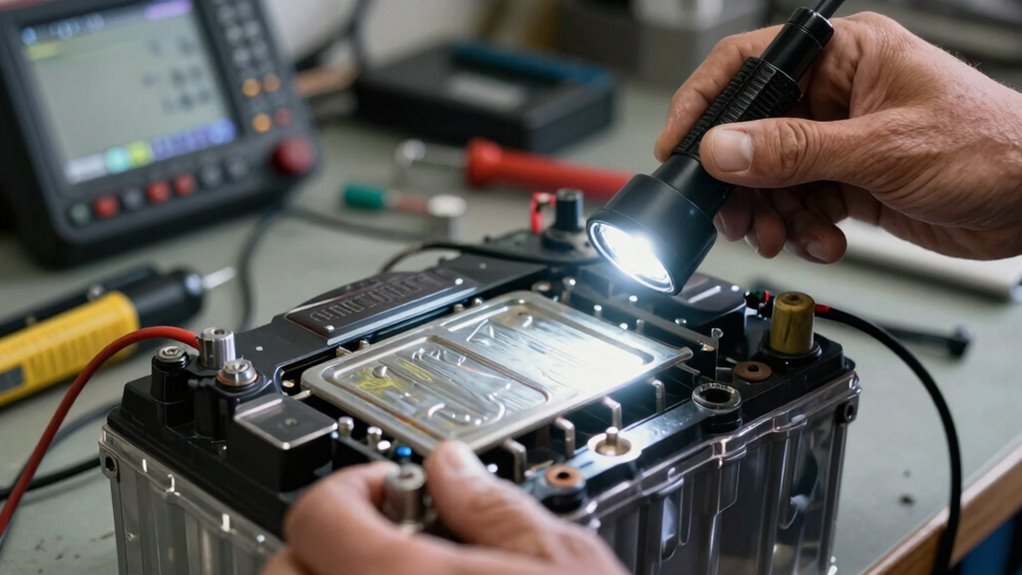

Knowing the pattern behind battery problems makes troubleshooting much easier because you can recognize common signs of aging or damage. When you understand how chemical changes, cycle counts, and performance drops relate, you can quickly identify the root cause of issues. This insight allows you to predict failures and take preventive actions. The more you see these patterns, the better you’ll get at fixing problems early. Keep exploring, and you’ll discover even more ways to manage your battery’s health effectively.

Get backup power and energy gear delivered free with Prime
- Fast, free delivery on millions of items
- Prime Video, Amazon Music and more included
- Member-only deals all year
Key Takeaways
- Recognizing patterns helps identify specific causes of battery issues more quickly.
- Understanding chemical and cycle-related trends allows for targeted troubleshooting.
- Pattern knowledge enables early detection of problems before complete failure occurs.
- It simplifies diagnosis by correlating symptoms with known degradation behaviors.
- Informed maintenance decisions are possible, extending battery lifespan and preventing unnecessary repairs.

Battery problems often follow a recognizable pattern that can help you diagnose and address issues more effectively. When you understand how batteries age and what causes their performance to decline, troubleshooting becomes much simpler. Most problems stem from changes in battery chemistry over time or from the way charging cycles impact the battery’s health. Recognizing these patterns allows you to predict failures before they happen and take proactive steps to prolong your battery’s lifespan.
At the core of many battery issues is the chemistry inside the cell. As you use your device, the chemical reactions that generate power gradually alter the internal structure of the battery. Over multiple charging cycles, the electrolyte and electrodes degrade, leading to reduced capacity and increased internal resistance. This deterioration isn’t random; it follows a pattern that, once understood, makes it easier to determine whether a battery simply needs to be replaced or if there’s an issue with how it’s being charged. For example, if you notice your battery draining quickly or not holding a full charge, it’s often due to the buildup of solid electrolyte interface layers or other chemical changes that happen naturally over time. Understanding battery aging processes can help you better anticipate these changes and plan for replacements or maintenance.
Battery chemistry deterioration causes capacity loss and increased resistance, leading to quicker drain and reduced performance over time.
Charging cycles also play a crucial role in how batteries age. Each cycle—going from a full charge to a full discharge—gradually wears down the battery’s ability to hold power. You might observe that after a certain number of cycles, the battery’s capacity diminishes noticeably. The key is to recognize that the rate of capacity loss increases as the number of cycles accumulates. If you track how many cycles your battery has gone through, you can better estimate its remaining lifespan and avoid pushing it to its absolute limits. This understanding allows you to optimize your charging habits—such as avoiding deep discharges and not overcharging—thus slowing down the decline caused by chemical fatigue. Proper battery maintenance can significantly extend the useful life of your device’s power source.
Once you see these patterns at work, solving battery problems becomes less daunting. Instead of guessing, you’re diagnosing based on the predictable effects of battery chemistry and charging cycles. You’ll know that a sudden drop in capacity after a certain number of cycles indicates aging, or that rapid loss of charge suggests a need for recalibrating charging habits. This knowledge gives you an advantage: you can maintain your battery’s health more effectively, and when it’s time for a replacement, you’ll understand exactly why. Recognizing the pattern transforms battery troubleshooting from a guessing game into a straightforward, manageable process. Additionally, understanding battery chemistry helps you better grasp why certain issues occur and how to prevent them through proper usage.
As an affiliate, we earn on qualifying purchases.
Frequently Asked Questions
How Do Temperature Changes Affect Battery Performance?
Temperature fluctuations substantially impact your battery’s performance through thermal effects. When it’s hot, your battery may overheat, reducing lifespan and causing rapid capacity loss. Conversely, cold temperatures slow chemical reactions, decreasing efficiency and runtime. By understanding these thermal effects, you can better manage your device in varying temperatures, preventing damage. Keeping your battery within ideal temperature ranges helps maintain performance, extends lifespan, and minimizes issues caused by temperature fluctuations.
Can Software Updates Improve Battery Longevity?
Yes, software updates can improve battery longevity. They often include enhancements to power management, optimizing how your device uses energy during each battery cycle. These updates may fix bugs that drain power unnecessarily or improve charging algorithms, helping your battery last longer over time. By keeping your software current, you guarantee your device manages power efficiently, reducing wear on the battery and extending its overall lifespan.
What Are Signs of a Failing Battery?
Like the fading glow of a once bright star, signs of a failing battery include rapid battery drain, longer charging times, and sudden shutdowns. You might notice decreased battery lifespan despite regular charging habits. If your device’s battery percentage drops quickly or it refuses to hold a charge, it’s time to contemplate a replacement. Recognizing these signs early helps you avoid unexpected shutdowns and prolongs your device’s overall performance.
How Often Should I Calibrate My Battery?
You should calibrate your battery about once every three months to keep it accurate. During calibration, fully drain your battery through a complete battery cycle, then recharge it to 100%. Use calibration tools or built-in device features to monitor this process. Regular calibration helps maintain battery health and provides precise readings, preventing unexpected shutdowns and extending your battery’s lifespan.
Do Different Devices Require Different Battery Care?
Think of your devices as different characters in a story—they each have unique needs. Yes, they require tailored battery care to optimize battery lifespan and improve charging habits. Some devices might need frequent full cycles, while others prefer partial charges. By understanding these differences, you can extend your device’s battery life and avoid common problems. Recognizing each device’s specific needs makes solving battery issues much easier—like reading a story with the right key.
Conclusion
Once you recognize the pattern behind battery problems, it’s like having a map in a maze—you can navigate issues more confidently. Instead of feeling lost and frustrated, you’ll see the clues that lead to solutions. Every pattern you uncover is a stepping stone, guiding you smoothly through troubleshooting. With this knowledge, solving battery problems becomes less of a guessing game and more of a clear path forward, like following a trail that always leads to the light.
Halloween Picks
halloween
As an affiliate, we earn on qualifying purchases.