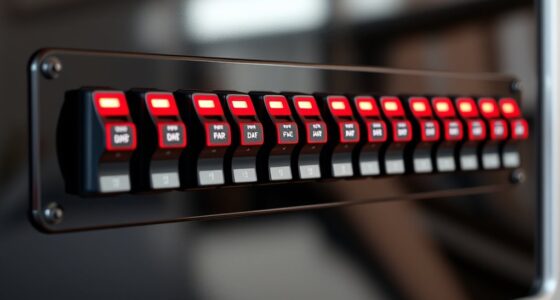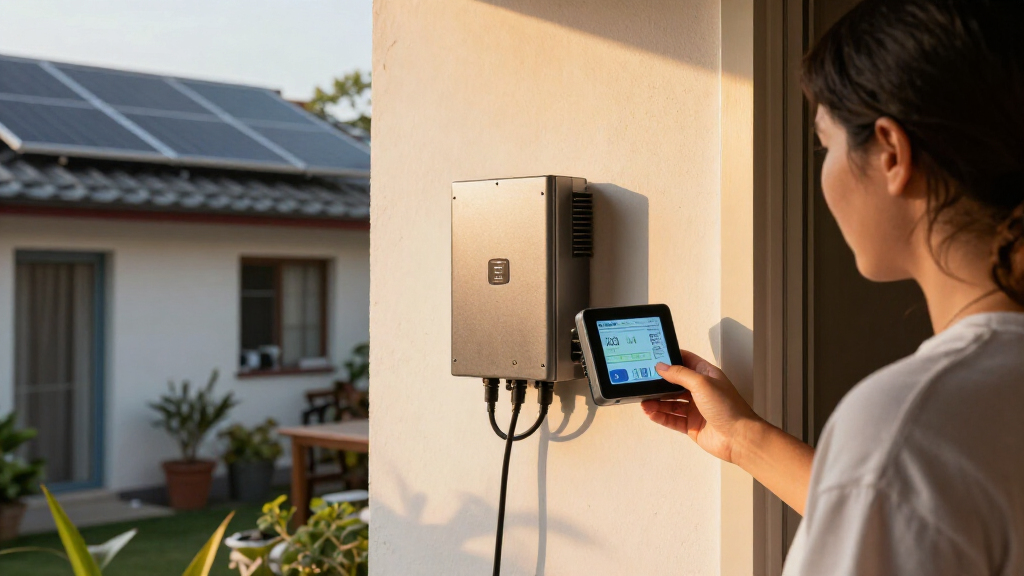
The best clean energy tracking devices make it easier to spot where household electricity goes, but the right pick depends on whether you want whole-home data or readings from individual appliances. I rank the Emporia Vue 3 best overall for its 16 branch sensors, while the Meross 18-Circuit Monitor stands out for broader circuit coverage and the Tapo P110M four-pack for simple plug-level tracking. Panel monitors can reveal patterns across circuits, but they take more setup and may require electrical expertise; smart plugs are easier to use but only measure connected devices. Read on for the full comparison, ranking logic, and advice on matching a monitor to your home.

Get backup power and energy gear delivered free with Prime
- Fast, free delivery on millions of items
- Prime Video, Amazon Music and more included
- Member-only deals all year
Key Takeaways
- Whole-panel coverage and appliance-level tracking solve different problems: Emporia, Meross, Refoss, and SEM-Meter monitor branch circuits, while the Tapo, Eve, and Govee plugs measure only the devices connected to them.
- The Emporia Vue 3 leads this lineup for circuit-level visibility because its 16 branch sensors offer a practical balance of household coverage and detailed monitoring.
- Meross offers the widest stated circuit count here at 18, while Refoss and SEM-Meter provide 16-sensor alternatives; confirm panel compatibility and sensor placement before choosing by count alone.
- Matter support is concentrated in a small-device subset: Shelly EM Mini Gen4, Tapo P110M, and Eve Energy are the picks to examine if smart-home interoperability matters alongside energy readings.
- Electrical access is the main dividing line: clamp-based panel monitors can show broader usage, but plug-in monitors are simpler to add and better suited to renters or single-appliance questions.
| EdgeAnt EPMC321-80A Smart WiFi Energy Monitor with Three 80A Clamp Sensors |  | Best for Multi-System Monitoring | Sensors: Three 80A current transformer clamp sensors | Measurements: Power, voltage, current, and power factor | Measurement accuracy: ±2% | VIEW LATEST PRICE | See Our Full Breakdown |
| Meross Smart Home Energy Monitor with 18-Circuit Monitoring |  | Best for Broad Circuit Coverage | Circuit monitoring: Two 200A main circuits and up to 16 60A branch circuits | Accuracy: ±2% | Supported systems: Single-phase 2-wire, split-phase 3-wire, and 3-phase 4-wire Wye with earthed neutral; no Delta | VIEW LATEST PRICE | See Our Full Breakdown |
| Refoss Smart Home Energy Monitor with 16 Circuit Sensors |  | Best for Local Data and Precision | Main sensors: Two sensors, up to 200A | Branch sensors: 16 sensors, up to 60A | Measurement accuracy: ±1% | VIEW LATEST PRICE | See Our Full Breakdown |
| Shelly EM Mini Gen4 Smart Energy Meter, Wi-Fi, Zigbee, Matter, 1-Channel, 16 A |  | Best Compact Appliance Monitor | Channels: One | Maximum current: 16A | Wattage: 3840W | VIEW LATEST PRICE | See Our Full Breakdown |
| Tapo P110M Matter Smart Plugs with Energy Monitoring, 4-Pack, 15A |  | Best for Room-by-Room Plug-In Tracking | Pack size: Four smart plugs | Model: P110M | Maximum current: 15A | VIEW LATEST PRICE | See Our Full Breakdown |
| Eve Energy Matter Smart Plug and Power Meter, 2-Pack |  | Best for Privacy-Focused Smart Homes | Pack size: 2 plugs | Voltage: 120 V | Connectivity: Matter, Thread | VIEW LATEST PRICE | See Our Full Breakdown |
| Shelly EM Gen3 Wi-Fi Smart Energy Meter with 50A Clamp |  | Best for Compact Single-Phase Monitoring | System: Single-phase, 2-channel | Included clamp: 50 A | Local data logging: Up to 10 days at one-minute intervals | VIEW LATEST PRICE | See Our Full Breakdown |
| Tapo P115 Smart Wi-Fi Plug with Energy Monitoring, 2-Pack, 15A |  | Best for Easy Outlet-Level Tracking | Quantity: 2 plugs | Maximum wattage: 1800 W | Operating voltage: 125 V | VIEW LATEST PRICE | See Our Full Breakdown |
| Aeotec Home Energy Meter 8 Smart Electricity Monitor with 2 × 200 A Clamp Sensors |  | Best for Solar and Split-Phase Tracking | Measurement accuracy: ±0.5% | Measuring range: 80–150 V, 0–200 A | Included sensors: 2 × 200 A clamps | VIEW LATEST PRICE | See Our Full Breakdown |
| SEM-Meter Smart Home Energy Monitor with 16 Circuit Sensors |  | Best for Whole-Panel Circuit Detail | Circuit sensors: 16 × 50 A | Supported electrical systems: Single-phase up to 240 VAC line-neutral; split-phase 120/240 VAC; three-phase up to 415Y/240 VAC (no Delta) | Connectivity: 2.4 GHz Wi-Fi; local MQTT mode requires Home Assistant | VIEW LATEST PRICE | See Our Full Breakdown |
| Emporia Vue 3 Home Energy Monitor with 16 Branch Sensors |  | Best for Solar and Whole-Panel Tracking | Installation: Circuit panel with clamp-on sensors | Included sensors: Sixteen 50A branch sensors | Supported systems: Single phase, single-split phase, and 2-wire systems | VIEW LATEST PRICE | See Our Full Breakdown |
| Govee Smart Plug with Energy Monitoring, Wi-Fi and Bluetooth, 2-Pack |  | Best for Tracking Individual Appliances | Model: H5086 | Pack size: 2 plugs | Connectivity: Wi-Fi and Bluetooth | VIEW LATEST PRICE | See Our Full Breakdown |
| clean energy tracking device | Connectivity | Warranty |
|---|---|---|
| EdgeAnt EPMC321-80A Smart WiFi | 2.4 GHz Wi-Fi with internet access | — |
| Meross Smart Home Energy Monit | — | Two years |
| Refoss Smart Home Energy Monit | — | Two years |
| Shelly EM Mini Gen4 Smart Ener | Wi-Fi, Bluetooth, Zigbee, and Matter | — |
| Tapo P110M Matter Smart Plugs | Matter and Wi-Fi | — |
| Eve Energy Matter Smart Plug a | Matter, Thread | 2 years |
| Shelly EM Gen3 Wi-Fi Smart Ene | — | 3 years |
| Tapo P115 Smart Wi-Fi Plug wit | 2.4 GHz Wi-Fi | — |
| Aeotec Home Energy Meter 8 Sma | Z-Wave Long Range | — |
| SEM-Meter Smart Home Energy Mo | 2.4 GHz Wi-Fi; local MQTT mode requires Home Assistant | 1 year |
| Emporia Vue 3 Home Energy Moni | 2.4 GHz Wi-Fi and internet connection required | 1 year |
| Govee Smart Plug with Energy M | Wi-Fi and Bluetooth | — |
More Details on Our Top Picks
EdgeAnt EPMC321-80A Smart WiFi Energy Monitor with Three 80A Clamp Sensors
The EdgeAnt stands out for buyers who need to track several circuits and want measurements beyond basic energy totals. Its three 80A clamp sensors capture power, voltage, current, and power factor, while bidirectional measurement can help show energy flowing both to and from the home. Compared with the Meross EM16, it offers fewer circuit sensors but lists support for several wiring types, including three-phase 4-wire Wye. That flexibility has limits: Delta systems are excluded, and some supported configurations need an optional sensor. SmartLife and Tuya integration suit households already using those platforms, but monitoring depends on 2.4 GHz Wi-Fi and internet access. I’d choose it for adaptable circuit monitoring, not for a simple plug-in setup; installation should be handled by a qualified person with power switched off.
Pros:- Includes three 80A clamp sensors for tracking multiple circuits or appliances.
- Measures power, voltage, current, and power factor, with bidirectional measurement.
- Supports several electrical system types, including three-phase 4-wire Wye.
- Works with the SmartLife app and Tuya devices.
Cons:- Requires 2.4 GHz Wi-Fi and internet access for app monitoring.
- Does not support Delta systems, and some configurations require an additional sensor.
- Breaker-panel installation and servicing require a qualified person.
Best for: Homeowners with a compatible electrical system who want multi-circuit readings, bidirectional measurement, and SmartLife or Tuya integration.
Not ideal for: People with a Delta system, buyers seeking a plug-in monitor, or anyone unable to arrange qualified breaker-panel installation.
- Sensors:Three 80A current transformer clamp sensors
- Measurements:Power, voltage, current, and power factor
- Measurement accuracy:±2%
- Connectivity:2.4 GHz Wi-Fi with internet access
- App:SmartLife
- Supported systems:Single-phase, single-split phase, 2-wire, 3-wire, and 3-phase 4-wire Wye; excludes Delta
- Dimensions:2.3 × 3.5 × 4.69 inches
- Weight:1.3 pounds
Our verdict“Choose the EdgeAnt if you want flexible, multi-circuit measurements on a supported system and can arrange professional installation.”
Meross Smart Home Energy Monitor with 18-Circuit Monitoring
The Meross EM16 is the clearest fit in this group for buyers who want a broad view of household circuits from one panel-mounted monitor. It covers two main circuits and up to 16 branch circuits, giving it wider stated circuit coverage than the EdgeAnt’s three included clamps and the Shelly EM Mini Gen4’s single-channel appliance monitoring. Home Assistant support, an open API, and web control make it more appealing to smart-home tinkerers than an app-only meter. Its local storage and up to five years of history also help buyers review patterns over time, while solar-surplus detection can inform when to run flexible loads. The tradeoff is system compatibility: it does not support Delta and requires an earthed neutral for listed configurations. Panel installation also makes this less suitable than Tapo’s plug-in approach for renters or appliance-only tracking.
Pros:- Monitors two main circuits and up to 16 branch circuits.
- Supports Home Assistant, an open API, and web control.
- Stores data locally and provides up to five years of history.
- Includes solar-surplus detection, usage alerts, and energy reports.
Cons:- Does not support Delta electrical systems.
- Supported system configurations require an earthed neutral.
- Panel-based clamp installation is less convenient than using smart plugs.
Best for: Homeowners with a compatible panel who want to monitor many main and branch circuits and connect energy data to Home Assistant.
Not ideal for: Renters, buyers who only need to monitor one appliance, or households with Delta wiring or no earthed neutral.
- Circuit monitoring:Two 200A main circuits and up to 16 60A branch circuits
- Accuracy:±2%
- Supported systems:Single-phase 2-wire, split-phase 3-wire, and 3-phase 4-wire Wye with earthed neutral; no Delta
- Integrations:Home Assistant
- Data storage:Up to five years
- Connectivity features:Open API and web control
- Certification:ETL-certified; compliant with UL 61010 testing standard
- Warranty:Two years
Our verdict“Pick the Meross EM16 for extensive whole-home circuit coverage and smart-home data access, provided your wiring is supported.”
Refoss Smart Home Energy Monitor with 16 Circuit Sensors
Refoss is the strongest match here for buyers who value local control and data portability alongside whole-home circuit monitoring. It tracks two main sensors and 16 branch sensors, like the Meross EM16, but lists ±1% measurement accuracy rather than Meross’s ±2%. Its local Web UI and support for Home Assistant through Refoss_RPC, Open API, MQTT, and WebSocket give technically minded households several ways to access readings without relying on cloud controls. Five years of daily data and CSV export make it easier to keep and analyze records than a plug-focused option such as the Tapo P110M. The tradeoff is that it still requires breaker-panel sensor installation, and branch sensors are limited to 60A. Buyers wanting a simple way to track one appliance should choose a smart plug instead.
Pros:- Tracks two main sensors up to 200A and 16 branch sensors up to 60A.
- Lists ±1% measurement accuracy.
- Offers local Web UI and integrations including Home Assistant, MQTT, and WebSocket.
- Keeps daily data for five years and supports CSV export.
Cons:- Installation requires placing sensors in the breaker panel.
- Branch sensors support circuits only up to 60A.
- Whole-home monitoring may be unnecessary for buyers tracking just one appliance.
Best for: Technically confident homeowners who want detailed circuit monitoring, local integrations, and exportable energy records.
Not ideal for: Renters, buyers who prefer a plug-in setup, or households needing branch monitoring above 60A.
- Main sensors:Two sensors, up to 200A
- Branch sensors:16 sensors, up to 60A
- Measurement accuracy:±1%
- Supported systems:Single-phase, split-phase, and 3-phase 4-wire Wye
- Local integrations:Home Assistant via Refoss_RPC, Open API, MQTT, WebSocket
- Data retention:Daily data stored for five years
- Data export:CSV
- Warranty:Two years
Our verdict“Choose Refoss if local access, higher stated accuracy, and exportable circuit history matter more than plug-in simplicity.”
Shelly EM Mini Gen4 Smart Energy Meter, Wi-Fi, Zigbee, Matter, 1-Channel, 16 A
The Shelly EM Mini Gen4 takes a narrower approach than the panel monitors: it tracks one appliance or circuit, rather than mapping a home’s main and branch circuits. That makes it a compact choice for a targeted question, such as whether a particular device is using power when it should be idle. Its mix of Wi-Fi, Zigbee, Matter, and Bluetooth gives it more connection options than the Wi-Fi-only Tapo P110M, and no hub is required. Unlike the Tapo plug, though, this is a meter rather than a plug-in outlet, so fit and installation depend on the intended setup. It also has no relay: the monitor can report consumption, but it cannot switch the connected load itself. The 16A limit rules it out for loads beyond its rating.
Pros:- Supports Wi-Fi, Bluetooth, Zigbee, and Matter.
- Compact design suits installations with limited space.
- Monitors energy use to help identify unusual consumption.
- Works without a hub.
Cons:- One channel is limited to tracking a single appliance or circuit at a time.
- No built-in relay for switching the connected load.
- Maximum current rating is 16A.
Best for: Smart-home owners who want a compact, single-channel energy meter for a specific appliance and value Matter or Zigbee connectivity.
Not ideal for: Buyers who need whole-home or multi-circuit tracking, want an integrated switch, or need to monitor loads above 16A.
- Channels:One
- Maximum current:16A
- Wattage:3840W
- Connectivity:Wi-Fi, Bluetooth, Zigbee, and Matter
- Relay:None
- Mounting type:Wall mount
- Memory:8 MB
- Compliance:CE and RoHS
Our verdict“Choose the Shelly for compact, connected monitoring of one suitable load; choose the Meross or Refoss for whole-home circuit coverage.”
Tapo P110M Matter Smart Plugs with Energy Monitoring, 4-Pack, 15A
The Tapo P110M four-pack is the easiest route in this group to tracking several individual appliances without opening a breaker panel. Each plug reports consumption and estimated electricity costs, while Matter support lets buyers connect through supported platforms including Apple Home, Alexa, Google Home, and SmartThings. Compared with the Shelly EM Mini Gen4, these are plug-in outlets with control, not a compact meter without a relay; schedules, voice commands, and remote control can make it easier to shift when devices run. The tradeoff is scope: four plugs monitor selected devices, not every circuit in the home like the Meross EM16 or Refoss monitor. They also use 2.4 GHz Wi-Fi, and cost estimates depend on entering or applying the right electricity tariff. Each plug is rated for 15A.
Pros:- Four plugs allow energy tracking across several individual appliances.
- Matter compatibility supports Alexa, Apple Home, Google Home, and SmartThings.
- Provides app, voice, scheduling, and remote control options.
- Compact design helps leave neighboring outlets accessible.
Cons:- Tracks connected plug-in devices rather than whole-home or breaker-panel circuits.
- Wi-Fi operation is limited to 2.4 GHz.
- Electricity cost estimates depend on usage data and the applicable tariff.
Best for: Households that want to monitor and schedule several plug-in appliances across Matter-compatible smart-home platforms.
Not ideal for: Buyers seeking whole-home or breaker-circuit monitoring, or households that need to track devices not connected through standard outlets.
- Pack size:Four smart plugs
- Model:P110M
- Maximum current:15A
- Wattage:1800W
- Connectivity:Matter and Wi-Fi
- Wi-Fi band:2.4 GHz
- Control methods:App, voice, and scheduling
- Compatible platforms:Amazon Alexa, Apple Home, Google Home, and Samsung SmartThings
Our verdict“Choose the Tapo four-pack for straightforward monitoring and scheduling of several plug-in appliances, not for a complete household energy map.”
Eve Energy Matter Smart Plug and Power Meter, 2-Pack
Local operation and Matter compatibility make this two-pack a strong fit for buyers who want to track the energy use of individual plug-in appliances without relying on a vendor cloud account. It measures at the outlet, so it is easier to install than panel monitors such as the SEM-Meter, but it cannot show whole-home or circuit-level usage. Matter and Thread support give it broad platform options, provided you already have a compatible hub. Compared with the Tapo P115, Eve’s standout advantage is communication without Eve cloud registration or tracking; Tapo instead offers cost estimates and charging controls. The tradeoff is that Eve’s hub requirement adds setup dependencies, and its platform and operating-system requirements may rule out some households.
Pros:- Tracks power use at individual outlets
- Works with major smart-home platforms through Matter and Thread
- Local communication does not require an Eve cloud account or tracking
- Supports app, voice, remote, and presence-based control
Cons:- Requires a compatible smart-home hub
- Requires iOS/iPadOS 16.4 or later, or Android 8.1 or later
Best for: Smart-home owners with a compatible Matter or Thread hub who want private, outlet-level energy monitoring for lights and appliances.
Not ideal for: Buyers seeking whole-home or circuit-by-circuit readings, or anyone without a compatible smart-home hub.
- Pack size:2 plugs
- Voltage:120 V
- Connectivity:Matter, Thread
- Hub requirement:Compatible smart-home platform hub required
- Dimensions:1.5 × 2.8 × 2.4 in (D × W × H)
- Certification:UL
- Warranty:2 years
Our verdict“Choose Eve for private, hub-connected outlet monitoring; pick the SEM-Meter instead if you need visibility across household circuits.”
Shelly EM Gen3 Wi-Fi Smart Energy Meter with 50A Clamp
The included 50 A clamp and one-minute local logging make the Shelly EM Gen3 a practical middle ground between smart plugs and larger panel monitors. It can follow whole-system or appliance-level consumption on a compatible single-phase setup, with up to 10 days of readings stored locally—useful if a network interruption would otherwise leave gaps. Unlike the SEM-Meter, it is not designed to cover 16 circuits, so buyers cannot use it for a broad circuit-by-circuit breakdown. It also supports Alexa, Google Home, Home Assistant, and other platforms. A contactor can enable automated appliance control, but it is not listed as included, and the single-phase design limits its fit for other electrical systems.
Pros:- Includes a 50 A clamp for monitoring without buying a sensor separately
- Records readings locally at one-minute intervals for up to 10 days
- Supports real-time energy monitoring and appliance-level tracking
- Works with Alexa, Google Home, Home Assistant, and other smart-home platforms
Cons:- Designed for single-phase systems
- Contactor for automated appliance control is not listed as included
Best for: Owners of single-phase electrical systems who want a compact clamp-based meter, short-term local data history, and smart-home platform support.
Not ideal for: Households needing multi-phase monitoring or detailed tracking across many circuits; automated shutoff also requires a separately sourced contactor.
- System:Single-phase, 2-channel
- Included clamp:50 A
- Local data logging:Up to 10 days at one-minute intervals
- Wattage:460 W
- Mounting:Wall mount
- Item weight:23 g
- Warranty:3 years
Our verdict“Choose the Shelly for compact single-phase monitoring with local logs, but choose the SEM-Meter for broader multi-circuit coverage.”
Tapo P115 Smart Wi-Fi Plug with Energy Monitoring, 2-Pack, 15A
For buyers starting with a few appliances rather than a breaker panel, the Tapo P115 two-pack offers a straightforward way to track outlet-level use and estimate electricity costs. Its app, voice control, and scheduling make it easier to spot and manage the consumption of a charger or lamp than with a clamp-based monitor such as the Shelly EM Gen3. The compact body also leaves neighboring outlets accessible, while overload shutoff and configurable charging cutoffs add practical control. Unlike the Eve Energy, Tapo supports 2.4 GHz Wi-Fi rather than Matter and Thread, so buyers should check their network and platform needs before choosing. These plugs monitor only connected devices, not whole-home consumption, and their IP00 protection makes them unsuitable for exposed or wet locations.
Pros:- Provides energy statistics and estimated electricity costs
- Supports app, voice, and remote control with programmable schedules
- Compact design leaves neighboring outlets accessible
- Includes overload shutoff and configurable charging cutoff
Cons:- Connects to 2.4 GHz Wi-Fi only
- IP00 protection rating is not suited to exposed or wet environments
Best for: New energy-monitoring users who want app-based cost estimates and scheduling for a couple of indoor plug-in devices.
Not ideal for: Buyers who need whole-home or circuit-level data, 5 GHz-only Wi-Fi, or plugs for exposed and wet locations.
- Quantity:2 plugs
- Maximum wattage:1800 W
- Operating voltage:125 V
- Connectivity:2.4 GHz Wi-Fi
- Voice assistants:Alexa, Google Assistant
- Compatible platforms:Samsung SmartThings
- Certifications:ETL, FCC, RoHS
Our verdict“Choose Tapo for accessible outlet-level monitoring and controls, not for a whole-home energy picture like the SEM-Meter provides.”
Aeotec Home Energy Meter 8 Smart Electricity Monitor with 2 × 200 A Clamp Sensors
The Aeotec Meter 8 is the clearest pick here for monitoring both electricity use and production across up to two phases or split phases, making it relevant to households with solar generation. Its two 200 A clamps and stated ±0.5% measurement accuracy suit buyers who want a more detailed electrical-system view than the outlet readings from the Tapo P115. It connects through Z-Wave Long Range and supports compatible hubs such as SmartThings and Home Assistant, with S2 and AES-128 encryption. That hub dependency makes setup less direct than using the Wi-Fi-based SEM-Meter, which also tracks up to 16 circuits. Aeotec’s stated measurement range is 80–150 V and up to 200 A, so confirm compatibility with the target installation before buying.
Pros:- Tracks both electricity consumption and production in real time
- Supports up to two phases or split phases
- Includes two 200 A clamp sensors
- Uses S2 and AES-128 encryption with compatible Z-Wave hubs
Cons:- Requires a compatible Z-Wave hub
- Stated measurement range is limited to 80–150 V and up to 200 A
Best for: Solar-equipped households with up to two phases or split-phase service and a compatible Z-Wave hub.
Not ideal for: Buyers without a compatible Z-Wave hub, or those whose electrical system falls outside the stated voltage and current measurement range.
- Measurement accuracy:±0.5%
- Measuring range:80–150 V, 0–200 A
- Included sensors:2 × 200 A clamps
- Supported phases:Up to 2 phases or split phases
- Connectivity:Z-Wave Long Range
- Maximum supply voltage:150 V AC
- Dimensions:3.48 × 2.14 × 1.5 in
Our verdict“Choose Aeotec for Z-Wave-based solar and split-phase monitoring, while the SEM-Meter is the stronger fit for detailed tracking across many circuits.”
SEM-Meter Smart Home Energy Monitor with 16 Circuit Sensors
With 16 clamp sensors, solar monitoring, and configurable time-of-use rates, the SEM-Meter gives buyers a circuit-by-circuit view that outlet monitors and single-clamp options cannot match. That can help identify which appliances or circuits drive usage and distinguish household consumption from solar production. Its support for single-phase, split-phase, and several three-phase systems adds flexibility, though it does not support Delta three-phase. The app records usage history, while local MQTT operation offers a cloud-free route for Home Assistant users. Compared with the Aeotec Home Energy Meter 8, this model covers more circuits, but Aeotec includes two 200 A clamps and uses Z-Wave Long Range. Panel access also matters: busbar-only installations need separate flexible sensors, and local mode requires Home Assistant with MQTT.
Pros:- Tracks power use and costs across up to 16 circuits
- Supports solar and net-metering monitoring
- Offers local MQTT operation without cloud access
- Includes customizable peak, off-peak, and holiday rate templates
Cons:- Does not support Delta three-phase systems
- Busbar-only panel access requires separate flexible sensors
- Local mode requires Home Assistant with MQTT
Best for: Homeowners who want detailed monitoring across many circuits, solar tracking, and customizable electricity-rate schedules.
Not ideal for: Buyers with Delta three-phase systems, busbar-only panel access without separate flexible sensors, or no interest in setting up Home Assistant for local operation.
- Circuit sensors:16 × 50 A
- Supported electrical systems:Single-phase up to 240 VAC line-neutral; split-phase 120/240 VAC; three-phase up to 415Y/240 VAC (no Delta)
- Connectivity:2.4 GHz Wi-Fi; local MQTT mode requires Home Assistant
- Accuracy:1%
- Data history:Hourly exports available for 90 days; day, month, and year exports are permanent
- Dimensions:3.1 × 1.2 × 4.18 in
- Warranty:1 year
Our verdict“Choose the SEM-Meter for broad circuit-level and solar insight, provided your panel and electrical system match its installation requirements.”
Emporia Vue 3 Home Energy Monitor with 16 Branch Sensors
The Emporia Vue 3 is the stronger fit for buyers who want to connect household electricity use with solar production and net metering. Its 16 included branch sensors show where power goes across individual circuits, while the app adds peak-demand monitoring, time-of-use settings, and excess-solar automation. Compared with the Meross Smart Home Energy Monitor, Emporia’s listed support for solar and net metering makes its clean-energy role explicit; circuit-level readings can also help identify when to run flexible loads using surplus generation.
The tradeoff is a more involved installation at the circuit panel, and some 3-wire or 3-phase systems need a separately sold sensor. It also relies on 2.4 GHz Wi-Fi and internet access. Its fastest readings are temporary: one-second data lasts three hours, while longer-term views use slower intervals. I’d rank it ahead of outlet-level plugs for whole-home insight, but not for buyers who only want to track a couple of appliances.
Pros:- Includes 16 branch sensors for tracking individual circuits and appliances.
- Monitors solar production and net metering alongside household electricity use.
- App includes real-time reporting, notifications, time-of-use settings, and energy automation.
- UL Listed and CE Listed.
Cons:- Requires installation in the circuit panel, plus 2.4 GHz Wi-Fi and an internet connection.
- Some 3-wire and 3-phase configurations need an additional 200A sensor sold separately.
- One-second data is retained for only three hours and is available only while the app is open.
Best for: Homeowners with solar or time-of-use electricity plans who want circuit-by-circuit usage and net-metering visibility.
Not ideal for: Renters, buyers who only need to measure a few plug-in devices, or households with a 3-wire or 3-phase setup that do not want to buy an additional sensor.
- Installation:Circuit panel with clamp-on sensors
- Included sensors:Sixteen 50A branch sensors
- Supported systems:Single phase, single-split phase, and 2-wire systems
- Connectivity:2.4 GHz Wi-Fi and internet connection required
- Data accuracy:±2%
- Data retention:1-second data for 3 hours; 1-minute data for 7 days; 1-hour data indefinitely
- Safety certifications:UL Listed and CE Listed
- Warranty:1 year
Our verdict“Choose the Emporia Vue 3 if you want solar-aware, circuit-level home tracking; skip it if you only need simple outlet monitoring.”
Govee Smart Plug with Energy Monitoring, Wi-Fi and Bluetooth, 2-Pack
The Govee Smart Plug 2-Pack makes clean-energy tracking approachable at the appliance level: plug in a device, then check its power, current, and voltage in the Govee Home app. Historical data can extend to one year, giving buyers a way to spot usage patterns without installing sensors in an electrical panel. Unlike the Emporia Vue 3, it won’t show whole-home circuits, solar production, or net metering; its advantage is that it can measure and remotely control two specific plug-in loads.
Schedules, group control, and Alexa and Google Assistant support make it useful for automating devices that can safely be switched off at the outlet. The limits are equally clear: it tracks only connected appliances, requires 2.4 GHz Wi-Fi, and does not support 5 GHz networks. I’d pick it over panel monitors for renters or anyone testing the consumption of a few devices, but buyers seeking a household clean-energy overview should choose a circuit-level system instead.
Pros:- Measures power, current, and voltage for connected devices.
- Provides historical energy data for up to one year.
- Supports remote control, schedules, group control, Alexa, and Google Assistant.
- Two-plug pack uses fire-resistant materials and has ETL and FCC certifications.
Cons:- Monitoring is limited to devices connected through the two plugs, not whole-home circuits.
- Requires 2.4 GHz Wi-Fi and does not support 5 GHz networks.
Best for: Renters and homeowners who want to track and schedule two plug-in appliances, such as lamps or small household devices.
Not ideal for: Buyers who need whole-home or circuit-level data, solar and net-metering tracking, or a plug compatible with 5 GHz Wi-Fi.
- Model:H5086
- Pack size:2 plugs
- Connectivity:Wi-Fi and Bluetooth
- Wi-Fi compatibility:2.4 GHz; does not support 5 GHz
- Voice assistants:Alexa and Google Assistant
- Plug type:Type B
- Certifications:ETL and FCC
- Hub required:No
Our verdict“Choose Govee for simple, appliance-specific energy tracking and outlet control; choose the Emporia Vue 3 for solar-aware whole-home monitoring.”
How We Picked
I ranked these devices by how usefully they answer common energy questions: which circuits draw power, how much a particular appliance uses, and whether the data can fit into an existing smart home. I weighed monitoring scope, stated sensor or channel count, plug-in versus panel installation, connectivity options, and the likely usefulness of the resulting readings. A higher circuit count helped only when it added meaningful coverage; an easy-to-use smart plug could rank well for a buyer who wants appliance data without panel work.
The order favors useful coverage and practical fit over feature lists alone. Whole-home monitors rank ahead for buyers seeking broad visibility, while compact meters and smart plugs receive distinct roles for focused or lower-effort monitoring. I also considered setup burden, compatibility checks, and the limits of each device type: a plug cannot measure other circuits, and a clamp monitor may require panel access and careful installation. Since the product information supplied does not establish field-tested accuracy or energy savings, I do not claim either as a ranking advantage.
Factors to Consider When Choosing Best Clean Energy Tracking Devices
Before choosing a device, decide what you want the data to change: a circuit-level mystery, an appliance habit, or the way your home uses energy over time. The answers affect where the sensor must go, what installation is involved, and whether you need smart-home connections.
Choose the measurement scope before the device
Start with the question you want answered, not the longest feature list. A panel monitor can help distinguish broad circuit use, while a smart plug can isolate the draw of a refrigerator, computer, or other plugged-in appliance. Neither replaces the other: panel sensors may not identify every individual device on a shared circuit, and plugs cannot report what happens elsewhere in the home. If you are unsure, list the appliances or circuits you want to track before shopping. This prevents paying for wide coverage when one plug would answer the question, or buying several plugs when the panel is the real source of uncertainty.
Check panel fit, sensor count, and installation needs
Branch-sensor counts are not the same as guaranteed coverage of every load in every home. Panel layouts, circuit types, available physical space, and the monitor’s supported wiring all affect whether the sensors can be fitted and placed usefully. Read the installation requirements and compare them with your panel before relying on the listed number of clamps. If you are not comfortable working near electrical equipment, plan for qualified help rather than treating a clamp-on design as risk-free. Renters and people without panel access may find a plug-in meter a more realistic route to useful readings.
Treat connectivity as a compatibility question
Wi-Fi, Zigbee, Bluetooth, and Matter describe ways a device may connect; they do not mean every monitor works with every hub, app, or automation. Check the exact platform support you need, including whether energy data is visible there or only in the manufacturer’s app. Matter support can help a device fit into a multi-brand smart home, but it should not be assumed to provide every monitoring feature. For a basic energy check, app access may be enough; for routines or a shared dashboard, compatibility deserves more weight. Decide where you want to view the data before buying.
Match the device to the question you can act on
Energy numbers are most useful when they point to a decision, such as changing a schedule, identifying standby draw, or comparing appliance use. Before buying, think about how often you will check the readings and what result would prompt a change. A detailed panel view may produce more information than a buyer needs, while a plug meter can make one appliance’s usage easier to interpret. Avoid assuming that monitoring by itself lowers consumption; the device reports data, and any savings depend on what you do with it. Choose the simplest scope that can guide the action you have in mind.
Weigh smart plugs against panel monitors for ongoing use
Smart plugs reduce installation effort and can be moved between compatible devices, but they only measure plugged-in loads and may not suit every appliance or electrical setup. Panel monitors cover more of the home, yet they require access to the electrical panel and can take more planning to install and interpret. A multi-pack can make sense when you already know which devices you want to compare; buying many plugs without a plan can leave readings scattered across apps or locations. If the goal is broad household visibility, a panel option is usually the more direct route. If the goal is a few appliance-level answers with minimal setup, plug-level monitoring is easier to keep focused.
Frequently Asked Questions
Should I buy a whole-home monitor or smart plugs first?
Choose a whole-home monitor if your main question concerns circuits or overall household patterns and you can access the electrical panel. Choose smart plugs if you want to isolate a few compatible appliances without panel work. A plug can provide a clearer reading for one connected device, while panel sensors can show broader use that plugs cannot capture. If you are unsure which loads matter, begin with the small number of devices you suspect are driving use, then expand only if the data leaves unanswered questions. Check installation and appliance compatibility before either purchase.
Can a 16- or 18-sensor monitor cover every circuit in my home?
Not from the sensor count alone. A home’s panel layout, the monitor’s wiring support, and the way loads are arranged all affect useful coverage. Some circuits may need special attention, and a sensor count does not guarantee that every individual appliance will be separately identified. Compare the device’s installation instructions with your panel and confirm that its sensors suit your electrical setup. If full coverage matters, ask a qualified electrician to review the fit before buying.
Do I need Matter support to track energy use?
No. Matter is relevant if you want a device to fit into a compatible multi-brand smart-home setup, but energy tracking may also be available through a manufacturer’s own app. The key question is where you need to see the readings and whether that platform exposes the energy information you want. Do not assume that Matter support means every feature appears in every connected app. Check the device’s supported integrations and energy-data features before making interoperability a deciding factor.
Will an energy monitor tell me which appliance is using power?
A smart plug can report usage for the appliance connected to it, which makes it useful for a focused check. A panel monitor measures at circuit level, so a circuit may include multiple devices and may not identify each one separately. To pinpoint a particular appliance with panel data, you may need to compare readings while that device is on and off, or monitor it directly with a compatible plug. Think of panel monitoring as broad visibility and plug monitoring as a more targeted measurement. Choose based on the level of identification you need.
Is a clamp-style monitor a good choice if I rent?
It may be a poor fit if you cannot access or modify the electrical panel, or if installation needs permission from a landlord. Clamp-style monitors are intended for panel-based measurement and can require careful fitting; they are not the same as a plug-in device that can be moved easily. A smart plug is usually the more practical starting point for tracking compatible appliances in a rental. Before installing any panel equipment, check your lease and the device instructions, and arrange qualified help where needed. Keep in mind that plugs will not reveal whole-home or unconnected circuit use.
Conclusion
For broad circuit-level insight, I recommend the Emporia Vue 3 as best overall, with the Meross 18-Circuit Monitor as best for buyers who want the highest stated branch-sensor count. The Tapo P110M four-pack is my best value-style pick for focused appliance tracking, while the Eve Energy suits buyers who prioritize a Matter smart plug and the Shelly EM Mini Gen4 is a compact metering choice for a compatible setup. For beginners, start with a plug-in energy monitor rather than a panel installation; for detailed household circuit visibility, choose a panel monitor only after checking fit and installation needs. The best choice is the one that measures the loads you want to understand without adding setup or coverage you will not use.