To size your LiFePO4 battery bank for your RV without overbuying, first calculate your daily power usage from appliances and electronics. Choose a battery capacity 2-3 times that amount to prevent deep discharges and include a buffer for future needs. Match the voltage to your system by connecting cells in series, and avoid oversizing to save weight and cost. If you want a precise plan, keep exploring how to optimize your setup efficiently.
Key Takeaways
- Determine your daily energy consumption and select a battery capacity 2-3 times higher to prevent deep discharges.
- Match the battery bank voltage to your RV’s electrical system (12V, 24V, or 48V) for optimal efficiency.
- Calculate the number of cells needed in series to meet voltage requirements without oversizing the bank.
- Include buffer capacity to account for inverter and charger inefficiencies, ensuring reliable power.
- Plan for future expansion by slightly oversizing your bank, avoiding costly upgrades later.
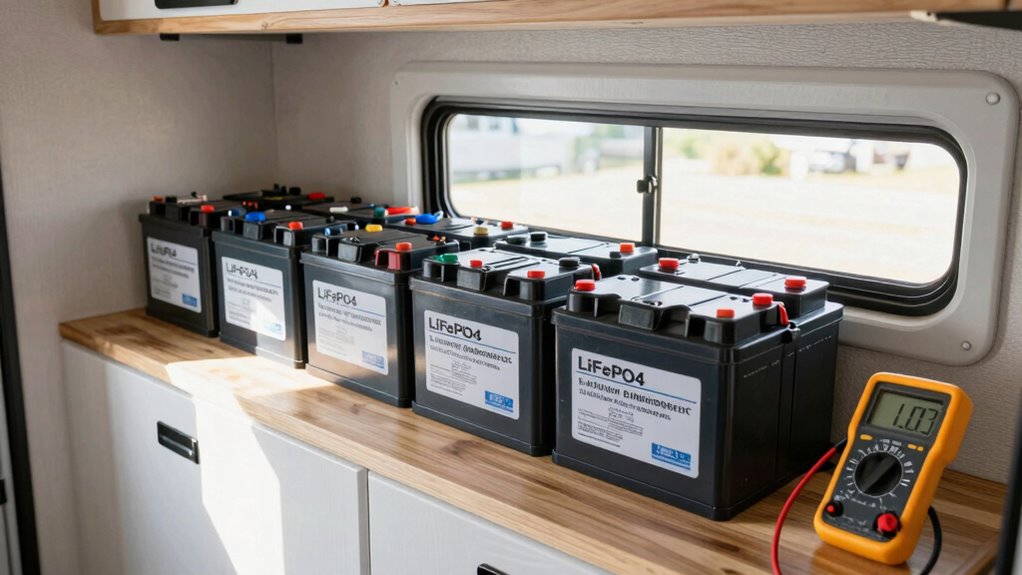
When planning to install a LiFePO4 battery bank in your RV, getting the sizing right is essential for reliable power and efficient use. The first step is understanding your specific energy needs, which means evaluating your daily power consumption and ensuring the battery capacity aligns with that. Battery capacity, measured in amp-hours (Ah), determines how long your batteries can supply power before needing a recharge. To size your bank properly, you’ll want to calculate your typical daily usage for appliances, lighting, and electronics. If you use 100 Ah daily, it’s wise to select a battery bank that offers at least 2 to 3 times that capacity to avoid deep discharges, which can shorten battery life. This approach provides a buffer, ensuring you don’t run the batteries to their limits and helps maintain longevity. Additionally, considering battery management systems can help optimize performance and longevity of your LiFePO4 bank. Voltage requirements are equally critical. Most RV systems operate at 12V, 24V, or 48V, so you need to match your battery bank’s voltage to your existing electrical system or the equipment you plan to power. For example, if your RV’s converter and inverter are designed for 12V, installing a 12V LiFePO4 bank makes sense. If you’re planning to run higher-powered appliances or want a more efficient setup, a 24V or 48V system might be better, but that requires appropriate wiring and compatibility checks. Remember, multiple LiFePO4 cells are connected in series to achieve the desired voltage, so understanding your voltage requirements helps you determine how many cells you need and how to configure them. Avoid overbuying by accurately calculating both your capacity and voltage needs upfront. Overestimating can lead to unnecessary expense and increased weight, while underestimating leaves you short on power, forcing frequent recharges or limiting your usage. It’s wise to think about future expansion—adding a little extra capacity now can save you from a complete upgrade later. Also, don’t forget to factor in inefficiencies from inverters and chargers, which can reduce usable capacity. Planning for these losses ensures your battery bank provides consistent power without unexpected outages.
Frequently Asked Questions
How Often Should I Monitor My Lifepo4 Battery’s Health?
You should monitor your LiFePO4 battery’s health regularly, ideally every month, to guarantee peak performance. During battery maintenance, check the voltage monitoring readings to spot any irregularities early. Keep an eye on the state of charge and overall capacity, especially after heavy use or long periods of inactivity. Consistent monitoring helps prevent issues, prolongs your battery’s lifespan, and keeps your RV’s power system running smoothly.
Can I Add Extra Cells Later to Increase Capacity?
Yes, you can add extra cells later to increase capacity, making your battery setup as adaptable as a chameleon blending into new environments. With a modular design, expanding your LiFePO4 bank becomes straightforward, allowing you to customize your power system over time. Just guarantee your existing wiring and BMS support expansion, and plan for proper balancing to keep your system healthy and efficient as you grow your capacity.
What Temperature Ranges Are Optimal for Lifepo4 Batteries?
You should keep your LiFePO4 batteries within an ideal temperature range of 32°F to 113°F (0°C to 45°C) for best performance. Thermal management helps prevent overheating or freezing, which can damage the cells. Always follow proper charging protocols, including avoiding extremes, to prolong battery life. Monitoring temperature regularly and maintaining a stable environment ensures your batteries operate efficiently and safely, especially in varying weather conditions.
How Do I Safely Dispose of or Recycle Old Batteries?
If you have old LiFePO4 batteries, you should prioritize safe disposal or battery recycling. For example, a camper safely recycled their batteries at a certified facility, preventing environmental harm. To do this, contact local recycling centers or battery retailers that accept lithium iron phosphate batteries. Never throw them in regular trash. Proper battery recycling guarantees hazardous materials are handled responsibly, protecting both you and the environment.
Are There Specific Chargers Recommended for Lifepo4 Banks?
You should choose chargers specifically designed for LiFePO4 banks, guaranteeing charger compatibility and proper voltage regulation. Look for chargers with a lithium iron phosphate setting to prevent overcharging and damage. Using a charger tailored for LiFePO4 batteries ensures safe, efficient charging, maintaining battery health. Always verify the charger’s voltage regulation features to match your bank’s capacity, preventing overvoltage and prolonging your battery’s lifespan.
Conclusion
Sizing your LiFePO4 bank for your RV is like fitting a puzzle piece perfectly—if you overbuy, it’s bulky and costly; if you underbuy, you won’t meet your needs. By carefully calculating your daily power use and future expansion, you’ll find the sweet spot. Remember, a well-sized battery bank is the backbone of reliable off-grid living—like a steady heartbeat keeping your adventures alive and well. Get it right, and enjoy worry-free travels!