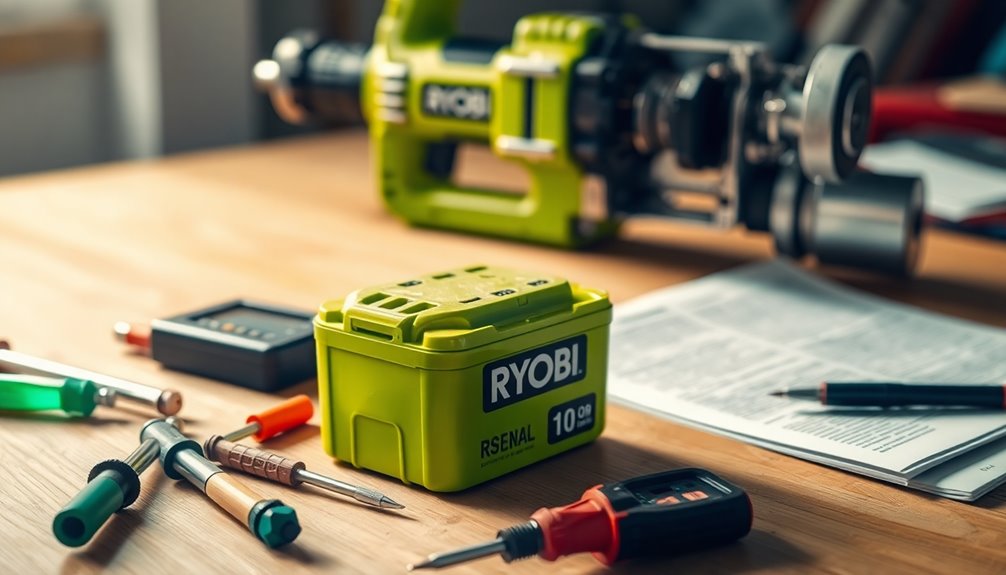
To use distilled water safely in flooded batteries, always use a clean, dedicated container and handle water in a contamination-free environment. Pour slowly at room temperature, avoiding overfilling or spilling acid. Regularly check water levels against the marked minimum and maximum, only topping off with pure distilled water. Store water properly to prevent impurities. Following these steps helps protect your battery’s internal chemistry, ensuring it lasts longer and runs efficiently. Stay tuned for more tips to keep your batteries in top shape.

Get backup power and energy gear delivered free — and shop member deals
- Fast, free delivery on millions of items
- Access to Prime Big Deal Days deals on October 6–7
- Prime Video, Amazon Music and more included
Key Takeaways
- Always add distilled water at room temperature to prevent thermal shock and internal damage.
- Use a clean, dedicated funnel or container to avoid contamination during pouring.
- Pour slowly and carefully to allow trapped air bubbles to escape and prevent spills.
- Regularly check and maintain water levels between the marked minimum and maximum.
- Store distilled water in a clean, sealed container to keep it free from impurities before use.
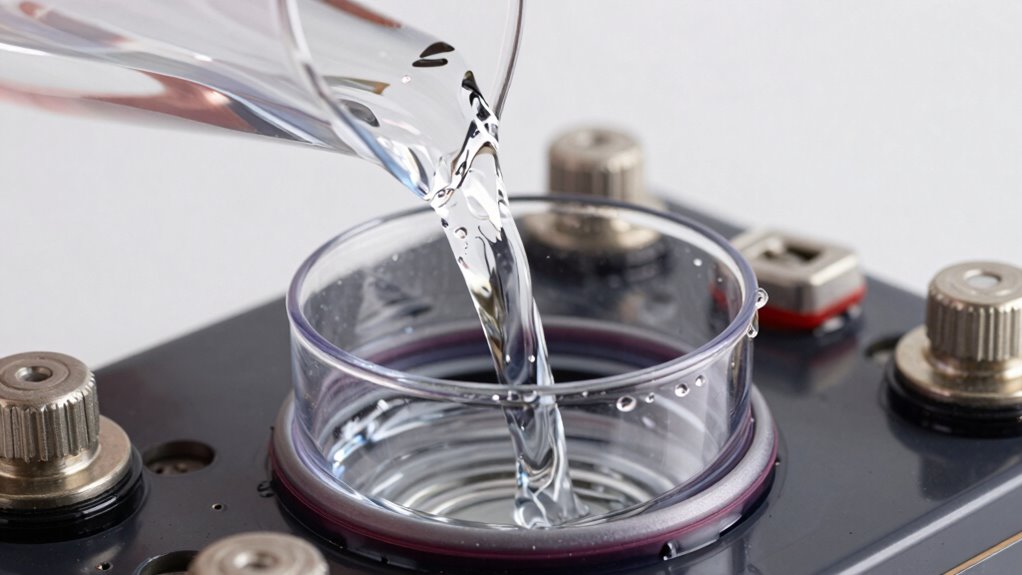
When maintaining flooded batteries, using distilled water is essential to prevent mineral buildup and guarantee peak performance. The quality of water you use directly impacts battery longevity and efficiency. Poor water quality, especially water contaminated with minerals or impurities, can cause corrosion on internal plates and reduce the battery’s overall lifespan. That’s why, during battery maintenance, you need to make certain that only the purest water is added. Distilled water is free from minerals, salts, and other contaminants that could harm your battery. Using anything else risks introducing impurities that can accelerate corrosion or lead to poor electrical performance.
Handling distilled water properly is vital for safe and effective maintenance. Always use a clean, dedicated funnel or container to pour the water into your flooded battery. This prevents dirt or dust from contaminating the water, which could compromise water quality and harm the internal components. Before opening the battery, make sure your hands are clean and dry to avoid transferring oils or dirt. When topping off, pour the distilled water slowly, allowing any trapped air bubbles to escape and ensuring an even fill. Overfilling can cause acid spillage, while underfilling might expose internal plates, both of which impair battery function. Additionally, proper water storage ensures the water remains free from contaminants before use.
Temperature also plays a role in water quality and battery maintenance. Ideally, you should add distilled water at room temperature, as pouring cold or hot water can cause thermal shock, potentially damaging internal components. Always check the water level regularly—most flooded batteries have a recommended minimum and maximum level marked on the casing. Maintaining proper water levels prevents the plates from being exposed to air, which can lead to sulfation and reduced capacity. Remember, only top off with distilled water; never add acid or tap water, as they contain impurities that can compromise battery health. Additionally, understanding the importance of water purity helps ensure your maintenance practices support long-term battery performance.
Consistent maintenance and attention to water quality help extend the life of your flooded batteries. Regular inspections ensure that water levels are maintained within the recommended range, and replacing any contaminated water prevents mineral buildup. When you prioritize using distilled water and keep your battery clean, you reduce the risk of corrosion and maintain peak performance. Good battery maintenance isn’t just about adding water—it’s about making sure that every drop you add is pure and safe for your battery’s internal chemistry. By following these practices, you’ll keep your flooded batteries running smoothly for years to come.
distilled water for flooded batteries
As an affiliate, we earn on qualifying purchases.
As an affiliate, we earn on qualifying purchases.
Frequently Asked Questions
Can I Mix Distilled Water With Tap Water for Batteries?
You should avoid mixing distilled water with tap water for battery maintenance because water compatibility is essential. Tap water contains minerals and impurities that can damage the battery’s plates and reduce its lifespan. Always use pure distilled water to guarantee peak performance and safety. Mixing the two can lead to mineral buildup and decreased efficiency, risking battery failure. Stick to distilled water to keep your flooded batteries in the best condition.
How Often Should I Check the Water Level in Flooded Batteries?
You should check the water level in flooded batteries every 1 to 3 months, depending on usage and climate. Regular battery maintenance is essential for longevity, and water quality plays a critical role. Make certain the electrolyte covers the plates without overflowing, and top up with distilled water as needed. Consistent checks prevent damage and keep your battery running smoothly, especially in hot or humid environments.
What Are the Signs of Overfilling a Flooded Battery?
If you overfill a flooded battery, you’ll notice water spilling over the sides, which can cause corrosion or damage. It may also lead to acid leakage and reduced battery lifespan. During battery maintenance, always avoid water overfill by checking the water level regularly and filling only up to the recommended level. Overfilling can compromise the battery’s performance, so be cautious to prevent water overfill and guarantee proper care.
Is It Safe to Use Distilled Water for All Types of Batteries?
Did you know that poor water quality in batteries can reduce their lifespan by up to 50%? It’s generally safe to use distilled water for most batteries, especially for maintenance, because it prevents mineral buildup. However, always check your battery manufacturer’s recommendations. Using the right water guarantees peak performance and longevity, making your battery maintenance more effective and helping you avoid costly replacements.
How Does Temperature Affect the Use of Distilled Water in Batteries?
Temperature greatly impacts how you use distilled water in batteries, depending on the battery chemistry. When it’s hot, water evaporates faster, so you need to check and top off more frequently. In cold weather, slower evaporation helps, but cold can also reduce battery efficiency. Proper temperature regulation ensures the water maintains the right level, preventing damage. Always monitor your battery’s environment to optimize performance and longevity.
Conclusion
By following these simple yet essential steps, you’ll keep your flooded batteries safe and functioning like a well-oiled machine. Always use distilled water carefully, never overfill, and check regularly—think of it as the heartbeat of your battery’s health. Neglecting these precautions can lead to disastrous consequences, potentially turning your battery into a ticking time bomb. Treat your batteries with respect and vigilance, and they’ll reward you with performance that’s nothing short of extraordinary.
Fall Picks
fall essentials
As an affiliate, we earn on qualifying purchases.