Avoid using a trickle charger if your battery shows signs of damage, such as swelling, leaks, or corrosion, as overcharging can worsen these issues. Don’t connect it to a deeply sulfated or compromised battery, since overcharging could cause overheating or gas buildup. Always follow the manufacturer’s instructions and guarantee good ventilation, especially if the battery is in poor condition. Continuing will reveal more tips to help you charge safely and prevent damage.
Key Takeaways
- Do not use a trickle charger on damaged, swollen, leaking, or corroded batteries.
- Avoid charging batteries that show signs of deterioration or have been compromised.
- Refrain from using a trickle charger on deeply sulfated batteries or during long-term storage.
- Do not charge batteries in poorly ventilated areas to prevent gas buildup and explosion risk.
- Avoid using a trickle charger without following manufacturer instructions or if the charger is malfunctioning.
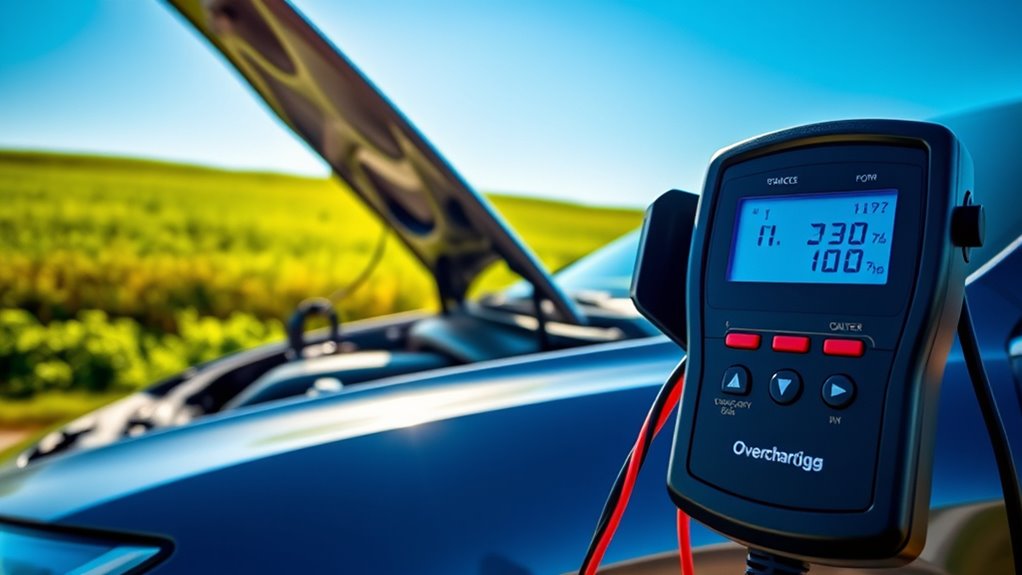
A trickle charger can be a helpful tool for maintaining a vehicle’s battery, but there are situations where using one can do more harm than good. If you leave a trickle charger connected for too long or in the wrong circumstances, you risk causing battery damage. Overcharging is a common issue, and it can lead to the battery overheating, swelling, or even leaking dangerous acids. When a battery is overcharged, it can lose its ability to hold a charge properly, which shortens its lifespan and forces you to replace it prematurely. This not only costs you money but also leaves you stranded if the battery fails unexpectedly.
Another critical concern is safety hazards. When a battery becomes overcharged, it can release explosive gases, such as hydrogen. If you’re not cautious, these gases can build up and pose a risk of explosion or fire. Working with a trickle charger in a poorly ventilated area increases the danger considerably. Additionally, improperly connected or malfunctioning chargers might cause sparks or electrical shorts, which can lead to fires or personal injury. You should always follow the manufacturer’s instructions carefully and ensure your charger is in good working order before hooking it up.
You should avoid using a trickle charger if your vehicle’s battery shows signs of damage or deterioration. For example, if the battery is swollen, leaking, or corroded, connecting a charger can exacerbate these issues. In such cases, it’s safer to replace the battery rather than try to restore it with a trickle charger. Also, if you’re unsure about the battery’s condition, you should have it tested by a professional before attempting to charge it. Overcharging a compromised battery can lead to dangerous failures and further battery damage.
Furthermore, don’t use a trickle charger if your vehicle has been sitting unused for a very long period without maintenance. Batteries can discharge completely and become deeply sulfated, which reduces their ability to be properly revived. In these cases, a trickle charger might not be effective and could cause additional harm. Instead, consider replacing the battery or consulting a professional for a more comprehensive maintenance plan. Proper understanding of battery health is essential to prevent unintended damage during charging.
Frequently Asked Questions
Can a Trickle Charger Damage a New Battery?
A trickle charger can potentially harm a new battery if it’s not compatible or used improperly. Over time, it might cause battery damage by overcharging, especially if the charger doesn’t automatically shut off or regulate voltage. Always check charger compatibility with your specific battery type and monitor the charging process. Using the right trickle charger ensures your new battery stays safe, fully charged, and avoids unnecessary damage.
Is It Safe to Leave a Trickle Charger Connected Overnight?
It’s generally safe to leave a trickle charger connected overnight if it’s designed for continuous use. However, you should monitor for signs of battery overheating or electrical surges, which can happen if the charger isn’t compatible or malfunctions. Make sure your charger has an automatic shut-off feature to prevent overcharging, and regularly check your battery to avoid potential damage from prolonged charging.
Are There Batteries That Cannot Be Charged With a Trickle Charger?
You should know that certain battery types, like sealed lead-acid, AGM, and gel batteries, can typically be charged with a trickle charger. However, some batteries, such as lithium-ion or certain deep-cycle batteries, have charging limitations and aren’t suitable for trickle charging. Always check your battery’s specifications, as improper charging can cause damage or reduce lifespan. If unsure, consult the manufacturer to avoid potential issues.
How Do I Know if My Battery Is Overcharged?
You can tell if your battery is overcharged by checking its health and charging indicators. If the battery becomes excessively hot, swollen, or leaks, it’s a sign of overcharging. Look for irregular charging indicators like fluctuating voltage levels or a constantly high charge status. Overcharging can damage the battery, so regularly monitor these signs and disconnect the charger if you notice any issues to maintain your battery’s health.
Can a Trickle Charger Cause a Fire Hazard?
A trickle charger can pose a fire risk if you neglect safety precautions, such as overcharging or leaving it unattended for too long. To minimize this risk, always follow the manufacturer’s instructions, unplug the charger once the battery is full, and avoid placing it near flammable materials. Regularly inspect the charger and cables for damage, and never leave it unattended overnight. These steps help guarantee safe use and prevent potential fire hazards.
Conclusion
So, next time you leave your car sitting for months, resist the urge to plug in that trickle charger. Ironically, while it’s great for keeping a battery alive, it can also turn your careful maintenance into overkill. Instead of saving your battery, you might just cook it. Sometimes, doing nothing and letting nature take its course is the best trickle of all—because even a trickle charger can become a flood.