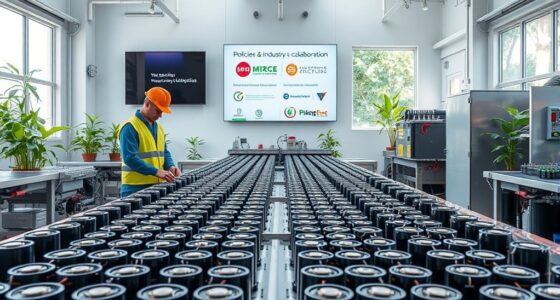

In practice, circular battery systems involve designing batteries for easier recycling and second-life use, so materials stay in circulation longer. You’ll find systems where used batteries are collected at designated points, then broken down through advanced recycling processes to recover valuable metals like lithium and cobalt. These recovered materials are refined and reused in new batteries, reducing the need for mining. By participating and supporting these practices, you help create a more sustainable energy future—there’s more to discover about how it all works.

Get backup power and energy gear delivered free with Prime
- Fast, free delivery on millions of items
- Prime Video, Amazon Music and more included
- Member-only deals all year
Key Takeaways
- Batteries are designed for easy disassembly and recyclability, facilitating material recovery at end-of-life.
- Used batteries undergo collection and are processed through hydrometallurgy or pyrometallurgy to reclaim valuable materials.
- Recovered materials like lithium, cobalt, and nickel are refined and reused in new battery production.
- Consumers and manufacturers collaborate through designated collection points and second-life applications to extend battery use.
- Closed-loop systems ensure continuous reuse, reducing reliance on virgin resources and minimizing environmental impact.
Have you ever wondered how we can make batteries more sustainable? The answer lies in the way we design and operate circular battery systems. These systems focus on keeping materials in use for as long as possible, minimizing waste, and reducing the need for virgin resources. At their core, they involve a continuous loop of reuse, remanufacturing, and recycling. When a battery reaches the end of its life, instead of discarding it, it enters a cycle where its valuable materials are recovered and reincorporated into new batteries. This process begins with effective recycling processes that extract key elements like lithium, cobalt, and nickel from used batteries. Advanced recycling techniques, such as hydrometallurgy or pyrometallurgy, enable high recovery rates, ensuring that these essential battery materials are reclaimed efficiently and safely.
In practice, a circular battery system involves close collaboration between manufacturers, consumers, and recycling facilities. When you use a battery, you might return it to a designated collection point rather than throwing it away. Once collected, the batteries undergo a series of recycling processes. These processes break down the batteries into their constituent parts, allowing valuable materials to be separated and purified. The recovered battery material can then be refined and processed to meet the specifications needed for manufacturing new batteries. This creates a closed-loop system where the materials from old batteries become the raw inputs for new ones, reducing reliance on environmentally damaging mining activities. Additionally, recycling efficiency plays a crucial role in maximizing the recovery of valuable materials, making the entire system more sustainable. Enhancing material recovery techniques is essential for improving the overall sustainability of the system.
Manufacturers play an integral role in this system by designing batteries with recyclability in mind. They use modular designs that make disassembly easier, or incorporate features that facilitate the recovery of valuable materials. Some companies are also investing in battery second-life applications, where used batteries are repurposed for less demanding tasks before being recycled. This extends the lifespan of the battery material, further supporting sustainability. Consumers, meanwhile, become active participants by responsibly recycling their batteries, knowing that their end-of-life products will feed back into the supply chain.
As an affiliate, we earn on qualifying purchases.
Frequently Asked Questions
How Long Do Circular Battery Systems Typically Last?
Circular battery systems typically last between 8 to 15 years, depending on usage and maintenance. You can gauge their durability by checking results from durability testing, which simulates long-term wear. Proper care, such as avoiding deep discharges and maintaining ideal temperatures, can extend their battery lifespan. Regular inspections help identify potential issues early, ensuring your system remains reliable and efficient over its entire lifecycle.
What Industries Are Most Adopting Circular Battery Systems?
You’ll notice industries like electric vehicles, renewable energy, and electronics leading the charge in adopting circular battery systems. Coincidentally, advancements in battery innovation and recycling technologies make this shift possible. These sectors prioritize sustainability, reducing waste through reuse and recycling. As a result, they’re not only cutting costs but also promoting environmental responsibility, ensuring that batteries are kept in productive use longer and waste is minimized.
Are Circular Battery Systems Cost-Effective Compared to Traditional Ones?
Circular battery systems are often more cost-effective over time because they extend battery lifespan and reduce the need for frequent replacements. By utilizing efficient recycling processes, you can recover valuable materials, lowering production costs. Although initial investments might be higher, the long-term savings from recycling and durability make circular systems a smarter choice financially, especially as technology improves and economies of scale are achieved.
How Is Battery Recycling Managed in Circular Systems?
In circular battery systems, you manage recycling by designing for extended battery lifespan and easy disassembly. Recycling processes are streamlined to recover valuable materials, reducing waste and environmental impact. You typically collect used batteries, then use specialized methods like hydrometallurgy or pyrometallurgy to extract metals. This approach guarantees materials are reused efficiently, supporting sustainability and minimizing the need for raw material extraction.
What Are the Main Challenges in Implementing Circular Battery Systems?
You face challenges in implementing circular battery systems, from managing material reuse to securing a reliable supply chain. You must navigate complex logistics, develop innovative recycling technologies, and establish partnerships that support sustainability. These hurdles test your commitment to environmental goals, requiring perseverance and adaptability. Despite these obstacles, your efforts to improve material reuse and strengthen the supply chain are essential steps toward creating a truly circular economy.
Conclusion
By embracing circular battery systems, you’re not just keeping up with technology—you’re staying ahead of the curve. These systems help you reduce waste, recycle materials, and extend battery life, making your energy use more sustainable. It’s a win-win situation that benefits both your wallet and the planet. Remember, when you invest in circular solutions, you’re planting seeds for a greener future—because in the end, it’s all about turning the tide and making a lasting impact.
Fall Picks
fall essentials
As an affiliate, we earn on qualifying purchases.