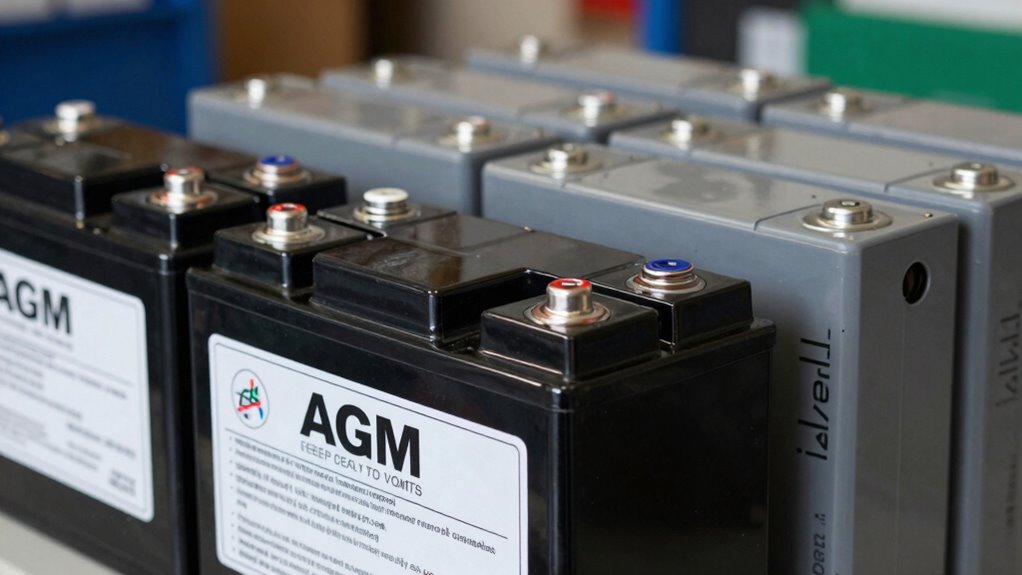

Float charging is a common myth that it’s safe for all batteries, but it’s not true for LiFePO4 cells. While AGM batteries tolerate float charging when properly managed, applying the same setting to lithium iron phosphate batteries can cause overcharging, heat buildup, and damage. Knowing the differences in chemistry is vital for safety and battery life. Stay tuned to learn how to protect your batteries with the right charging techniques.

Get backup power and energy gear delivered free with Prime
- Fast, free delivery on millions of items
- Prime Video, Amazon Music and more included
- Member-only deals all year
Key Takeaways
- Float charging maintains AGM batteries safely but can overcharge LiFePO4 batteries, risking damage.
- AGM batteries are designed to handle float voltages, while LiFePO4 batteries require controlled, lower voltage profiles.
- Applying float charge to LiFePO4 can cause overheating and reduce lifespan due to overcharging.
- Proper charging practices depend on battery chemistry; always follow manufacturer guidelines.
- Misconceptions about float charging can lead to battery damage; understand the differences between AGM and LiFePO4.

Many people believe that float charging a battery is always harmful or unnecessary, but this isn’t true. In fact, when done correctly, float charging can help maintain a battery’s charge level without damaging it. However, it’s vital to understand that not all batteries respond the same way to this process. For example, AGM (Absorbent Glass Mat) batteries are designed to handle float charging effectively, which can actually extend their battery longevity. Proper float charging prevents deep discharges, keeps the battery ready for use, and reduces the need for frequent replacements. This method, when applied correctly, can be a safe and efficient way to manage batteries in various applications.
Additionally, using a charger with appropriate voltage regulation ensures the process remains safe and effective for specific battery types.
Safety concerns are a valid reason some people avoid float charging, especially with lithium-based batteries like LiFePO4 (Lithium Iron Phosphate). Unlike AGM batteries, LiFePO4 batteries have different chemistry and voltage characteristics. Applying a float charge designed for lead-acid or AGM batteries can lead to overcharging, increased heat, or even damage to the cells. Over time, this can compromise the safety of the battery, increasing the risk of thermal runaway or other hazards. For this reason, it’s imperative to follow manufacturer guidelines and use chargers specifically designed for LiFePO4 batteries. Using the wrong charging method can diminish battery longevity and pose safety concerns, which is why understanding the differences is so important.
You should also consider that float charging isn’t a one-size-fits-all solution. AGM batteries tolerate this method well, and it can help keep them at optimal voltage levels without risking damage. On the other hand, LiFePO4 batteries require a different approach, often involving a controlled, maintenance-free charging profile that avoids prolonged float voltage. If you’re unsure, always check the manufacturer’s specifications or consult a professional. This will help prevent safety concerns and extend your battery’s lifespan.
As an affiliate, we earn on qualifying purchases.
Frequently Asked Questions
Can Float Charging Damage AGM Batteries Over Time?
Yes, float charging can damage AGM batteries over time if not done correctly. Float charging risks include overcharging or maintaining a voltage that exceeds the recommended level, which can shorten AGM lifespan. To prevent this, use a charger specifically designed for AGM batteries, monitor voltage levels regularly, and avoid leaving the battery on float charge longer than necessary. Proper maintenance guarantees your AGM batteries stay healthy and last longer.
Is Float Charging Safe for All Lithium Battery Types?
Float charging isn’t safe for all lithium battery types. You need to follow specific charging protocols based on the battery chemistry. Lithium-ion and LiFePO4 batteries, for example, require precise voltage and current settings to prevent damage or safety issues. Always check the manufacturer’s guidelines for your battery’s chemistry, and avoid using float charging unless it’s explicitly recommended. Proper charging protocols guarantee longevity and safe operation of your lithium batteries.
How Does Temperature Affect Float Charging Safety?
Temperature notably impacts float charging safety because thermal effects can cause voltage regulation issues. When it’s too hot, batteries risk overheating and damage, while cold temperatures may reduce charging efficiency. You should monitor the ambient temperature and adjust voltage settings accordingly to prevent thermal stress. Proper temperature management ensures your lithium batteries stay safe, maximizing performance and lifespan while avoiding potential hazards caused by temperature fluctuations.
What Are the Signs of Overcharging in AGM Batteries?
Your AGM battery shows signs of overcharging when the voltage regulation is off the charts, causing swelling or excessive heat. You might notice electrolyte degradation, with gassing or foul smells indicating that the internal chemistry is breaking down. These warning signs suggest the battery is being pushed beyond its limits, risking permanent damage. Keep a close eye on voltage levels and temperature, and adjust your charging setup to protect your investment.
Are There Alternative Charging Methods for Lifepo4 Batteries?
Yes, there are alternative charging methods for LiFePO4 batteries that guarantee lithium compatibility. You can use specialized lithium charger profiles or smart chargers with adjustable settings to match the battery’s requirements. These methods prevent overcharging and extend battery life. Always choose chargers designed specifically for lithium chemistry, and avoid using AGM or lead-acid settings, which can damage LiFePO4 cells and reduce their lifespan.
Conclusion
Now that you’ve uncovered the truth about float charging, you might wonder what other myths are lurking out there. Could your current setup be quietly harming your batteries? Stay vigilant, because the difference between a long-lasting battery and costly repairs might be just one small adjustment away. Don’t settle for misconceptions—keep digging, stay informed, and you’ll be the one with the power to make smarter decisions. The next revelation could change everything.
Halloween Picks
halloween
As an affiliate, we earn on qualifying purchases.