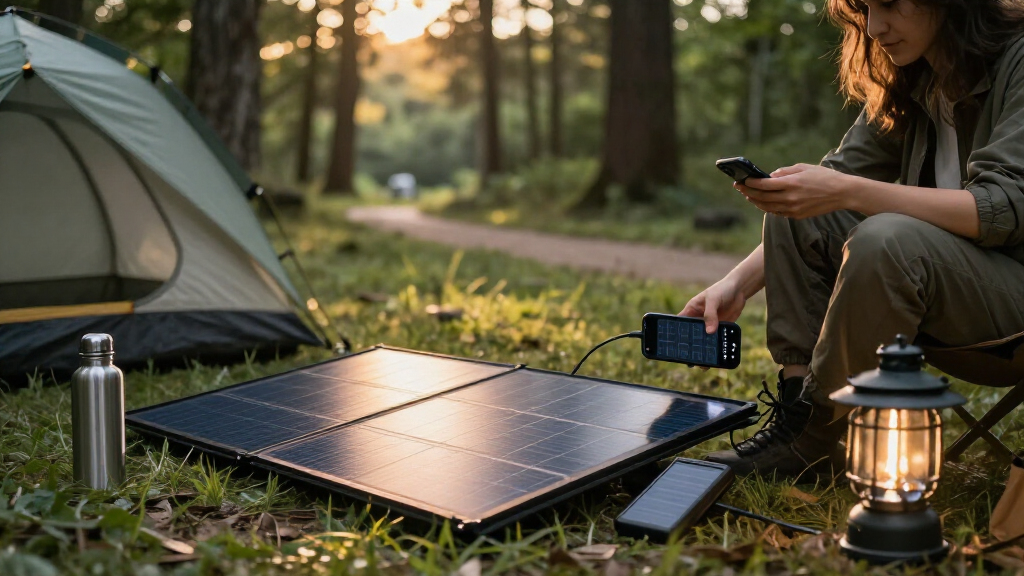
For most camping trips, I’d choose the SOARAISE 50,000mAh Solar Power Bank with 22.5W Fast Charging as the best overall pick for its high stated capacity and faster wired charging. The BLAVOR 20,000mAh is a more manageable alternative for campers who want wireless charging without carrying a bulkier high-capacity unit, while the BLAVOR 10,000mAh suits short trips where lighter carry matters most. The main tradeoff is that large batteries add weight, and a small solar panel on a power bank is generally better for topping up than replacing wall charging. I compare capacity, charging options, portability and useful backup features across all eight picks. Read on for the full breakdown and advice on matching a power bank to your trip.

Get backup power and energy gear delivered free with Prime
- Fast, free delivery on millions of items
- Prime Video, Amazon Music and more included
- Member-only deals all year
Key Takeaways
- Capacity and portability pull in opposite directions: the 50,000mAh SOARAISE and 48,000mAh SOARAISE prioritize stored power, while BLAVOR’s 10,000mAh model is the lightest-capacity choice in this lineup.
- Wired charging separates the more practical picks: the 22.5W SOARAISE and USB-C fast-charging YELOMIN stand out for campers who need a quicker phone top-up than wireless charging typically provides.
- Built-in cables reduce packing friction: the 48,000mAh SOARAISE, BLAVOR 20,000mAh hand-crank model and Uukto include cables, but their added convenience may mean more bulk or more features to manage.
- Emergency features are not interchangeable: the BLAVOR 20,000mAh hand-crank and FEELLE 50,000mAh include a crank, while the YELOMIN emphasizes a dual LED flashlight; treat these as backup tools, not substitutes for a dedicated lantern or power source.
- Solar charging is a supplement across the lineup: capacity, charging speed and ports matter more for dependable campsite use than assuming a built-in panel can quickly refill a depleted bank.


| solar power banks for camping | Battery capacity | Ports | Wireless charging | Outdoor features |
|---|---|---|---|---|
| SOARAISE 50000 mAh Solar Power | 50,000 mAh | 3, plus built-in USB-C and Lightning cables | Up to 15 W | 3-mode flashlight, compass, thermometer, waterproof, shockproof, and dustproof construction |
| SOARAISE 48,000mAh Solar Power | 48,000 mAh | 3: 2 USB-A outputs and 1 USB-C input/output | — | — |
| BLAVOR Solar Power Bank with H | 20,000 mAh | 3 | Qi, up to 15 W | Flashlight, camping lantern, compass, thermometer, carabiner, and rope |
| FEELLE 50,000mAh Solar Power B | 50,000 mAh | 3 | Magnetic, up to 15 W | Compass, steady/SOS/strobe LED flashlight, and backpack hook |
| BLAVOR 10,000 mAh Solar Power | 10,000 mAh | 3 | Qi | Dual LED flashlights, compass carabiner, IPX5 waterproof rating, dustproof and shock-resistant design |
| YELOMIN 38800mAh Solar Power B | 38,800mAh | — | — | — |
| BLAVOR 20,000mAh Solar Power B | 20,000mAh | — | Qi; supports phones and Apple Watch | Flashlight, camping light, compass, thermometer, carabiner, and rope |
| Uukto 20000mAh Solar Power Ban | 20,000mAh | 6 | — | — |
More Details on Our Top Picks
SOARAISE 50000 mAh Solar Power Bank with 22.5W Fast Charging and Wireless Capability
For a group campsite where several phones need power, the 50,000 mAh capacity and ability to charge up to six devices give this SOARAISE an advantage over the lighter BLAVOR 10,000 mAh model. Its 22.5W USB-C PD output is also the strongest stated wired charging rate among these five picks, while wireless charging provides another way to top up compatible phones. Built-in cables reduce the number of accessories to pack, and the flashlight, compass, thermometer, and rugged construction add practical campsite utility.
The tradeoff is portability: this large-capacity unit is bulkier than the BLAVOR 10,000 mAh option. Its solar panel is a backup rather than a dependable way to refill a large battery during a short stop, so I’d plan to charge it from an outlet before leaving. Wireless performance can also suffer with thick cases or metal accessories.
Pros:- 50,000 mAh capacity supports multiple device recharges between outlets.
- 22.5W USB-C PD offers the highest stated wired output among these five products.
- Built-in USB-C and Lightning cables plus extra ports cut down on packing separate cords.
- Flashlight, compass, thermometer, and rugged construction suit outdoor use.
Cons:- Large capacity makes it bulkier and heavier than compact choices such as the BLAVOR 10,000 mAh.
- Solar charging is supplemental and slow for refilling the full battery.
- Thick cases or metal accessories can interfere with wireless charging.
Best for: Campers sharing a site with several phone or tablet users who want fast wired charging and fewer loose cables.
Not ideal for: Solo backpackers prioritizing low pack weight, or campers expecting the solar panel to quickly replenish the bank.
- Battery capacity:50,000 mAh
- Battery cell type:Lithium-ion
- USB-C PD output:22.5 W
- Wireless charging:Up to 15 W
- Ports:3, plus built-in USB-C and Lightning cables
- Simultaneous devices:Up to 6
- Power sources:Corded electric and solar
- Outdoor features:3-mode flashlight, compass, thermometer, waterproof, shockproof, and dustproof construction
Our verdict“Choose this SOARAISE for group camping and fast multi-device charging, but not if compact carry or solar-only recharging is your priority.”
SOARAISE 48,000mAh Solar Power Bank with Wireless Charging and 4 Built-In Cables
The main reason I’d pick this SOARAISE for a shared campsite is its four built-in cables and stated support for up to seven devices at once. That gives it an edge over the SOARAISE 50,000 mAh model, which lists charging for up to six devices, when a group has mixed cable needs and several phones to keep running. Four solar panels, wireless charging, three ports, and a camping flashlight offer flexible options around camp.
The compromise is charging speed: its USB-C output is listed at 5V/3A, while the other SOARAISE model specifies 22.5W USB-C PD. Its thick, 1.57-inch profile is also less appealing for a backpacker watching pack space. The four panels add solar input options, but the supplied details give no solar charging rate, so I’d treat sunlight as backup power rather than count on a quick refill.
Pros:- Four built-in cable types accommodate a range of devices without separate cords.
- Supports up to seven devices simultaneously, the highest stated device count in this batch.
- Four solar panels and wireless charging add alternative ways to supply power.
- Camping flashlight and ruggedness features suit campsite use.
Cons:- Thick form factor takes more room in a pack than the BLAVOR 10,000 mAh.
- 5V/3A USB-C output is less fast than the 22.5W PD output listed for the other SOARAISE.
- Solar charging speed is unspecified and can vary with outdoor conditions.
Best for: Families or groups at established campsites who want built-in cable variety and the ability to connect several devices at once.
Not ideal for: Backpackers with limited pack space or anyone prioritizing the fastest stated USB-C charging in this lineup.
- Battery capacity:48,000 mAh
- Battery type:Lithium-polymer
- Dimensions:6.38 × 3.43 × 1.57 inches
- Solar panels:4
- Built-in cables:USB-C, phone, USB-A, and Micro
- Ports:3: 2 USB-A outputs and 1 USB-C input/output
- USB-C output:5V/3A
- Simultaneous devices:Up to 7
- Other features:Wireless charging, camping flashlight, waterproof, shockproof, and dustproof
Our verdict“Pick this model for a group that values cable variety and multiple connections over fast USB-C charging or a slim pack profile.”
BLAVOR Solar Power Bank with Hand Crank and Built-in 4 Cables 20000mAh
This BLAVOR is the most distinct emergency-minded option here: its hand crank gives campers a manual backup when sunlight and outlets are unavailable. That separates it from both SOARAISE models, which offer solar input but no crank. At 20,000 mAh, it has less stored power than those larger units, yet it pairs that capacity with 20W USB-C PD, 15W Qi wireless charging, and four built-in cables for flexible use at camp.
The flashlight, lantern, compass, and thermometer make it more of a utility kit than a simple charger, though that feature mix may be unnecessary for campers who already carry dedicated gear. The hand crank is a contingency source, not a substitute for charging the battery ahead of a trip, and solar charging speed is not specified. Compared with the compact BLAVOR 10,000 mAh, this one offers more capacity and backup tools at the cost of a larger, heavier carry.
Pros:- Hand crank provides a manual backup when sunlight and outlets are unavailable.
- 20,000 mAh capacity exceeds the BLAVOR 10,000 mAh model.
- 20W USB-C PD and 15W Qi wireless charging support wired and wireless top-ups.
- Four built-in cables, flashlight, lantern, compass, and thermometer add campsite utility.
Cons:- Larger and heavier than a basic compact power bank.
- Hand-crank output is a contingency rather than a practical fast way to refill the battery.
- Solar charging speed is not specified.
Best for: Remote-site campers who want a manual power-generation backup alongside a charged battery, cables, and basic emergency tools.
Not ideal for: Minimalist backpackers who want a light, simple charger, or buyers expecting the hand crank to recharge the bank quickly.
- Battery capacity:20,000 mAh
- Battery cell type:Lithium-polymer
- USB-C output:20 W
- Wireless charging:Qi, up to 15 W
- Ports:3
- Built-in cables:2 USB-C, 1 iOS, and 1 USB-A
- Power sources:Corded electric, solar, and hand crank
- Outdoor features:Flashlight, camping lantern, compass, thermometer, carabiner, and rope
Our verdict“Choose this BLAVOR when manual backup power and emergency tools matter more than minimizing weight or keeping the kit simple.”
FEELLE 50,000mAh Solar Power Bank with Magnetic Wireless Charging and Hand Crank
The FEELLE’s magnetic wireless charging gives it a specific campsite advantage for compatible phones: it can hold the phone against the charger without requiring a cable connection. Along with a 50,000 mAh battery, four built-in cables, and three ports, it serves campers who want several ways to connect devices. The hand crank also sets it apart from the SOARAISE 50,000 mAh, which offers faster stated USB-C PD charging but no manual generation option.
That flexibility comes with bulk: its capacity and accessory-heavy design are better suited to a base camp than a weight-conscious hike. The magnetic feature depends on phone compatibility and a suitable case; thick cases can weaken attachment and charging efficiency. Four solar panels and a crank are useful backup options, but the provided details do not state their charging rates, so I wouldn’t rely on either to rapidly replenish a depleted bank.
Pros:- Magnetic wireless charging can keep compatible phones attached without a charging cable.
- 50,000 mAh capacity and charging for up to six devices suit group use.
- Four built-in cables and three ports support varied wired connections.
- Hand crank, four solar panels, compass, and three-mode flashlight add outdoor backup and utility.
Cons:- Large capacity and multiple features make it a bulky choice for weight-conscious trips.
- Thick cases can reduce magnetic hold and wireless charging efficiency.
- Solar and hand-crank charging rates are not stated, limiting confidence in their ability to refill the bank.
Best for: Campers with compatible phones who want magnetic wireless charging, built-in cables, and a manual backup option at a base camp.
Not ideal for: Lightweight backpackers or people with phones and cases that do not work reliably with magnetic wireless charging.
- Battery capacity:50,000 mAh
- Battery cell type:Lithium-polymer
- Wireless charging:Magnetic, up to 15 W
- Ports:3
- Built-in cables:USB-C, phone cable, Micro-USB, and USB-A
- Simultaneous devices:Up to 6
- Power sources:Solar, hand crank, and USB
- Solar panels:4
- Outdoor features:Compass, steady/SOS/strobe LED flashlight, and backpack hook
Our verdict“Choose the FEELLE for a base camp where magnetic charging and manual backup matter more than low weight or documented recharge speed.”
BLAVOR 10,000 mAh Solar Power Bank – Portable Wireless Charger
For campers who count every ounce, the BLAVOR 10,000 mAh is the clearest contrast to the bulky 48,000 and 50,000 mAh options. At a listed 9.3 ounces, it is easier to fit into a daypack or keep close for a phone top-up, while still offering 20W USB-C fast charging, Qi wireless charging, and three output ports. Its dual flashlights and compass carabiner add useful outdoor touches without turning it into a large emergency kit.
The tradeoff is capacity: it is better suited to keeping one phone going than supplying a group over a long trip. Unlike the BLAVOR 20,000 mAh hand-crank model, it has no manual generator and half the battery capacity. Solar charging is included, but the supplied information gives no recharge rate, so I’d use it as supplemental input and charge the bank before setting out. Its stated IPX5 rating offers outdoor protection, not a reason to submerge it.
Pros:- Listed weight of 9.3 ounces makes it more portable than the larger-capacity models here.
- 20W USB-C input and Qi wireless charging provide flexible phone charging.
- Three output ports support more than one connected device.
- Dual LEDs, compass carabiner, and IPX5-rated construction suit outdoor carry.
Cons:- 10,000 mAh capacity is limited for multi-day use or sharing among several campers.
- No hand crank, unlike the BLAVOR 20,000 mAh model.
- Solar recharge speed is unspecified and may be slow in low light.
Best for: Solo campers and day hikers who want a lighter phone-focused charger with wired and wireless charging plus basic outdoor features.
Not ideal for: Groups, multi-day trips without outlet access, or campers needing the higher stored capacity and hand-crank backup of the BLAVOR 20,000 mAh.
- Battery capacity:10,000 mAh
- Battery type:Lithium-cobalt
- Weight:9.3 ounces
- Dimensions:5.91 × 3.07 × 0.87 inches
- USB-C charging:20 W
- Wireless charging:Qi
- Ports:3
- Outdoor features:Dual LED flashlights, compass carabiner, IPX5 waterproof rating, dustproof and shock-resistant design
Our verdict“Pick this BLAVOR for a lighter, phone-focused camping kit, but choose a larger model for group charging or extended trips away from outlets.”
YELOMIN 38800mAh Solar Power Bank with USB-C Fast Charging, Dual LED Flashlight, 3-Output Backup Charger for Outdoor Use
The YELOMIN pairs a listed 38,800mAh capacity with a 9.9-ounce weight, making it a useful middle ground for campers who want more stored charge than a 20,000mAh unit without carrying one of the roundup’s larger-capacity banks. Its two USB-A ports and USB-C input/output let you charge several devices, while the steady, SOS, and strobe LEDs add basic campsite and emergency lighting. A carabiner gives it a simple way to attach to a pack, though the solar panel is best treated as supplemental backup, not a dependable way to refill the battery during a trip. Compared with the BLAVOR 20,000mAh, the YELOMIN offers more stated capacity and a lighter listed weight, but it lacks that model’s built-in cables and wireless charging. I’d choose it for capacity over charging convenience.
Pros:- High listed 38,800mAh capacity for carrying more stored charge between outlets
- Listed weight of 9.9 ounces keeps the bank relatively packable
- Two USB-A ports plus USB-C input/output support several wired devices
- Dual LEDs offer steady, SOS, and strobe modes for basic outdoor lighting
Cons:- Solar charging is very slow and is only described as supplemental backup
- No built-in charging cables or wireless charging are listed
- The supplied details do not state a USB-C wattage, limiting comparison of charging speed
Best for: Hikers and weekend campers who want a high stated battery capacity in a lightweight pack attachment and mainly charge USB devices.
Not ideal for: Campers who expect the panel to recharge the bank quickly, or who want built-in cables and wireless charging for a mixed-device group.
- Battery capacity:38,800mAh
- Voltage:3.7V
- Amperage:2.4A
- Charging ports:3: 2 USB-A and 1 USB-C
- USB-C function:Input and output
- Weight:9.9 oz
- Lighting:Dual LEDs with steady, SOS, and strobe modes
- Other features:Solar panel and built-in carabiner
- Warranty:12 months
Our verdict“Choose the YELOMIN if you want a lightweight bank with a higher stated capacity than the 20,000mAh options and can recharge it by cable.”
BLAVOR 20,000mAh Solar Power Bank with Wireless Charging
The BLAVOR’s standout advantage for a shared campsite is its ready-to-use charging setup: four built-in cables, three USB ports, and Qi wireless charging reduce the adapters and loose leads you need to pack. Its 20W USB-C output is a clearly stated speed advantage over the Uukto, whose fast-charging rate is not specified. The 20,000mAh capacity is more modest than the YELOMIN’s stated 38,800mAh, so I’d favor the BLAVOR for charging convenience rather than longer stretches away from a power source. A flashlight, camping light, compass, thermometer, and carabiner add practical campsite features, while the listed IPX5 rating and protective shell suit rougher conditions. The tradeoff is that solar performance is unspecified, and the listed 12V figure does not clearly explain typical USB output. I’d verify device compatibility rather than infer it from that spec.
Pros:- Four built-in cables, three USB ports, and Qi wireless charging cover several charging methods
- Stated 20W USB-C output gives a clear fast-charging specification
- Flashlight, camping light, compass, thermometer, and carabiner add outdoor utility
- IPX5 is listed, alongside protection from overcharge, over-discharge, over-current, and short circuits
Cons:- Its 20,000mAh capacity is substantially below the YELOMIN’s stated 38,800mAh
- Solar charging performance and recharge time are not specified
- The listed 12V voltage does not clearly describe typical USB output
Best for: Campers carrying a mix of phones, an Apple Watch, and other small devices who want fewer separate cables and a stated 20W USB-C output.
Not ideal for: Long-trip campers prioritizing the largest listed battery capacity, or buyers who need clear solar recharge figures and unambiguous output specifications.
- Battery capacity:20,000mAh
- USB-C output:20W
- USB ports:3
- Built-in cables:4: 2 USB-C, 1 iOS, and 1 USB-A
- Wireless charging:Qi; supports phones and Apple Watch
- Listed voltage and amperage:12V and 3A
- Water resistance:IPX5 listed
- Outdoor features:Flashlight, camping light, compass, thermometer, carabiner, and rope
- Charging protection:Overcharge, over-discharge, over-current, and short-circuit protection
Our verdict“Pick the BLAVOR for a camp kit where built-in cables and wireless charging matter more than maximum capacity or documented solar performance.”
Uukto 20000mAh Solar Power Bank with Built-In Cables and Lights
The Uukto is aimed at group camps or device-heavy trips: its six ports and built-in cables are listed to support as many as five devices at once. That arrangement can cut down on the cable pile when several people need a top-up, and the camping light and multi-mode flashlights add a separate reason to keep it near the tent. Compared with the BLAVOR 20,000mAh, the Uukto offers a stated five-device maximum, while the BLAVOR gives buyers a specified 20W USB-C output and Qi wireless charging. The Uukto’s capacity is 20,000mAh, so it is less suited to long trips without access to a wall outlet than higher-capacity options such as the YELOMIN. Its solar performance and fast-charging rate are not specified, which makes this a better pick for port count and lighting than for predictable recharge speed.
Pros:- Six listed ports and built-in cables support up to five simultaneous device connections
- USB-C works as both an input and output
- Camping light and multi-mode flashlights provide useful illumination at camp
- Listed protections include overcharging, short circuits, and overheating
Cons:- Solar charging speed and performance are not specified
- No fast-charging wattage is provided, unlike the BLAVOR’s stated 20W USB-C output
- The 20,000mAh capacity is below the YELOMIN’s listed 38,800mAh
Best for: Small groups or campers carrying several USB-powered devices who value multiple connection options and integrated campsite lighting.
Not ideal for: Campers who need a documented fast-charging rate, dependable solar-recharge expectations, or more capacity for extended trips away from outlets.
- Model:PN-M5W
- Battery capacity:20,000mAh
- Battery cell type:Lithium polymer
- Voltage:3.7V
- Ports:6
- Connectors:USB-C input/output, iOS, and USB-A
- Maximum simultaneous devices:5
- Lighting:Camping light and multi-mode flashlights
- Power source:Solar powered
Our verdict“Choose the Uukto when several campers need wired charging and built-in lights, but skip it if documented charging speed is a priority.”

How We Picked
I compared these eight solar power banks for camping by looking at the features that affect a trip: stated capacity, wired charging options, wireless charging, built-in cables, portability cues and outdoor-oriented extras such as lights or a hand crank. I gave more weight to useful charging flexibility than to feature count alone, since campers need a dependable way to recharge phones and other small devices. I also treated solar panels as a supplementary charging feature rather than assuming they can replace a wall outlet or dedicated solar panel.
The ranking reflects how well each model’s feature mix fits a typical camping kit, then separates options for different priorities. The high-capacity SOARAISE leads for campers who want more stored power and faster wired charging; lower-capacity BLAVOR models rank better for lighter carry and simpler needs. Hand cranks, wireless charging and built-in cables can help in specific situations, but they do not automatically make a bank the best choice for every trip. Product claims such as capacity and charging speed should be checked against the device requirements and the manufacturer’s specifications before purchase.
| solar power banks for camping | Battery cell type | Wireless charging |
|---|---|---|
| SOARAISE 50000 mAh Solar Power | Lithium-ion | Up to 15 W |
| SOARAISE 48,000mAh Solar Power | — | — |
| BLAVOR Solar Power Bank with H | Lithium-polymer | Qi, up to 15 W |
| FEELLE 50,000mAh Solar Power B | Lithium-polymer | Magnetic, up to 15 W |
| BLAVOR 10,000 mAh Solar Power | — | Qi |
| YELOMIN 38800mAh Solar Power B | — | — |
| BLAVOR 20,000mAh Solar Power B | — | Qi; supports phones and Apple Watch |
| Uukto 20000mAh Solar Power Ban | Lithium polymer | — |
Factors to Consider When Choosing Solar Power Banks For Camping
My shortlist starts with one practical question: what needs power, and for how many days? The best choice depends less on the word “solar” than on your device mix, access to a reliable charging source and willingness to carry extra weight. These factors help prevent buying a feature-heavy bank that does not suit your campsite routine.
Match Capacity to Your Trip, Not the Biggest Number
Think in terms of the devices you will charge and how often, rather than choosing the largest stated capacity by default. A phone-only overnight trip has different needs from several days away with a phone, headlamp and camera. A larger bank can provide more stored energy, but it adds bulk and may be slower or less comfortable to pack. Capacity claims also describe stored energy, not the exact amount delivered to your devices, since charging involves losses. Leave headroom for cold weather, navigation use and emergency calls instead of planning around a best-case estimate. If you cannot estimate your use, count typical daily phone charges at home and use that as a starting point.
Treat Built-In Solar as a Top-Up Option
A power bank’s small integrated panel is exposed to changing sun, shade, angle and weather, so solar input can be inconsistent at a campsite. It may help add charge while the bank sits in direct sunlight, but it is not a reliable way to restore a large battery quickly. A common mistake is arriving with an empty bank and expecting sunlight to replace a full pre-trip charge. Charge the unit fully before leaving, then treat its panel as a backup. If your trip depends on solar replenishment, compare the bank’s solar input specifications and consider a separate, larger panel. Keep the panel positioned in sun while the battery itself stays protected from excess heat when the manufacturer advises it.
Choose Charging Speed and Ports for Your Devices
Check whether the bank’s output matches the charging needs of your phone and other gear; a fast-charging label is only useful if your device and cable support the relevant standard. USB-C can simplify charging for newer devices, while multiple outputs help when two people need power at once. Wireless charging reduces cable dependence, but it can be slower and less efficient than a direct cable connection. Built-in cables are convenient if they match your devices, yet they can be awkward to replace if damaged or outdated. Before buying, list the connectors your group actually uses and check the number of outputs available at the same time. For navigation or a quick battery boost, a wired connection is usually the more dependable choice.
Balance Capacity Against Pack Weight
On a car-camping trip, a heavier power bank may be an easy trade for more stored energy; on a backpacking route, every extra item competes with food, water and safety gear. Compare dimensions and weight where reliable specifications are available, rather than using capacity alone as a proxy for portability. Larger units can be less comfortable to carry in a pocket or daypack and may need a more protected spot in your pack. Smaller banks make sense when you can recharge at a trailhead or campsite between outings. If several people share one bank, a larger model may reduce duplicated gear, but only if its output can serve their devices efficiently. Set a carry limit before comparing features so convenience does not quietly turn into unnecessary load.
Use Emergency Extras as Backup, Not Core Power
A flashlight, hand crank or wireless charging pad can be useful when a cable is missing or a campsite gets dark, but these additions do not replace dedicated safety equipment. A built-in light may be handy for locating a port or finding gear, while a separate headlamp is better for hands-free tasks. Hand cranks can provide a fallback in a pinch, but manual generation takes effort and is not a realistic way to recharge a large bank quickly. Wireless charging can simplify a brief top-up, though a cable is often preferable when efficiency matters. Decide which extras solve a real problem on your trips before paying in added size or complexity. Keep a primary light source and a charged bank even if your chosen model includes emergency features.
Check Durability and Charging Conditions
Camping exposes electronics to dust, moisture, drops and temperature swings, so inspect the manufacturer’s guidance on weather resistance and operating conditions rather than assuming “outdoor” means waterproof. A rugged-looking shell does not confirm a specific protection rating. Store the power bank in a dry bag or protected pocket when rain is possible, and avoid leaving it in direct heat for long periods. Cold conditions can reduce battery performance, so keeping the bank insulated can help preserve usable charge. Check whether ports have covers and whether the product includes clear care instructions. A little protection and a pre-trip function check can matter more than a long list of extra features.
Frequently Asked Questions
Can a built-in solar panel recharge a power bank during a weekend camping trip?
It may add some charge in steady direct sunlight, but the result depends on panel size, sun exposure, angle and weather. Shade from trees, clouds and frequent movement can cut solar input, while a large-capacity bank takes a long time to replenish through a small integrated panel. I would fully charge the bank before departure and treat the panel as a backup rather than the trip’s main power plan. If you expect to rely on solar each day, compare the stated solar input and look at a separate panel designed to provide more area. Keep a plan for essential communication devices if the weather stays overcast.
Should I choose a 50,000mAh bank or a 20,000mAh bank for backpacking?
Choose based on device use and how much weight you are prepared to carry, not on capacity alone. A 50,000mAh model can suit a group or a longer trip with multiple devices, but its size and weight may be an unnecessary burden for a solo hiker with one phone. A 20,000mAh option is often easier to pack, though it leaves less reserve for repeated charging or poor weather. Estimate your daily use and add a buffer for navigation, cold conditions and emergencies. If you can recharge between trail days, a smaller bank may be the more practical fit.
Is wireless charging useful at a campsite, or should I prioritize USB-C?
Wireless charging is handy when you want to avoid carrying or finding a cable, but it can be less efficient and may charge more slowly than a wired connection. USB-C is usually the stronger priority if your phone supports fast wired charging or you need to top up quickly before heading out. A bank with both options offers flexibility, but added features can contribute to bulk and cost. Check whether the wireless feature works with your phone and whether the bank can power other devices through its wired outputs at the same time. For most camping kits, I would pack a suitable cable even when wireless charging is available.
Do I need a hand-crank power bank for camping?
A hand crank can provide a limited emergency power source when normal charging is unavailable, but it takes physical effort and is not a quick way to refill a large battery. It may appeal to campers who value an extra fallback feature, especially for a short emergency phone boost or light use. It should not replace a fully charged bank, a suitable backup light or an emergency communication plan. If you mainly need routine charging, capacity and dependable wired outputs are usually more useful than a crank. Check the maker’s guidance on what the crank can realistically power before relying on it.
What should I verify before taking a solar power bank into wet or cold weather?
Check the manufacturer’s stated weather-resistance rating, operating temperature range and care instructions; an outdoor-style casing alone does not confirm waterproof protection. Keep the bank dry and avoid leaving it exposed to rain, snow or condensation, particularly around open ports. Cold can reduce battery performance, so store the unit inside your pack or another insulated space when possible. Do not charge it outside the stated temperature range. Before the trip, inspect the casing and ports, test the cables and make sure the bank is fully charged.
Conclusion
For a typical camping kit, I’d start with the SOARAISE 50,000mAh with 22.5W fast charging as the best overall choice: it pairs substantial stated capacity with a wired charging option that suits practical top-ups. The best value in capability is the YELOMIN 38,800mAh for campers who want USB-C fast charging, multiple outputs and a dual LED flashlight in one outdoor-focused unit. For a best premium-style feature set, the FEELLE 50,000mAh combines magnetic wireless charging and a hand crank, though those extras make the most sense only if you will use them. Beginners who want a simpler, lighter starting point should look at the BLAVOR 10,000mAh; for extended trips or shared charging, consider the 48,000mAh SOARAISE. If built-in cables matter most, compare the Uukto and the 48,000mAh SOARAISE, while campers wanting a crank in a smaller-capacity format can choose the BLAVOR 20,000mAh with hand crank. Whichever you choose, plan to charge it before leaving and treat its solar panel as supplemental power.