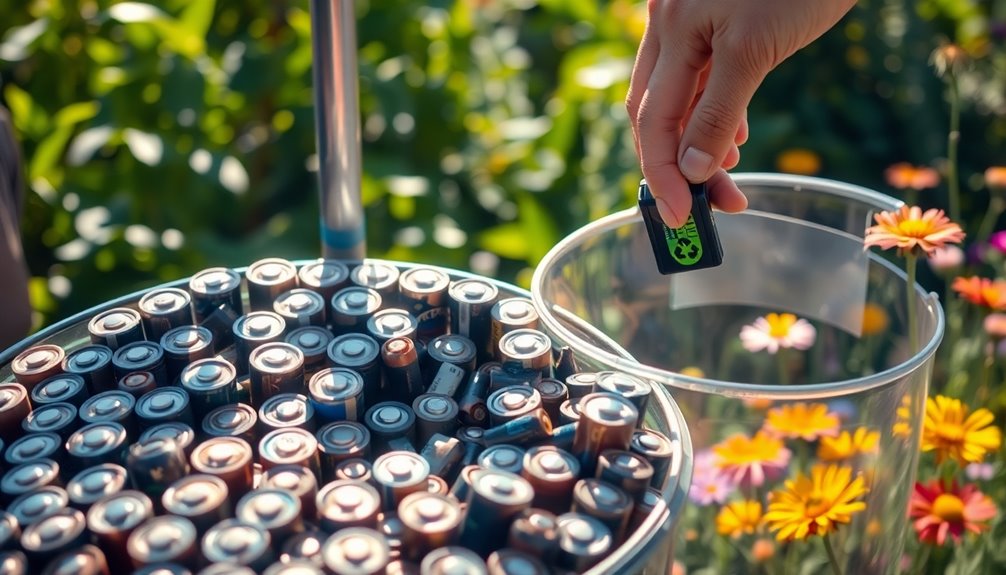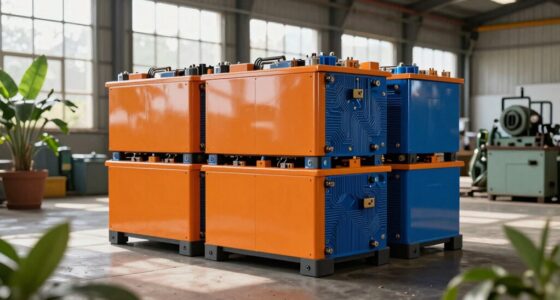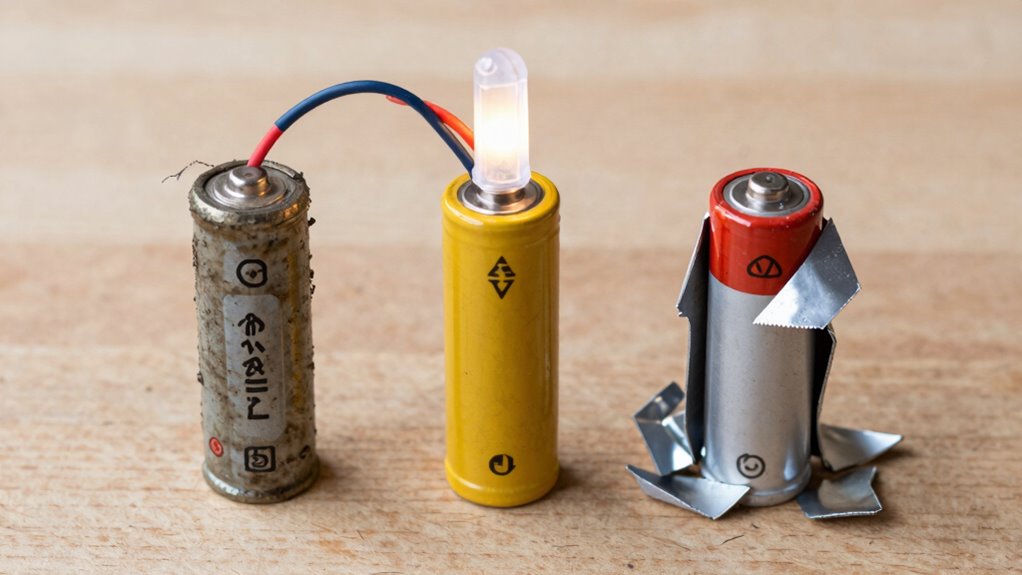

Battery reuse means directly using a battery in its original form after removal, often after testing to guarantee safety. Repurposing involves giving a used battery a new role, usually in different applications, to extend its lifespan. Recycling focuses on extracting valuable materials when reuse or repurposing isn’t possible, preventing environmental harm. Understanding these differences helps you make better decisions for sustainability and waste reduction—if you want to explore how each option impacts the environment, keep going.

Get backup power and energy gear delivered free with Prime
- Fast, free delivery on millions of items
- Prime Video, Amazon Music and more included
- Member-only deals all year
Key Takeaways
- Battery reuse involves directly using the original battery in a similar application without significant modification.
- Repurposing assigns a new function to the battery, often in different applications, extending its overall lifespan.
- Recycling processes recover valuable materials from batteries, focusing on responsible disposal and environmental safety.
- Reuse extends battery life with minimal processing, while repurposing involves adapting batteries for different roles.
- Recycling aims to close the battery lifecycle loop by recovering materials when reuse and repurposing are no longer feasible.
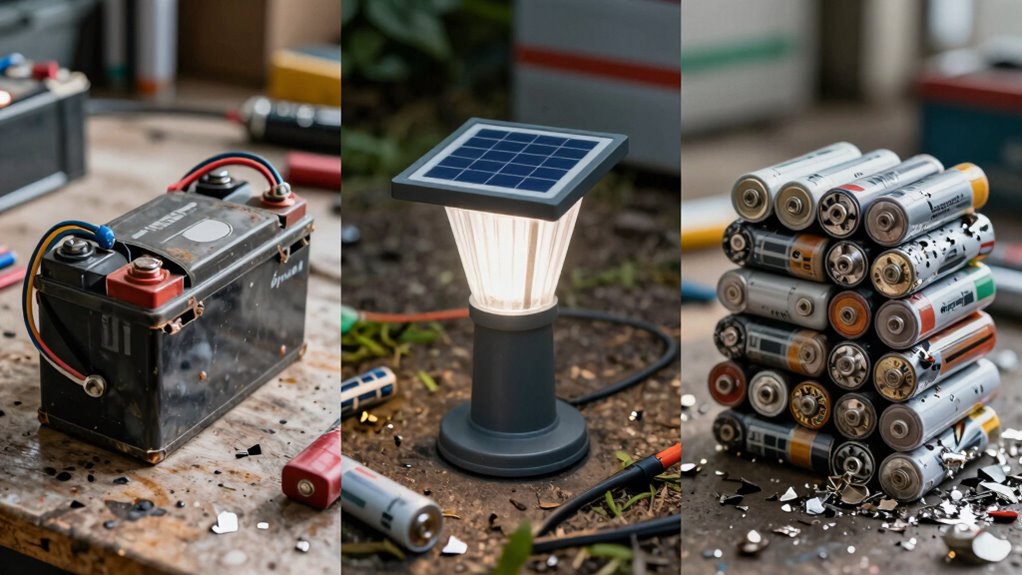
As the demand for batteries grows with our increasing reliance on portable electronics and electric vehicles, it’s more vital than ever to contemplate how we manage their end-of-life. Understanding the differences between reuse, repurpose, and recycle can help you make more informed decisions that impact both battery lifespan and the environment. Each approach plays a unique role in extending the usefulness of batteries and reducing their environmental impact, but they are not interchangeable.
Battery reuse involves directly using a battery in its original form after it has been removed from its initial device. For example, a lithium-ion battery from a laptop might be kept in service for a different device with similar power needs. Reuse extends the battery’s lifespan, delaying the need for disposal, and minimizes waste. This process is often the most straightforward way to maximize the value of a battery, but it relies on the battery still being in good condition and capable of delivering reliable performance. Proper testing is vital to guarantee safety and efficiency, as a poorly functioning reused battery can pose safety risks and environmental hazards. Additionally, testing and certification are essential to ensure the safety and reliability of reused batteries, especially when they are repurposed for different applications.
Repurposing takes reuse a step further by giving a used battery a new role, often in a different application. For instance, retired electric vehicle batteries, which may no longer meet the strict performance standards for vehicle use, can be repurposed for stationary energy storage. This approach helps extend the battery’s overall lifespan, making better use of the materials and reducing the need for manufacturing new ones. Repurposing reduces the environmental impact because it decreases the demand for raw materials and lowers the energy consumption associated with creating new batteries. It’s a smart way to leverage existing resources while minimizing waste and environmental harm. Additionally, understanding the process of battery recycling is crucial for a comprehensive approach to battery management, as it ensures responsible disposal when reuse and repurposing are no longer feasible. Proper recycling processes recover valuable materials and prevent environmental contamination from hazardous components.
As an affiliate, we earn on qualifying purchases.
Frequently Asked Questions
How Long Can Reused or Repurposed Batteries Last?
Reused or repurposed batteries can last anywhere from several months to a few years, depending on their initial condition and how you use them. Battery longevity varies based on factors like usage patterns and storage. The reuse benefits include extending the battery’s life and reducing waste. Proper maintenance and careful application can maximize their lifespan, helping you get the most out of your repurposed batteries and supporting sustainability efforts.
Are There Safety Risks With Battery Reuse or Repurposing?
Yes, there are safety risks with battery reuse or repurposing if you don’t follow proper safety protocols and risk management practices. You could encounter issues like leaks, overheating, or even fires if batteries aren’t properly tested or handled. To stay safe, always use appropriate protective gear, inspect batteries thoroughly, and adhere to manufacturer guidelines. Proper training and safety protocols are essential to minimize potential hazards during reuse or repurposing.
What Industries Primarily Benefit From Battery Reuse?
Imagine batteries as aging heroes whose stories aren’t over. You benefit mainly in industries like industrial applications and consumer electronics, where reused batteries continue to power essential equipment and gadgets. These sectors cherish the reliability and sustainability of battery reuse, giving new life to batteries once thought spent. By embracing reuse, you help reduce waste, lower costs, and support a greener future, turning old energy sources into valuable assets again.
How Does Recycling Impact the Environment Compared to Reuse?
Recycling offers significant environmental benefits by reducing waste and conserving resources, but it also faces challenges like complex processes and potential pollution. Reuse, on the other hand, minimizes environmental impact more effectively by extending a battery’s life and reducing the need for new materials. By prioritizing reuse, you lower environmental risks associated with recycling challenges, ultimately helping protect the environment more sustainably.
Can Second-Hand Batteries Be Legally Sold or Distributed?
Yes, you can legally sell or distribute second-hand batteries, but you need to follow legal regulations. Most regions require resale certification to guarantee safety and proper handling. You must comply with environmental and safety standards, especially for batteries containing hazardous materials. Before reselling, obtain the necessary certifications and ensure the batteries meet quality and safety requirements. This helps protect consumers and the environment, keeping your resale activities legal and responsible.
Conclusion
By understanding the difference between reuse, repurpose, and recycle, you can make smarter choices for your batteries and the environment. Did you know that over 90% of lithium-ion batteries can be reused or repurposed before recycling? This considerably reduces waste and conserves resources. So, next time you think about disposal, consider options that extend your battery’s life—helping you save money and protect the planet at the same time.
Halloween Picks
halloween
As an affiliate, we earn on qualifying purchases.