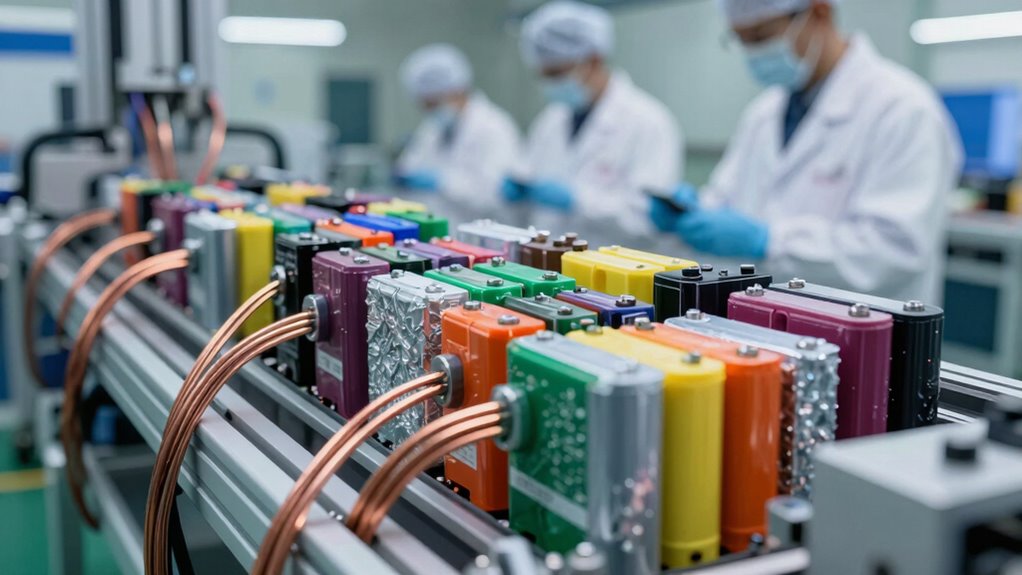

Recycled materials are changing battery manufacturing by offering a sustainable, cost-effective alternative to traditional raw materials, helping you reduce environmental impact. Recycling lowers reliance on damaging mining activities and cuts carbon emissions, supporting eco-friendly practices. It also stabilizes supply chains and improves costs amid rising demand. Advances in recycling technology now allow for higher purity and greater recovery of valuable metals. To discover how these innovations will shape the future of batteries, keep exploring this important topic.

Get backup power and energy gear delivered free with Prime
- Fast, free delivery on millions of items
- Prime Video, Amazon Music and more included
- Member-only deals all year
Key Takeaways
- Recycling provides high-purity metals, reducing reliance on environmentally damaging mining for battery production.
- It stabilizes supply chains by decreasing dependency on volatile raw material markets like lithium and cobalt.
- Technological advancements improve recovery efficiency, enabling more sustainable and cost-effective battery manufacturing.
- Recycling supports the development of longer-lasting, more efficient batteries with innovative design features.
- Industry adoption accelerates as recycled materials help meet rising demand for sustainable energy storage solutions.
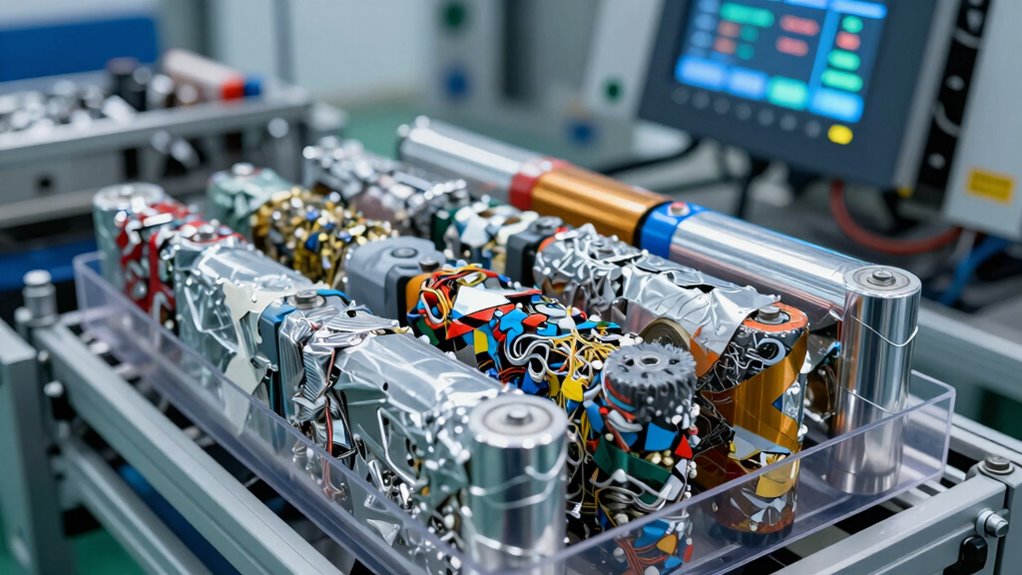
Recycled materials are transforming how batteries are made, offering a sustainable alternative to traditional raw materials. As the demand for batteries grows, especially with the rise of electric vehicles and renewable energy storage, the need for more eco-friendly manufacturing practices becomes urgent. Battery recycling plays an essential role here, allowing you to recover valuable metals like lithium, cobalt, and nickel from used batteries. Instead of extracting these materials from the earth, which often involves environmentally damaging processes, recycling helps close the loop, making battery production more sustainable. This shift not only reduces the environmental footprint but also helps stabilize supply chains, preventing shortages of critical raw materials.
When you incorporate recycled materials into battery manufacturing, you’re directly contributing to sustainable energy goals. The use of recycled metals lowers the reliance on mining, which is energy-intensive and often causes habitat destruction. By reusing materials, manufacturers can considerably cut down on carbon emissions associated with raw material extraction and refining. This process aligns perfectly with the broader push for sustainable energy solutions, where minimizing environmental impact is just as important as developing high-performance batteries. Recycling also encourages innovation within the industry, prompting companies to develop more efficient methods of extracting and purifying metals from used batteries, which further enhances the sustainability of the entire supply chain. Additionally, advancements in battery recycling techniques are making it possible to recover higher purity levels of metals, boosting the overall efficiency of recycling processes. These improvements are driven by the increasing demand for recycled materials, which motivates research and investment in more effective recycling technologies.
As you see the benefits of using recycled materials, it becomes clear that battery recycling isn’t just an environmental necessity—it’s a strategic advantage. It helps guarantee a stable supply of essential materials without depleting finite natural resources. Plus, recycled batteries tend to be more cost-effective over time because they reduce dependency on volatile raw material markets. This economic advantage encourages manufacturers to invest more in recycled materials, accelerating the shift toward greener battery production. The integration of recycled materials into manufacturing processes also fosters innovation in battery design, leading to longer-lasting, more efficient energy storage solutions that support sustainable energy systems worldwide. Moreover, increasing awareness of the importance of sustainable practices is motivating industries to adopt more environmentally responsible approaches, further advancing the goal of a greener future. Additionally, ongoing advancements in recycling technologies are essential to meeting the increasing demand for sustainable energy solutions and optimizing resource recovery.
Furthermore, the development of advanced recycling methods is helping to improve the quality and quantity of recovered materials, making recycling even more viable as a primary source for battery production.
As an affiliate, we earn on qualifying purchases.
Frequently Asked Questions
How Do Recycled Materials Compare in Performance to Virgin Materials?
Recycled materials often perform comparably to virgin materials, helping you maintain battery efficiency while offering environmental benefits. They support supply chain sustainability by reducing reliance on mined resources and lowering environmental impact. Although some variations in purity exist, advancements in recycling technology guarantee that recycled components meet strict performance standards. This shift allows you to produce high-quality batteries while promoting eco-friendly practices and contributing to a more sustainable future.
What Are the Biggest Challenges in Sourcing Recycled Battery Components?
You might find it surprising, but sourcing recycled battery components faces big hurdles like supply chain complexities and contamination risks. These challenges often come from inconsistent collection processes and difficulty separating impurities, which can compromise quality. You need reliable sources and strict quality control to guarantee recycled materials meet performance standards. Overcoming these issues requires coordination across industries, investment in better sorting tech, and developing standardized recycling practices.
Are Recycled Materials Cost-Effective for Large-Scale Battery Production?
Recycled materials can be cost-effective for large-scale battery production, especially as market demand rises. You’ll notice that improvements in the supply chain and recycling technologies help lower costs, making recycled components more competitive with virgin materials. While initial investments may be higher, economies of scale and increased demand drive down expenses over time. This shift not only reduces costs but also supports sustainability efforts in the industry.
How Does Recycling Impact Battery Safety and Lifespan?
You’ll find that recycling improves battery safety and lifespan by reducing impurities and ensuring higher-quality materials. Notably, 85% of consumers now prefer eco-friendly products, driving companies to meet environmental regulations and boost safety standards. Recycling minimizes the risk of harmful leaks, corrosion, and short circuits, making batteries more durable and safer over time. Increased consumer awareness encourages manufacturers to prioritize recycled materials, which directly enhances battery longevity and safety.
What Policies Support the Adoption of Recycled Materials in Manufacturing?
You’ll find that government incentives, like tax breaks and grants, strongly support adopting recycled materials in manufacturing. These policies encourage companies to use sustainable resources and reduce waste. Additionally, international standards promote consistent quality and safety in recycled materials, fostering global trust and adoption. By aligning with these policies, manufacturers can innovate responsibly, meet regulatory requirements, and contribute to a more sustainable industry.
Conclusion
By now, it’s clear that recycled materials are transforming battery manufacturing like a breath of fresh air. They’re not just reducing waste; they’re fueling a greener, more sustainable future. Think of it as turning yesterday’s trash into tomorrow’s treasure, opening new possibilities while protecting our planet. Embracing this shift means you’re part of a movement that’s reshaping how we power our lives—one recycled battery at a time.
Halloween Picks
halloween
As an affiliate, we earn on qualifying purchases.