TL;DR

Get backup power and energy gear delivered free with Prime
- Fast, free delivery on millions of items
- Prime Video, Amazon Music and more included
- Member-only deals all year
Delectrik Systems and Bondada Engineering have been awarded a contract for a 120MWh vanadium redox flow battery project in Gujarat for state-owned GIPCL. The project is intended to store renewable electricity for dispatch at different times, but the available report does not give its cost, construction schedule or expected commissioning date.
Delectrik Systems and Bondada Engineering have been awarded a contract for a 120MWh vanadium redox flow battery project in Gujarat, according to Energy-Storage.News. The project is for Gujarat Industries Power Company Limited (GIPCL) and would add long-duration storage capacity to a power portfolio dominated by renewable generation.
The contract followed a competitive solicitation by GIPCL seeking an engineering, procurement and construction contractor, according to the report. Delectrik confirmed the award to Energy-Storage.News by email. The supplied report does not state the contract value or provide a construction timetable, so the project’s cost and expected start of operations are not confirmed here.
The tender envisages the battery operating at approximately 1.5 cycles per day. An indicative schedule in the tender documents suggested charging from 1 a.m. to 5 a.m. and from 9 a.m. to 4 p.m., with discharging from 6 a.m. to 9 a.m. and from 6 p.m. to midnight. These timings are described as indicative, not as a confirmed final operating schedule.
Delectrik is working with Bondada Engineering, its partner on a separate 100MWh vanadium flow battery award for NTPC in Gujarat. That earlier project was awarded in June, the report says, around four months before the GIPCL award was reported. The NTPC system is planned as a 16.7MW/100MWh installation at the Khavda Renewable Energy Park; it is distinct from the new 120MWh contract.
Adding Storage to Gujarat’s Renewable Fleet
GIPCL’s generation portfolio totals 1,859.4MW, including 937MW of solar photovoltaic capacity and 112.4MW of wind generation, according to the source report. Storage can help shift electricity from periods when it is available to times when it is needed, including evening demand periods. The proposed discharge schedule reflects that potential role, though actual operation will depend on final project design and dispatch requirements.
The tender documents also noted that GIPCL’s 310MW of combined-cycle gas turbine capacity in Vadodara had been out of operation since November 2021 because of elevated fuel costs. That background makes the storage award relevant to the company’s ability to manage a renewable-heavy portfolio, but the source does not say the battery will replace those gas plants or provide an equivalent amount of firm power.
The award is another Indian utility-scale contract for a non-lithium storage technology. It may offer evidence of interest in longer-duration storage, but one contract alone does not establish how widely flow batteries will be adopted or whether they will prove more economical over the project’s lifetime.
Products Worth Considering

Samsung 27 Odyssey OLED G5 (G50SF) QHD QD-OLED Gaming Monitor

Apple iPad Air (4th Generation, 10.9-inch, Wi-Fi, 256GB) – Space Gray

Samsung 32-Inch Odyssey OLED G8 (G80SH) 4K Gaming Monitor
As an affiliate, we earn on qualifying purchases.
Delectrik’s Recent Gujarat Awards
Delectrik’s partnership with Bondada follows their successful bid for the 100MWh NTPC project. NTPC had issued that tender in February and awarded the contract in June, according to Energy-Storage.News. The report says Delectrik previously installed a 3MWh pilot system for NTPC through a 2024 tender, with installation completed in mid-2025 and the smaller system reported by the company to be operating successfully.
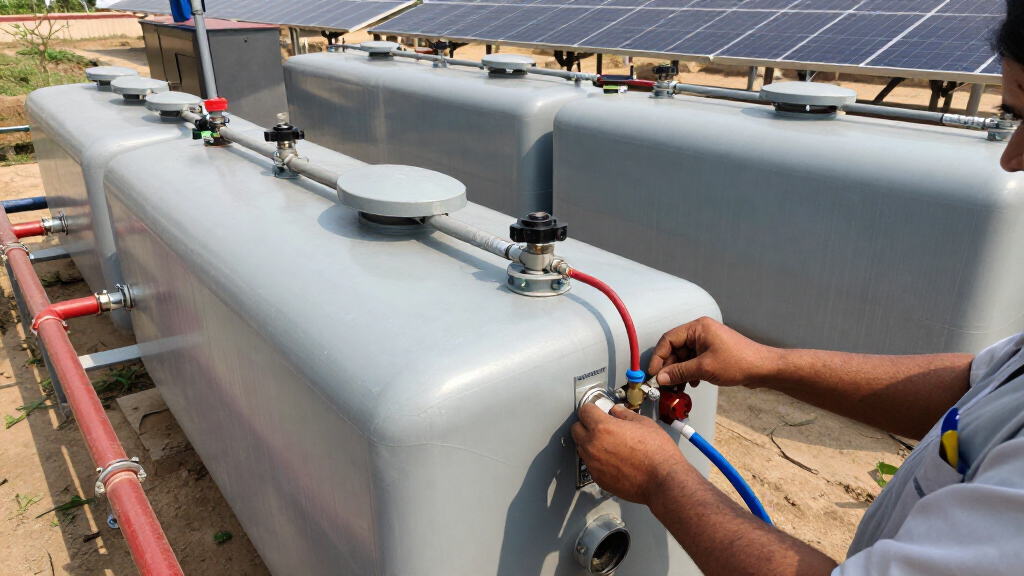
Vanadium flow batteries store energy in liquid electrolytes held in tanks. Their energy capacity can be increased by adding electrolyte and tank capacity, while their power output is determined separately by the system’s cell stacks. Energy-Storage.News notes that the technology can operate over thousands of cycles without degradation and does not carry lithium-ion batteries’ thermal-runaway risk. It also reports that flow batteries generally have higher upfront capital costs than lithium-ion systems; claims of lower lifetime ownership costs depend on project conditions and are not confirmed for this contract.
In a July interview cited by the outlet, Delectrik chief executive Vishal Mittal said demand in India was moving beyond two- and four-hour storage toward systems of six hours or more as renewable generation expands. India’s Central Electricity Authority has modelled a need for about 74GW and 411GWh of storage by 2031-32, according to the report. That projected need spans technologies and is not a forecast of flow battery demand specifically.
“The LDES flow battery project “is a true template for upcoming projects to supply firm and dispatchable renewable energy on a round-the-clock (FDRE RTC) basis.””
— Vishal Mittal, Delectrik Systems chief executive, in a LinkedIn post cited by Energy-Storage.News
Project Cost and Schedule Remain Undisclosed
The available report does not identify the contract value, planned construction start, commissioning date, project location within Gujarat or final system power rating. It also does not establish whether the indicative charging and discharging periods will be adopted unchanged. Those details would be needed to assess the project’s delivery timeline and precise operating role.
The report describes the award but does not provide a detailed project agreement, GIPCL statement or independent assessment of expected costs and performance. Claims about flow batteries’ lifetime economics are general arguments made by technology advocates, not verified results for this installation. The project’s final configuration and commercial performance remain to be seen.
Delivery Details and Commissioning
The next visible milestones are likely to be disclosure of the project’s delivery schedule and technical configuration, followed by construction and commissioning updates from GIPCL, Delectrik or Bondada. No dates for those steps are given in the source report, so it is not possible to say when the battery will begin operating.
Once operational, the system’s performance and dispatch pattern could provide a practical test of vanadium flow storage in a renewable-heavy Indian utility portfolio. Until operating data and project costs are available, comparisons with lithium-ion batteries or other long-duration options should remain provisional.
Key Questions
Who won the 120MWh battery contract?
Delectrik Systems and Bondada Engineering were awarded the contract for GIPCL’s Gujarat project, according to Energy-Storage.News.
What type of battery is planned?
The project is described as a vanadium redox flow battery, a technology that stores energy in liquid electrolytes. The source does not state the system’s final power rating.
When will the battery be built or start operating?
The available report does not give a construction start date or commissioning schedule. Those details remain unconfirmed.
How is this project related to the NTPC award?
Delectrik and Bondada also won a separate 100MWh contract for NTPC in Gujarat. That project is planned for Khavda Renewable Energy Park and is distinct from GIPCL’s 120MWh award.
Source: energy-storage.news