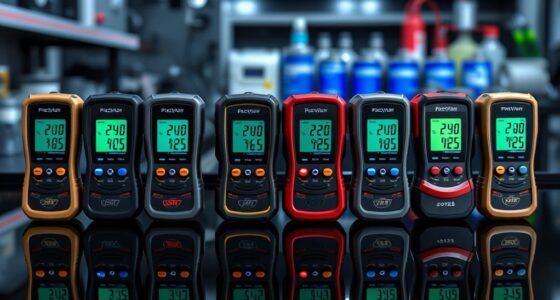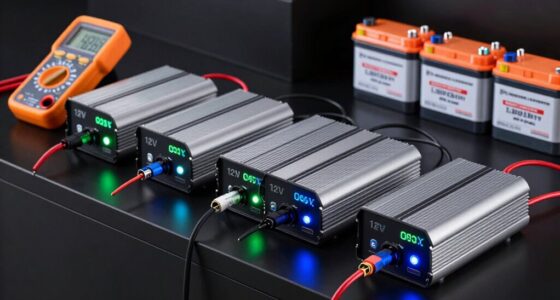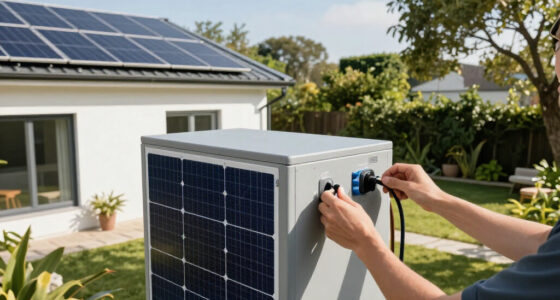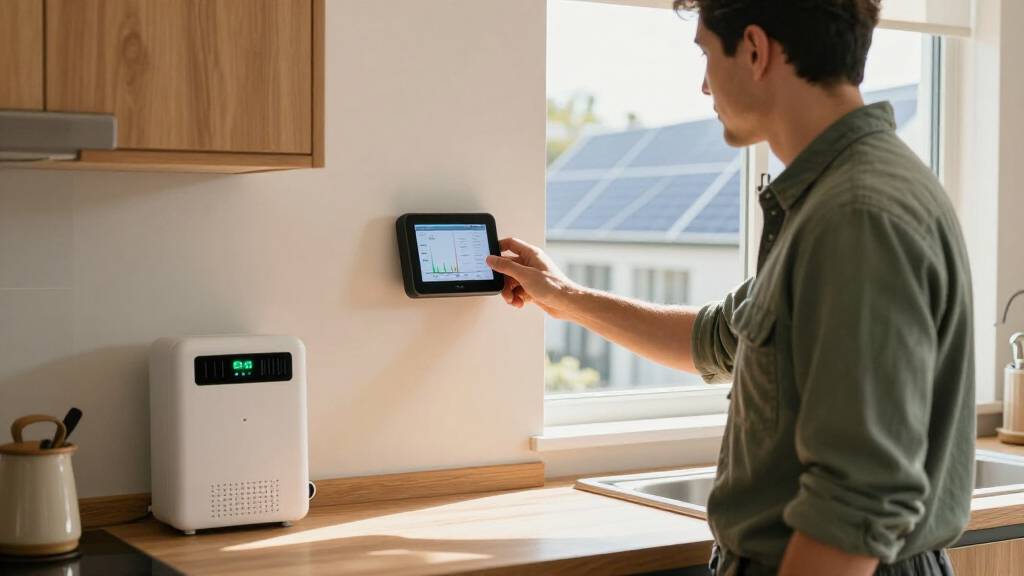

The best home energy monitors pair useful circuit-level data with an app or smart-home setup you can actually use. I rank the Emporia Vue 3 with 16 Circuit Sensors best overall for broad household coverage, while the Refoss EM16P stands out for open integrations and the Renogy ONE Core for off-grid systems. The main tradeoffs are how many circuits you can track, how well the monitor fits your existing smart-home tools, and whether installation suits your electrical panel and comfort level. More sensors can reveal more detail, but they also add setup work and may not be useful in every home. Read on for the full comparison and guidance on choosing the right monitor for your setup.

Get backup power and energy gear delivered free with Prime
- Fast, free delivery on millions of items
- Prime Video, Amazon Music and more included
- Member-only deals all year
Key Takeaways
- The Emporia Vue 3 with 16 sensors is the strongest general-purpose pick: its sensor count suits homes that want broad circuit-level visibility without choosing an off-grid-specific system.
- Sensor count should match your panel, not just sound impressive: the 8-sensor Emporia Vue 3 can suit a smaller monitoring plan, while 16- and 18-circuit models offer more room to track individual loads.
- Smart-home compatibility separates the Refoss and Home Assistant-focused options: buyers who want local control or open integrations should prioritize those capabilities over a feature list built around app-only monitoring.
- The Renogy ONE Core serves a different job: its battery and off-grid focus makes it a better match for vans, cabins, boats, and tiny homes than a conventional whole-house panel monitor.
- More monitoring features mean more setup decisions: circuit mapping, panel fit, sensor placement, and integration support matter as much as real-time readings when choosing among this lineup.
| Refoss EM16P Smart Home Energy Monitor with Open API and Home Assistant |  | Best for Local Smart-Home Control | Main circuit sensors: 2, 2–200A each | Branch circuit sensors: 16, 1–60A each | Accuracy: ±1%; ±2% at low current | VIEW LATEST PRICE | See Our Full Breakdown |
| Emporia Vue 3 Home Energy Monitor with 16 Circuit Sensors |  | Best for Broad Circuit Coverage | Model: EMV3A-2P-16 | Included circuit sensors: 16 branch sensors, 50A | Accuracy: ±2% | VIEW LATEST PRICE | See Our Full Breakdown |
| Emporia Vue 3 Home Energy Monitor with 8 Circuit Sensors |  | Best Starter Circuit Monitor | Model: EMV3A-2P-8 | Included sensors: 8 circuit sensors | Accuracy: ±2% | VIEW LATEST PRICE | See Our Full Breakdown |
| Emporia Vue 3 Home Energy Monitor – Smart Home Automation Module and Real-Time Electricity Usage Monitor |  | Best for Flexible Panel Configurations | Model number: EMV3A-2P-WH | Supported systems: Single phase, single-split phase, 2-wire, 3-wire, 3-phase, 4-wire Wye | Connectivity: 2.4 GHz Wi-Fi | VIEW LATEST PRICE | See Our Full Breakdown |
| Meross Smart Home Energy Monitor with 16 Circuit Sensors |  | Best Value for Local Monitoring | Main circuit capacity: 2 circuits, 200A | Branch circuit capacity: Up to 16 circuits, 60A | Accuracy: ±1% | VIEW LATEST PRICE | See Our Full Breakdown |
| Siemens Inhab Smart Home Energy Monitor with Circuit-Level Sensors |  | Best for Solar and Whole-Panel Visibility | Model: INHEM1216 | Main sensors: 2 x 200A CTs | Circuit sensors: 16 x 50A CTs | VIEW LATEST PRICE | See Our Full Breakdown |
| Renogy ONE Core: All-in-one Off-Grid Energy Monitoring Panel |  | Best for Off-Grid DC Systems | Power source: Battery powered | Minimum operating voltage: 8V DC | Measurement type: Voltmeter and ammeter | VIEW LATEST PRICE | See Our Full Breakdown |
| Meross Smart Home Energy Monitor with 18 Circuit Monitoring | | Best for Home Assistant and Local Data | Model: EM16 | Number of circuits: 18 | Monitoring capacity: Main circuits 200A; branch circuits 60A | VIEW LATEST PRICE | See Our Full Breakdown |
| Smart Home Energy Monitor with 16 50A Circuit Sensors |  | Best for Rental and Shared-Circuit Cost Tracking | Sensor count: 16 | Sensor current: 50A | Supported voltages: 120VAC, 240VAC, 415Y/240VAC | VIEW LATEST PRICE | See Our Full Breakdown |
| Refoss Smart Home Energy Monitor with 16 60A Circuit Sensors and Local Control |  | Best for Local Automation and Long-Term Data | Sensor count: 16 | Circuit capacity: 60A per sensor | System compatibility: Single-phase, split-phase, 3-phase 4-wire Wye | VIEW LATEST PRICE | See Our Full Breakdown |
| home energy monitor | Warranty | Dimensions | Connectivity |
|---|---|---|---|
| Refoss EM16P Smart Home Energy | 2 years | 4.5 x 3.5 x 1.1 inches | — |
| Emporia Vue 3 Home Energy Moni | 1 year | 10 x 5 x 5 inches | 2.4 GHz Wi-Fi and internet connection required |
| Emporia Vue 3 Home Energy Moni | 1 year | — | 2.4 GHz Wi-Fi and internet connection required |
| Emporia Vue 3 Home Energy Moni | 1 year | 10 x 5 x 5 inches | 2.4 GHz Wi-Fi |
| Meross Smart Home Energy Monit | 2 years | 4.5 x 3.48 x 1.1 inches | — |
| Siemens Inhab Smart Home Energ | — | 1.1 x 5.71 x 2.76 inches | Wi-Fi |
| Renogy ONE Core: All-in-one Of | 2 years | — | Bluetooth and Wi-Fi |
| Meross Smart Home Energy Monit | 2 years | — | — |
| Smart Home Energy Monitor with | 1 year | 3.1 x 1.2 x 4.18 inches | 2.4GHz Wi-Fi, MQTT |
| Refoss Smart Home Energy Monit | 2 years | 4.5 x 3.5 x 1.1 inches | Wi-Fi, Open API, MQTT, WebSocket |
More Details on Our Top Picks
Refoss EM16P Smart Home Energy Monitor with Open API and Home Assistant
The Refoss EM16P is my pick for homeowners who want detailed circuit data without routing it through a required cloud service. Its built-in web interface, Open API, MQTT, and native Home Assistant integration give technically minded buyers more control over how they view and use energy readings than the app-centered Emporia Vue 3. It monitors two main circuits and up to 16 branch circuits, so you can separate larger household loads and build circuit-level alerts or solar automations. The tradeoff is a more hands-on setup: installation requires access to the electrical panel, and the low-current accuracy falls to ±2%. Compared with the similarly local Meross EM16, Refoss lists the same five-year data capacity but has a slightly heavier unit. This is a strong fit for automation; buyers seeking a simple app-first setup may prefer Emporia.
Pros:- Local monitoring through the built-in web UI without requiring a cloud service
- Native Home Assistant integration plus Open API and MQTT
- Monitors two main circuits and up to 16 branch circuits
- Supports circuit alerts and solar automation
Cons:- Clamp-on installation requires access to the home’s circuit panel
- Accuracy is ±2% at low current rather than the stated ±1% elsewhere
- At 4.24 pounds, it is heavier than the Meross EM16 listed here
Best for: Home Assistant users and technically confident homeowners who want local access, open integrations, and monitoring across many circuits.
Not ideal for: Buyers who want a plug-and-play app experience, cannot access their electrical panel, or need the stated ±1% accuracy at low current.
- Main circuit sensors:2, 2–200A each
- Branch circuit sensors:16, 1–60A each
- Accuracy:±1%; ±2% at low current
- Data storage:Up to 5 years
- Connectivity and integrations:Wi-Fi, built-in web UI, Open API, MQTT, Home Assistant
- Certification:ETL certified; compliant with UL 61010
- Warranty:2 years
- Dimensions:4.5 x 3.5 x 1.1 inches
Our verdict“Choose the Refoss EM16P if local control and flexible Home Assistant automation matter more than a beginner-friendly app setup.”
Emporia Vue 3 Home Energy Monitor with 16 Circuit Sensors
The Emporia Vue 3 with 16 sensors makes the most sense when you want to identify usage across many individual circuits without adding branch sensors separately. Alongside whole-home readings, it can monitor solar and net metering through the Emporia app, with live data, notifications, and energy-management automations. That app-led approach is simpler for many households than the local APIs and setup options of the Refoss EM16P, but it depends on 2.4 GHz Wi-Fi and an internet connection. Its ±2% stated accuracy is also less precise on paper than the ±1% listed for the Refoss and Meross monitors. Check your panel configuration before buying: some supported 3-wire and 3-phase setups need an additional sensor. With a one-year warranty, it offers wide included coverage but less warranty time than the two-year Refoss and Meross options.
Pros:- Includes 16 branch sensors for detailed circuit-level monitoring
- Tracks whole-home use, solar, and net metering
- App provides live data, notifications, and energy-management automations
- UL- and CE-listed
Cons:- Requires 2.4 GHz Wi-Fi and an internet connection
- Some supported wiring configurations need an additional sensor
- One-year warranty is shorter than the two-year coverage listed for Refoss EM16P and Meross EM16
Best for: Homeowners who want whole-home, solar, and up to 16 branch-circuit readings in one app-based system.
Not ideal for: Buyers who need local monitoring without internet, want open integrations, or have a panel configuration requiring an additional sensor.
- Model:EMV3A-2P-16
- Included circuit sensors:16 branch sensors, 50A
- Accuracy:±2%
- Connectivity:2.4 GHz Wi-Fi and internet connection required
- Supported systems:Single phase, single-split phase, and 2-wire; some 3-wire and 3-phase systems with an additional sensor
- Certifications:UL and CE Listed
- Warranty:1 year
- Dimensions:10 x 5 x 5 inches
Our verdict“Pick this Emporia configuration if broad included circuit coverage and app-based solar tracking are your priorities.”
Emporia Vue 3 Home Energy Monitor with 8 Circuit Sensors
For a household that wants circuit-level insight but does not need 16 branch readings, the Emporia Vue 3 with 8 sensors is the more focused entry into this lineup. It still covers whole-home use and supports solar and net metering through Emporia’s app, while the eight sensors let you track selected loads rather than every branch circuit. That makes it easier to start with the circuits you care about most, though buyers who want wider coverage from the outset should choose the 16-sensor Emporia Vue 3 instead. Like that model, this version needs 2.4 GHz Wi-Fi and internet, and some wiring systems call for an extra sensor. Its one-second data is retained for only three hours, limiting its usefulness for reviewing fine-grained usage later. UL and CE listings add a clear safety credential, but do not remove the need to check panel compatibility.
Pros:- Eight included sensors support circuit-level monitoring without requiring coverage of every branch
- Tracks whole-home use and supports solar and net metering
- Offers real-time readings and energy-management features through the app
- UL- and CE-listed
Cons:- Requires 2.4 GHz Wi-Fi and an internet connection
- One-second data is retained for only three hours
- Some supported electrical systems require an additional sensor
Best for: Homeowners starting with a short list of high-use circuits, such as HVAC, water heating, or kitchen appliances, who also want solar monitoring.
Not ideal for: Buyers who want to monitor more than eight circuits, need local offline access, or want to retain one-second readings beyond three hours.
- Model:EMV3A-2P-8
- Included sensors:8 circuit sensors
- Accuracy:±2%
- Connectivity:2.4 GHz Wi-Fi and internet connection required
- Compatible interfaces:iPhone, Android, web app
- Supported systems:Single phase, single-split phase, and 2-wire; some 3-wire and 3-phase systems with an additional sensor
- Certifications:UL and CE listed
- Warranty:1 year
Our verdict“Choose the eight-sensor Vue 3 if you want to track a handful of important circuits and can accept app-dependent access.”
Emporia Vue 3 Home Energy Monitor – Smart Home Automation Module and Real-Time Electricity Usage Monitor
This Emporia Vue 3 module stands out for its stated support across a wide range of electrical systems, including single phase, split phase, 2-wire, 3-wire, 3-phase, and 4-wire Wye. That breadth can make it a better starting point than the eight- or 16-sensor Emporia packages for owners whose panel setup needs careful matching. It provides Wi-Fi readings, solar and net-metering support, and the option to add sensors for appliance-specific monitoring. Unlike the packaged Vue 3 options in this roundup, the supplied details do not specify an included branch-sensor count, so buyers should confirm what is included before planning circuit coverage. It also relies on 2.4 GHz Wi-Fi, and one-second updates are available only while the app is open. Its retention is clear for minute and hourly data, but shorter than the five-year storage stated for Refoss EM16P and Meross EM16.
Pros:- Lists support for single-phase, split-phase, 2-wire, 3-wire, 3-phase, and 4-wire Wye systems
- Supports solar and net metering
- Additional sensors can extend monitoring to specific appliances
- Provides real-time energy data and automation features
Cons:- Requires 2.4 GHz Wi-Fi for full functionality
- Additional sensors are sold separately, and the supplied details do not state an included sensor count
- One-second updates are available only while the app is open
Best for: Homeowners with less common panel wiring who want a Wi-Fi-based monitor and are prepared to confirm sensor needs before purchase.
Not ideal for: Buyers who want a clearly stated set of included branch sensors, local monitoring without Wi-Fi, or long-term one-second data access.
- Model number:EMV3A-2P-WH
- Supported systems:Single phase, single-split phase, 2-wire, 3-wire, 3-phase, 4-wire Wye
- Connectivity:2.4 GHz Wi-Fi
- Data retention:7 days for 1-minute data; hourly data retained indefinitely
- Certifications:CE and UL
- Warranty:1 year
- Dimensions:10 x 5 x 5 inches
- Weight:1.92 pounds
Our verdict“Consider this Vue 3 module if panel-system compatibility is your main concern and you are willing to verify sensor inclusions before buying.”
Meross Smart Home Energy Monitor with 16 Circuit Sensors
The Meross EM16 combines the broad circuit coverage and local-control approach that make the Refoss EM16P appealing, while listing a lower unit weight and a two-year warranty. It monitors two main circuits and up to 16 branch circuits, tracks voltage, current, power, and power factor, and stores data for up to five years. Home Assistant support, local storage, customizable alerts, and no subscription fees suit owners who want energy data to feed a smart-home setup rather than remain inside a single vendor app. Its stated ±1% accuracy is stronger on paper than the ±2% figure for either Emporia Vue 3 package. The tradeoff is compatibility: Meross says it does not work with Delta electrical systems, and buyers need to verify their wiring before installation. Compared with Refoss, the feature set is closely matched, so wiring fit should drive the choice.
Pros:- Monitors two main circuits and up to 16 branch circuits
- Local data storage and Home Assistant compatibility without subscription fees
- Lists ±1% accuracy and up to five years of data storage
- Includes customizable alerts and a two-year warranty
Cons:- Not compatible with Delta electrical systems
- Wiring configuration should be checked before purchase and installation
- Panel installation requires access to the electrical cabinet
Best for: Home Assistant households seeking local, long-term monitoring across many circuits and willing to check electrical-system compatibility first.
Not ideal for: Owners with Delta systems or anyone unable to verify that their panel wiring matches the monitor’s supported configurations.
- Main circuit capacity:2 circuits, 200A
- Branch circuit capacity:Up to 16 circuits, 60A
- Accuracy:±1%
- Data storage:Up to 5 years
- Compatibility:Home Assistant; single-phase 2-wire, split-phase 3-wire, and 3-phase 4-wire Wye systems
- Certification:ETL-certified; compliant with UL 61010 testing standard
- Warranty:2 years
- Dimensions:4.5 x 3.48 x 1.1 inches
Our verdict“Choose the Meross EM16 if you want local Home Assistant monitoring with broad circuit coverage and your electrical system is compatible.”
Siemens Inhab Smart Home Energy Monitor with Circuit-Level Sensors
The Siemens Inhab is a strong fit for homeowners who want to see both whole-home energy flow and individual circuit use rather than rely on a single total. It monitors the main supply and up to 16 circuits, while its app tracks energy use and production and supports time-of-use and excess-solar management. Compared with the Meross EM16, which offers 18 circuits and local-data features, the Inhab’s appeal is its clearly specified main and branch sensors plus UL listing in the US and Canada. The tradeoff is that it needs to be installed inside an electrical panel, so it is not a plug-in option for renters or buyers who want to avoid panel work. Its stated availability is also limited to the United States and Canada.
Pros:- Tracks the main supply and up to 16 individual circuits
- Monitors both energy use and production, with time-of-use and excess-solar management features
- Includes custom notifications and historical tracking
- UL Listed in the United States and Canada
Cons:- Requires installation inside an electrical panel
- Availability is limited to the United States and Canada
Best for: Homeowners in the United States or Canada with solar or time-of-use electricity plans who want circuit-level data and energy-management alerts.
Not ideal for: Renters, people seeking a monitor that plugs into an outlet, or buyers outside the United States and Canada.
- Model:INHEM1216
- Main sensors:2 x 200A CTs
- Circuit sensors:16 x 50A CTs
- Connectivity:Wi-Fi
- Certifications:CE marked; UL Listed in the US and Canada
- Dimensions:1.1 x 5.71 x 2.76 inches
- Item weight:4.8 pounds
- Availability:United States and Canada
Our verdict“Choose the Siemens Inhab if you want panel-level and circuit-level solar insight with a UL-listed system for US or Canadian homes.”
Renogy ONE Core: All-in-one Off-Grid Energy Monitoring Panel
Unlike the panel-mounted home monitors in this roundup, the Renogy ONE Core is built for off-grid DC setups such as vans, cabins, boats, and tiny homes. It tracks voltage and current for compatible Renogy equipment and pairs remote app access with Bluetooth and Wi-Fi connectivity. Its 10,000mAh battery and support for smart accessories make it more suited to monitoring and managing a small standalone energy system than measuring household circuits. By comparison, the Siemens Inhab monitors a home’s main supply and individual AC circuits, so it is the more relevant choice for a conventional house. The Renogy’s boundary is clear: it is limited to 12V and 24V DC systems, and full remote features depend on connectivity. Its battery capacity may also constrain continuous monitoring time.
Pros:- Designed for off-grid applications including vans, cabins, boats, and tiny homes
- Supports remote monitoring through the app
- Works with compatible Renogy batteries and smart accessories for automation
- Battery-powered design offers flexible installation
Cons:- Limited to 12V and 24V DC systems rather than standard whole-home AC circuit monitoring
- Full remote features require Bluetooth or Wi-Fi connectivity
- Battery capacity may limit continuous monitoring duration
Best for: Van, boat, cabin, and tiny-home owners running compatible Renogy batteries or accessories on 12V or 24V DC systems.
Not ideal for: Homeowners seeking whole-house AC or individual breaker monitoring, or anyone without compatible Renogy equipment and a Bluetooth or Wi-Fi connection.
- Power source:Battery powered
- Minimum operating voltage:8V DC
- Measurement type:Voltmeter and ammeter
- Battery capacity:10,000mAh lithium-ion polymer
- Connectivity:Bluetooth and Wi-Fi
- Compatible devices:Renogy energy devices, smart accessories, batteries with Bluetooth, DC Home App, Renogy ONE Portal
- Item weight:0.41 kg
- Warranty:2 years
Our verdict“Pick the Renogy ONE Core for monitoring a compatible off-grid DC system, not for tracking circuits in a conventional home.”
Meross Smart Home Energy Monitor with 18 Circuit Monitoring
The Meross EM16 is a compelling choice for smart-home owners who want circuit-level monitoring tied to local automation. It supports Home Assistant, Open API, and web control, stores up to five years of data, and adds solar-surplus detection and smart alerts. Its 18-circuit coverage exceeds the Siemens Inhab’s stated capacity of 16 circuits, though the Siemens specifies its main and branch CT ratings and carries UL listing in the US and Canada. Meross instead stands out for local data handling and Home Assistant support, which may matter more to automation-focused buyers than a branded energy-management app. It still requires electrical-panel installation, and the lack of a built-in display means readings depend on connected software. Its supported wiring configurations are also specific, so buyers should confirm their system matches.
Pros:- Monitors up to 18 circuits
- Supports Home Assistant, Open API, and web control
- Stores up to five years of data and supports local data access
- Includes solar-surplus detection and smart alerts
Cons:- Requires installation by someone familiar with electrical systems
- No built-in display; readings rely on connected software
- Supported wiring configurations may not fit every home
Best for: Homeowners with compatible US-style wiring who use Home Assistant or Open API and want local circuit data, solar-surplus detection, and long-term records.
Not ideal for: People who want a built-in screen, avoid panel installation, or have wiring outside the listed supported configurations.
- Model:EM16
- Number of circuits:18
- Monitoring capacity:Main circuits 200A; branch circuits 60A
- Supported systems:Single-phase 2-wire; single-split phase 3-wire; 3-phase 4-wire with earthed neutral
- Data storage:Up to 5 years
- Compatibility:Home Assistant, Open API, web control
- Warranty:2 years
- Color:Orange and white
Our verdict“Choose the Meross EM16 if Home Assistant integration, local data, and 18-circuit coverage matter more to you than an onboard display.”
Smart Home Energy Monitor with 16 50A Circuit Sensors
This 16-sensor monitor has a distinct use case: tracking circuit use and assigning electricity costs in rental homes or shared living spaces. It records real-time consumption, supports customizable billing, and can operate locally through MQTT without a cloud dependency. That makes it more appealing to technically comfortable landlords or residents who want local data than the Siemens Inhab, whose described strengths center on whole-home energy and solar management. The 50A sensors and listed voltage support cover several common residential and multi-phase configurations, but MQTT and local network setup are part of the ownership experience rather than an optional advanced extra. The product information gives little detail about its app interface, and its one-year warranty is shorter than the two-year coverage listed for the Meross and Refoss monitors.
Pros:- Tracks 16 individual circuits with 50A sensors
- Supports real-time power use and electricity cost tracking
- Local MQTT operation avoids cloud dependency
- Customizable billing suits rental properties and shared homes
Cons:- MQTT and local network configuration require technical setup
- Only 2.4GHz Wi-Fi is specified
- App interface usability is not detailed, and the warranty is one year
Best for: Landlords and house-share residents who need circuit-level usage and customizable cost allocation and can configure MQTT on a local network.
Not ideal for: Buyers who want an intuitive app-led setup, a longer stated warranty, or monitoring without local network configuration.
- Sensor count:16
- Sensor current:50A
- Supported voltages:120VAC, 240VAC, 415Y/240VAC
- Connectivity:2.4GHz Wi-Fi, MQTT
- Compatibility:Home Assistant
- Dimensions:3.1 x 1.2 x 4.18 inches
- Item weight:4.05 pounds
- Warranty:1 year
Our verdict“Pick this monitor for private, MQTT-based circuit tracking and shared-home cost allocation if you are comfortable handling the setup.”
Refoss Smart Home Energy Monitor with 16 60A Circuit Sensors and Local Control
The Refoss is a good match for buyers who want local control, flexible automation interfaces, and long-term energy records. It supports Wi-Fi, Open API, MQTT, and WebSocket, with five years of data storage and compatibility with single-phase, split-phase, and 3-phase 4-wire Wye systems. Its 60A-per-sensor capacity is higher than the 16 x 50A sensors on the Siemens Inhab, while the Meross EM16 also offers local integration and five-year storage but specifies 18 circuits. That makes the Refoss’s case less about having the most sensors and more about its combination of higher-rated sensors and several local interfaces. The tradeoff is the technical installation: panel work may call for qualified help, and buyers should confirm their electrical system fits the listed types.
Pros:- Includes 16 sensors rated at 60A each
- Offers local control through Open API, MQTT, and WebSocket
- Stores data for up to five years
- Supports single-phase, split-phase, and 3-phase 4-wire Wye systems
Cons:- Panel installation may require technical knowledge or professional help
- Compatibility is limited to the listed electrical system types
- Product details do not specify a built-in display
Best for: Homeowners or technically confident smart-home users who want local automation through MQTT or WebSocket and need 60A circuit sensors.
Not ideal for: Buyers seeking simple plug-in monitoring, an uncomplicated installation, or support for electrical systems outside the listed configurations.
- Sensor count:16
- Circuit capacity:60A per sensor
- System compatibility:Single-phase, split-phase, 3-phase 4-wire Wye
- Data storage duration:Up to 5 years
- Connectivity:Wi-Fi, Open API, MQTT, WebSocket
- Warranty:2 years
- Dimensions:4.5 x 3.5 x 1.1 inches
- Item weight:4.27 pounds
Our verdict“Choose the Refoss if you want higher-rated circuit sensors and several local automation options, and are prepared for panel installation.”
How We Picked
I ranked these monitors by how well they address the core household need: understanding where electricity is going, with enough usability and compatibility to make the data actionable. I weighed circuit coverage, stated sensor capacity, smart-home and local-control support, and whether the product is aimed at a standard home or an off-grid system. I also considered the practical work involved: matching sensors to panel circuits, interpreting the readings, and fitting the monitor into the buyer’s existing setup.
The ranking favors options with a clear role and broad usefulness, rather than giving every product the same claim to be best. That puts the Emporia Vue 3 with 16 sensors first for its general household fit, while the 8-sensor version is a more limited choice and the Refoss models appeal to buyers who value integrations or local control. The Meross and generic 16-sensor models are judged against those needs, and the Renogy ONE Core is ranked for its narrower off-grid audience rather than treated as a direct substitute for a standard home monitor.
Factors to Consider When Choosing Best Home Energy Monitors
Before choosing a model, I would start with the electrical panel and the decisions you want the data to support. A monitor can show consumption, but its usefulness depends on whether you can identify the circuits, understand the readings, and connect them to your routines.
Match Sensor Count to the Circuits You Want to Track
Count the circuits you actually want to separate before choosing a sensor bundle. Whole-home readings can reveal overall patterns, while circuit-level sensors help distinguish large loads such as heating, cooking, or laundry equipment. You may not need a sensor on every branch circuit to answer your main questions. A common mistake is to buy the largest sensor package without checking whether the panel has room or whether the included sensors fit the intended circuits. Leave space in your plan for future loads, but avoid paying attention to circuit capacity as a substitute for checking panel compatibility. If you are unsure how to identify circuits, ask a qualified electrician to assess the panel.
Check Panel Fit and Installation Requirements First
Home energy monitors connect to electrical equipment, so physical fit and safe installation matter more than a quick setup claim. Panel layouts, available space, wiring arrangements, and local electrical rules can vary, and a product’s sensor count does not guarantee it suits every panel. Review the manufacturer’s installation guidance and compare it with your panel before buying. Do not open or work inside an energized panel unless you are qualified to do so. Some buyers may be comfortable with permitted DIY steps, while others should budget for professional installation as part of the decision. Confirming fit early can prevent a monitor from arriving only to prove unsuitable.
Choose Data Access That Fits Your Smart-Home Plans
Decide whether you only need readings in a manufacturer’s app or want the monitor to feed a broader automation system. Open integrations, Home Assistant support, and local-control options can matter when you want data to trigger routines or remain accessible without relying entirely on cloud services. Those features can also bring extra configuration and maintenance, so they are not automatically better for every household. Check which integrations are supported now, how they connect, and whether the functions you want depend on an account or internet access. Buyers who prefer a simple dashboard may be better served by prioritizing clear everyday reporting. Buyers building a custom smart home should verify compatibility before choosing by sensor count alone.
Separate Energy Readings From Cost Estimates
Usage data and a household bill are related, but they are not always the same thing. Cost estimates can depend on the electricity rate entered, billing periods, time-of-use schedules, and utility-specific charges. Before treating an app’s cost figure as a bill forecast, check whether it supports your rate structure and whether you must maintain those settings yourself. For households with variable rates, a simple flat-rate estimate may not capture when electricity is most expensive. Compare monitor readings with utility data over time instead of expecting a perfect match on day one. This distinction helps prevent a useful trend tool from being mistaken for an exact billing system.
Think Through Solar, Batteries, and Off-Grid Use
A conventional home monitor and an off-grid energy panel serve overlapping but different needs. Grid-connected homeowners may want to understand household circuits and solar surplus, while van, boat, cabin, or tiny-home users may need visibility into batteries and stored energy. Confirm that the monitor supports the system components and measurements you rely on; a household circuit monitor should not be assumed to replace dedicated battery monitoring. Solar owners should check whether the system distinguishes generation, household consumption, and exported or surplus power. Buyers with a mixed grid-and-battery setup should map out which readings they need before selecting a product category. The Renogy ONE Core’s off-grid focus is a reason to shortlist it for mobile or standalone power, not a reason to treat it as the default choice for every house.
Weigh Ongoing Setup Against the Detail You Will Use
More detailed monitoring can produce more decisions to make: naming circuits, checking sensor placement, setting rates, and maintaining integrations. Ask what you want to learn in the first month, such as which appliance drives peak use or whether a schedule reduces consumption. If the goal is a broad household trend, a smaller sensor plan may be easier to maintain than a fully mapped panel. If you want to automate around specific loads, extra circuit detail can justify the added setup. Check warranty terms, app requirements, and any stated subscription or service conditions before purchase. The best fit is the one whose level of detail you will keep using, not simply the one with the longest feature list.
Frequently Asked Questions
Can I install a home energy monitor myself?
That depends on the monitor, your panel, your electrical experience, and local rules. Many whole-home monitors require access to the electrical panel, where mistakes can cause serious injury or damage. Read the manufacturer’s installation instructions before purchase and ask a qualified electrician if the work is outside your skill or permitted DIY scope. Also confirm that the panel has room for the sensors and monitor hardware. A professional installation may be the safer choice even when the product is marketed as straightforward to set up.
Do I need a sensor for every circuit?
No. You can start by monitoring the circuits most likely to answer your questions, such as major appliances or heating and cooling equipment. Whole-home readings can still show overall patterns without individually tracking every branch. More sensors provide finer detail, but they also require more circuit identification and setup. Check whether your preferred model allows you to add or leave out sensors as your needs change. Match coverage to your panel and goals rather than assuming maximum coverage is necessary.
Will an energy monitor show exactly what my utility bill will be?
Not always. Monitors can estimate electricity cost from usage, but the result depends on correct rate settings and how well the system handles time-of-use pricing, fees, and billing periods. A flat-rate estimate may be less useful if your utility charges different rates at different times. Treat the monitor as a way to spot consumption patterns, then compare its totals with your utility account over several billing cycles. Check the product’s rate-setting options before relying on cost estimates for budgeting.
Which type should I choose if I use Home Assistant?
Prioritize the exact integration method and control options you plan to use, rather than relying on a general compatibility label. The Refoss EM16P is a standout in this roundup for its open API and Home Assistant focus, while other listed models also state Home Assistant support or local-control features. Verify whether the integration is maintained and whether it depends on cloud access, a local network, or additional setup. Community integrations can change over time, so check current documentation before buying. If you want a simple app and no custom automations, advanced integration support may add complexity without much benefit.
Can one of these monitors work for a van, cabin, or boat?
The Renogy ONE Core is the clearest fit in this lineup for vans, cabins, boats, and tiny homes because it is designed around off-grid energy and battery monitoring. Most of the other products are positioned as household circuit monitors, so do not assume they provide the measurements needed for a standalone battery system. Check battery chemistry, system voltage, and supported equipment against the product documentation before connecting anything. For a mixed system with grid power, solar, and batteries, list each source and load you need to monitor. A dedicated off-grid monitor may be more useful than a home-panel model even if both show energy data.
Conclusion
For most households, I recommend the Emporia Vue 3 with 16 Circuit Sensors as the best overall choice because it offers broad circuit coverage for a standard home. The Emporia Vue 3 with 8 Circuit Sensors is my value pick when a smaller monitoring plan matches the panel and the circuits you care about. Beginners who want a familiar household-monitoring approach can start with the Emporia range, choosing sensor count based on their goals rather than buying the largest bundle by default. For a premium, integration-focused setup, I would shortlist the Refoss EM16P for its open API and Home Assistant emphasis, while buyers who value local control should compare it with the Refoss 16-sensor local-control model. For off-grid use in a van, boat, cabin, or tiny home, the Renogy ONE Core is the most purpose-built option here. Choose by panel fit, data access, and the readings you will act on; those factors matter more than a long feature list.
Halloween Picks

Vexalify 11-Inch Halloween Pumpkin Fog Machine with Bluetooth Speaker and 12-Color LED Lights

Spirit Halloween 4 ft 7 in Sitting Scarecrow Animatronic

Fun Costumes Creepy Twin Boys Halloween Animatronic
As an affiliate, we earn on qualifying purchases.