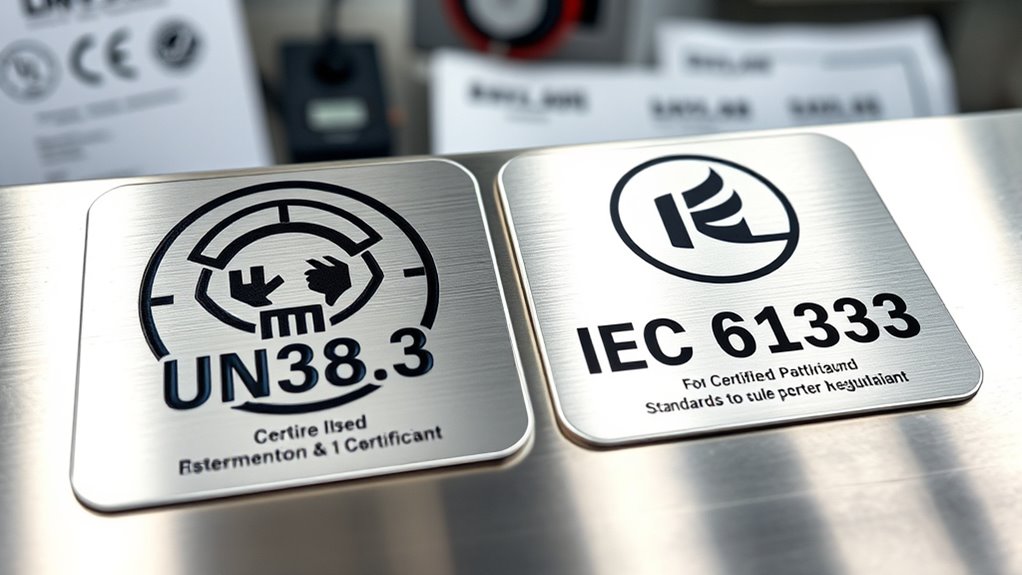

Battery certifications like UN38.3 and IEC 62133 guarantee your batteries meet strict safety, quality, and performance standards. These tests simulate real-world conditions, checking for safety during transportation and use. Certification confirms that batteries can withstand shocks, vibrations, and temperature changes, reducing risks of accidents. By complying with these standards, manufacturers build trustworthy products you can rely on. To learn more about how these standards protect you and improve battery safety, keep exploring.
Key Takeaways
- Battery certifications like UN38.3 and IEC 62133 ensure safety, quality, and compliance during manufacturing, transportation, and use.
- UN38.3 tests simulate transportation stresses such as vibration, shock, and temperature changes to prevent hazards.
- IEC 62133 focuses on safety aspects of portable rechargeable batteries, including electrical and thermal safety.
- Certification standards are regularly updated to address emerging safety concerns and technological advancements.
- Achieving these certifications verifies that batteries meet international safety requirements, promoting consumer trust and industry standards.

Have you ever wondered what it takes to guarantee a battery is safe and reliable? Ensuring battery safety isn’t just about choosing the right type; it involves a rigorous certification process that verifies the battery meets strict standards. Certification processes are designed to evaluate various aspects of a battery’s construction, performance, and safety features before it reaches consumers. These processes are critical in preventing accidents, malfunctions, and potential hazards, especially as batteries power more of our daily devices and vehicles. When a battery undergoes certification, it’s subjected to a series of tests that simulate real-world conditions to confirm its durability and safety.
Understanding these certification processes helps you appreciate why certain batteries are deemed trustworthy and others are not. For example, standards like UN38.3 and IEC 62133 are globally recognized benchmarks that manufacturers must meet to validate their batteries’ safety and quality. The UN38.3 certification process involves tests to evaluate a battery’s ability to withstand transportation stresses, such as vibration, shock, altitude, and temperature changes. These tests ensure the battery can endure shipping and handling without risking leaks, fires, or explosions. This process is especially essential for lithium-ion batteries, which are highly efficient but also potentially hazardous if not properly managed.
IEC 62133, on the other hand, focuses specifically on the safety of rechargeable batteries used in portable devices. It examines aspects like electrical safety, thermal stability, and mechanical integrity. Passing IEC 62133 tests indicates that the battery can operate safely across a range of conditions, reducing the risk of overheating or failure during use. These standards are continually updated to reflect technological advancements and emerging safety concerns, so manufacturers frequently revisit their designs to ensure compliance.
For you, as a consumer or industry professional, understanding battery safety and certification processes means you can make more informed choices. Knowing that a battery has been certified according to recognized standards provides confidence that it has undergone thorough testing and meets safety requirements. It’s not just about compliance; it’s about protecting yourself, your devices, and the environment. Certification also encourages manufacturers to maintain high quality standards, which ultimately leads to safer, more dependable batteries. In a world increasingly reliant on portable power, these certification processes build trust and help prevent the costly and dangerous consequences of battery failures. So, next time you see a certified label, you’ll know it’s there because someone took the necessary steps to prioritize safety and reliability.
Frequently Asked Questions
Are There Regional Differences in Battery Certification Requirements?
Yes, regional standards vary, so you need to verify specific requirements for each market. While certification harmonization efforts aim to streamline processes, differences still exist between regions like North America, Europe, and Asia. These variations can impact your product’s approval process, so it’s essential to comprehend local regulations and adapt your batteries accordingly. Staying informed helps ensure your batteries meet regional standards and avoid delays or legal issues.
How Often Must Batteries Be Re-Certified for Compliance?
You need to renew your battery certification every 2 to 3 years, depending on regional regulations. Did you know that over 30% of batteries fail certification renewal due to outdated safety standards? This renewal process is crucial for ensuring safety throughout the battery’s lifecycle. Regular certification renewal keeps your batteries compliant, protecting users and maintaining market access, so stay vigilant and schedule your updates accordingly.
What Are the Consequences of Non-Compliance With Certifications?
If you don’t comply with battery safety certifications, you risk legal penalties like fines or product recalls. Non-compliance can also compromise safety, leading to potential fire hazards or damage. You might face delays in getting your products to market or lose customer trust. Ultimately, ignoring these standards puts your business at legal and financial risk, making it essential to stay compliant and uphold safety regulations.
Do Certifications Cover All Types of Rechargeable Batteries?
Around 80% of rechargeable batteries need certification, but not all types are covered. Certification scope varies by battery type, such as lithium-ion, nickel-metal hydride, or lead-acid batteries. Some specialized batteries, like those used in aerospace or medical devices, may require additional or specific standards. So, you should always verify if your battery type is included in relevant certifications to guarantee safety and compliance.
How Do Certifications Impact Battery Recycling and Disposal?
Certifications influence your battery’s lifecycle by ensuring safe recycling and disposal practices. They set recycling standards that help prevent environmental harm, making sure batteries are properly processed at end-of-life. When a battery meets these standards, it’s easier to recycle responsibly, reducing waste and conserving resources. Your adherence to certified recycling methods helps protect the environment and supports sustainable battery lifecycle management.
Conclusion
By understanding these certifications like UN38.3 and IEC 62133, you’re gently guided toward safer, more reliable battery choices. While the standards may seem intricate at first, they serve as subtle safeguards, encouraging you to make informed decisions. Embracing these certifications isn’t just about compliance—it’s about nurturing trust and peace of mind in your devices. Ultimately, they help you stay a step ahead, quietly ensuring your safety without the need for loud assurances.