TL;DR
A solar-powered backup generator is usually a portable power station paired with solar panels: the battery stores electricity, and an inverter supplies power to devices. Choose by checking both output in watts and usable energy in watt-hours, then account for startup surges, cloudy-weather charging, and safe connection limits. These units work well for many small essentials, but they are not automatic whole-house replacements.
A storm can silence the refrigerator, darken the hallway, and turn your Wi-Fi router into a useless little box. A solar-powered backup generator can keep some of those essentials running—but the name can make the equipment sound more powerful and self-sufficient than it is.

Get backup power and energy gear delivered free with Prime
- Fast, free delivery on millions of items
- Prime Video, Amazon Music and more included
- Member-only deals all year
In most cases, you are buying a battery-based portable power station, then charging it from solar panels, a wall outlet, or sometimes a vehicle. That is different from a fuel-burning generator and different from rooftop solar with a home battery. The distinction matters when you are planning for a long outage, a fridge compressor starting up, or a week of gray skies.
This guide explains how these units work, how to estimate power and runtime, what solar charging can realistically do, and where safety rules draw the line. You will leave with a practical checklist for matching a unit to your lights, communications gear, fridge, or other essential loads.
A solar-powered backup generator is usually a battery power station charged by panels, rather than a fuel-burning generator.
Check both continuous and surge output in watts, then estimate runtime from usable watt-hours—not the battery’s headline capacity alone.
Solar recharge varies with sun, shade, season, and the station’s input limit; plan another compatible charging option for prolonged outages.
Use portable stations for matched essential loads, and never connect one to household wiring through an improvised cord or wall outlet.
For a gas or propane generator, operate it outdoors and away from doors, windows, and vents to prevent carbon-monoxide poisoning.
How a solar generator turns sunlight into usable power
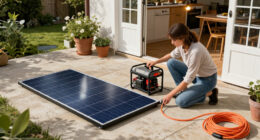
A solar-powered backup generator is usually a portable power station paired with solar panels, not a conventional generator burning fuel. The panels make direct-current electricity, a charge controller regulates power going into the battery, and an inverter changes stored DC power into the AC electricity many household devices use. You plug devices into the station’s outlets, much as you would use a very large battery pack.
For example, you might set a unit on a dry, stable surface in the living room and plug in a router, two lamps, and a phone charger. During the day, a panel outside can recharge the battery, provided the panel is compatible and gets useful sunlight. Some units also charge from a wall outlet or a vehicle, and some accept extra batteries.
A portable station is not the same thing as a rooftop solar system with battery storage. It is generally easier to move and set up, but usually stores less energy and supplies less power. Think of it as a well-packed day bag: handy for the essentials, but not built to carry everything in your house.
The label “solar generator” is broad marketing language. Panels may be included, sold separately, or limited by the station’s solar-input rating. Before buying, check the package contents, compatible panel voltage and current, outlet types, and whether add-on batteries or home connections are actually supported.
Products Worth Considering

Logitech MX Mechanical Wireless Illuminated Keyboard, Tactile Quiet, Graphite

LG 27GS60QC-B Ultragear 27-inch Curved Gaming Monitor (QHD, 180Hz, 1ms, 1000R)

Samsung 27-Inch Odyssey G5 QHD Gaming Monitor (G50F)
As an affiliate, we earn on qualifying purchases.
Check watts and watt-hours before you trust the runtime estimate
A solar-powered backup generator needs enough output watts to run your devices and enough watt-hours of capacity to run them for the time you need. Watts describe how much power devices draw at once; watt-hours describe the amount of energy stored. A unit can have a large battery but still fail to start a motor if its output or surge rating is too low.
Suppose you want to run a 100 W device from a battery with 800 Wh of usable energy. The rough calculation is 800 Wh ÷ 100 W = 8 hours. Real runtime can be shorter because the inverter uses energy, the unit draws power itself, and the device may not draw a steady 100 W. A 1,000 Wh battery does not automatically provide 1,000 Wh at its outlets.
Refrigerators and pumps deserve extra attention. A fridge might draw modest power once running, then briefly demand much more as its compressor starts. Check both the power station’s continuous output and surge capacity, and compare those figures with the appliance specifications. If you have a plug-in energy meter, measuring the fridge over a normal day can give a more useful estimate than guessing from its label.
Make a short load list before shopping: a router, two LED lights, phones, and a fridge are a different job from an electric heater or clothes dryer. That contrast is the heart of good sizing. A battery can keep the house connected and illuminated without being able to run every appliance that normally hums behind the walls.
Choose a unit with this eight-step outage checklist
To choose a solar-powered backup generator, start with the devices you need—not the biggest battery you can find. A useful shortlist records each device’s running watts, startup surge if it has a motor, and expected hours of use. For instance, a family keeping a fridge, router, and several lights going overnight needs a different setup from a camper charging phones for a weekend.
- List essential devices and find their wattage in the manual, on the label, or through a meter.
- Check startup surges for refrigerators, pumps, and other motor-driven equipment.
- Estimate daily energy by multiplying each device’s watts by its hours of use, then add the loads.
- Choose continuous and surge output that can handle the devices you may use at the same time.
- Check usable capacity and allow for inverter losses and the station’s own consumption.
- Review solar-input limits, panel compatibility, included cables, and realistic recharge estimates.
- Compare battery chemistry, warranty, weight, cycle-life terms, and expansion options.
- Confirm safety features and storage instructions, and verify any medical-device requirements with the manufacturer or care provider.
For example, an apartment resident may choose portability and enough energy for communications, lights, and a small fridge, while a homeowner may value add-on batteries and several charging methods. Neither person needs to pay for features they cannot use. The best match is the one that covers the actual essentials and can be charged under the conditions you expect.
Compare battery stations with gas generators before an outage
A battery-based solar unit is quieter and produces no exhaust at the point of use, while a fuel-burning generator can supply sustained power as long as you have fuel and operate it safely outdoors. Neither option wins every situation. A portable power station often suits smaller loads and indoor use as directed; a gas generator may better serve high, prolonged loads, but it brings noise, fuel handling, maintenance, and carbon-monoxide danger.
| Feature | Solar-powered power station | Fuel-burning generator |
|---|---|---|
| Sound and exhaust | Quiet; no operating exhaust at the unit | Noisy; produces exhaust and carbon monoxide |
| Energy source | Stored battery, with solar or other charging | Fuel, as long as supply and operation continue |
| Typical fit | Phones, lights, routers, and selected appliances | Potentially larger sustained loads, depending on rating |
| Weather dependence | Stored charge works in clouds; solar recharge may slow | Does not rely on sunlight, but needs fuel |
| Connection to home wiring | Requires approved equipment and a safe setup | Requires approved equipment and a safe setup |
Picture a winter outage with low clouds and a refrigerator to protect. A charged battery station can run the fridge for a while, but solar recharging may be weak; another approved charging option or a longer-term backup plan matters. A fuel generator can keep producing power, but it must stay outdoors, well away from doors, windows, and vents. Never run a gas or propane generator indoors or in an enclosed space.
Some households may use more than one backup option, depending on budget, needs, and local rules. Battery power also has an environmental footprint: manufacturing batteries and panels uses materials, and batteries need proper recycling or disposal at end of life.
Plan for cloudy skies, battery aging, and safe connections
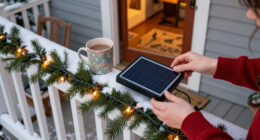
A solar panel’s advertised wattage is a rated maximum, not guaranteed all-day output. Sun angle, shade, season, clouds, panel temperature, and placement all change how much energy reaches the battery. A panel that performs well in clear midday sun may produce far less on a shaded porch during a storm—the very weather that can cause an outage.
Check the station’s maximum solar-input rating and the maker’s estimated charging times, then treat those times as starting points rather than promises. A small panel can take a long time to refill a large battery. If you expect extended outages, multiple charging choices—solar, wall power when available, and compatible vehicle charging—can matter more than a flashy panel wattage claim. The tradeoff is practical: more panel capacity may shorten recharge time in good sun, but it adds cost, space, and setup effort, and cannot guarantee energy when skies stay cloudy. A plan that depends on recharging each day should leave room for several low-output days or include another compatible way to charge.
Battery chemistry also affects weight and service life. Many newer stations use lithium iron phosphate (LFP, or LiFePO₄), which manufacturers often rate for a longer cycle life and good thermal stability. Other lithium-ion chemistries can pack more energy into less weight. Compare the cycle-life rating and its test conditions; a claim such as “3,000 cycles” is incomplete unless you know what capacity remains at the end of that count. Cycle life is not the same as calendar life: heat, storage charge level, and time can also affect aging. A longer-rated battery may be a better value for frequent use, while a lighter unit may be easier to carry if outages are occasional.
Most portable stations power appliances plugged directly into the unit. Do not feed power into a home through a wall outlet or improvised cord. Connecting to household wiring requires approved equipment and code-compliant installation; a qualified electrician can assess whether a transfer switch or another permitted arrangement fits your home. This protects utility workers and prevents dangerous backfeeding, while also ensuring the station is not asked to power circuits beyond its rating. For medical equipment, verify runtime and power requirements with the device maker and care provider instead of relying on a generic estimate.
Know which household essentials a portable station can handle
A portable power station usually works best for small, essential loads: phones, LED lights, laptops, routers, and some refrigerators or medical devices when the unit’s output and capacity match the equipment. It is usually a poor fit for long, continuous use of high-demand appliances such as electric space heaters, ovens, clothes dryers, or central air-conditioning. Those devices can drain a battery quickly or exceed its output rating. The distinction is both about power and energy: a device may draw more watts than the inverter can supply, or it may fit the output limit but consume the stored watt-hours so quickly that it cannot run for the needed duration.
Take a family working through an evening outage. They might keep a Wi-Fi router, two lamps, and phones running, then cycle a refrigerator carefully rather than expecting the station to power every circuit. That is a practical compromise: a calm, lit room and working communications, not a fully functioning house. Larger expandable systems can cover more, but they cost more, weigh more, and still need a safe connection plan. Prioritizing also has a cost: switching a refrigerator on and off may help conserve energy, but frequent or poorly timed cycling can be inconvenient, and perishable food still needs to stay within safe temperature limits. Decide in advance which loads matter most and how much runtime each deserves.
Pass-through charging—charging a unit while it powers devices—is available on many models, but rules vary. Read the manual for supported charging sources, restrictions, and battery-wear guidance. Keep the station dry, use compatible cables, leave vents clear, avoid damaged cords, and follow the maker’s temperature and storage instructions. A setup that is easy to reach and operate matters during an outage; placing the unit near the devices may reduce cable clutter, but keep it where it can stay dry and ventilated.
Use a portable power station as part of an outage plan, not as the whole plan. Decide where it will sit, which devices get priority, how you will recharge it, and what you will do if the outage lasts longer than the stored energy. A few written choices made on a calm afternoon beat hunting for cables by flashlight.
Frequently Asked Questions
Can a solar-powered backup generator run a refrigerator?
Sometimes. The station must handle the refrigerator’s running wattage and its compressor’s startup surge, and its usable capacity must cover the expected runtime. Check the appliance specifications or measure its energy use; a fridge may run for fewer hours than a simple battery-capacity calculation suggests.
How long will a solar generator power my devices?
Estimate runtime by dividing usable battery capacity in watt-hours by the devices’ combined power draw in watts. For example, 800 Wh of usable energy divided by a steady 100 W load suggests about eight hours, but inverter losses and changing device use can shorten that time.
Will solar panels recharge it on a cloudy day?
Panels can still produce electricity in cloudy weather, but output may drop substantially. The battery can continue powering devices from its stored charge; for a longer outage, consider a compatible wall or vehicle charging option rather than counting on weak sunlight alone.
Can I use a portable power station indoors?
Battery power stations produce no exhaust during normal operation and are generally suitable indoors when you follow the manufacturer’s instructions. Keep the unit dry, give it the ventilation the manual calls for, and keep vents clear. Fuel-burning generators must stay outdoors because carbon monoxide can be fatal.
Can I connect a portable solar generator to my home wiring?
Do not connect it through a wall outlet or an improvised cord. A connection to household wiring needs approved equipment and a code-compliant setup, which may involve a transfer switch. Ask a qualified electrician to assess the installation and local requirements.
Conclusion
Choose by the devices you must keep running, the hours you need them, and the ways you can recharge—not by the biggest number on a product box. Write down your essential loads, check their startup needs, and make sure the station’s outlets and charging limits fit your plan.
A well-sized unit can keep a dark room connected and gently lit. That is a much better promise than expecting one portable battery to make a whole house forget the storm.