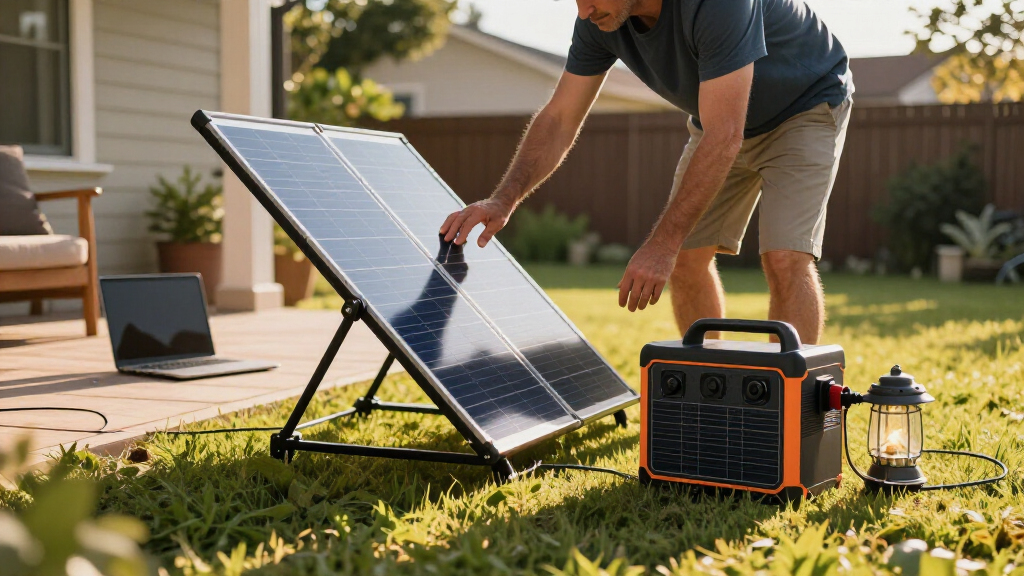
When most people start shopping for a solar backup power station, the search narrows quickly to two names: EcoFlow and Jackery. And within their lineups, two models sit almost directly on top of each other in price and purpose — the EcoFlow Delta 2 Max and the Jackery Explorer 2000 Plus. Both are expandable lithium stations in the 2 kWh range, both accept enough solar input to recharge in a day, and both are marketed as fridge-and-router-keeping emergency backup for homes, as well as serious overlanding or jobsite power.

Get backup power and energy gear delivered free with Prime
- Fast, free delivery on millions of items
- Prime Video, Amazon Music and more included
- Member-only deals all year

ZeroKor 300W Portable Power Station with 60W Foldable Solar Panel
- ✔ Output Power: 300W max
- ✔ AC Outlets: 2 x 300W max
- ✔ USB Ports: 3 x 5V/3A, 1 x quick charge

Jackery Explorer 300 Portable Power Station, 292Wh Backup LiFePO4 Battery
- ✔ Capacity: 292Wh
- ✔ Output: 300W continuous, 600W peak surge
- ✔ Weight: 7.1 lbs
That overlap is exactly why the comparison is hard. You are not choosing between a budget and a premium product; you are choosing between two philosophies. EcoFlow prioritizes raw speed and control — faster charging, faster solar harvest, a more detailed app. Jackery prioritizes capacity headroom and simplicity — a bigger base battery, cheaper expansion batteries, and an interface that asks less of you. The wrong choice here is not a disaster, but it is an expensive one: once you buy extra batteries or solar panels from one brand, switching later means rebuying most of the system.
The short version: if you want the most responsive, fastest-cycling station and like tuning everything from your phone, the Delta 2 Max is the stronger pick. If you expect your power needs to grow — longer outages, more appliances, maybe a future whole-circuit setup — the Explorer 2000 Plus scales further for less money. The rest of this guide breaks down where each wins and who each one actually fits.
At a Glance
| Criteria | EcoFlow Delta 2 Max | Jackery Explorer 2000 Plus | Winner |
|---|---|---|---|
| Base capacity and output | 2,048 Wh, 2,400 W AC output (peaks to 3,400 W) | 2,048 Wh, 2,200 W AC output (peaks to 4,400 W with parallel units) | Tie |
| Battery chemistry and lifespan | LiFePO4 (LFP), ~3,000 cycles to 80% | LiFePO4 (LFP), ~4,000 cycles to 70% | B |
| Expansion capability | Expands to ~6 kWh with add-on batteries | Expands to 12 kWh with one battery, 24 kWh with two; parallel AC output to 6,600 W | B |
| Solar input and charging speed | Up to 1,000 W solar input; ~1,600 W total AC charging, 0–80% in under an hour | Up to 600 W solar input standard (expandable with Jackery adapter); slower AC charging (~2 hours to full) | A |
| App and control features | Full app control, custom charge rates, per-output toggles, energy statistics | Simpler app: output control, monitoring, Bluetooth; fewer tuning options | A |
| Port selection | 6 AC outlets, 100 W USB-C, USB-A, 12 V car port, Anderson port | 3 AC outlets, 100 W USB-C, USB-A, 12 V car port | A |
| Portability and build | ~23 kg, sturdy handle, loud-ish cooling fans | ~27 kg, heavier and bulkier; robust build | A |
| Ecosystem and warranty | EcoFlow ecosystem is large but expansion batteries are pricier per kWh; 5-year warranty | Jackery expansion batteries cost less per added kWh; 5-year warranty | B |
ZeroKor 300W Portable Power Station with 60W Foldable Solar Panel
Every other station in this roundup makes you buy a panel separately, and that changes the math more than most buyers expect. The ZeroKor is the only option that arrives as a complete solar generator kit: a 300W station plus a 60W foldable monocrystalline panel with a respectable 20.5% conversion efficiency. For a first foray into solar backup, this option stands out for removing the guesswork of matching panels to stations.Where it falls short of the GRECELL is runtime and charging speed. Its capacity is smaller, its USB ports max out at standard rates with only one quick-charge port, and it lacks the pure sine wave reassurance of our top pick. Compared with the similarly-rated Jackery Explorer 300, the ZeroKor trades battery longevity for completeness — its cells won’t match Jackery’s 4,000-cycle LiFePO4 rating, but you are charging under the sun on day one rather than shopping for accessories.The kit’s built-in MPPT controller makes solar charging more efficient than a basic panel-and-adapter setup, and the included DC, car, and AC recharge options give genuine flexibility. Two caveats deserve attention: the panel’s junction box is not waterproof, so it needs repositioning or shelter in rain, and the station requires regular charge cycles to avoid entering a protection state. For budget-conscious beginners, those are manageable tradeoffs; for anyone powering medical devices, the GRECELL remains the safer choice.
Pros:
- Only option here that includes a solar panel, making it a true out-of-the-box solar kit
- 60W monocrystalline panel delivers 20.5% conversion efficiency with built-in MPPT charging
- Three recharge methods (AC, solar, 12V car) with all cables and adapters included
- BMS protection covering short circuit, over-current, over-voltage, overload, and overheating
Cons:
- 300W limit cannot run coffee makers, hair dryers, or water pumps
- Solar panel junction box is not waterproof
- Requires regular charging cycles to avoid entering battery protection mode
Best for: First-time buyers and campers who want a working solar setup on day one without sourcing a separate panel
Not ideal for: Anyone needing extended runtime, fast USB charging, or weatherproof solar components
Bottom line: The most complete entry point into solar backup — you sacrifice capacity and charging speed, but nothing else in this lineup is ready for the sun on day one.
“The most complete entry point into solar backup — you sacrifice capacity and charging speed, but nothing else in this lineup is ready for the sun on day one.”
Jackery Explorer 300 Portable Power Station, 292Wh Backup LiFePO4 Battery
If the GRECELL is the station you keep plugged in at home and the ZeroKor is the starter kit, the Jackery Explorer 300 is the one you actually carry. At 7.1 pounds with an integrated handle, it is dramatically easier to move than either competitor, and that difference compounds quickly on campsites, hunting trips, or when shuttling gear between rooms during an outage.Its defining advantage is chemistry: the LiFePO4 battery is rated for 4,000+ charge cycles to 70% capacity, which Jackery estimates at roughly eleven years of use. Standard lithium cells like those in the GRECELL typically degrade far sooner under similar duty cycles. For a backup device that sits idle most of the year and must work when called upon, that longevity is not a spec-sheet nicety — it is the whole point.The Jackery also solar-charges faster than either rival relative to its size, reaching 80% in roughly 2.8 hours from a 100W panel, and its 100W USB-C PD port outpaces the ZeroKor’s standard USB charging for laptops. The compromises are real, though: 292Wh is the smallest capacity here, 300W output rules out anything but lightweight devices, and — like the GRECELL — the panel is a separate purchase. This model is better suited to buyers who value a decade of dependable, grab-and-go power over maximum runtime per charge.
Pros:
- Lightest option in the lineup at 7.1 lbs with an integrated carry handle
- LiFePO4 chemistry rated for 4,000+ cycles — roughly 11 years of service
- Fast solar charging: 80% in about 2.8 hours with a 100W panel
- 100W USB-C PD port charges laptops far faster than standard USB ports
Cons:
- Smallest capacity of the three at 292Wh
- 300W output limits it to phones, laptops, lights, and small devices
- Solar panel sold separately
Best for: Campers, travelers, and light-duty backup users who want a station they can carry anywhere and rely on for years
Not ideal for: Households needing extended outage runtime or anyone wanting a panel included in the purchase
Bottom line: The most portable and longest-lasting option here — buy it for the decade, not the runtime.
“The most portable and longest-lasting option here — buy it for the decade, not the runtime.”
As an Amazon Associate we earn from qualifying purchases.
Key Differences
The three differences that actually matter in practice are charging speed, expansion economics, and battery cycle life. On charging, the Delta 2 Max is simply faster: it can pull roughly 1,600 W from the wall and hit 80% in well under an hour, and it accepts up to 1,000 W of solar out of the box. The Explorer 2000 Plus is no slouch, but its standard solar input is 600 W and full AC recharging takes about twice as long. For short outages or daily solar cycling, this matters — a station that refills by noon has twice the usable energy of one that finishes at dusk.
On expansion, the roles reverse. The Delta 2 Max tops out around 6 kWh. The Explorer 2000 Plus accepts a single expansion battery to reach 12 kWh, a second to reach 24 kWh, and can even be paired with a second unit for 6,600 W of combined output — enough to run a well pump or a small air conditioner through a multi-day outage. Jackery’s expansion batteries also tend to cost less per added kilowatt-hour, so the scaling path is both larger and cheaper. If your mental model is “start small, grow into whole-home-ish backup,” Jackery’s ceiling is far higher.
Battery chemistry is a quiet but real win for Jackery: its LFP cells are rated for roughly 4,000 cycles versus EcoFlow’s ~3,000. Both will outlast the electronics around them for typical emergency-only use, but for daily off-grid cycling, the Jackery bank should hold its capacity meaningfully longer. EcoFlow counters with a richer app — adjustable charge rates, per-port switching, detailed consumption logs — which sounds like a gimmick until you use it to slow-charge from a small solar array or schedule charging around off-peak rates.
Detailed Comparison
Base capacity and output (minor difference)
Both units start at 2,048 Wh — a dead heat, and enough to run a full-size refrigerator for roughly 15–20 hours, keep internet and lights going for days, or run a microwave, TV, and laptops through an evening outage. Output is nearly tied too: 2,400 W continuous for the Delta 2 Max versus 2,200 W for the Explorer 2000 Plus. Both run nearly any household appliance except high-draw items like electric water heaters or central AC. The Jackery’s 4,400 W surge rating (with a companion unit) edges ahead for motor-starting loads, but on its own the two are functionally equivalent for everyday backup duty.
Battery chemistry and lifespan (Jackery Explorer 2000 Plus wins — moderate)
Both use LiFePO4 chemistry — a genuine improvement over the older NMC cells in earlier generations, safer and longer-lived. Jackery rates its cells for about 4,000 cycles to 70% capacity versus EcoFlow’s ~3,000 cycles to 80%. Those rating methods differ slightly, so don’t over-read the numbers, but the direction favors Jackery. In practice, both will last 8–10+ years for someone who uses the station only during outages. The gap only becomes meaningful for daily cyclers — van lifers, off-grid cabins, daily solar workhorses — where Jackery’s bank degrades noticeably slower.
Expansion capability (Jackery Explorer 2000 Plus wins — major)
This is where the two products genuinely diverge. The Delta 2 Max supports add-on batteries to roughly 6 kWh — a solid ceiling for fridge-plus-essentials backup. The Explorer 2000 Plus scales to 12 kWh with one expansion pack and 24 kWh with two, and can run parallel with a second station for up to 6,600 W of output. Jackery’s expansion batteries also cost less per kWh, so the marginal cost of growth is lower. If there is any realistic chance your needs expand — a medical device, an EV enthusiast wanting emergency top-ups, longer grid outages — Jackery’s platform is the safer long-term bet. EcoFlow’s answer is that most people never expand past 4–6 kWh anyway, and at that scale the two ecosystems cost similarly.
Solar input and charging speed (EcoFlow Delta 2 Max wins — major)
EcoFlow wins this clearly. The Delta 2 Max accepts up to 1,000 W of solar input natively and combines AC plus solar for very fast refills — 0 to 80% from the wall in under an hour is class-leading. The Explorer 2000 Plus takes 400 W of solar natively, expandable to around 600 W with Jackery’s adapter, and full AC charging takes roughly two hours. In daily solar use, the Delta 2 Max will finish recharging hours earlier on marginal days, which effectively multiplies usable energy. For emergency-only users who recharge from the grid between outages, the difference is convenience rather than capability.
App and control features (EcoFlow Delta 2 Max wins — moderate)
EcoFlow’s app is more capable: you can cap the AC charging rate (useful for generator or small-solar inputs), toggle individual outputs, set charging schedules to exploit cheap off-peak electricity, and review detailed consumption history. Jackery’s app covers the basics — on/off, monitoring, firmware updates — but offers less tuning. Neither app is why you should buy the station, but EcoFlow’s extra control genuinely changes how the unit behaves day to day, especially for anyone charging from variable sources or trying to minimize electricity costs.
Port selection (EcoFlow Delta 2 Max wins — moderate)
The Delta 2 Max carries six AC outlets against Jackery’s three, plus a similar spread of USB and 12 V ports on both. Six outlets means you can plug in an entire desk setup or a kitchen counter’s worth of devices without a power strip — genuinely useful during an outage when you’re running things directly off the station. Jackery’s three outlets are fine for targeted backup (fridge, router, lamp) but force a strip for anything more distributed. Both include a 100 W USB-C port, which covers modern laptops.
Portability and build (EcoFlow Delta 2 Max wins — minor)
At around 23 kg versus roughly 27 kg, the Delta 2 Max is noticeably easier to move, and its handle design is friendlier for carrying with one hand. Neither is “portable” in the casual sense — both are car-trunk units — but the difference is felt on stairs and at campsites. Both are well-built with solid casings and decent weather resistance on the ports. Call this a modest win for EcoFlow for anyone who actually moves their station around rather than parking it in a closet.
Ecosystem and warranty (Jackery Explorer 2000 Plus wins — moderate)
Both companies offer 5-year warranties (with registration) and have mature accessory ecosystems — solar panels, transfer switches, and expansion batteries. The economics differ: Jackery’s expansion path is cheaper per kWh and goes much higher, while EcoFlow’s ecosystem is broader in breadth (generators, whole-home hubs like the Delta Pro line). If you anticipate staying in the 2–6 kWh range, either ecosystem serves you fine. If you might build toward 12 kWh or more, Jackery’s path within this product family is more affordable, though EcoFlow would argue you should have bought a Delta Pro instead.
EcoFlow Delta 2 Max: Pros and Cons
Pros:
- Class-leading charging speed — 0–80% from the wall in under an hour
- 1,000 W native solar input refills faster during daylight hours
- Six AC outlets run a whole room without power strips
- Rich app with charge-rate control, scheduling, and per-output toggles
- Lighter and easier to move than the Jackery
Cons:
- Expansion caps out around 6 kWh — a low ceiling for growing needs
- Add-on batteries cost more per kWh than Jackery’s
- Cooling fans can be audible under heavy load
- Slightly shorter rated cycle life than the Jackery
Jackery Explorer 2000 Plus: Pros and Cons
Pros:
- Scales to 12–24 kWh and 6,600 W parallel output — a genuine home-backup platform
- Cheaper expansion batteries make growth economical
- ~4,000 rated cycles — best-in-class battery longevity
- Simpler interface that never gets in the way during an emergency
- 4,400 W surge rating handles motor-starting loads well
Cons:
- Slower charging — roughly 2 hours to full from AC, 600 W solar ceiling
- Only three AC outlets; power strip required for distributed loads
- Heavier and bulkier to move around
- App offers basic monitoring without fine-grained control
Who Should Choose What
Choose EcoFlow Delta 2 Max if:
- You want fast turnarounds between uses — recharge in an hour, not an evening
- You cycle the station daily from solar (van life, off-grid cabin, work site) and want maximum daily harvest
- You value app control: charge limits, schedules around off-peak rates, per-port switching
- You’ll keep capacity in the 2–6 kWh range and don’t plan to expand further
- You’ll move the station between locations and appreciate the lighter weight
Choose Jackery Explorer 2000 Plus if:
- You expect your backup needs to grow — medical equipment, well pumps, longer outages
- You want a realistic path to 12–24 kWh without abandoning the original unit
- You’re building toward partial home backup (fridge, furnace fan, lights, internet) on a budget
- You prefer set-and-forget simplicity over app-based tuning
- You’ll cycle the battery frequently and want the longest cell life
Skip both if: You need true whole-home backup including air conditioning or electric heating — both are undersized for that job; look at EcoFlow’s Delta Pro line or a permanently installed home battery system instead. Likewise, if you only need phone-and-laptop power for camping trips, both are overkill and a sub-$500 station will serve you better.
Value for Money
At list price, these two stations trade blows within about $100 of each other, so value comes down to what happens after the initial purchase. If you never expand, the Delta 2 Max delivers more capability per dollar in the base configuration: faster charging, more outlets, better app, easier portability. It is the better pure value for the majority of buyers, who realistically use these stations for occasional outages and tailgates rather than daily cycling.
Pay more attention to the scaling math if expansion is in your future. Building toward 12 kWh with Jackery costs noticeably less per added kilowatt-hour than pushing a Delta 2 Max setup toward its 6 kWh ceiling, and Jackery’s ceiling keeps going where EcoFlow’s stops. In that scenario, the Explorer 2000 Plus is the better long-term value despite a weaker feature set at 2 kWh. The one thing worth avoiding is buying the cheaper base unit and then bolting on enough expansion batteries that you’ve matched a dedicated larger system’s price — do the full-system math before committing.
Final Verdict
For most buyers, the EcoFlow Delta 2 Max is the better pick. It charges twice as fast, harvests more solar per day, offers six outlets instead of three, weighs less, and gives you an app that meaningfully changes how you use the station. Those advantages apply on day one and every day after, while the Jackery’s main advantage — expansion — only pays off if you actually spend the additional money later.
Choose the Jackery Explorer 2000 Plus instead when your plan is bigger than one station: multi-day outages, growing household loads, or a stepwise build toward 12–24 kWh of storage. Its cheaper expansion batteries, higher cycle count, and parallel-output capability make it the smarter platform to grow on, and its simplicity is a feature when you’re fumbling with it by flashlight at 2 a.m.
The deciding factor is a single honest question: will this station stay at roughly 2–4 kWh forever? If yes, buy the Delta 2 Max. If you can name a concrete reason it will need to grow — well pump, medical device, longer outages, an RV build — buy the Explorer 2000 Plus and budget for its first expansion battery from the start.
Frequently Asked Questions
Can either station run a refrigerator during a power outage?
Yes, easily. A typical modern fridge draws 100–200 W on average, so 2,048 Wh runs one for roughly 15–20 hours before recharging — longer if you’re diligent about not opening the door. Add a modest solar panel array and either station can keep a fridge, router, lights, and phones running through a multi-day outage almost indefinitely, weather permitting.
Which one works better with solar panels?
The Delta 2 Max, on input speed: it accepts up to 1,000 W natively versus around 600 W for the Jackery, so it refills hours earlier on the same panels. Note that neither requires brand-matched panels — any panel with the right connector and voltage range works — though buying the bundled kits usually simplifies wiring and warranty support.
Are these safe to use indoors during an outage?
Yes. Unlike gas generators, both produce no exhaust and can safely run inside your home. That indoor-safety factor is one of the strongest reasons to choose a battery station over a fuel generator for apartment or suburban backup. Just keep them out of direct sun and away from moisture, and don’t block the cooling fans.
How long do the batteries last before needing replacement?
Both use LiFePO4 cells rated in the thousands of cycles. With occasional emergency use, expect 8–10+ years before capacity drops noticeably. Jackery’s ~4,000-cycle rating gives it an edge for daily cycling, but for typical backup duty both will likely outlive their usefulness before their batteries wear out.
Can I expand either one later if my needs grow?
Yes, but within very different limits. The Delta 2 Max grows to about 6 kWh with add-on batteries. The Explorer 2000 Plus reaches 12 kWh with one expansion battery, 24 kWh with two, and supports a parallel second unit for 6,600 W of output. If growth is likely, Jackery’s platform has roughly four times the ceiling.
Halloween Picks
halloween
As an affiliate, we earn on qualifying purchases.